
Exfoliation and Daily Hydration: An Educational Overview of Skin Care Practices
A neutral guide to understanding skin renewal and moisture balance
Exfoliation and daily hydration are commonly discussed components of skin care routines. These practices relate to how the skin maintains its outer layer and retains moisture. In the Philippines, regulatory bodies such as the Department of Health (DOH) and the Food and Drug Administration (FDA) oversee product safety and labeling to help protect consumers. This article explains the basic concepts of exfoliation and hydration, including their functions, types, and general safety considerations.
Skin Renewal and Moisture Balance
The outermost layer of the skin, known as the epidermis, undergoes a natural process of cell turnover. Older skin cells gradually shed and are replaced by newer cells. Hydration supports the skin barrier, which helps reduce water loss and maintain flexibility.
Disruptions in this balance may be associated with dryness, rough texture, or buildup of dead skin cells.
What Is Exfoliation?
Exfoliation refers to the removal of dead skin cells from the surface of the skin. This process may occur naturally, but some individuals use products or tools to assist with it.
Types of Exfoliation
- Physical exfoliation: Uses textured materials (such as scrubs or brushes) to manually remove surface cells
- Chemical exfoliation: Uses ingredients such as alpha hydroxy acids (AHAs) or beta hydroxy acids (BHAs) to loosen the bonds between skin cells
The choice between methods depends on skin type, tolerance, and environmental factors. Overuse of exfoliation may affect the skin barrier and lead to irritation.
What Is Daily Hydration?
Daily hydration in skin care refers to maintaining the skin’s moisture levels through topical products such as moisturizers.
Common Components of Moisturizers
- Humectants: Attract water to the skin (e.g., glycerin)
- Emollients: Help soften and smooth the skin surface
- Occlusives: Form a barrier to reduce water loss
Hydration supports the function of the skin barrier and may help maintain skin comfort under varying climate conditions, including humid or dry environments.
General Practices and Safety Considerations
- Frequency awareness: Exfoliation is typically not performed as frequently as cleansing or moisturizing
- Skin observation: Monitoring for signs of irritation, such as redness or dryness
- Patch testing: Testing new products on a small area before regular use
- Sun protection: Using sunscreen, especially when using exfoliating products that may increase sensitivity to sunlight
Consumers are advised to check product labels and verify regulatory compliance through official Philippine FDA resources.
Hypothetical Example for Understanding
An individual living in a humid environment may use a light moisturizer daily to support hydration. If occasional rough texture is observed, exfoliation might be used less frequently to assist in removing surface buildup. This example illustrates how practices can vary without implying specific outcomes.
Context: Dermatology and Consumer Protection
In dermatological research, exfoliation and hydration are studied in relation to skin barrier function and overall skin maintenance. Proper balance is emphasized to avoid disruption of the skin’s natural processes.
Under the Consumer Act of the Philippines (RA 7394), marketing and labeling of cosmetic products must avoid misleading claims. Globally, guidelines encourage accurate, evidence-based communication and discourage exaggerated or unverified benefits.
FAQ (Educational Only)
What is exfoliation in skin care?
Exfoliation is the process of removing dead skin cells from the outer layer of the skin, either through physical or chemical methods.
Is daily hydration necessary?
Daily hydration refers to maintaining moisture levels in the skin. The need and type of moisturizer may vary depending on skin type and environment.
Can exfoliation and hydration be done together?
These practices are often part of the same routine, but their frequency and method may differ based on individual skin response.
Trusted Sources
- Department of Health (Philippines) – Public health guidance
- Food and Drug Administration (Philippines) – Cosmetic safety and regulation
- World Health Organization (WHO) – Skin health information
- American Academy of Dermatology (AAD) – Educational resources
- Peer-reviewed dermatology and cosmetic science journals
Disclaimer
This article is for general informational and educational purposes only. It does not constitute professional medical, dermatological, or consumer purchasing advice. References to products, routines, or treatments do not imply endorsement or guarantee of results. Readers are encouraged to consult licensed dermatologists and verified resources for skin care decisions.
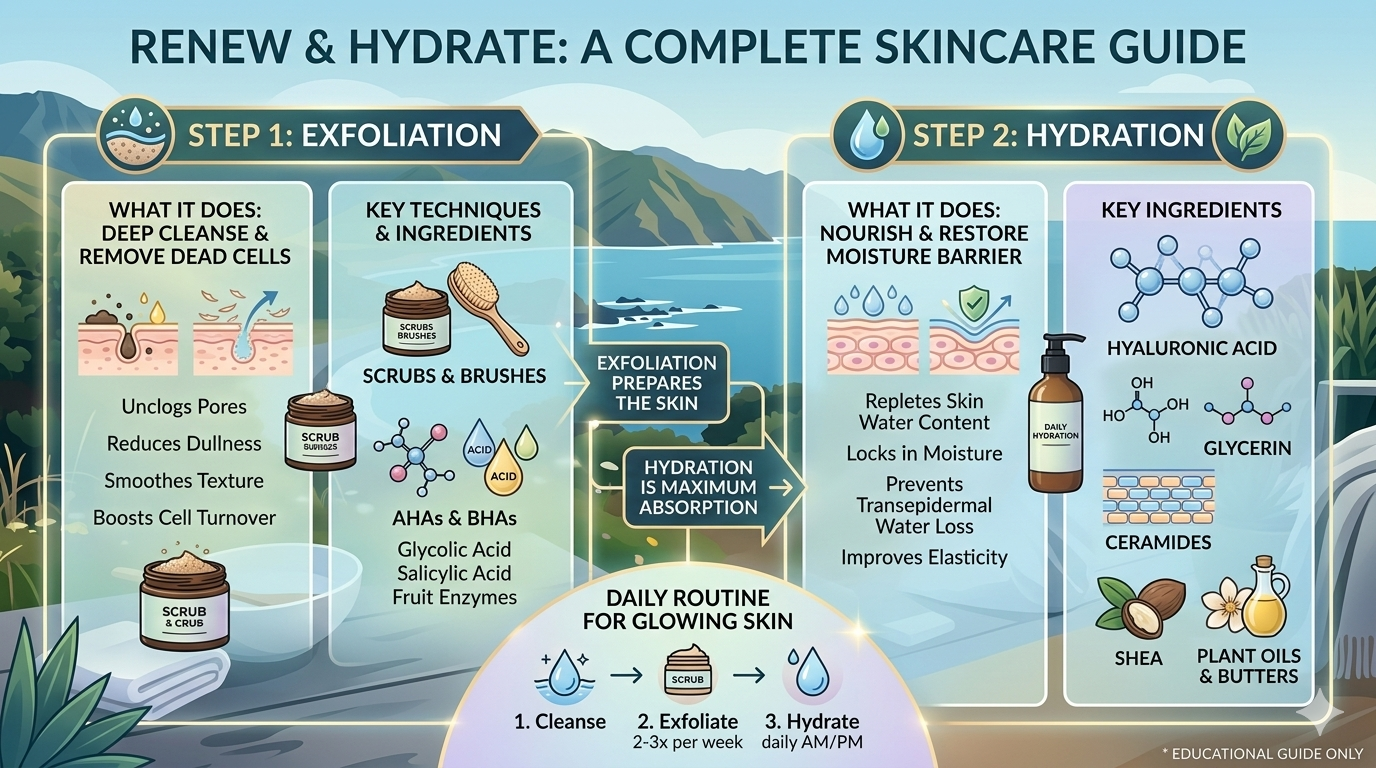
Illustration of surface exfoliation and moisture balance within skin layers