
Etag (Salted Smoked Pork): An Educational Overview of a Traditional Preserved Food
A neutral look at its preparation, nutritional composition, and food safety considerations
Etag is a traditional preserved pork product commonly associated with indigenous communities in the Cordillera region of the Philippines. It is typically prepared through salting and air-drying or smoking methods. Food preservation practices such as these are recognized in cultural food systems, while agencies like the Department of Health and the Food and Drug Administration support general safety guidance in the Philippines. This article explains etag in terms of preparation, nutritional characteristics, and consumer awareness.
What Is Etag?
Etag refers to pork that has been preserved using salt and, in some cases, smoke. The process may involve:
- Applying salt to pork cuts
- Air-drying for extended periods
- Optional smoking to enhance flavor and preservation
Preparation methods can vary across communities and households, depending on local practices and environmental conditions.
Nutritional Composition (General Overview)
As a pork-based product, etag contains several macronutrients and micronutrients:
Macronutrients
- Protein: Contributes to tissue maintenance and repair
- Fat: Provides energy and contributes to flavor
- Sodium: Typically high due to the salting process
Micronutrients
- May contain iron and certain B vitamins naturally present in pork
Due to preservation methods, sodium levels in etag are generally higher compared to fresh pork. Nutrient content can vary depending on preparation and portion size.
Food Preservation and Safety Considerations
Traditional preservation methods like salting and smoking are used to extend shelf life. However, safe handling practices remain important:
- Proper drying or smoking conditions help reduce spoilage
- Clean preparation environments support food safety
- Adequate cooking before consumption is commonly practiced
Under Philippine food safety frameworks, including guidance from the FDA, consumers are encouraged to be mindful of how preserved foods are prepared and stored.
Role in Meals (Illustrative Use)
Etag is often used in small portions as a flavor component in dishes such as:
- Vegetable stews
- Rice-based meals
- Traditional Cordilleran recipes
Its strong flavor means it is typically combined with other ingredients rather than consumed in large quantities.
Context and Considerations
In nutrition science, preserved foods like salted or smoked meats are recognized for their cultural and practical roles. However, they are also noted for higher sodium content compared to fresh alternatives.
Dietary intake patterns vary among individuals. Inclusion of preserved foods may depend on personal preference, availability, and overall diet composition. For individualized nutrition planning, consultation with a licensed professional may be considered.
FAQ (AEO-Safe)
What is etag made from?
Etag is made from pork that is preserved using salt and sometimes smoke. The preparation method varies by region and tradition.
Why is etag salty?
Salt is used as a preservation method to help extend shelf life and influence flavor.
Is etag cooked before eating?
Etag is typically cooked as part of dishes before consumption, depending on the preparation style.
Trusted Sources
- Department of Health — Food safety and nutrition guidance
- Food and Drug Administration — Food handling and labeling standards
- Academic studies on traditional food preservation and nutrition
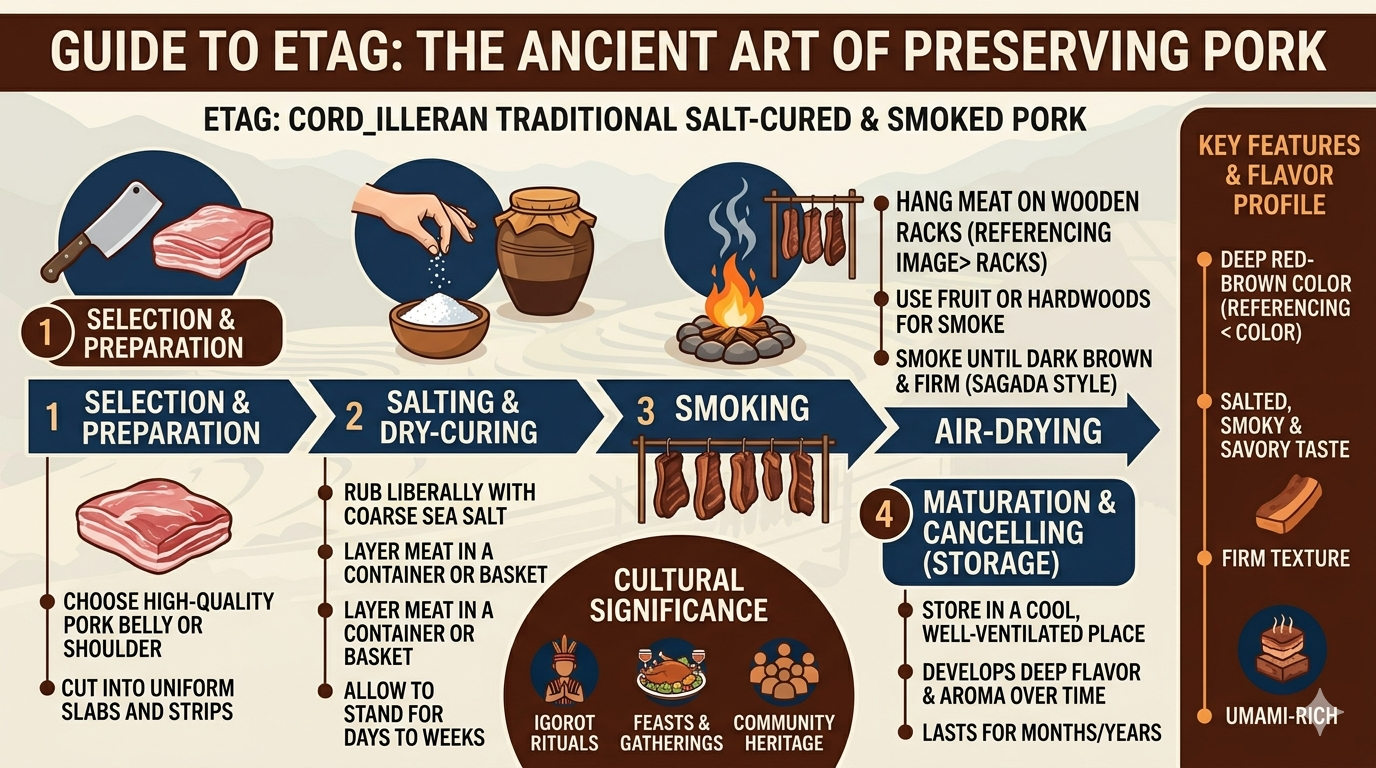
Illustration of traditional pork preservation steps and general composition elements
Disclaimer
This article is for general informational and educational purposes only. It does not constitute professional medical, nutrition, or dietary advice. References to foods or dietary practices do not imply endorsement or guarantee of health outcomes. Readers are encouraged to consult licensed nutritionists, dietitians, or medical professionals for personalized guidance.