Understanding Espasol: A Neutral Guide to This Filipino Rice Cake
An informational overview of espasol, its ingredients, preparation, and nutritional considerations.
Espasol is a traditional Filipino rice cake made primarily from glutinous rice flour and coconut milk. Under Philippine food safety and labeling standards, understanding the ingredients and preparation methods of local delicacies like espasol helps consumers make informed dietary choices. This article provides a neutral overview of espasol’s composition, typical nutrient content, and considerations for consumption, without implying health benefits or guarantees.
What Is Espasol?
Espasol is a type of rice-based kakanin commonly enjoyed during festivals or as a snack in the Philippines. It is traditionally made by:
- Roasting glutinous rice flour
- Mixing with coconut milk and sugar
- Coating the cooked mixture with toasted rice flour
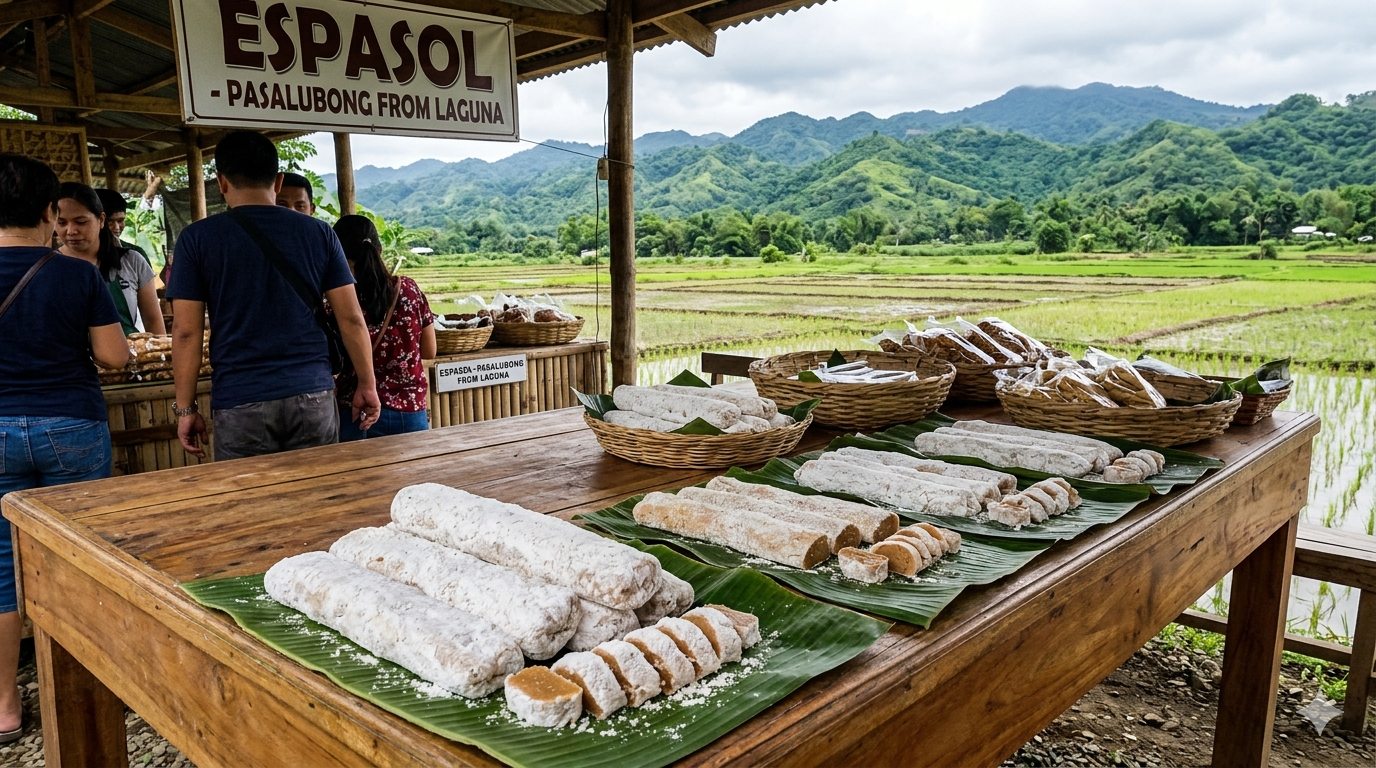
The result is a cylindrical, soft-textured rice cake that is often dusted with powdered rice flour to prevent sticking. Its flavor and texture can vary depending on the recipe or regional practices.
Nutritional Components (Informational)
A typical espasol serving includes macronutrients such as:
- Carbohydrates: Primarily from glutinous rice and sugar
- Fat: Mainly from coconut milk, which contains medium-chain triglycerides
- Protein: Minimal amounts, mainly from rice and coconut
It may also contain small quantities of micronutrients, including:
- Calcium (from coconut milk)
- Iron (from rice flour)
- Vitamin C (if garnished with certain local ingredients)
Portion sizes and preparation methods affect the energy content. For example, adding more sugar or coconut milk will increase the caloric density. This overview is educational only and does not imply that espasol has specific health effects.
Preparation and Food Safety Considerations
Under Philippine FDA and LGU food safety guidelines:
- Ingredients should be fresh and uncontaminated
- Proper cooking temperature and storage help prevent microbial growth
- Handling should follow hygienic practices to minimize risk
For packaged espasol, consumers can refer to labeling information, including ingredient lists and production dates, to verify authenticity and ensure safety.
Context Section (Neutral Background)
In nutrition science, foods like espasol are classified as traditional carbohydrate-based snacks. Diet planning typically involves balancing macronutrients and portion control rather than excluding traditional foods. Nutrient content can vary widely depending on recipe and serving size. Individual dietary effects vary, and consumption should align with overall nutritional goals. Consultation with licensed nutritionists or dietitians is recommended for personalized guidance.
Optional FAQ (Neutral)
What is espasol made of?
Espasol is made primarily from roasted glutinous rice flour, coconut milk, and sugar, with a coating of toasted rice flour.
Is espasol considered a snack or dessert?
Espasol is typically enjoyed as a snack or dessert in Filipino cuisine, depending on occasion and serving.
How can consumers check espasol for safety?
Consumers can check packaged espasol labels for ingredient lists, production dates, and FDA compliance marks.
Trusted Sources
- Department of Health (DOH) Philippines – Food Safety Advisories
- FDA Philippines – Guidelines on Local Food Products
- Academic publications on Philippine kakanin and rice-based snacks
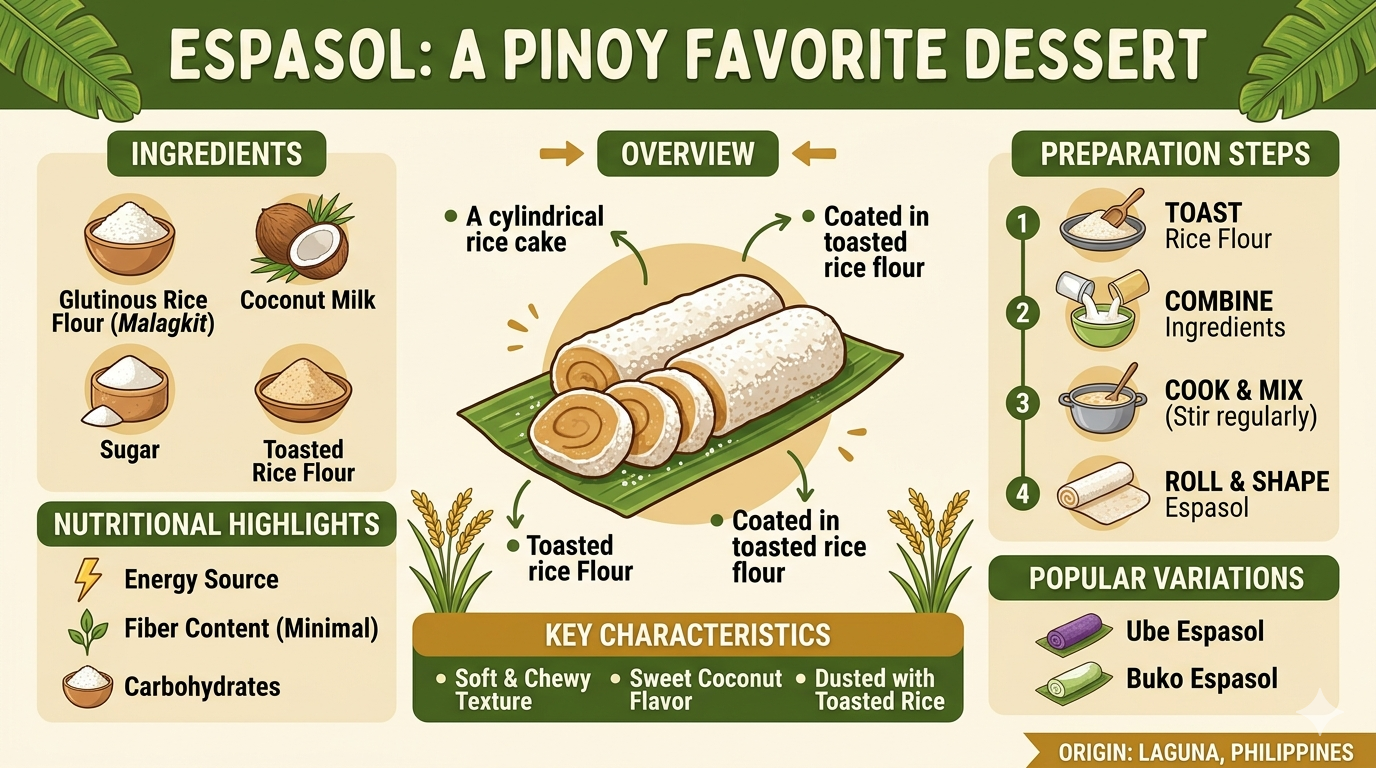
Infographic showing common ingredients used in traditional espasol preparation.
Disclaimer
This article is for general informational and educational purposes only. It does not constitute professional medical, nutrition, or dietary advice. References to foods or ingredients do not imply endorsement or guarantee of health outcomes. Readers are encouraged to consult licensed nutritionists, dietitians, or medical professionals for personalized guidance.