Developing Long-Term Strategies for Career Growth
A neutral overview of how career development is discussed in education and workforce studies
This article explains how long-term career growth strategies are commonly described in educational, organizational, and workforce development literature. It outlines general concepts such as skill development, goal setting, adaptability, and professional relationships. The focus is on providing a structured understanding of career development without suggesting guaranteed outcomes or specific paths.
What Is Career Growth?
Career growth is typically defined as the progression of an individual’s work-related skills, responsibilities, or roles over time. In research and workforce discussions, it may include:
- acquiring new competencies
- taking on different responsibilities
- exploring varied career paths
- adapting to changes in industry or work environments
Career growth is not always linear and may vary depending on economic, organizational, and personal factors.
Self-Awareness and Career Direction
Self-awareness is often discussed as a factor in understanding career preferences, strengths, and areas of interest. In career development literature, this may involve reflecting on:
- work values (e.g., stability, flexibility, collaboration)
- preferred types of tasks or environments
- responses to challenges or feedback
This process is typically presented as exploratory rather than prescriptive.
Goal Setting in Career Development
Goal setting is commonly described as a way to organize professional intentions over time. Educational frameworks often distinguish between:
- short-term goals: focused on immediate tasks or learning areas
- long-term goals: broader directions that may evolve
Some models reference structured approaches (such as setting specific and measurable goals), though outcomes can vary based on context and opportunities.
Skills Development and Lifelong Learning
Workforce studies often emphasize the role of continuous learning in adapting to changing job requirements. This may include:
- technical or job-specific skills
- communication and collaboration skills
- problem-solving and critical thinking
Learning can take place through formal education, workplace experience, or independent study. The relevance of specific skills may change over time depending on industry trends.
Communication and Professional Relationships
Communication is frequently described as a key component of workplace interaction. It may involve:
- sharing information clearly
- listening and responding to feedback
- participating in team discussions
Professional relationships, sometimes referred to as networks, are discussed in terms of information exchange and collaboration rather than guaranteed advancement.
Adaptability and Changing Work Environments
Adaptability refers to how individuals respond to changes such as:
- new technologies
- shifting job roles
- organizational restructuring
In educational literature, adaptability is viewed as a response pattern that can be influenced by experience and context.
Habit Formation and Work Patterns
Habit formation in career contexts is often linked to consistent behaviors, such as:
- managing time
- organizing tasks
- maintaining routines
Behavioral frameworks suggest that repeated actions may become more automatic over time, although consistency can be influenced by external factors like workload and environment.
Ethical Considerations in Career Development Content
Career development discussions sometimes raise ethical concerns, especially in commercial contexts. These may include:
- claims of guaranteed career success
- pressure to purchase courses or certifications
- oversimplified representations of career paths
Consumer protection standards, including those aligned with Philippine regulations, emphasize accurate representation and the avoidance of misleading claims.
Common Misconceptions About Career Growth
Some commonly discussed misconceptions include:
- Career paths are always linear: Many individuals experience shifts or changes in direction over time.
- Specific strategies ensure success: Outcomes often depend on multiple variables, including opportunity and external conditions.
- Skill acquisition leads directly to advancement: While skills are important, advancement may also depend on organizational and economic factors.
Context Section (Educational Background)
In workforce development research, career growth is often examined through models that consider both individual behavior and external influences such as labor markets and organizational structures. In education and management literature, long-term planning is discussed as a flexible process rather than a fixed roadmap.
Under consumer protection principles, including the Consumer Act of the Philippines (RA 7394), career-related content must avoid deceptive claims, particularly those suggesting guaranteed employment outcomes or financial success.
FAQ (AEO-Safe)
What is a long-term career strategy?
A long-term career strategy refers to a general plan or direction for professional development over time. It often includes goals, skill development, and adaptability to changing conditions.
Is career growth always predictable?
Career growth is not always predictable. It may be influenced by personal decisions, workplace environments, and broader economic factors.
Why is continuous learning discussed in career development?
Continuous learning is often highlighted because job requirements and industries can change. Learning new skills may help individuals adapt to these changes.
Trusted Sources
- International Labour Organization (ILO) – Workforce development research
- World Bank – Employment and skills reports
- American Psychological Association (APA) – Organizational psychology resources
- Philippine Department of Trade and Industry (DTI) – Consumer protection guidelines
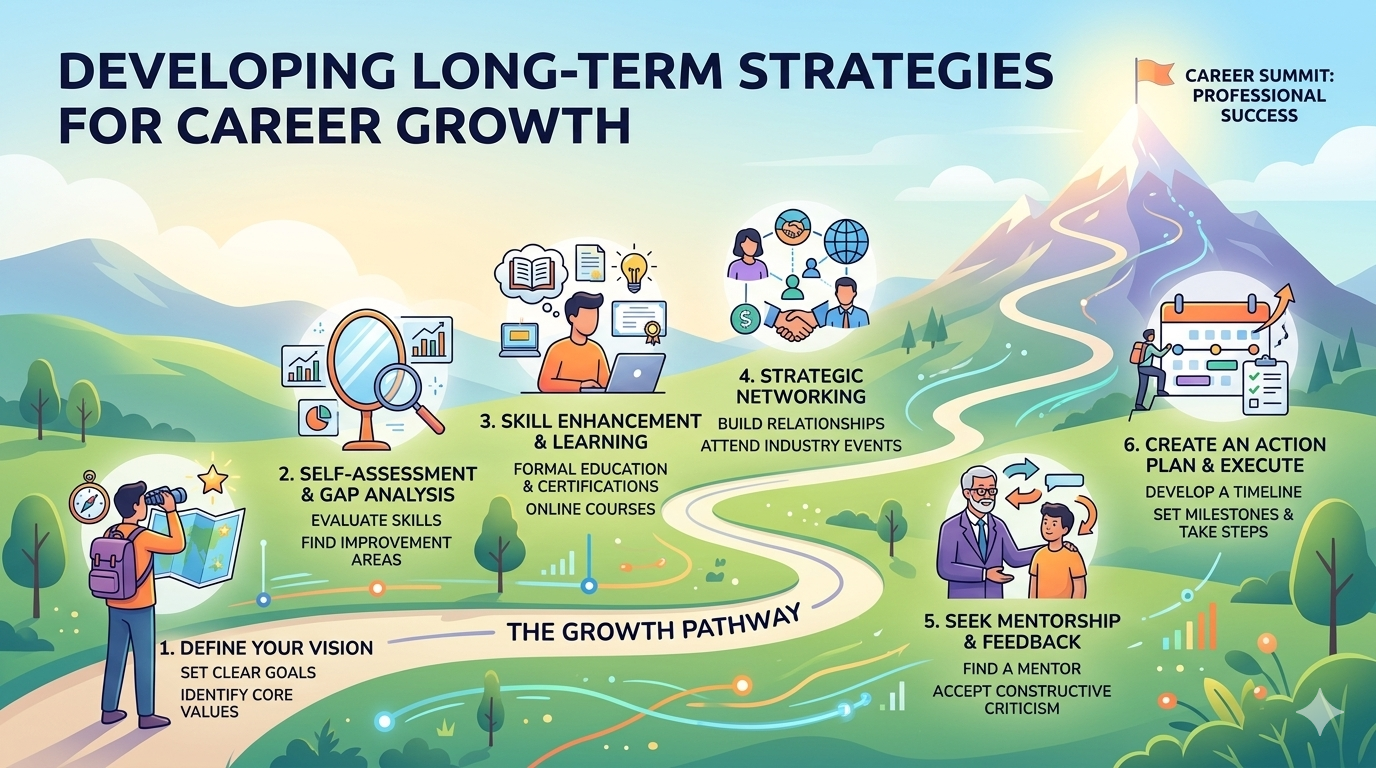
Visual breakdown of career growth strategy components
Disclaimer
This article is for general informational and educational purposes only. It does not constitute professional psychological, counseling, medical, or consumer purchasing advice. References to programs, books, tools, or methods do not imply endorsement or guarantee of results. Readers are encouraged to consult licensed professionals and verified educational sources when pursuing personal development.