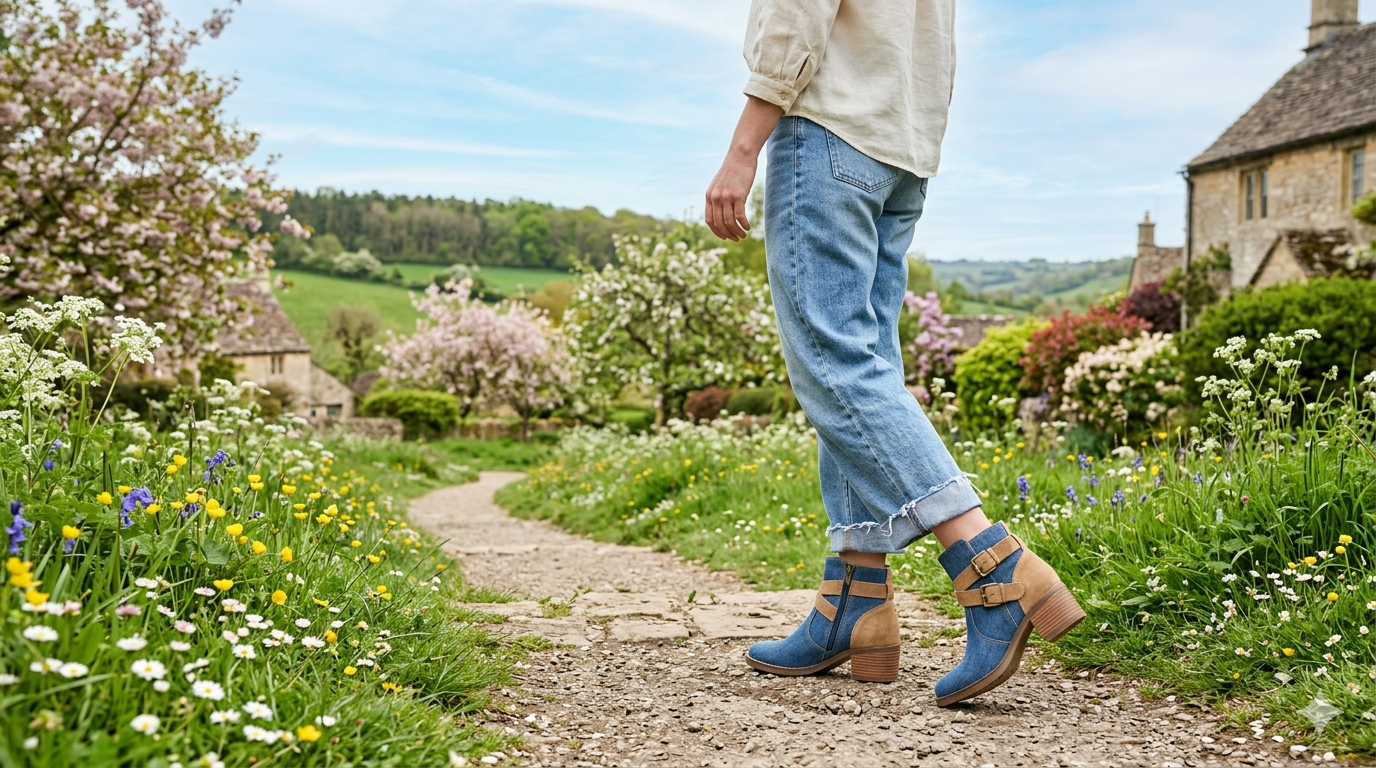
Denim and Suede Booties in Spring Styling: Fabric Interaction and Seasonal Coordination
A neutral overview of how denim garments and suede footwear function together in warm-weather wardrobe planning.
This article explains how denim and suede booties are used in spring outfit coordination. It covers fabric characteristics, seasonal considerations, and basic styling principles. The discussion focuses on material behavior, color interaction, and practical garment pairing. Content is presented for general educational purposes and aligns with consumer awareness standards.
What Is Fashion Styling?
Fashion styling refers to the process of combining clothing, footwear, and accessories based on principles such as proportion, color coordination, and context of use. It focuses on how garments interact visually and functionally within an outfit.
Fabric and Textile Considerations
Denim
Denim is a durable cotton twill fabric known for its structured weave. It is commonly used in garments such as jeans, jackets, and skirts.
- Typically medium to heavy weight
- Breathable but may retain warmth depending on thickness
- Often available in various washes and finishes
Suede
Suede is a type of leather with a soft, napped surface. It is commonly used in footwear, including ankle-height booties.
- Softer texture compared to full-grain leather
- More porous and sensitive to moisture
- Often associated with transitional or mild-weather use
When combined, denim provides structure while suede introduces a softer visual texture.
Basic Principles of Fit and Silhouette
In styling practice, silhouette refers to the overall shape created by an outfit.
- Slim-fit denim can create a narrow visual line when paired with ankle booties
- Wider-leg denim may partially cover the footwear, creating a layered effect
- Cropped denim lengths can expose the top of the boot, emphasizing footwear placement
Balance between garment length and footwear height affects overall proportion.
Color Theory and Outfit Coordination
Color coordination in clothing involves how hues interact within an outfit.
- Denim commonly appears in blue tones, which are considered versatile in color pairing
- Suede booties are often found in neutral shades such as tan, brown, or gray
- Neutral footwear can visually anchor outfits that include mid-tone or darker denim
Contrast and harmony depend on the relationship between fabric color and surrounding garments.
Texture and Material Contrast
Texture plays a role in how outfits are perceived.
- Denim has a structured and slightly coarse surface
- Suede has a soft, matte texture
Combining different textures can create visual variation without relying on complex patterns. This approach is commonly used in transitional season styling.
Seasonal Considerations (Spring Context)
Spring weather in many regions, including parts of the Philippines, may involve variable temperatures and occasional rainfall.
- Lightweight denim may be more suitable for warmer conditions
- Suede footwear may require care in wet environments due to moisture sensitivity
- Breathability and comfort depend on fabric weight and lining
Material selection should consider climate variability rather than fixed seasonal rules.
Capsule Wardrobe Context
In wardrobe planning, some individuals include versatile garments that can be worn across different settings.
- Denim items are often used due to durability and adaptability
- Neutral-toned footwear may coordinate with multiple outfits
Selection of items depends on personal preference, climate, and usage needs.
Sustainability and Material Awareness
In apparel education, sustainability discussions often include:
- Longevity of materials such as denim when properly maintained
- Environmental considerations in leather and suede production
- Importance of reading product labels for material composition
Durability and care practices can influence how long garments remain usable.
Consumer Tips: Labels, Care, and Quality Checks
When evaluating denim and suede items:
- Check fabric labels for fiber content and care instructions
- Inspect stitching consistency and seam construction
- For suede footwear, review care guidelines related to cleaning and moisture exposure
- Verify sizing information, as fit may vary between manufacturers
Accurate product information supports informed purchasing decisions.
Context Section (Neutral Background)
In fashion history, denim originated as workwear fabric due to its durability, while suede developed as a softer leather alternative used in footwear and accessories. Over time, both materials became integrated into everyday clothing across various climates and settings. Their continued use reflects practical and aesthetic considerations rather than fixed seasonal rules.
FAQ
What are suede booties?
Suede booties are ankle-height shoes made from suede leather. They typically have a soft surface and are used in various casual and semi-formal outfits.
Is denim suitable for warm weather?
Denim can be used in warm weather if lighter-weight fabrics and looser fits are selected. Comfort depends on fabric thickness and ventilation.
How do textures affect outfit coordination?
Different textures, such as smooth, rough, or soft surfaces, create visual contrast. This can add variation to an outfit without changing color combinations.
Trusted Sources
- Philippine Department of Trade and Industry (DTI) – Consumer product labeling guidance
- Textile and apparel educational references (general fabric studies)
- Museum archives on historical clothing materials
- Sustainability resources on textile production and material care
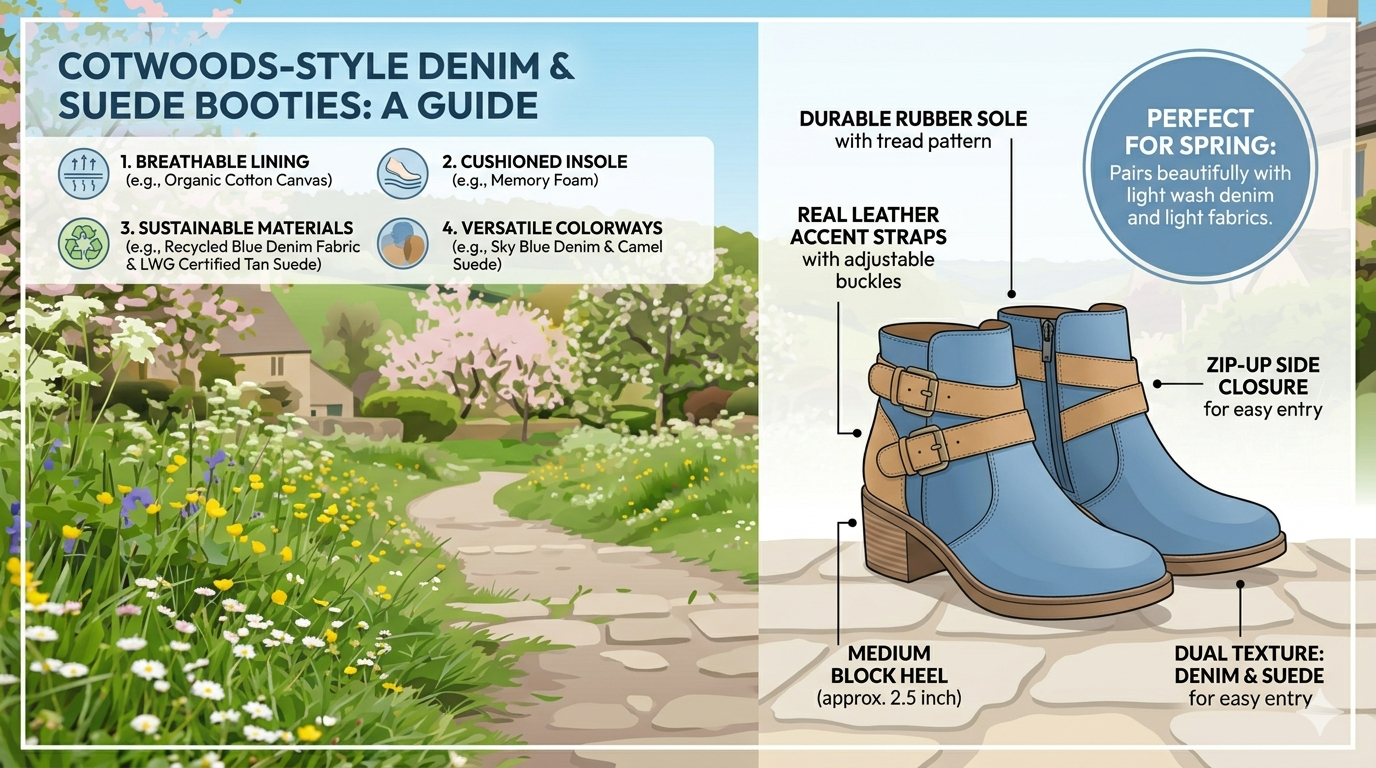
Visual layout comparing denim and suede materials with color interaction
Disclaimer
This article is for general informational and educational purposes only. It does not constitute professional styling, psychological, medical, or consumer purchasing advice. References to trends, brands, or styling concepts do not imply endorsement or guarantee of results. Readers are encouraged to rely on personal preference, verified product information, and official consumer protection resources when making fashion or purchasing decisions.