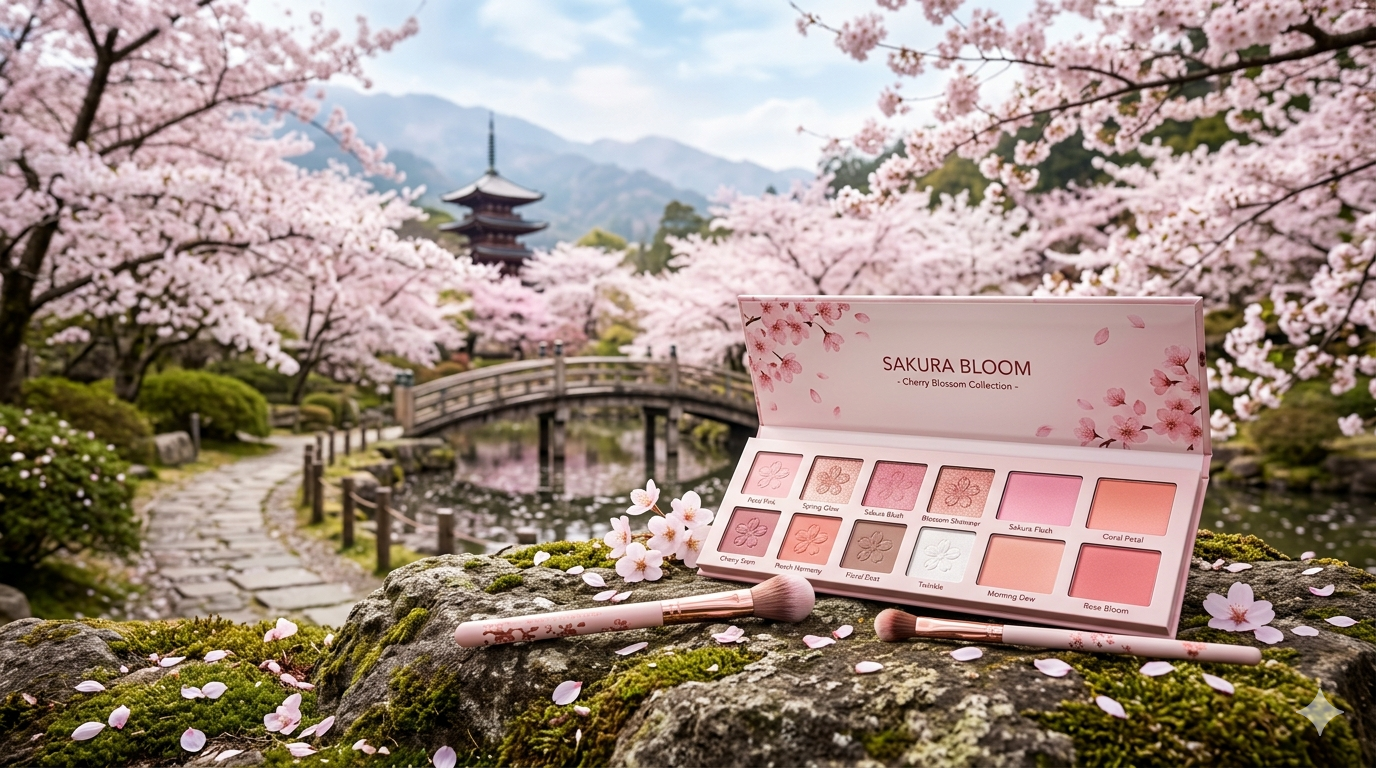
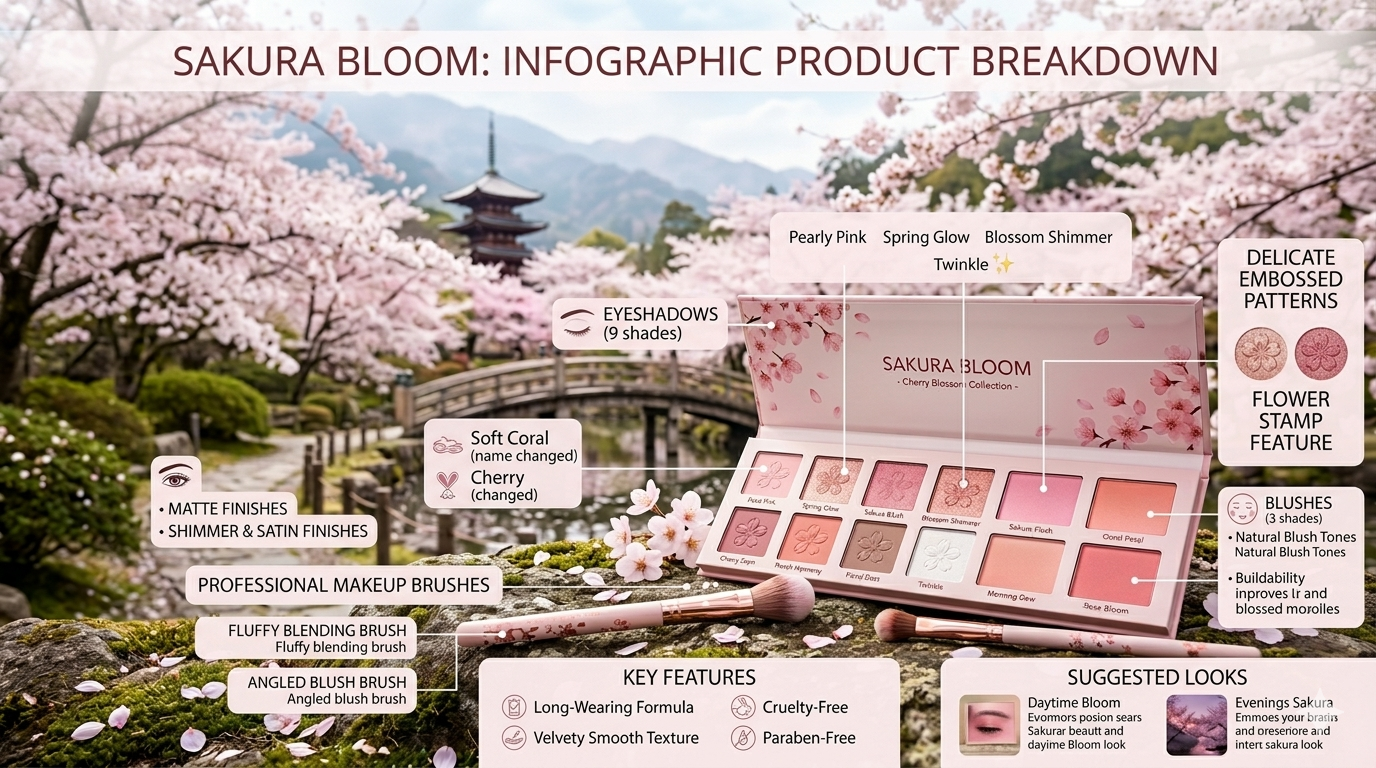
Infographic displaying pink cosmetic color tones linked to cherry blossom themes.
Cherry Blossom–Inspired Eyeshadow and Blush: An Educational Overview of Color Themes in Makeup
Neutral discussion of soft pink cosmetic color palettes commonly associated with cherry blossom imagery.
Color themes in makeup are sometimes inspired by elements found in nature, seasonal events, or cultural symbols. One example is the cherry blossom theme, which often features soft pink and light pastel tones. Cosmetic discussions about this theme generally focus on color selection and placement techniques rather than appearance outcomes.
In the Philippines, cosmetic products are regulated by the Food and Drug Administration Philippines under consumer safety frameworks such as the Consumer Act of the Philippines (Republic Act No. 7394). Educational guides about makeup typically describe product types, color categories, and hygiene considerations.
This article explains how cherry blossom–inspired color palettes are commonly referenced in eyeshadow and blush discussions in cosmetic education.
Color Characteristics Associated with Cherry Blossom Themes
Cherry blossoms are flowers produced by trees of the genus Prunus. Their petals are commonly described as pale pink, light rose, or soft pastel shades. These colors are sometimes referenced in makeup palettes designed around spring or floral themes.
Common color descriptions include:
- Pale pink
- Rose pink
- Soft coral-pink
- Light peach-pink
- Muted mauve-pink
These tones are typically used in cosmetic products such as eyeshadow powders, blush formulas, or multi-use palettes.
Eyeshadow in Cherry Blossom Color Palettes
Eyeshadow products are applied to the eyelid area to introduce color or finish. In color-theme discussions, cherry blossom–inspired palettes often include:
- Light pink shades applied across the eyelid area
- Slightly deeper pink or rose tones used near the crease for color variation
- Soft shimmer or satin finishes included in some formulations for reflective effects
Application methods vary depending on product type. Powder eyeshadow is commonly applied using brushes, while cream formulas may be applied with fingers or synthetic applicators.
Cosmetic education generally focuses on color placement and blending techniques rather than predicting cosmetic outcomes.
Blush in Cherry Blossom Color Themes
Blush products are used to add color to the cheek area. In palettes inspired by cherry blossom tones, blush shades may include:
- Soft pink
- Petal pink
- Light rose
- Peach-pink blends
Blush products are available in powder, cream, liquid, or gel formulations. Distribution of the product across the cheek area can be done using brushes, sponges, or fingertips depending on the formula.
The intensity of color varies according to product pigmentation and application amount.
Hygiene and Product Safety
Safe cosmetic use generally includes basic hygiene practices:
- Clean brushes and sponges regularly
- Avoid sharing personal cosmetic products
- Follow recommended usage periods listed by manufacturers
- Remove makeup using appropriate facial cleansing products
Consumers in the Philippines may consult safety notices from the Food and Drug Administration Philippines or public health guidance from the Department of Health Philippines regarding cosmetic product safety.
Context: Color Themes in Cosmetic Design
Cosmetic brands sometimes organize makeup collections around seasonal, botanical, or cultural motifs. Cherry blossom imagery is widely used in visual design and packaging due to its association with spring flowering trees.
In cosmetic education, these themes are generally discussed as color palette inspirations rather than as indicators of cosmetic effectiveness or performance.
FAQ
What does “cherry blossom–inspired makeup” usually refer to?
The phrase generally refers to cosmetic color palettes that include soft pink or pastel tones similar to cherry blossom petals. It describes a visual theme rather than a specific product formula.
What types of products may include cherry blossom colors?
Eyeshadow palettes, blush powders, lip products, and cosmetic collections may feature these color tones. Product types vary depending on manufacturer formulation.
Are cherry blossom makeup themes linked to specific ingredients?
Not necessarily. The theme usually refers to color inspiration or packaging design rather than the presence of botanical extracts.
Trusted Sources
- Food and Drug Administration Philippines — Cosmetic product safety information
- Department of Health Philippines — Public health guidance
- Cosmetic science and dermatology publications discussing pigment use and cosmetic formulations
- ASEAN Cosmetic Directive documentation
Disclaimer:
This article is for general informational and educational purposes only. It does not constitute professional cosmetic, dermatological, or consumer purchasing advice. References to products, routines, or brands do not imply endorsement or guarantee of results. Readers are encouraged to consult licensed professionals and verified resources for cosmetic decisions.