Buko Pie (Los Baños) — Educational Overview
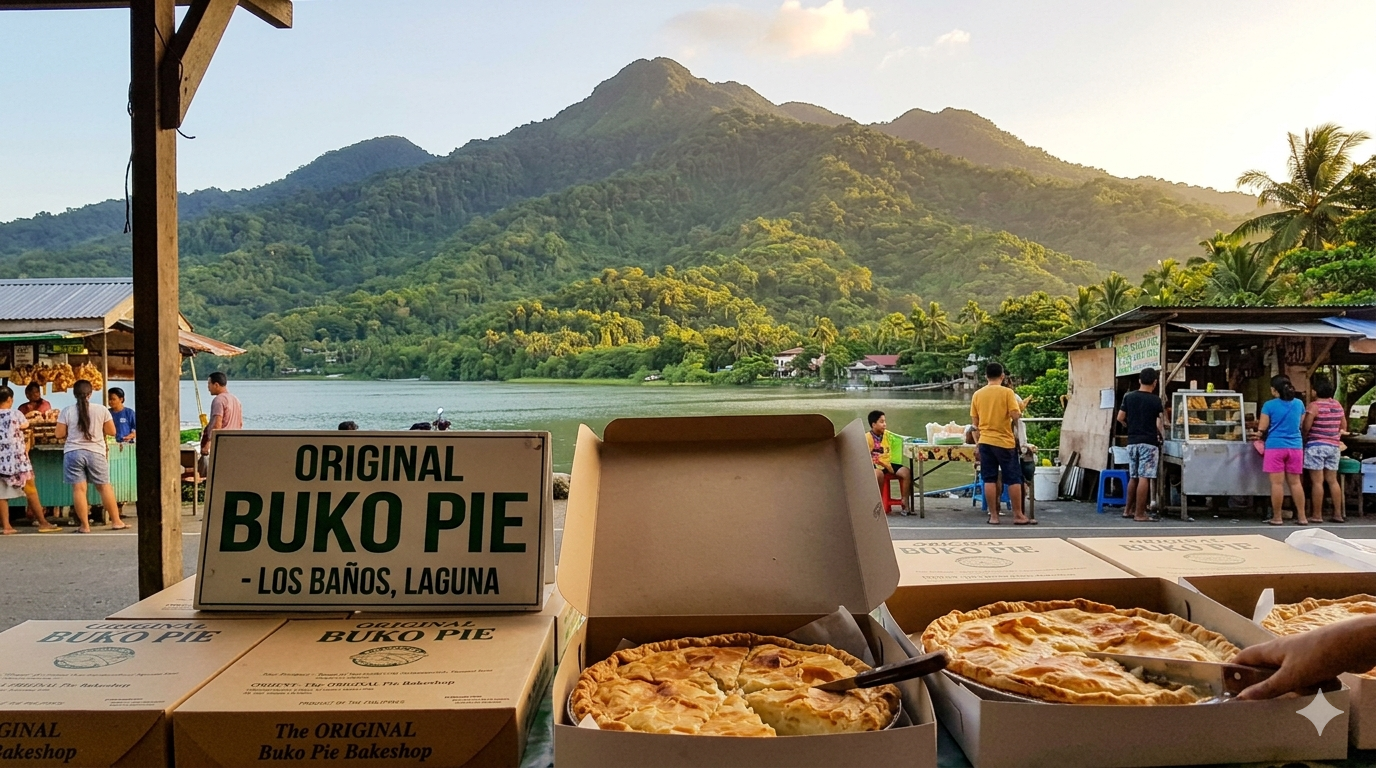
Buko pie is a traditional Filipino baked dessert made from young coconut (“buko” in Tagalog) and is especially associated with Los Baños, Laguna, where it became a local specialty and well‑known pasalubong item (a gift brought home after travel).
What Is Buko Pie?
Buko pie is a Filipino coconut custard pie featuring tender young coconut meat encased in a baked pastry crust. It is sometimes called “coconut pie” in English but is distinct from Western coconut cream pies, as it traditionally has neither cream filling nor meringue toppings.
The filling typically combines buko meat with sugar and sweetened condensed milk, resulting in a denser texture than some other custard pies.
Origin and Cultural Context
Buko pie is widely considered to have originated in Los Baños, Laguna, a municipality known for its educational institutions (such as the University of the Philippines Los Baños), hot springs, and culinary traditions.
The dessert was developed in the mid‑20th century when local bakers adapted Western pie‑making techniques to use coconut — a staple ingredient in the Philippines.
Los Baños has since become recognized for this delicacy, and many visitors to the area purchase buko pie as a pasalubong (souvenir food gift) to bring home.
Typical Ingredients (Descriptive)
Buko pie recipes vary, but common components include:
- Young coconut meat (buko)
- Pie crust (flour with fat and water)
- Sweetened condensed milk or sugar
- Sometimes additional ingredients for texture or flavor (e.g., a touch of milk or cornstarch)
It’s important to note that ingredients can affect the nutrient profile of the finished product. A serving of buko pie is generally higher in calories, fats, and carbohydrates due to the crust and sweetened filling, and also contains nutrients such as calcium, iron, niacin, and folate from the coconut and dairy components.
Nutritional Considerations (Neutral and Educational)
From a dietary and nutritional perspective:
- Energy density: Buko pie typically contains a significant amount of calories from fats and simple carbohydrates (sugars), which contribute to overall energy intake.
- Macronutrients: It provides fats (from coconut and crust), carbohydrates (from sugar and crust), and small amounts of protein.
- Micronutrients: Coconut contributes trace minerals and B‑vitamins.
Because it is a sweet pastry, buko pie is often enjoyed as an occasional treat or dessert rather than a staple food in everyday meal planning.
Cultural and Culinary Notes
- Buko pie can be served warm or at room temperature and is often shared among family and friends during gatherings.
- While Los Baños is widely associated with the traditional buko pie, many other bakeries in the Philippines produce their own versions, some adding regional touches.
Context — Consumer Awareness
Under Philippine food safety and consumer protection standards:
- Individuals purchasing prepared foods like buko pie should pay attention to proper food handling and storage to reduce food safety risks.
- Packaged or freshly baked items should be handled according to guidance from food safety authorities such as the Department of Health and the Food and Drug Administration (FDA Philippines).
- Nutrition content in traditional dishes can vary widely based on recipe and portion size, so individuals interested in tracking dietary intake may refer to standardized food composition resources or consult licensed nutrition professionals for personalized guidance.
Optional FAQ (Educational Only)
What does “buko” mean in buko pie?
“Buko” is the Filipino word for young coconut, referring to the softer, tender coconut meat used in this dessert.
Why is buko pie associated with Los Baños?
Los Baños, Laguna, is recognized as the place where this dessert became popular and commercially produced, contributing to its cultural identity as a local specialty.
Trusted Sources (Examples)
- “Buko pie” — Wikipedia (general culinary and cultural information)
- Local tourism and food culture context — Los Baños, Laguna overview
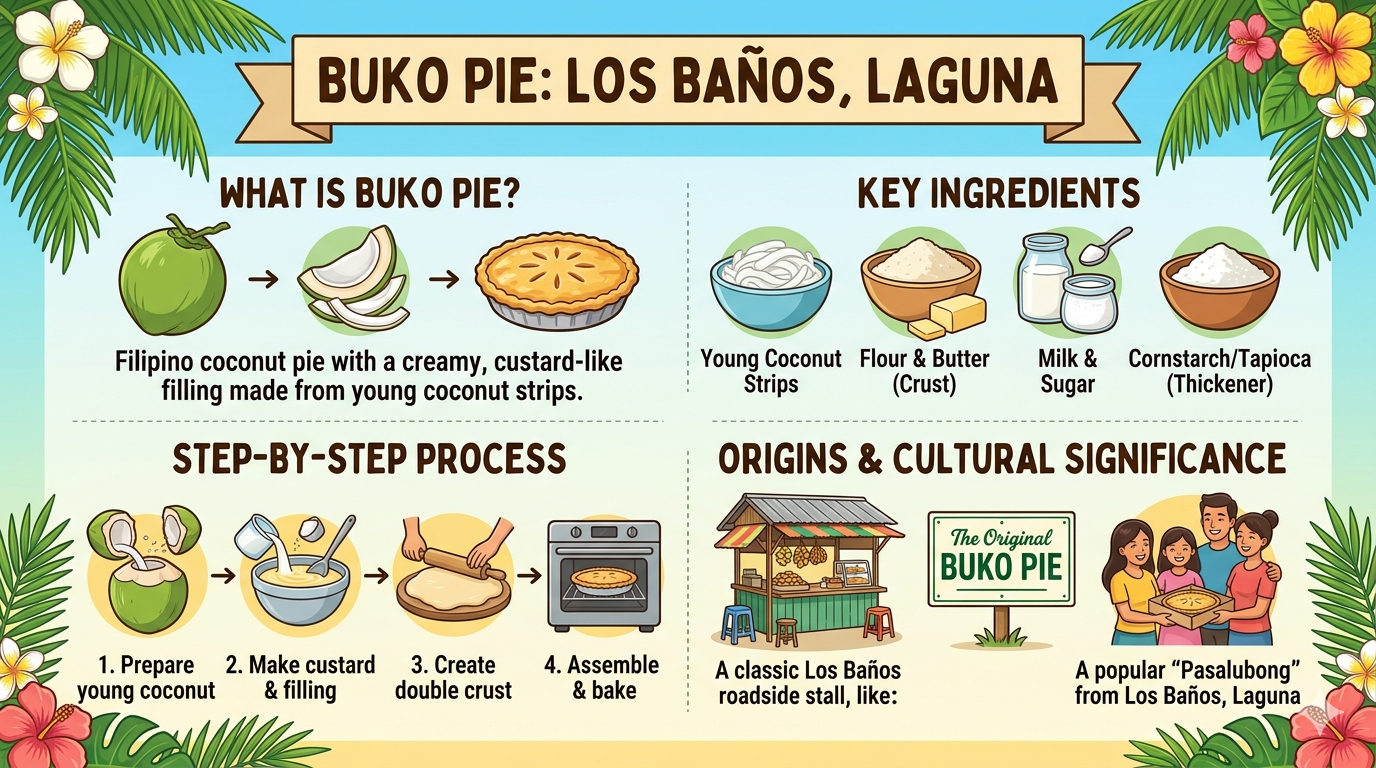
Illustration detailing typical components and layers of a Buko Pie.
Disclaimer:
This article is for general informational and educational purposes only. It does not constitute professional medical, nutrition, or dietary advice. References to foods or dishes do not imply endorsement or guarantee of health outcomes. For personalized dietary guidance, readers are encouraged to consult licensed nutritionists, dietitians, or medical professionals.