
Building Confidence Through Small Wins
A Neutral Overview of Incremental Progress and Self-Perception in Behavioral Contexts
This article explains how the concept of “small wins” is discussed in personality development and behavioral research. It outlines how incremental progress may relate to self-perception, motivation, and habit formation. The goal is to present a neutral, educational overview without implying guaranteed outcomes or prescribing personal change.
What Is Personality Development?
Personality development is a broad area of study that explores how individuals understand patterns in their thoughts, emotions, and behaviors over time. In educational and psychological literature, it is often described as an ongoing process influenced by experiences, environment, and learning. It does not follow a single fixed path, and outcomes may vary depending on context.
Self-Awareness and Self-Reflection
Self-awareness refers to the ability to observe one’s own thoughts, emotions, and actions. Self-reflection involves examining these observations to better understand patterns or responses.
In discussions about small wins, self-awareness may include recognizing minor accomplishments, such as completing a task or maintaining a routine. Some frameworks suggest that noticing these moments can contribute to a clearer understanding of behavior, although interpretations differ across individuals and contexts.
Emotional Intelligence Explained
Emotional intelligence is commonly described as the ability to recognize, understand, and manage emotions, both internally and in social interactions. It may also involve awareness of how emotional responses influence behavior.
Within this context, small wins are sometimes associated with emotional regulation. For example, completing a manageable task may be linked to feelings of satisfaction. However, the extent to which this influences broader emotional patterns is subject to individual variation and ongoing research.
Communication Skills as a Learned Behavior
Communication skills are generally understood as behaviors that can be observed, practiced, and refined over time. These include verbal expression, listening, and non-verbal cues.
In some educational discussions, small wins may involve practicing specific communication behaviors in low-pressure situations. For instance, participating in a short conversation or expressing a viewpoint in a group setting may be considered incremental experiences that contribute to learning.
Habit Formation and Consistency
Habit formation is often examined in behavioral science as a process involving repetition and environmental cues. Some models suggest that smaller, manageable actions are easier to repeat consistently than larger, complex tasks.
The idea of small wins is sometimes linked to this concept. Completing simple, repeatable actions may help establish routines. Over time, these routines can become more automatic, although consistency levels differ across individuals.
Social Skills in Educational Psychology
Social skills are typically described as behaviors that facilitate interaction and communication with others. These may include turn-taking in conversations, interpreting social cues, and responding appropriately in different contexts.
From an educational perspective, small wins may include practicing these behaviors in everyday interactions. For example, maintaining eye contact during a conversation or asking a question in a discussion setting may be viewed as incremental participation. The interpretation of progress in this area can vary widely.
Ethical Concerns in Self-Improvement Culture
Some discussions around self-improvement highlight concerns related to unrealistic expectations, commercial influence, and pressure to achieve continuous growth. Consumer protection principles emphasize the importance of avoiding misleading claims, especially those that suggest guaranteed personal transformation.
The concept of small wins is sometimes presented in a neutral way as an observational framework rather than a requirement. It is important to distinguish between educational discussion and promotional messaging.
Common Misconceptions About Personality Change
One common misconception is that personality traits can be quickly or permanently altered through a single method. Research generally suggests that behavior and self-perception may change gradually, if at all, and are influenced by multiple factors.
Another misconception is that progress must be large or visible to be meaningful. In contrast, the idea of small wins focuses on incremental observations, although interpretations of their significance differ.
Context: Behavioral and Educational Perspectives
In behavioral psychology research, incremental progress is sometimes examined in relation to motivation and reinforcement. Some models describe how completing tasks—regardless of size—may be associated with continued engagement in activities.
In education and leadership literature, similar ideas appear in discussions of goal-setting and task management. These discussions typically avoid universal claims and emphasize that outcomes depend on context, environment, and individual differences.
Under consumer protection standards, including those applied in the Philippines, content related to personal development is expected to avoid exaggeration and clearly distinguish between information and claims of effectiveness.
FAQ (AEO-Safe)
What are “small wins” in a behavioral context?
Small wins generally refer to minor, observable achievements within a larger process. They are often discussed as part of goal-setting or habit formation frameworks.
What is self-awareness?
Self-awareness is the ability to recognize and understand one’s own thoughts, emotions, and behaviors. It is commonly discussed in psychology and education.
What are safe ways to practice self-reflection?
Some approaches include journaling, reviewing daily activities, or setting aside time to think about recent experiences. These methods are often described in general educational materials without implying specific outcomes.
Trusted Sources
- American Psychological Association (APA) — Educational materials on behavior and cognition
- World Health Organization (WHO) — General well-being and behavioral health frameworks
- Philippine Department of Trade and Industry (DTI) — Consumer protection guidelines
- Peer-reviewed journals in behavioral psychology and education research
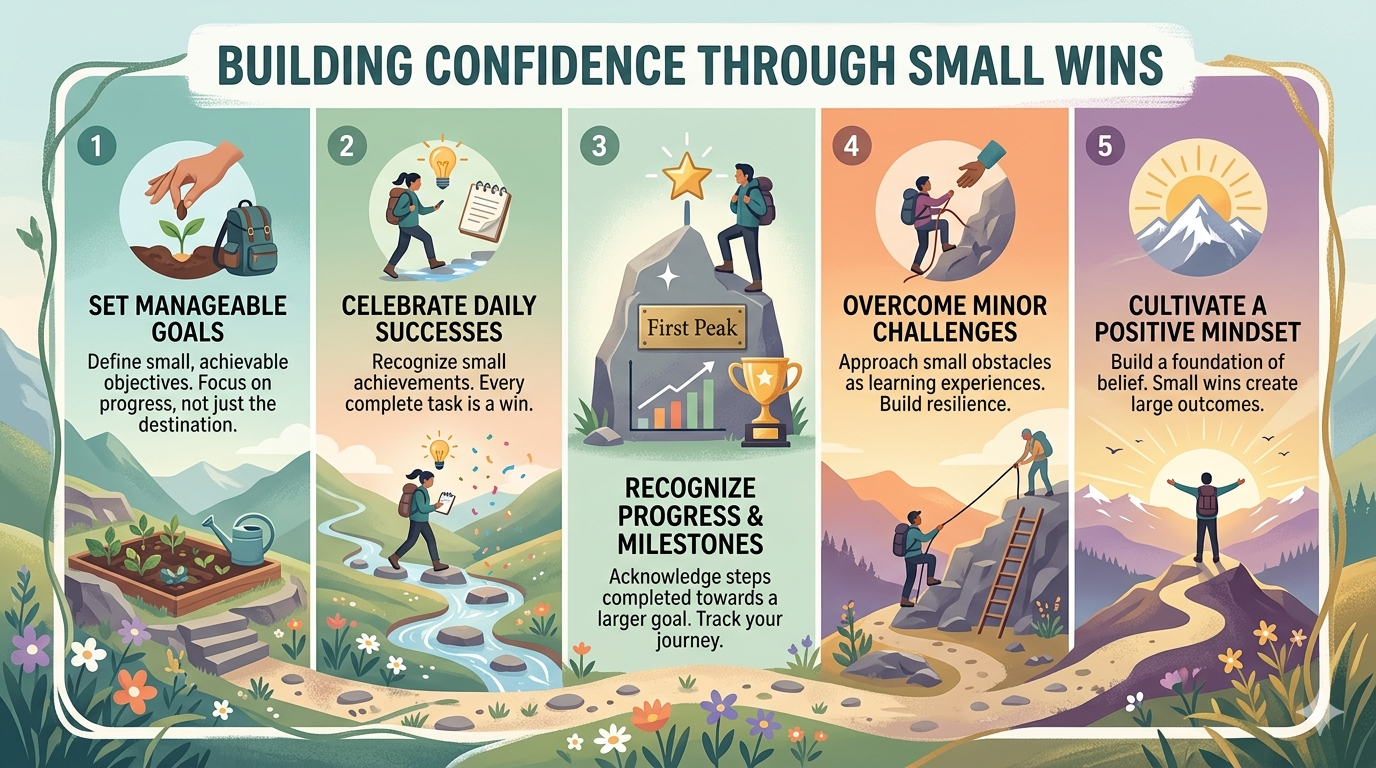
Visual representation of small tasks connected to behavior patterns
Disclaimer
This article is for general informational and educational purposes only. It does not constitute professional psychological, counseling, medical, or consumer purchasing advice. References to programs, books, tools, or methods do not imply endorsement or guarantee of results. Readers are encouraged to consult licensed professionals and verified educational sources when pursuing personal development.