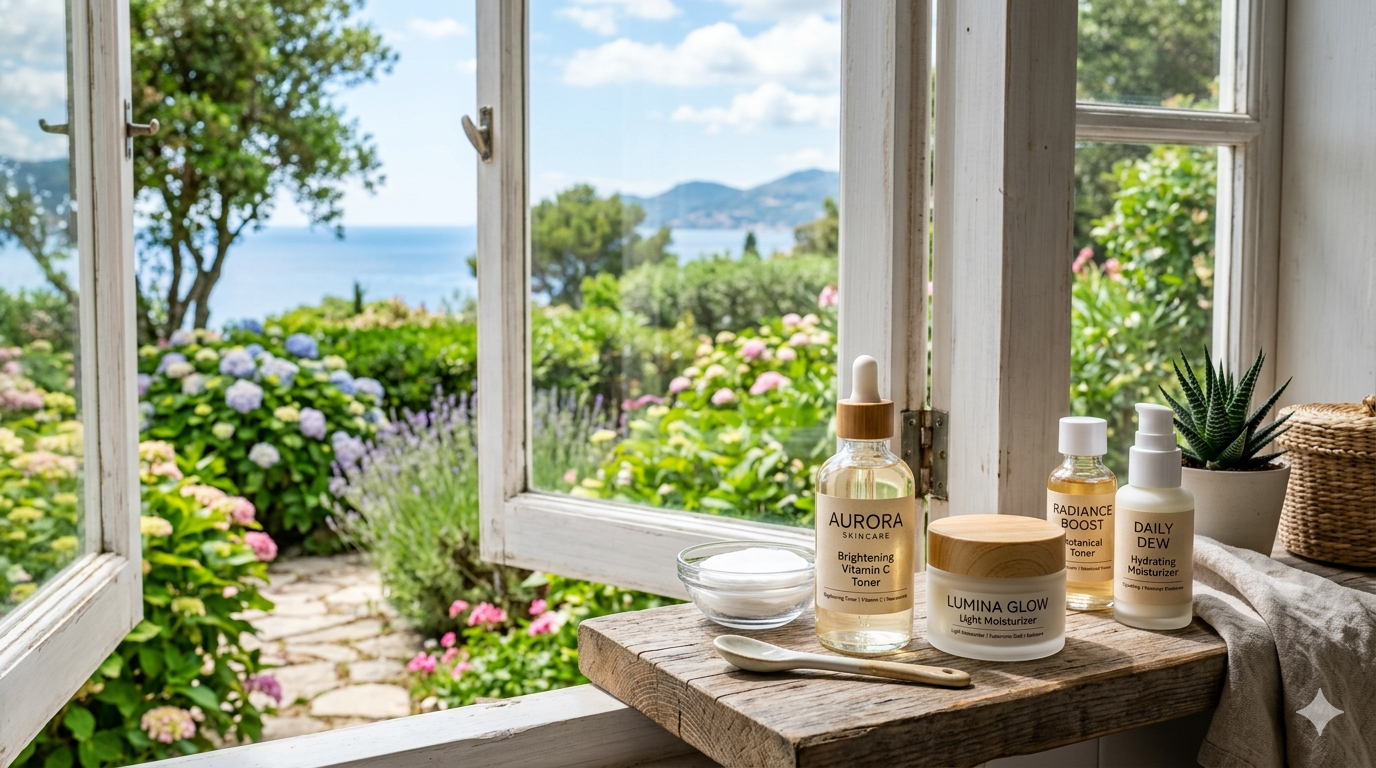
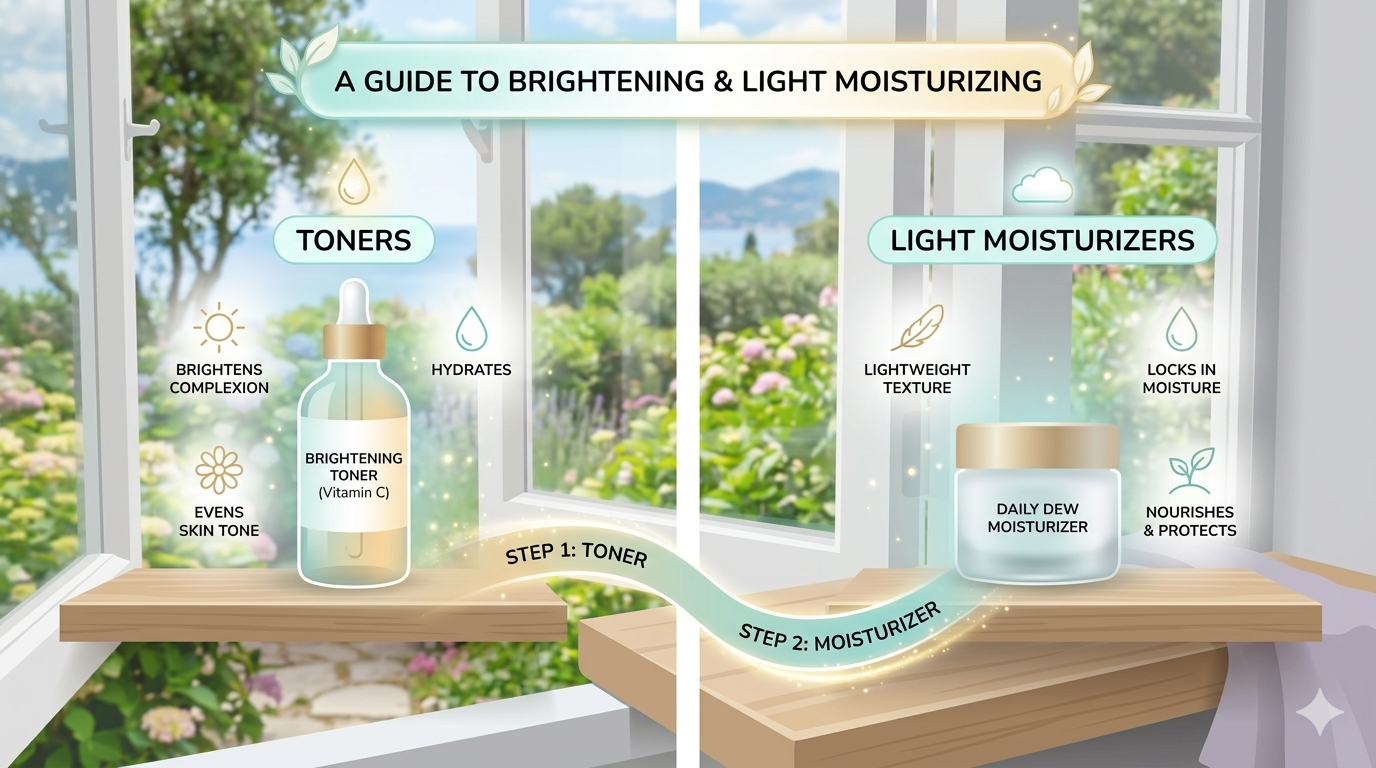
Visual diagram outlining toner and moisturizer product categories and formulation components.
Brightening Toners and Light Moisturizers: An Educational Overview of Two Skin Care Product Categories
A neutral explanation of toners and lightweight moisturizers commonly discussed in skin care routines.
Skin care routines sometimes include products described as “brightening toners” and “light moisturizers.” These product categories are commonly referenced in cosmetic and dermatology discussions about maintaining skin hygiene and hydration. In the Philippines, cosmetic products are monitored under consumer protection and safety frameworks administered by agencies such as the Food and Drug Administration Philippines and the Department of Health.
This article explains how these product categories are generally defined, how they are used in routine skin care discussions, and the types of ingredients that may appear in publicly available product descriptions.
What Are Toners?
Toners are liquid cosmetic products typically applied after cleansing the skin. In dermatology and cosmetic science references, toners are often described as products intended to help remove residual impurities or prepare the skin surface before additional products are applied.
Some toners are labeled by manufacturers as “brightening.” In product descriptions, this label often refers to ingredients associated with skin tone appearance or surface clarity. The term “brightening” is a marketing descriptor and does not represent a standardized medical outcome.
Examples of ingredient categories that may appear in toner formulations include:
- Humectants such as glycerin or hyaluronic acid
- Plant-derived extracts used in cosmetic formulations
- Mild exfoliating ingredients such as certain alpha hydroxy acids (AHAs) in regulated concentrations
- Vitamin-related compounds, including derivatives associated with antioxidant research
Ingredient lists and concentration levels vary between products.
What Are Light Moisturizers?
Light moisturizers refer to topical skin care products designed with thinner textures compared with heavier creams or ointments. Cosmetic descriptions may use terms such as “lotion,” “gel,” or “water-based moisturizer” to indicate lighter formulations.
Moisturizers are generally discussed in dermatology literature as products that support hydration by helping reduce moisture loss from the outer skin layer. Light moisturizers are often described as suitable for situations where heavier textures may feel uncomfortable, such as warm climates or humid environments.
Typical components in moisturizer formulations may include:
- Humectants – ingredients that attract water to the skin surface
- Emollients – ingredients that soften and smooth the skin surface
- Occlusive agents – ingredients that help reduce water evaporation from the skin barrier
The specific combination and concentration of ingredients differ across manufacturers.
How These Products May Appear in Skin Care Routines
In educational descriptions of skin care routines, toners and moisturizers are sometimes discussed in a sequence following cleansing.
A hypothetical example used in educational contexts may involve a person applying a cleanser, followed by a toner, and later a moisturizer. This example illustrates how product categories may be layered within routines; it does not imply that every routine requires these steps.
Individual routines may vary depending on skin preferences, environmental conditions, and personal product selection.
Context: Cosmetic Labeling and Consumer Awareness
Cosmetic terminology such as “brightening,” “hydrating,” or “refreshing” is commonly used in product labeling and marketing materials. Under consumer protection principles, cosmetic claims should avoid misleading or unverified statements.
Regulatory frameworks such as the Consumer Act of the Philippines (RA 7394) encourage accurate advertising and transparency in product information. Consumers are commonly advised to review ingredient lists, verify product registration where applicable, and consult qualified professionals for dermatological concerns.
FAQ
What does “brightening” mean in skin care product descriptions?
In cosmetic labeling, “brightening” generally refers to ingredients associated with the appearance of skin tone or surface clarity. The term is not a standardized medical classification.
What is the difference between a toner and a moisturizer?
Toners are liquid products typically applied after cleansing. Moisturizers are products designed to help maintain hydration and reduce moisture loss from the skin surface.
Why are lightweight moisturizers discussed in warm climates?
In some skin care discussions, lighter textures are mentioned because they may feel more comfortable in humid or warm environments. Product preference varies between individuals.
Trusted Sources
- Food and Drug Administration Philippines cosmetic product guidance
- Department of Health public health resources
- American Academy of Dermatology dermatology education materials
- Peer-reviewed dermatology and cosmetic science publications
Disclaimer
This article is for general informational and educational purposes only. It does not constitute professional medical, dermatological, or consumer purchasing advice. References to products, routines, or treatments do not imply endorsement or guarantee of results. Readers are encouraged to consult licensed dermatologists and verified resources for skin care decisions.