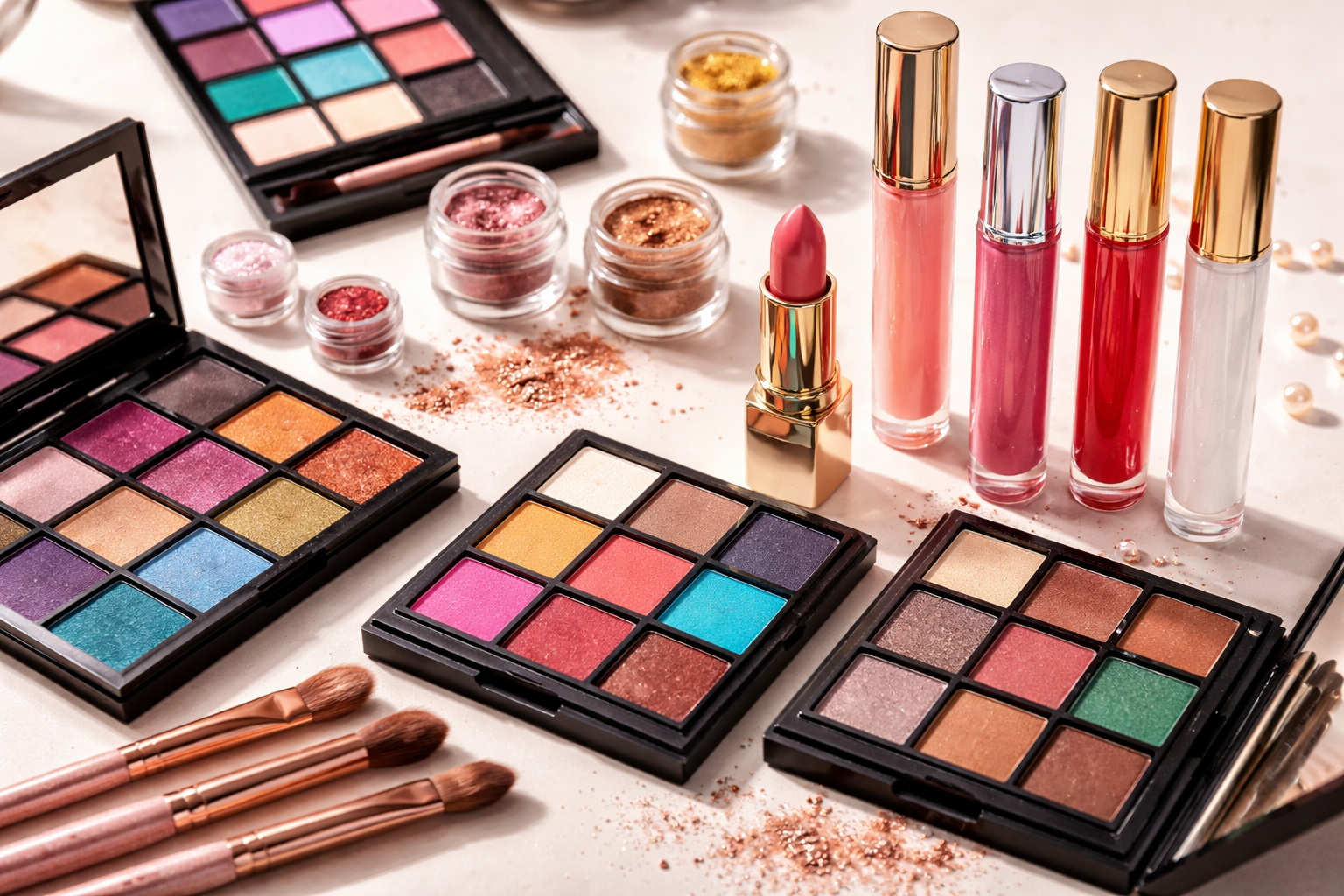
Bold Pigmented Eyeshadow and Glossy Lip Products: An Educational Overview
Understanding color intensity in eye cosmetics and reflective finishes in lip formulations
Eyeshadow and lip cosmetics are commonly used components of makeup routines. These products vary in formulation, pigment concentration, and finish. In the Philippines, cosmetic products are regulated by the Food and Drug Administration Philippines under consumer safety standards including the Consumer Act of the Philippines (RA 7394).
This article provides an informational overview of two commonly referenced cosmetic characteristics: pigmented eyeshadow products and glossy lip formulations. The discussion focuses on definitions, product composition, and typical application tools.
Pigmented Eyeshadow: Product Characteristics
Pigmented eyeshadow refers to eye cosmetic products that contain concentrated colorants designed to produce visible color on the eyelids. Pigments may include mineral-based or synthetic cosmetic colorants permitted for cosmetic use.
Eyeshadow formulations can vary in texture and composition.
Common types include:
- Pressed powder eyeshadow – compact powder formulas pressed into palettes or pans
- Loose pigment eyeshadow – finely milled powder stored in small containers
- Cream eyeshadow – semi-solid formulas applied with fingers or brushes
- Liquid eyeshadow – fluid formulations that dry after application
Color intensity may vary depending on pigment concentration, formulation, and application technique.
Glossy Lip Products: Reflective Lip Cosmetic Formulations
Glossy lip products are cosmetic formulations designed to create a reflective or shiny surface on the lips. These products often contain emollient ingredients such as oils, waxes, or synthetic polymers that create a smooth surface appearance.
Common glossy lip product types include:
- Lip gloss – transparent or tinted products with a reflective finish
- Gloss-enhanced lipstick – lipstick formulations designed with added shine
- Lip oils – oil-based products with a glossy appearance
Glossy finishes may vary depending on ingredient composition and layering with other lip products.
Application Tools and Methods
Cosmetic products are commonly applied using tools designed to distribute product evenly across the intended area.
Examples include:
Eyeshadow Brushes
Small cosmetic brushes are frequently used for applying and blending eyeshadow on the eyelids.
Applicator Wands
Many lip gloss products include built-in applicator wands designed for controlled application.
Fingertip Application
Some cream or liquid cosmetic products may also be applied using clean fingertips in certain cosmetic routines.
Hygiene Considerations in Eye and Lip Cosmetics
Cosmetic safety literature commonly recommends hygiene practices during makeup use.
Examples include:
- Avoiding the sharing of personal eye or lip cosmetic products
- Cleaning reusable makeup tools regularly
- Closing product containers securely after use
- Checking cosmetic packaging for manufacturer instructions and expiration guidance
Eye-area cosmetics may require particular care due to the sensitivity of the skin around the eyes.
Context: Cosmetic Pigments and Regulatory Oversight
Cosmetic pigments used in eyeshadow and lip products are subject to regulatory oversight in many countries. In the Philippines, the Food and Drug Administration Philippines reviews cosmetic ingredients and monitors products distributed in the market for safety compliance.
Under the Consumer Act of the Philippines (RA 7394), cosmetic manufacturers are required to provide accurate labeling and ingredient information to consumers.
FAQ
What does “pigmented eyeshadow” mean?
Pigmented eyeshadow refers to an eyeshadow product formulated with concentrated colorants that produce visible color when applied to the eyelids.
What creates the glossy effect in lip products?
Glossy lip products typically contain oils, polymers, or waxes that reflect light and create a shiny surface on the lips.
Can glossy lip products be layered with other lip cosmetics?
In some cosmetic routines, lip gloss may be applied alone or layered with other lip products depending on formulation compatibility.
Trusted Sources
- Food and Drug Administration Philippines – Cosmetic safety guidance
- Department of Health Philippines – Public health information
- Cosmetic ingredient safety references and dermatology publications
- International cosmetic science research journals
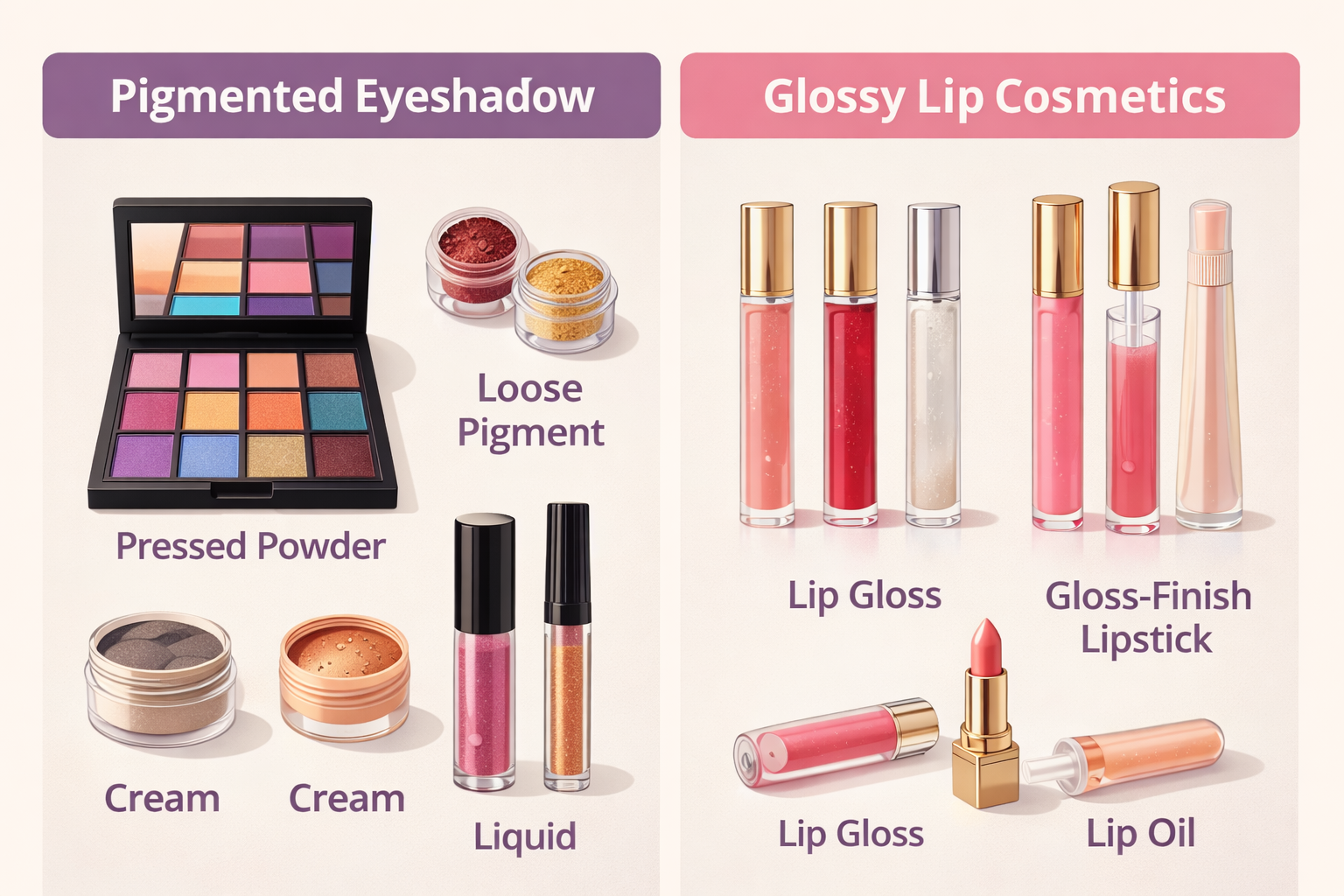
Visual diagram presenting common eyeshadow textures and glossy lip cosmetic formats.
Disclaimer
This article is for general informational and educational purposes only. It does not constitute professional cosmetic, dermatological, or consumer purchasing advice. References to products, routines, or brands do not imply endorsement or guarantee of results. Readers are encouraged to consult licensed professionals and verified resources for cosmetic decisions.