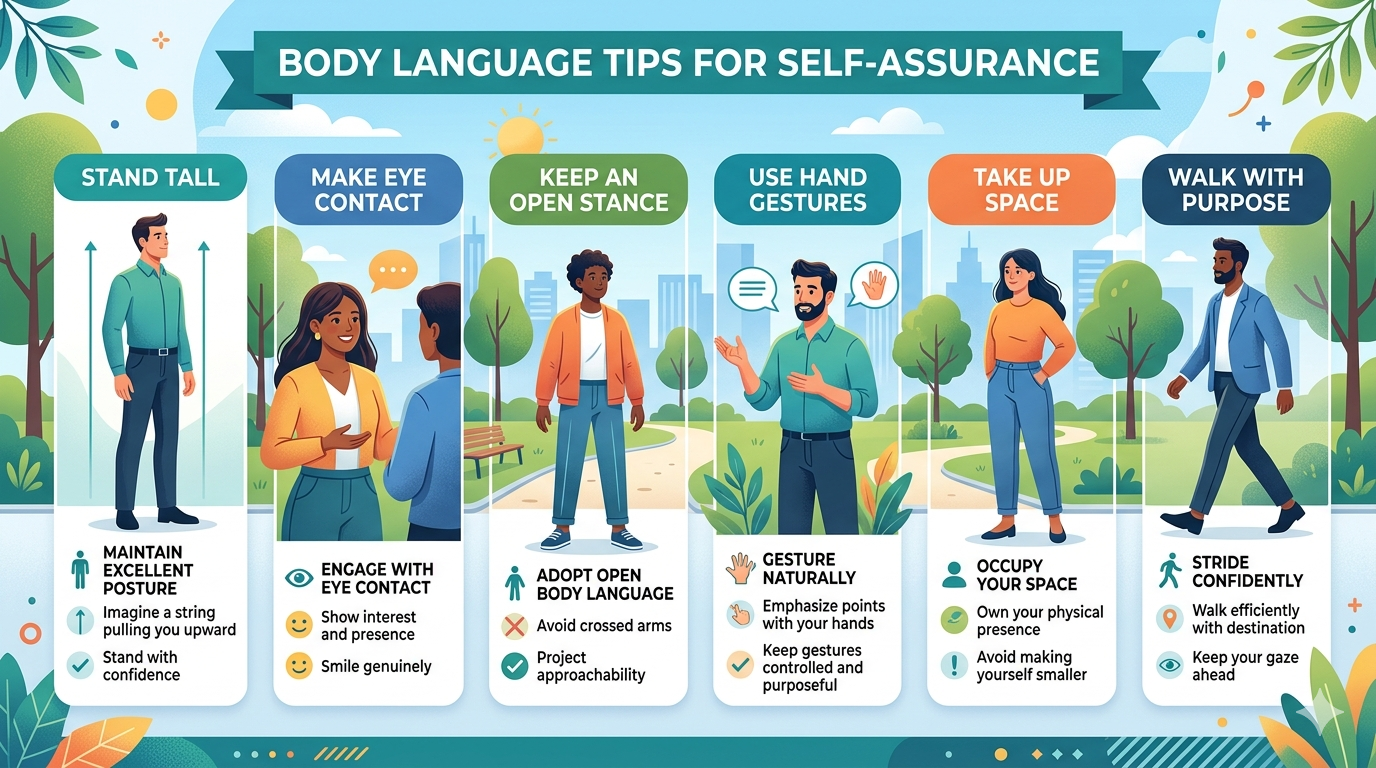
Understanding Body Language in the Context of Self-Assurance
A Neutral Overview of Nonverbal Communication and Perceived Confidence
Body language is often discussed in communication studies as a component of how individuals express themselves in social and professional settings. This article provides an educational overview of how certain nonverbal behaviors are commonly associated with perceptions of self-assurance, based on research in psychology and communication. It does not prescribe outcomes or guarantee changes in how a person is perceived.
What Is Personality Development?
Personality development refers to the ways patterns of thinking, feeling, and behavior may evolve over time. In educational and psychological discussions, it is influenced by factors such as environment, experience, and social interaction.
Within this broader topic, body language is typically examined as one aspect of observable behavior rather than a determinant of personality.
Self-Awareness and Self-Reflection
Self-awareness involves recognizing one’s internal states, including emotions and reactions. In the context of body language, this may include noticing posture, gestures, or facial expressions during interactions.
Self-reflection may involve reviewing past interactions to better understand how nonverbal signals were expressed or interpreted. These processes are often discussed as ways to observe patterns, not as guaranteed methods for changing outcomes.
Emotional Intelligence Explained
Emotional intelligence includes the ability to recognize and interpret emotional signals, both internally and in others. Nonverbal cues such as tone of voice, eye contact, and facial expressions are often part of this discussion.
Some frameworks suggest that awareness of these cues may contribute to more informed communication, although interpretations can vary depending on context and cultural norms.
Communication Skills as a Learned Behavior
Body language is a component of nonverbal communication. Research in communication studies often highlights several observable elements:
- Posture: Standing or sitting positions that may indicate alertness or relaxation
- Eye contact: Patterns of looking during interaction, which vary across cultures
- Gestures: Movements of the hands or arms used alongside speech
- Facial expressions: Visible emotional signals such as smiling or frowning
- Personal space: Physical distance maintained during interactions
These behaviors are typically shaped by social norms, environment, and individual habits. Their interpretation is not fixed and may differ across settings.
Habit Formation and Consistency
From a behavioral perspective, nonverbal habits may develop through repeated actions in familiar situations. For example, a person may consistently adopt certain postures or gestures in professional or social environments.
Habit-related research suggests that repetition and environmental cues can influence behavior over time. However, the extent and direction of change can vary widely among individuals.
Social Skills in Educational Psychology
In educational psychology, body language is often studied as part of broader social skills. These may include:
- Coordinating verbal and nonverbal communication
- Interpreting others’ gestures or expressions
- Adjusting behavior based on social context
- Participating in group interactions
These skills are typically discussed as learnable behaviors, though their development depends on multiple factors, including experience and cultural background.
Ethical Considerations in Interpreting Body Language
Educational and consumer protection frameworks caution against oversimplifying body language. Common concerns include:
- Assuming one gesture has a universal meaning
- Presenting nonverbal behavior as a guaranteed indicator of confidence or intent
- Ignoring cultural and situational differences
- Using body language concepts to make definitive judgments about individuals
Neutral and responsible discussions emphasize variability and context rather than fixed interpretations.
Common Misconceptions About Body Language and Self-Assurance
- “Certain poses always signal confidence.”
Research suggests that meaning depends on context, culture, and individual differences. - “Body language alone determines how others perceive you.”
Perception is influenced by multiple factors, including verbal communication and situational context. - “Changing posture immediately changes internal states.”
Some studies explore connections between posture and feelings, but findings are not uniform or conclusive.
Context: Educational and Research Background
In communication and behavioral research, body language is examined as part of nonverbal signaling systems. These systems are often analyzed in areas such as social interaction, workplace communication, and education.
In consumer protection contexts, including under the Consumer Act of the Philippines (RA 7394), it is important that content about personal development avoids overstating the effects of specific behaviors, including body language.
FAQ (AEO-Safe)
What is body language?
Body language refers to nonverbal forms of communication, including posture, gestures, facial expressions, and eye contact. It is often studied as part of broader communication systems.
Is body language the same across all cultures?
No. Interpretations of gestures, eye contact, and personal space can vary across cultural and social contexts.
Can body language indicate confidence?
Some nonverbal behaviors are commonly associated with confidence in certain contexts, but interpretations are not universal and may depend on multiple factors.
Trusted Sources
- American Psychological Association (APA) — Communication and behavior resources
- Peer-reviewed journals in social and behavioral psychology
- Academic literature in communication studies
- Philippine Department of Trade and Industry (DTI) — Consumer guidance on non-deceptive claims
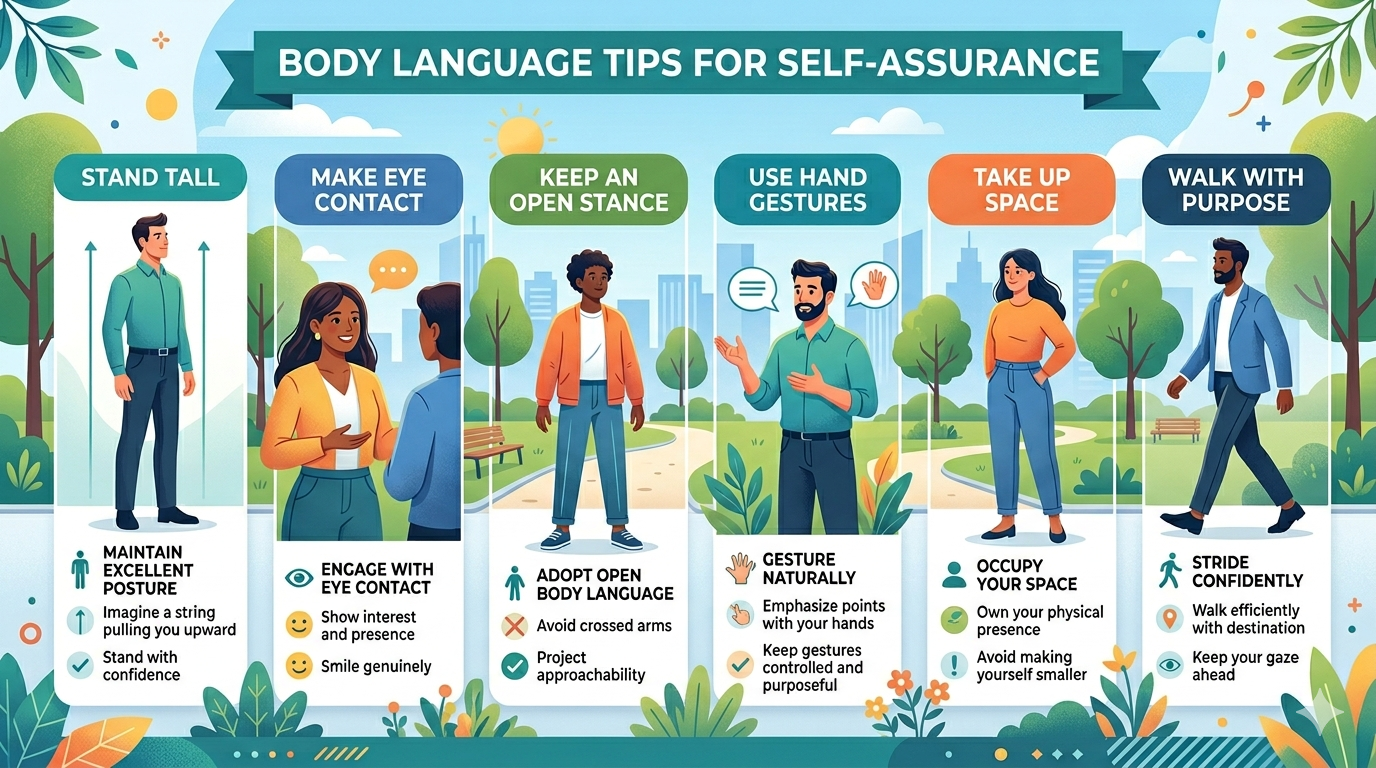
Visual diagram of common nonverbal communication elements
Disclaimer
This article is for general informational and educational purposes only. It does not constitute professional psychological, counseling, medical, or consumer purchasing advice. References to programs, books, tools, or methods do not imply endorsement or guarantee of results. Readers are encouraged to consult licensed professionals and verified educational sources when pursuing personal development.