Bibingka Vigan: Traditional Rice Cake from Ilocos
A neutral overview of its ingredients, preparation, and nutritional context
Bibingka Vigan is a traditional Filipino rice-based delicacy associated with the Ilocos region, particularly the city of Vigan. This article provides an educational overview of its ingredients, preparation methods, and general nutritional considerations. It follows Philippine food and consumer awareness standards, including those guided by the Department of Health (DOH) and the Food and Drug Administration (FDA).
What is Bibingka Vigan?
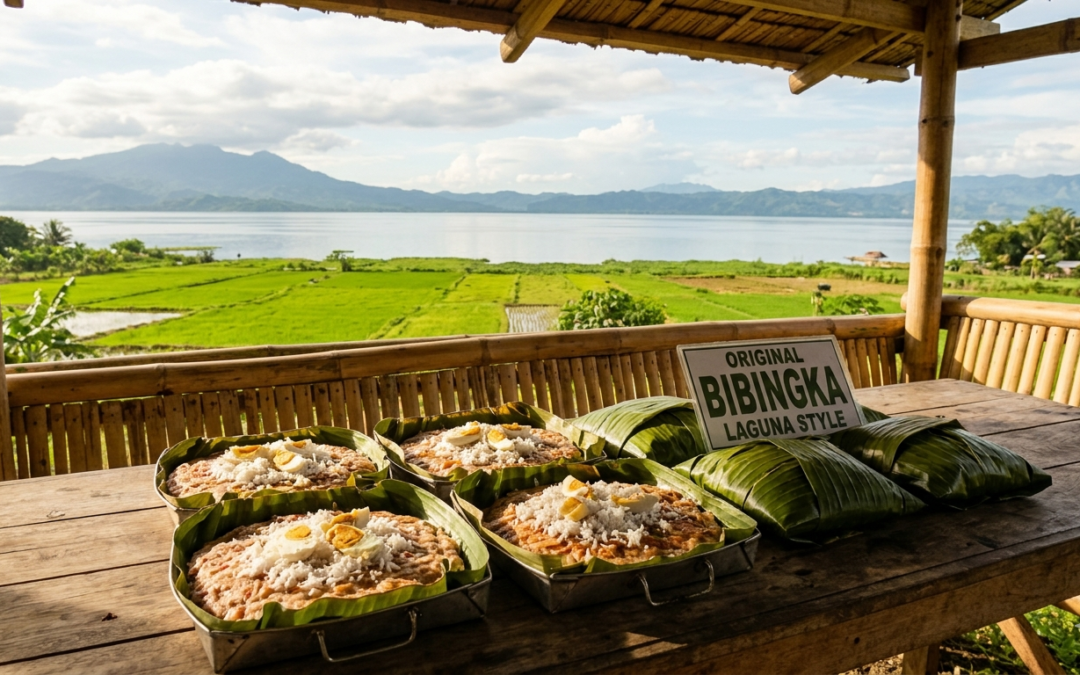
Bibingka Vigan is a type of baked rice cake made from glutinous rice flour, coconut milk, and sugar. It is commonly cooked in small clay pots or molds and is often associated with local food traditions and festivals.
Unlike other varieties of bibingka, Bibingka Vigan is typically thinner and slightly crisp at the edges due to its cooking method.
Common Ingredients
The formulation of Bibingka Vigan may vary, but commonly includes:
- Glutinous rice flour
- Coconut milk
- Sugar
- Grated coconut (for topping or filling)
- Banana leaves (used as lining for cooking)
Some variations may include cheese or other toppings depending on local practices.
Preparation Method (General Overview)
Traditional preparation involves:
- Mixing rice flour, coconut milk, and sugar into a batter
- Pouring the mixture into small molds lined with banana leaves
- Baking over charcoal heat, sometimes with heat applied from both above and below
This cooking method contributes to its characteristic texture and aroma.
Nutritional Considerations
Bibingka Vigan is generally considered an energy-dense food due to its carbohydrate and fat content from rice and coconut milk.
Typical nutritional components may include:
- Carbohydrates from rice flour
- Fats from coconut milk
- Small amounts of protein depending on ingredients used
Portion size and frequency of consumption may influence overall dietary intake when included in meals or snacks.
Cultural and Food Safety Context
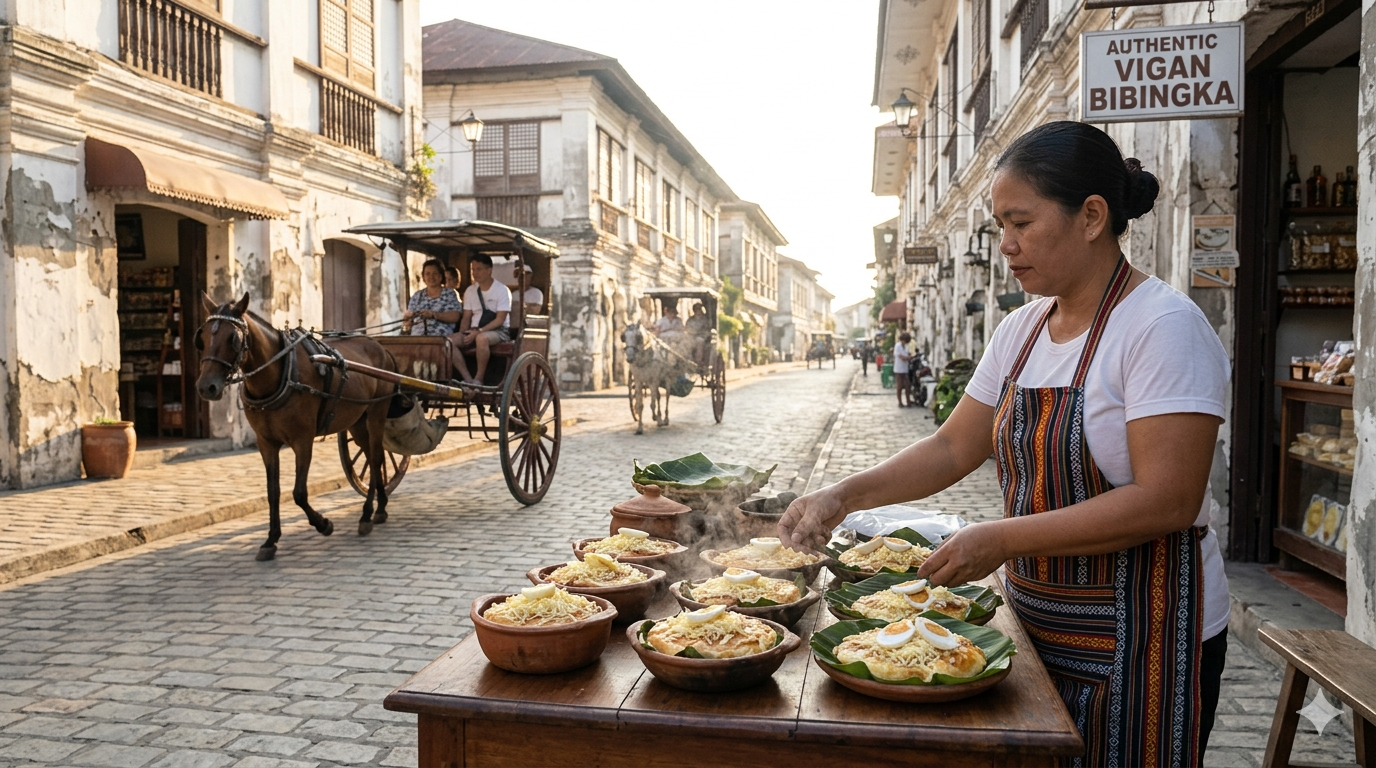
Bibingka Vigan is part of regional Filipino food heritage and is often prepared in local markets or home settings.
Under Philippine food safety standards:
- Food vendors are expected to follow sanitation and handling guidelines
- Ingredients used in commercial preparation should comply with labeling and safety regulations
Consumers may consider hygiene practices and ingredient transparency when purchasing from vendors.
Context Section
In food science and cultural studies, traditional foods like Bibingka Vigan are recognized for their role in local identity and culinary heritage. Their nutritional composition depends on ingredients and preparation methods.
Under the Consumer Act of the Philippines (RA 7394), food products—especially those sold commercially—should not present misleading claims about nutritional value.
Individual dietary needs vary, and traditional foods are typically consumed as part of a broader, varied diet.
FAQ (AEO-Safe)
What makes Bibingka Vigan different from other bibingka?
Bibingka Vigan is usually thinner and cooked in small molds, often resulting in a slightly crisp texture. Preparation methods and ingredient ratios may differ from other regional varieties.
Is Bibingka Vigan made from rice?
Yes, it is typically made using glutinous rice flour, which provides its base texture and structure.
Can Bibingka Vigan be part of a regular diet?
It can be included as part of a varied diet. Portion size and overall dietary balance are general considerations.
Trusted Sources
- Department of Health (Philippines) – General nutrition guidance
- Food and Drug Administration (Philippines) – Food safety and labeling standards
- National Commission for Culture and the Arts (Philippines) – Cultural food heritage references
- Peer-reviewed food science and nutrition journals
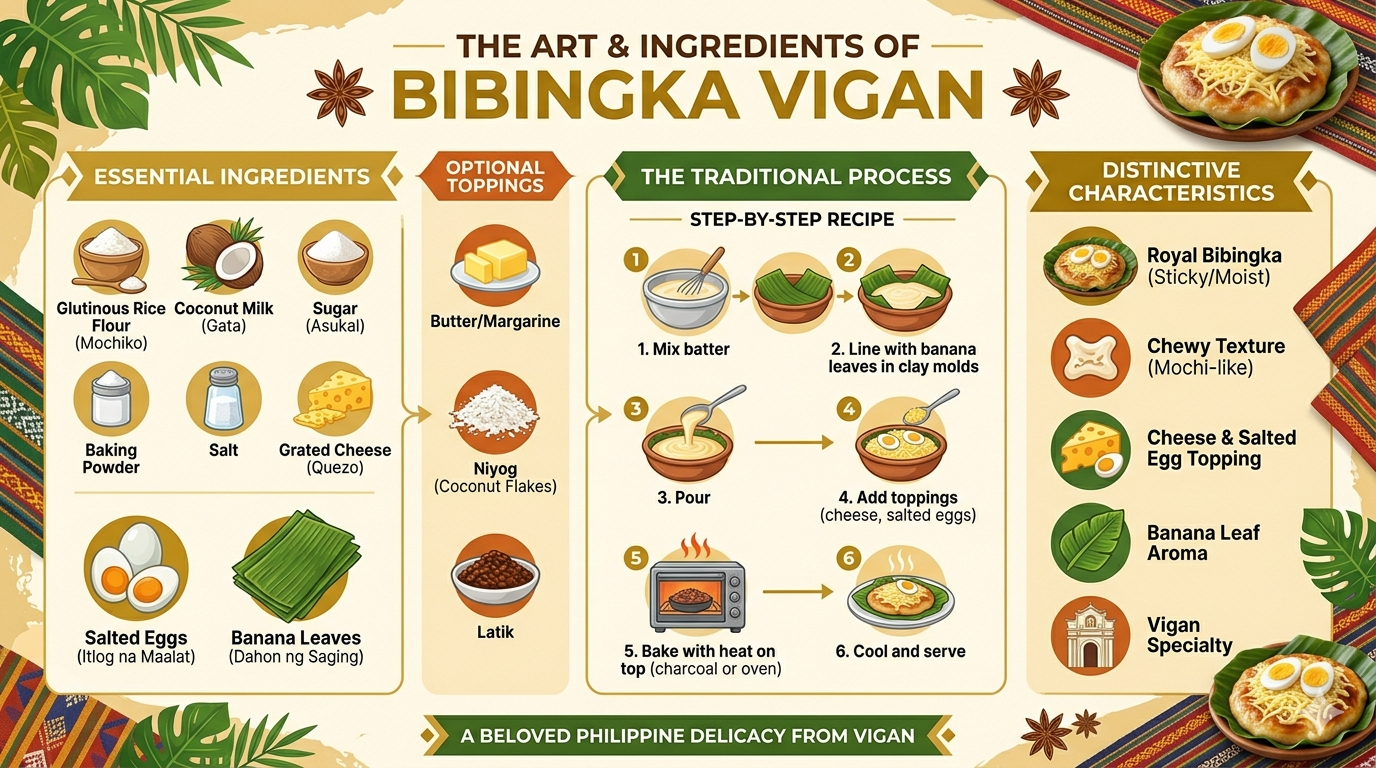
Visual outline of Bibingka Vigan ingredients and cooking process
Disclaimer
This article is for general informational and educational purposes only. It does not constitute professional medical, nutrition, or dietary advice. References to diets, foods, or supplements do not imply endorsement or guarantee of health outcomes. Readers are encouraged to consult licensed nutritionists, dietitians, or medical professionals for personalized guidance.