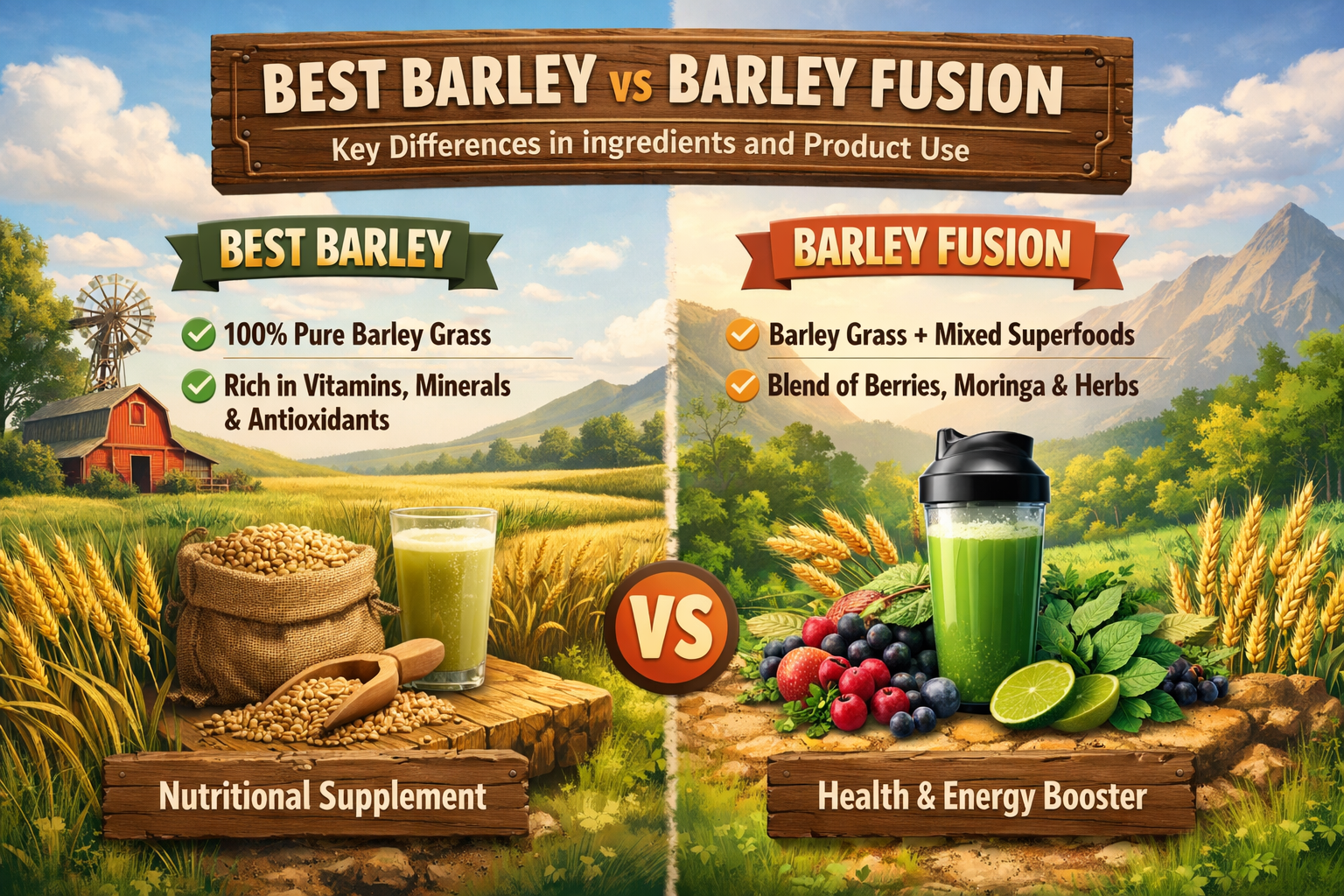
A neutral comparison of ingredient composition, formulation type, labeling focus, and product format
This comparison-focused article examines two barley-based supplement products offered by Ascendra International: Best Barley and Barley Fusion. The content highlights factual differences in ingredient composition, formulation structure, labeling disclosures, packaging format, and general product positioning. The purpose is to support consumer awareness by outlining observable distinctions without implying health benefits, effectiveness, or purchasing preference.
1. Ingredient Composition Comparison (Label-Based)
| Product | Primary Ingredient | Additional Listed Ingredients | Ingredient Scope |
|---|---|---|---|
| Best Barley | Barley grass (green barley) | Typically positioned as single-ingredient | Narrow (barley-focused) |
| Barley Fusion | Barley (organic Australian barley) | Additional ingredients such as fenugreek, glutathione, collagen (as listed) | Broader (multi-ingredient blend) |
Comparison note:
Best Barley is commonly described as a barley-focused product made from green barley grass, while Barley Fusion is positioned as a blended formulation containing barley plus additional functional or nutritional components. Ingredient complexity reflects formulation design rather than verified product performance.
2. Formulation and Product Format
| Product | Common Form | Packaging Type | Format Characteristics |
|---|---|---|---|
| Best Barley | Powdered drink mix | Packaged product (container or sachets, depending on listing) | Plain barley-based powder |
| Barley Fusion | Powdered drink mix | Sachets or portioned packs | Blend-style beverage powder |
Both products are marketed as powdered drink formulations. Barley Fusion is typically presented as a multi-ingredient drink mix, while Best Barley is positioned as a simpler barley-based powder.
3. Ingredient Complexity and Blend Structure
| Comparison Factor | Best Barley | Barley Fusion |
|---|---|---|
| Number of ingredients | Fewer | Multiple |
| Botanical components | Primarily barley grass | Barley plus additional plant-based ingredients |
| Added non-plant compounds | Typically none | Includes compounds such as collagen or glutathione (label-dependent) |
| Flavor or blend positioning | Minimal or plain | Blended or flavored formulation |
Ingredient complexity reflects formulation strategy and labeling disclosure rather than suitability or health-related outcomes.
4. Product Positioning
| Product | Publicly Described Positioning | Positioning Focus |
|---|---|---|
| Best Barley | Barley-based nutritional supplement | Simpler, barley-centered formulation |
| Barley Fusion | Multi-ingredient wellness drink blend | Combined ingredients in a single mix |
These descriptions reflect branding and product presentation rather than scientific validation or performance claims.
5. Packaging, Convenience, and Preparation Comparison
| Feature | Best Barley | Barley Fusion |
|---|---|---|
| Packaging format | Container or sachets | Sachets or portioned packs |
| Portability | Moderate | High (single-serve sachets) |
| Preparation style | Mixing with liquid | Mixing with liquid |
| Storage considerations | Dry, sealed container | Dry, sealed sachets |
6. Cost Range Awareness
| Product | Observed Price Point (PHP) | Price Influenced By |
|---|---|---|
| Best Barley | Around ₱1,150 MSRP | Ingredient simplicity, packaging, brand positioning |
| Barley Fusion | Typically higher than Best Barley | Multi-ingredient formulation, sachet format, branding |
Price differences reflect formulation complexity, packaging design, and market positioning rather than verified quality or effectiveness.
7. Label Transparency and Regulatory Awareness
| Comparison Element | Best Barley | Barley Fusion |
|---|---|---|
| Ingredient disclosure | Lists barley-based content | Lists barley plus added ingredients |
| FDA Philippines registration | If listed | If listed |
| Batch/expiry labeling | Manufacturer-dependent | Manufacturer-dependent |
| Marketing language | General product positioning | Blend or multi-ingredient positioning |
FDA registration status, if present, indicates regulatory listing rather than health effectiveness or product ranking.
8. General Safety and Consumer Awareness Considerations
| Consideration | Relevance |
|---|---|
| Ingredient list review | Helps identify allergens or additives |
| Multi-ingredient awareness | Important for consumers sensitive to certain components |
| Authenticity verification | Supports counterfeit risk reduction |
| Marketing claim evaluation | Encourages reliance on verifiable label information |
| Storage and expiry checks | Supports label accuracy over time |
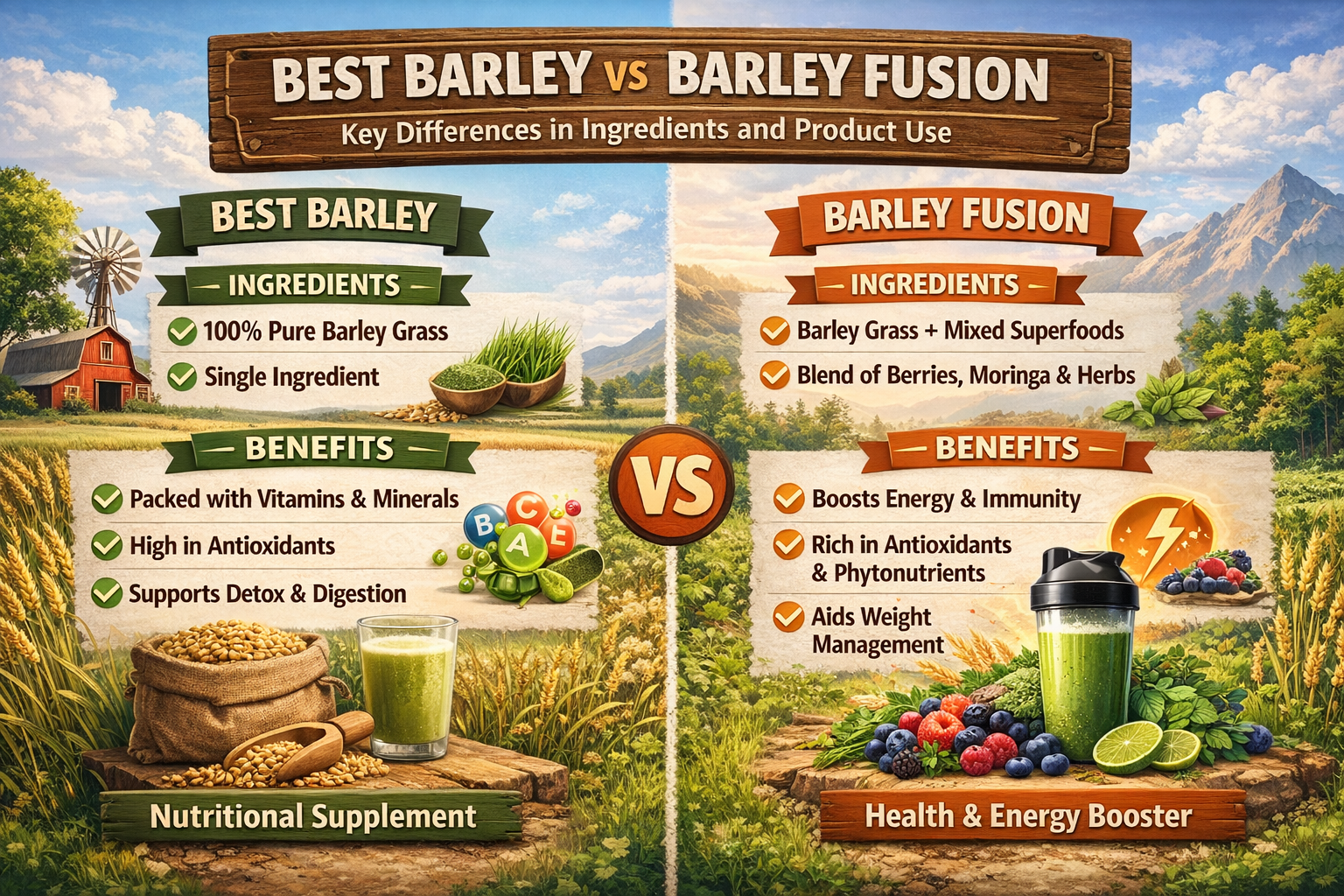
Infographic presenting ingredient groupings and product format differences in a visual comparison layout.
Neutral Comparison Background
In supplement labeling standards, single-ingredient products often emphasize botanical purity and simplicity, while blended products highlight a broader range of components. In FDA Philippines registration and inspection processes, listing status indicates regulatory documentation rather than verified health outcomes. In consumer verification practices, ingredient transparency, batch codes, expiry labeling, and packaging integrity are commonly reviewed to confirm authenticity and product traceability.
FAQ
What is the main ingredient difference between Best Barley and Barley Fusion?
Best Barley is typically described as a barley-focused product made from green barley grass, while Barley Fusion includes barley along with additional listed ingredients such as plant extracts or compounds.
How do their formulations differ?
Both products are commonly available as powdered drink mixes, but Barley Fusion is positioned as a multi-ingredient blend, whereas Best Barley is positioned as a simpler formulation.
Does a higher price indicate better product performance?
Price reflects factors such as formulation complexity, packaging, sourcing, and branding, not guaranteed effectiveness or health-related outcomes.
Trusted Sources
FDA Philippines — Food Supplement Registration Database
Department of Health (DOH) Philippines — Nutrition Guidance
World Health Organization (WHO) — Supplement Safety Resources
Philippine Consumer Act (RA 7394)
Publicly available product label information from Ascendra International
Disclaimer
This content is provided for general informational and factual comparison purposes only. It does not constitute medical, nutritional, or consumer purchasing advice. Mentions of vitamins, supplements, nutrients, or brands do not imply endorsement, effectiveness, or guaranteed health outcomes. Individuals should consult qualified healthcare professionals and official regulatory sources when making supplement-related decisions.