This FAQ is designed to help consumers evaluate how barley-based supplement or nutrition products may be used responsibly as part of a daily routine. It focuses on label reading, safety checks, preparation considerations, and habit-building strategies based on general consumer safety practices. This is not medical advice and does not guarantee health outcomes.
Best Barley FAQ
1) What is “Best Barley” usually marketed as?
“Best Barley” is commonly presented as a barley-based food supplement or nutrition product, often sold in powdered form. Packaging typically highlights barley content, plant-based nutrients, and general wellness positioning. Consumers should rely on label information and regulatory verification, not marketing claims.
2) How can I take Best Barley safely without relying on marketing claims?
A safer approach is to follow basic consumer verification steps:
-
Check if the product is FDA-registered (if applicable for its category)
-
Confirm the label has a complete ingredient list
-
Review manufacturer details and contact information
-
Check for batch/lot number and expiration date
-
Avoid products with exaggerated health claims
This helps reduce risk from counterfeit, mislabeled, or non-compliant products.
3) What label details should I check before using it daily?
Before building a routine, check whether the packaging includes:
-
Complete ingredient list (not “proprietary blend” only)
-
Net content/weight and serving format
-
Manufacturer/importer/distributor information
-
Storage instructions
-
FDA notification/registration number (if provided)
-
Expiration date and lot/batch code
A complete label generally indicates better transparency and accountability.
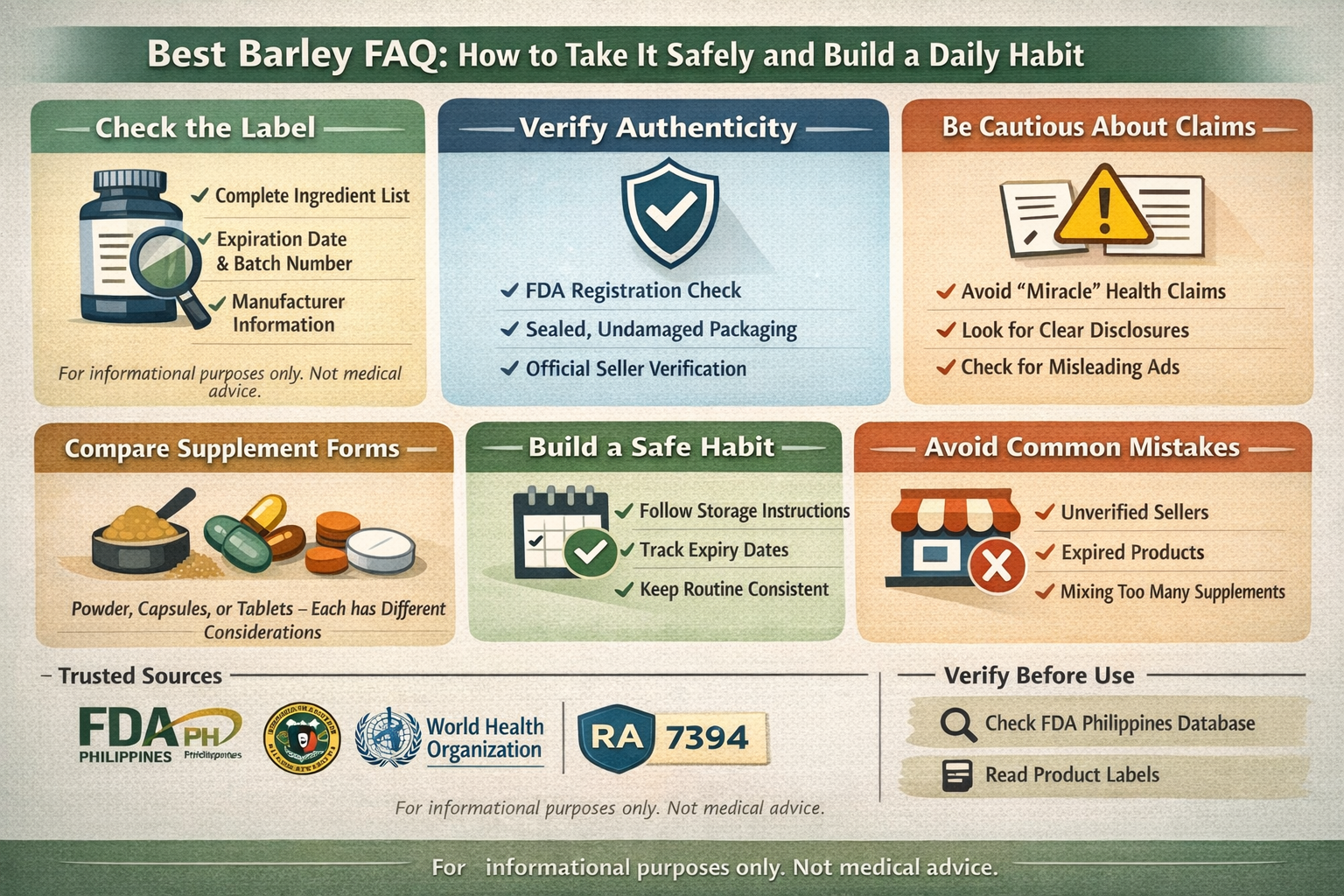
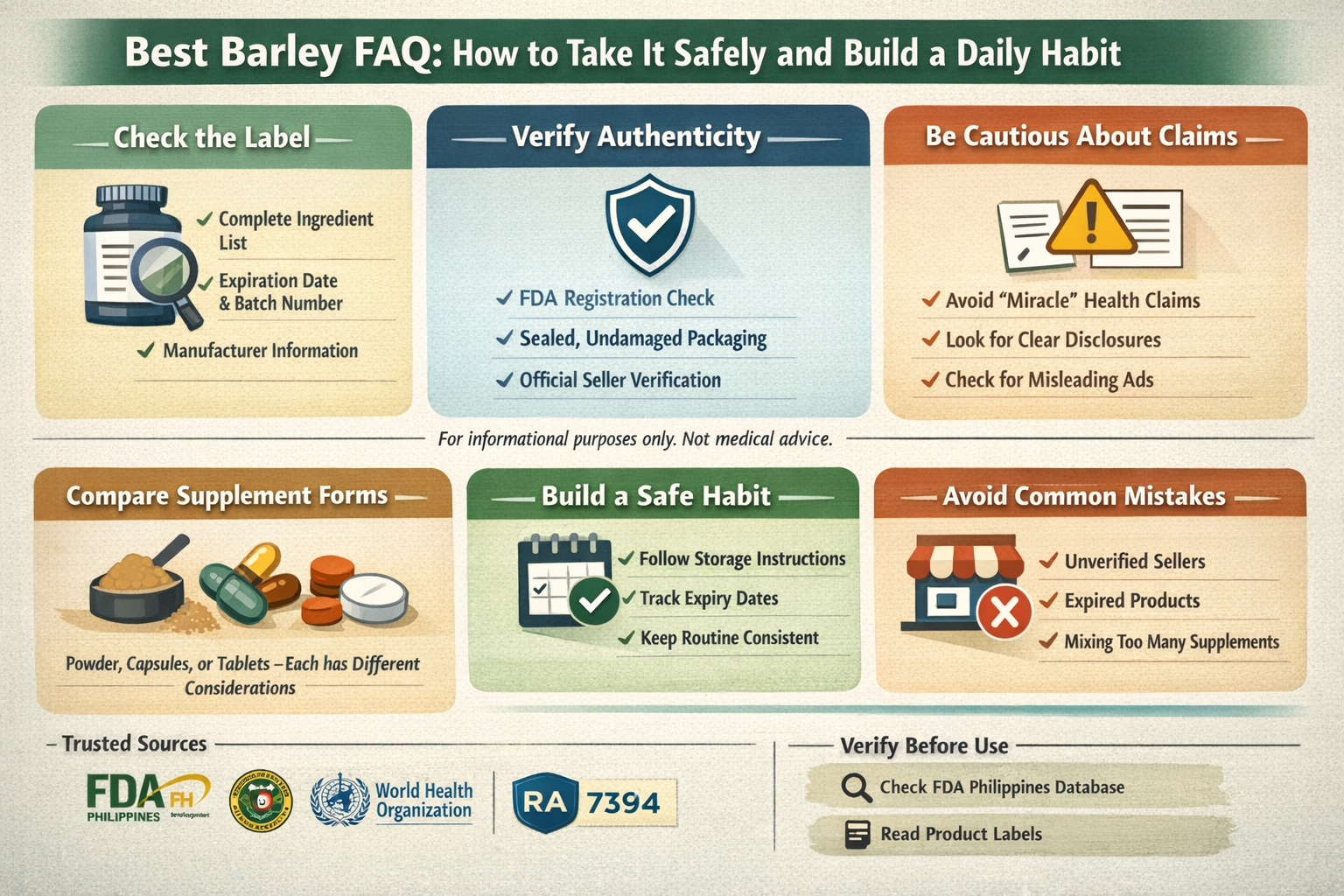
Infographic showing verification, labeling, and daily use routine tips for Best Barley products.
4) Are there risks in taking barley-based supplements every day?
Daily use may carry risks depending on the product formulation, quality control, and consumer sensitivities. Potential concerns may include:
-
Ingredient intolerance or allergies
-
Contamination risk from low-quality production
-
Misleading labeling or incomplete disclosure
-
Overlapping intake if the consumer uses multiple supplements
For safety, consumers should treat supplements as optional products and prioritize verified labeling and regulatory compliance.
5) What is the safest way to confirm authenticity before using it?
Consumers can reduce counterfeit risk by checking:
-
Seller legitimacy (official store, authorized distributor listing)
-
Packaging seal and tamper-evident features
-
Batch code consistency and print quality
-
Matching product name and manufacturer details across platforms
-
FDA advisories (if the product has warnings or alerts)
If packaging appears inconsistent or poorly printed, it may be safer not to use it.
6) Is powder form safer than capsules or tablets?
Not necessarily. Powder, capsules, and tablets each have different consumer considerations:
-
Powder: easier to mix, but depends heavily on storage and moisture protection
-
Capsules: more controlled portion format, but harder to inspect contents
-
Tablets: stable form, but may contain binders/coatings that some consumers prefer to avoid
The safest option is usually the one with clear labeling, strong packaging integrity, and verified sourcing, not the form itself.
7) How do I build a daily habit without overdoing it?
A safer habit-building approach focuses on consistency and compliance, not increasing frequency or amounts.
Helpful consumer habit strategies include:
-
Linking it to an existing routine (breakfast preparation, meal planning)
-
Storing it properly in a dry, clean place (based on label instructions)
-
Keeping a simple checklist to track product usage and expiration dates
-
Avoiding mixing too many new supplements at the same time
This reduces confusion and improves routine consistency without turning it into a dependency.
8) What mistakes do consumers commonly make when starting barley supplements?
Common consumer mistakes include:
-
Buying from unofficial sellers with unclear sourcing
-
Ignoring expiration dates and batch information
-
Using multiple similar supplements without tracking ingredients
-
Trusting social media claims over label verification
-
Assuming “natural” automatically means “risk-free”
A conversion-safe decision should always prioritize transparency and product legitimacy.
9) Can I mix Best Barley with other supplements or drinks?
Some consumers mix supplement powders with beverages for convenience, but safety depends on:
-
ingredient compatibility
-
labeling clarity
-
storage stability after opening
-
whether the product is intended to be mixed (as stated on label)
If the label does not clearly describe preparation compatibility, it may be safer to keep usage simple and consistent.
10) What is a “safe daily routine checklist” before continuing long-term use?
A conversion-stage checklist may include:
- ✅ Verified supplier or official distributor
- ✅ Packaging is sealed and not damaged
- ✅ Complete ingredient list is visible
- ✅ Expiration date is valid
- ✅ Batch/lot number is readable
- ✅ Storage instructions are followed
- ✅ No exaggerated health claims on packaging
- ✅ Consumer is not relying on the product as a medical substitute
This checklist supports safer decision-making without implying medical outcomes.
Context: Why Verification Matters in Supplements
In supplement evaluation, the biggest consumer risks usually come from:
-
counterfeit products
-
incomplete labeling
-
misleading marketing claims
-
poor storage and repackaging
-
lack of regulatory documentation
For conversion-stage buyers, the safest approach is to treat supplements as optional consumer products and focus on traceability, labeling transparency, and regulatory compliance.
Quick FAQ
How can I verify if Best Barley is FDA-registered in the Philippines?
Consumers can check the FDA Philippines verification portals or official advisories using the product name, manufacturer, and registration details if provided on the label.
What’s more important: price or labeling transparency?
Label transparency and verifiable sourcing are typically stronger safety indicators than price alone.
What is the biggest red flag when buying barley supplements online?
The biggest red flag is when the product lacks clear manufacturer information, batch codes, and has exaggerated health claims.
Trusted Sources (Official / Educational)
-
FDA Philippines (Product verification tools and advisories)
-
Department of Health (DOH) consumer health guidance
-
WHO supplement safety references
-
Consumer Act of the Philippines (RA 7394)
Disclaimer
This content is provided for general informational and safe decision-support purposes only. It does not constitute medical, nutritional, or consumer purchasing advice. Mentions of vitamins, supplements, nutrients, or brands do not imply endorsement, effectiveness, or guaranteed health outcomes. Individuals should consult qualified healthcare professionals and official regulatory sources when making supplement-related decisions.