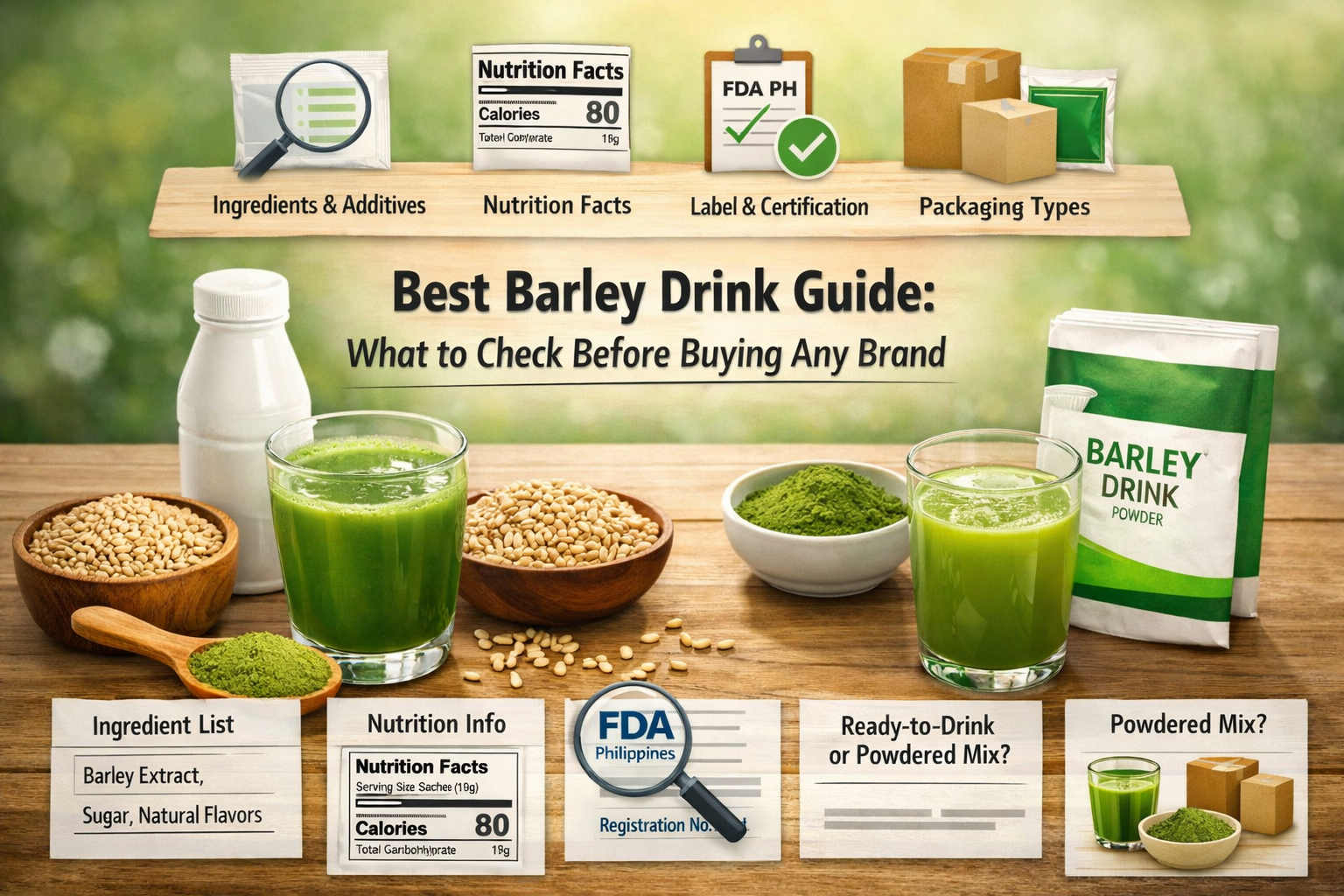
A neutral, decision‑focused overview of label, formulation, and quality factors for barley‑based beverages
This article helps readers understand key factors to consider when evaluating barley drink products across different brands. Barley drinks vary in formulation, ingredient lists, nutrient content, and processing methods; assessing these elements can support informed consumer decisions. The discussion below focuses on product characteristics, label transparency, compliance with regulatory standards, and considerations relevant to product quality — without making health claims, prescribing usage, or promoting specific brands.
Understanding Barley Drink Types
Barley drinks appear in several forms, including ready‑to‑drink, powdered mixes, and brewed concentrates. Some products emphasize simple barley water (water infused with barley grain) while others include added flavors, sweeteners, or nutrients. In consumer decision‑making, it is useful to note how the composition differs across types: for example, whether a product is primarily barley extract in water or a multi‑ingredient beverage with additives.
Ingredient Lists and Transparency
Product labels should clearly list all ingredients, typically in descending order by weight. Common components may include barley extract or grain, water, flavorings (such as natural or artificial flavors), and sweeteners (such as sugar or non‑nutritive sweeteners). Understanding these entries helps distinguish between products with minimal ingredients and those with complex formulations. Be cautious when key inputs are not clearly described (e.g., unspecified “natural flavors”) as this can limit clarity about what the beverage contains.
Formulation Additives and Consumer Awareness
Barley‑based beverages sometimes include additives for texture, stability, or taste. These may be thickeners, preservatives, or colorants. In supplement quality evaluation, consumers can review the safety assessments or regulatory status of such additives on official food safety lists (e.g., allowable food additives under FDA Philippines food regulations). Awareness of additive names and functions can support decisions about product preferences without implying any health outcomes.
Packaging and Serving Formats
Barley drinks are sold in glass or plastic bottles, cartons, and single‑serve sachets for powdered products. Packaging influences convenience, storage, and labeling space for mandatory information like nutrition facts and ingredient lists. In label reading, ensure that serving size, storage instructions, and manufacturing details appear legibly.
Nutrition Information Panels
Most packaged beverages include a nutrition information panel. This panel outlines energy (calories) and amounts of macronutrients (e.g., carbohydrates) per serving size. While this content does not inform about health effects, it supports comparisons between products with differing sugar, carbohydrate, or other nutrient profiles. Consumers may consider how values differ across brands if nutrition content aligns with their personal dietary preferences.
Regulatory Compliance and Product Verification
In the Philippines, food and beverage products, including barley drinks, should be registered or notified as required under FDA Philippines rules. Checking whether a product has an FDA Philippines registration or listing number on its label can help verify it has undergone the standard administrative process. Consumers can consult official FDA Philippines databases or contact local regulatory offices for verification.
Hypothetical Evaluation Scenario
For example, a consumer comparing two barley drink products might observe that Product A lists barley extract, water, and sugar, while Product B lists barley water concentrate, natural flavors, and non‑nutritive sweeteners. In this hypothetical context, differences in ingredient complexity and sweetener types can be noted without asserting effects, suitability, or preference.
Context
In supplement and beverage quality evaluation, regulatory bodies such as FDA Philippines assess labeling compliance, ingredient safety, and product registration status. Food and beverage labeling regulations under the Consumer Act of the Philippines (RA 7394) require that products provide truthful and clear information to avoid misleading consumers. Clear labeling and transparent ingredient disclosure contribute to informed purchasing decisions. Official food safety guidance from WHO and regional standards can inform general safety considerations for ingredients and processing practices in barley‑based beverages.
FAQ
What should consumers look for on a barley drink label?
Consumers can check the ingredient list, nutrition information panel, manufacturer or distributor information, and any regulatory registration identifiers. Clear labeling supports comparison and understanding of product contents.
How can consumers verify that a barley drink meets Philippine regulatory standards?
Verification may involve checking if the product displays an FDA Philippines registration or listing number and reviewing official FDA databases or advisories related to food and beverage products.
What factors differentiate ready‑to‑drink barley beverages from powdered mixes?
Ready‑to‑drink products are pre‑formulated and packaged for immediate consumption, while powdered mixes require reconstitution. Differences may include formulation complexity, packaging type, and ingredient lists, which consumers can evaluate based on their preferences.
Trusted Sources
-
FDA Philippines — official food and beverage product registration and labeling requirements
-
Department of Health (DOH) — nutrition policy and food safety guidance
-
Consumer Act of the Philippines (RA 7394) — product labeling and consumer protection standards
-
World Health Organization (WHO) — general guidance on food safety and beverage formulation considerations
Disclaimer
This content is provided for general informational and decision‑consideration purposes only. It does not constitute medical, nutritional, or purchasing advice. Mentions of barley drinks or product characteristics do not imply endorsement, effectiveness, or guaranteed outcomes. Individuals should consult qualified professionals and official regulatory sources before making decisions related to product selection or use.