by Ramil Villar | Apr 6, 2026 | Food & Nutrition Basics
Kinalas (Bicol): An Educational Look at a Filipino Noodle Dish
A neutral overview of what kinalas is, common ingredients, and basic nutrition considerations.
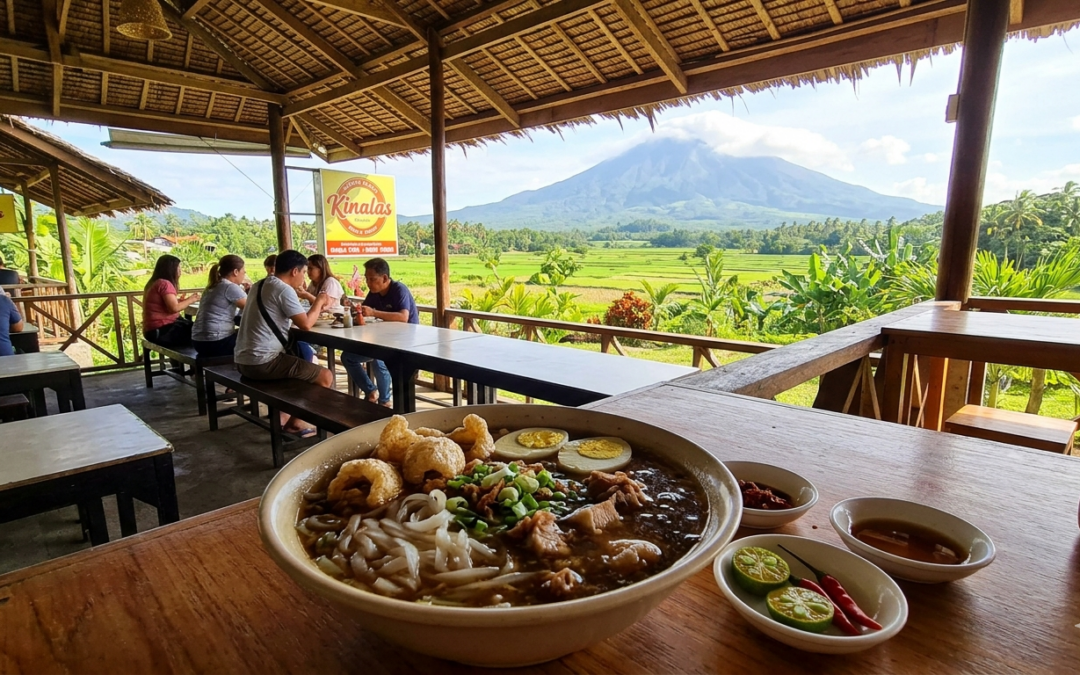
Kinalas is a traditional Filipino noodle dish from the Bicol region. This article explains what kinalas typically includes, basic nutritional components of its ingredients, and considerations for balanced eating. The content is informational and aligned with general nutrition principles; it does not promise health outcomes or endorse specific diets.
What Is Kinalas?
Kinalas is a savory noodle soup popular in parts of Bicol and neighboring provinces. It typically combines:
- Rice or egg noodles (locally known as “misua” or similar varieties),
- Broth made from simmering meat and bones, often pork,
- Meat slices and toppings such as pork head meat, pork skin, and sometimes offal,
- Condiments like garlic, onions, black pepper, and sometimes chili.
The name kinalas refers to the act of shredding or pulling the meat from the broth, which becomes part of the dish.
Basic Nutritional Components
Below are the common nutrient categories in kinalas based on its typical ingredients. Values vary widely depending on preparation and portion size.
Carbohydrates
- Noodles provide most of the carbohydrate content.
- Carbohydrates are a primary energy source in the diet.
Protein
- Meat and broth contribute protein, which is necessary for tissue maintenance and other bodily functions.
Fat
- Broths and cuts from pork can contain fat, including both visible fat and fat dissolved in the broth.
- Fat provides energy and supports absorption of fat‑soluble nutrients.
Sodium and Flavor Enhancers
- Broths and seasonings may contribute sodium (salt).
- Sodium is an essential mineral, but high intake is often moderated in dietary guidelines.
Other Nutrients
- Garnishes like onions and garlic provide small amounts of vitamins, minerals, and plant compounds.
Considerations for Balanced Eating
- Portion size: Traditional serving sizes vary. Moderation supports energy balance within a broader dietary pattern.
- Sodium awareness: Broths with added salt or flavor enhancers can contribute significant sodium; some individuals choose lower‑sodium options.
- Protein balance: Pairing with vegetables or legumes in the same meal can add fiber and micronutrients.
This overview does not recommend one way of eating over another; individual needs differ based on age, activity, health conditions, and cultural preferences.
Context
In nutrition science, foods like kinalas are examined in terms of their nutrient composition rather than as inherently “good” or “bad.” A balanced approach to eating typically includes a variety of foods from different groups over time. Philippine dietary guidelines emphasize a mix of grains, proteins, vegetables, fruits, and fluids to support overall nutrient needs.
Under consumer protection and labeling standards in the Philippines, prepared foods sold commercially should comply with Department of Health (DOH) and Food and Drug Administration (FDA Philippines) guidelines for food safety, handling, and accurate ingredient disclosure when applicable.
FAQs
What are the main ingredients in kinalas?
Kinalas typically includes noodles, broth (often from meat and bones), meat pieces, and seasonings like garlic and pepper.
Is kinalas high in protein?
The dish can provide a source of protein from the meat and broth, but the amount varies by recipe and serving size.
Can kinalas be part of a balanced meal?
In nutrition planning, combining a variety of foods across food groups over the day supports nutrient balance. Kinalas can be one component alongside vegetables or fruit in other meals.
Trusted Sources
- Food and nutrition science references on macronutrients and diet planning (academic journals)
- Philippine dietary guidelines and nutrition recommendations by DOH
- FDA Philippines food safety and labeling information
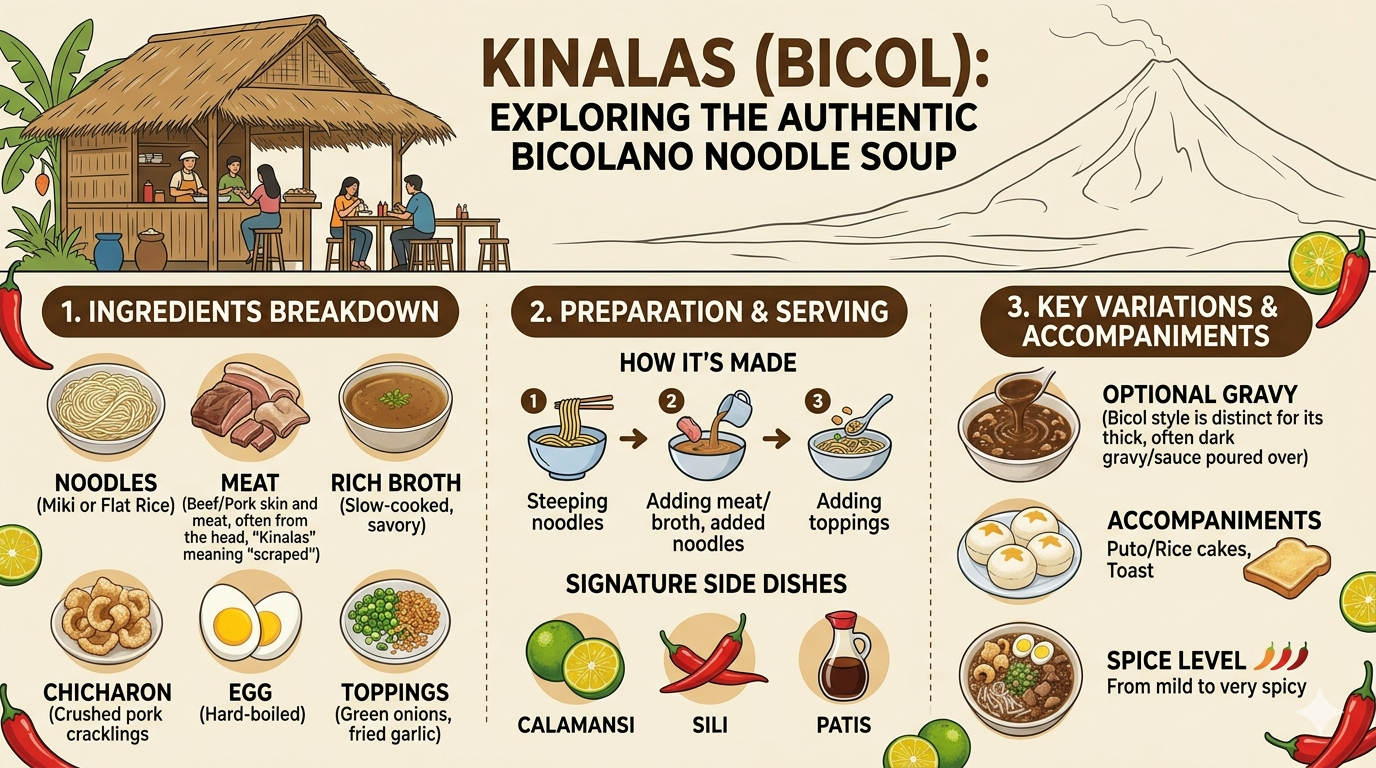
Visual summary of Kinalas ingredients and typical composition
Disclaimer
This article is for general informational and educational purposes only. It does not constitute professional medical, nutrition, or dietary advice. References to dishes or foods do not imply endorsement or guarantee of health outcomes. Readers are encouraged to consult licensed nutritionists, dietitians, or medical professionals for personalized guidance.
by Ramil Villar | Apr 6, 2026 | Food & Nutrition Basics
Pinakbet: Nutritional Overview of a Traditional Filipino Vegetable Dish
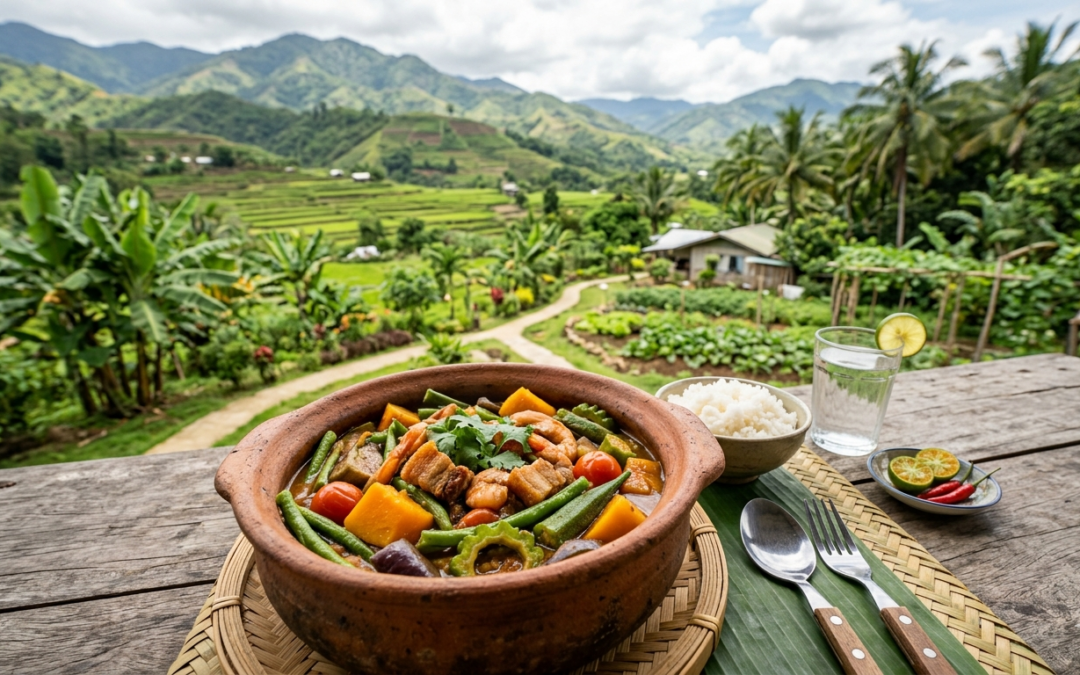
Pinakbet is a traditional Filipino dish composed mainly of locally grown vegetables such as bitter melon, eggplant, squash, okra, and string beans, typically flavored with fermented shrimp paste (bagoong). This article provides an informational overview of its nutrient composition, dietary considerations, and hypothetical meal planning applications. It follows guidance from the Department of Health (DOH) and Food and Drug Administration (FDA Philippines) regarding safe food consumption and nutrition information.
Nutritional Principles
Pinakbet is rich in dietary fiber, which contributes to digestive health, and contains a variety of micronutrients, including:
- Vitamin A – from squash and bitter melon
- Vitamin C – from okra, tomatoes, and eggplant
- Potassium – from squash and eggplant
- Magnesium and trace minerals – from vegetables and small amounts of shrimp paste
The dish generally has a low fat content unless additional cooking oil is used. Sodium intake can increase if fermented shrimp paste or commercial bagoong is added.
Food Groups and Nutrient Balance
- Vegetables – primary component, rich in fiber and micronutrients
- Protein – minimal, mainly from shrimp paste or small seafood additions
- Carbohydrates – usually added via rice or other grains when consumed as part of a meal
In a balanced meal, pinakbet can be paired with whole grains (like brown rice) and lean protein sources (such as tofu or fish) to provide a more complete nutrient profile.
Hypothetical Meal Example (Informational)
Sample Lunch Plate:
- 1 cup cooked brown rice
- 1 cup pinakbet
- 50 g grilled fish or tofu
- 1 glass water
Approximate Nutrient Highlights (per plate, educational purposes only):
- Calories: 350–400 kcal
- Protein: 12–15 g
- Carbohydrates: 55–60 g
- Fat: 8–10 g
- Fiber: 6–8 g
This is for informational purposes and does not guarantee any specific health outcomes.
Context
In nutrition science studies, diets rich in vegetables like those in pinakbet are associated with adequate fiber and micronutrient intake, supporting general nutrition. Under Philippine consumer protection and labeling standards, monitoring added salts, oils, or processed condiments helps ensure dietary awareness. Nutrient intake varies individually, and overall dietary balance should be considered in consultation with licensed nutrition professionals.
FAQs
What is pinakbet?
Pinakbet is a Filipino vegetable stew that typically includes bitter melon, eggplant, squash, okra, and string beans, often flavored with fermented shrimp paste.
What nutrients are in pinakbet?
Pinakbet provides dietary fiber, vitamins A and C, potassium, and trace minerals, with minor protein contributions from shrimp paste or seafood.
How can pinakbet fit into a meal plan?
It can be included as part of a balanced meal with whole grains and lean protein while monitoring sodium content.
Trusted Sources
- Department of Health (DOH Philippines) – Nutrition and Food Safety Advisories
- Food and Drug Administration (FDA Philippines) – Food Labeling Guidelines
- Philippine Dietary Reference Intakes (PDRI) – Nutrient Recommendations
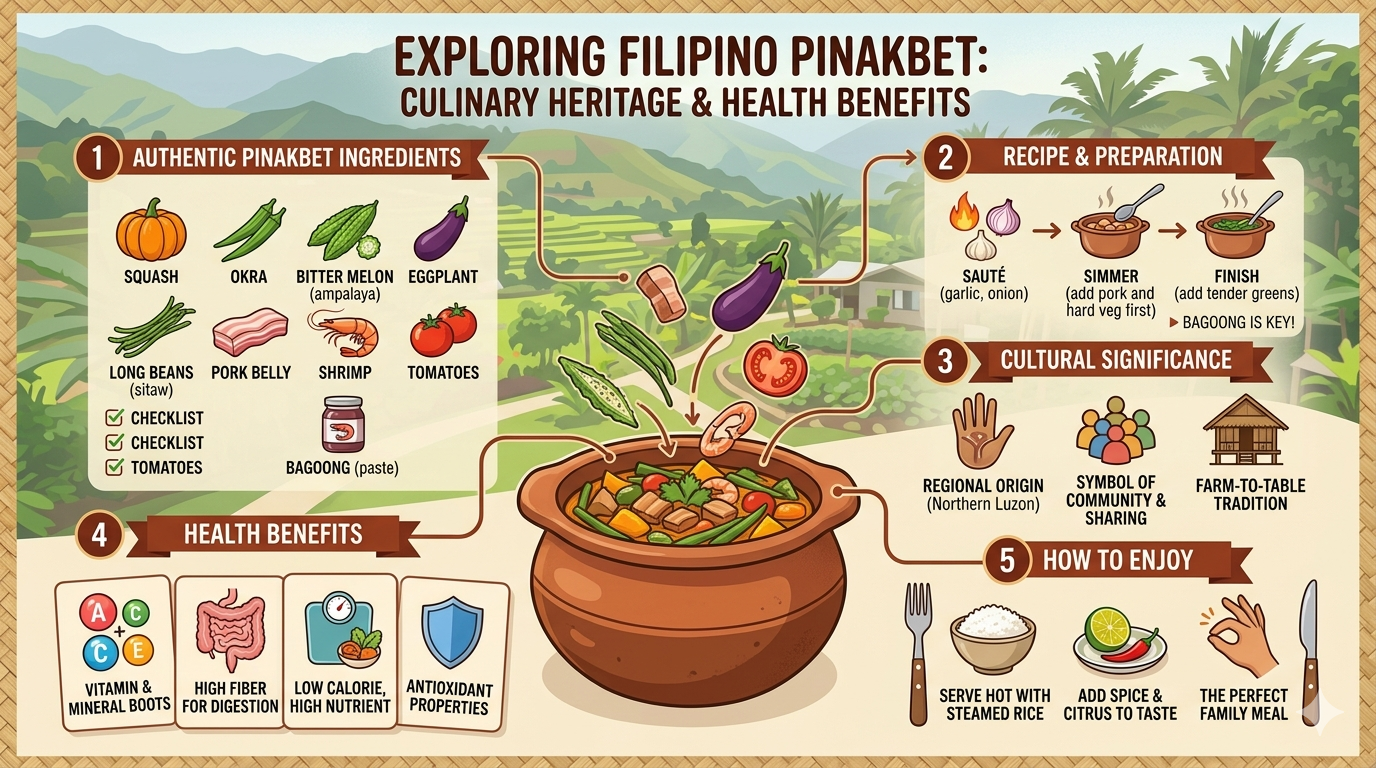
Diagram of vegetables included in Pinakbet.
Disclaimer
This article is for general informational and educational purposes only. It does not constitute professional medical, nutrition, or dietary advice. References to traditional dishes or foods do not imply endorsement or guarantee of health outcomes. Readers are encouraged to consult licensed nutritionists, dietitians, or medical professionals for personalized guidance.
by Ramil Villar | Apr 6, 2026 | Food & Nutrition Basics
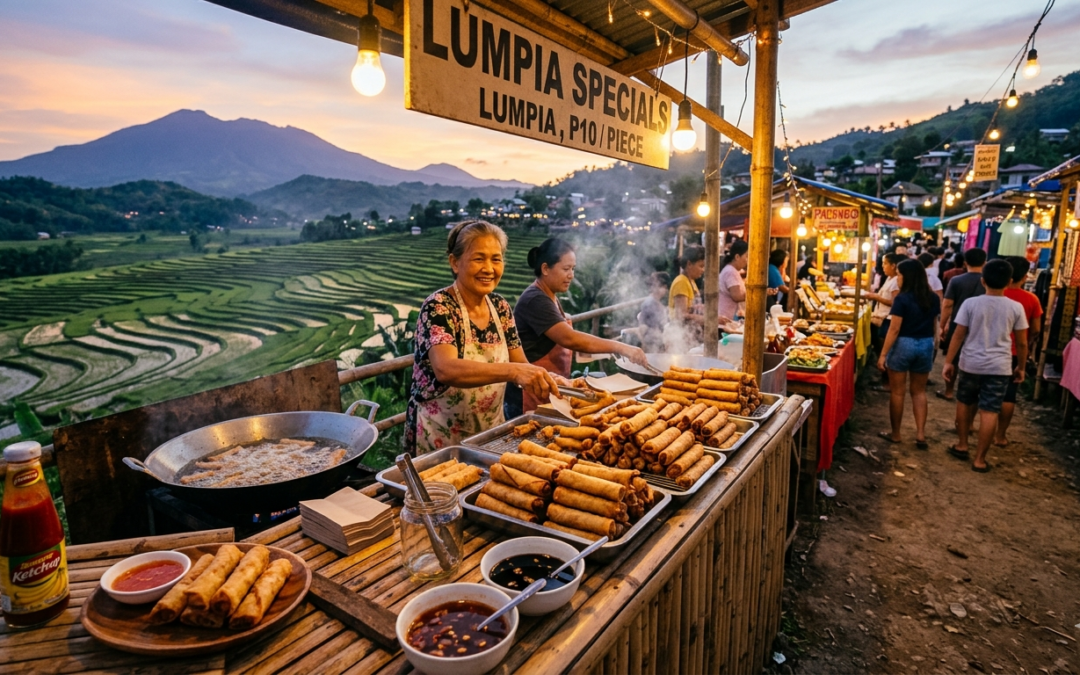
Understanding Lumpia: Nutrition and Dietary Overview
A neutral look at ingredients, preparation methods, and nutritional considerations of lumpia.
Lumpia is a traditional Filipino dish commonly served as an appetizer or snack. This article provides an educational overview of lumpia’s typical ingredients, nutritional composition, and considerations for balanced dietary planning. Information is aligned with Philippine DOH and FDA guidelines for food safety and labeling.
Ingredients and Preparation
Lumpia generally consists of a thin wrapper made from wheat flour and water, filled with vegetables, meat, or a combination of both. Common fillings include:
- Vegetables: carrots, cabbage, green beans, onions
- Protein: ground pork, shrimp, or tofu
- Seasonings: garlic, soy sauce, salt, and pepper
The preparation can involve frying, steaming, or baking. Frying increases fat content, while steaming or baking may result in lower added fats.
Nutritional Considerations
Lumpia contains macronutrients from its ingredients:
- Carbohydrates: primarily from the wrapper
- Protein: from meat, seafood, or tofu
- Fat: from cooking oil used in frying or from meat content
- Fiber: from vegetables in the filling
Micronutrients such as vitamin A (from carrots) and vitamin C (from cabbage) can also be present, depending on the ingredients.
Portion and Meal Planning
In neutral meal planning, lumpia can be included as part of a varied diet. Hypothetical portion guidance may consider:
- 1–3 pieces of lumpia alongside a serving of rice or vegetables
- Combining with other nutrient-dense foods for balanced meals
- Choosing steaming or baking methods for reduced added fats
Context
In nutrition science studies, the nutritional content of lumpia varies widely based on ingredients, cooking methods, and portion sizes. Under Philippine consumer protection and labeling standards, ingredient lists and cooking methods should be transparent to inform dietary choices. Dietary planning typically involves balancing macronutrients, micronutrients, and portion sizes. Results vary individually, and readers are encouraged to consult licensed nutrition professionals for personalized guidance.
FAQs
What is lumpia?
Lumpia is a Filipino dish consisting of a thin wrapper filled with vegetables, meat, or seafood. It can be fried, steamed, or baked.
What nutrients are in lumpia?
Lumpia provides carbohydrates, protein, and fat. Vegetables in the filling contribute dietary fiber and certain vitamins and minerals.
How does cooking method affect nutrition?
Frying can increase fat content, while steaming or baking generally results in lower added fats. Nutrient content depends on both ingredients and preparation.
Trusted Sources
- Department of Health, Philippines: Nutrition Facts and Food Safety Guidelines
- FDA Philippines: Food Labeling and Consumer Information
- Academic food science and nutrition journals (peer-reviewed)
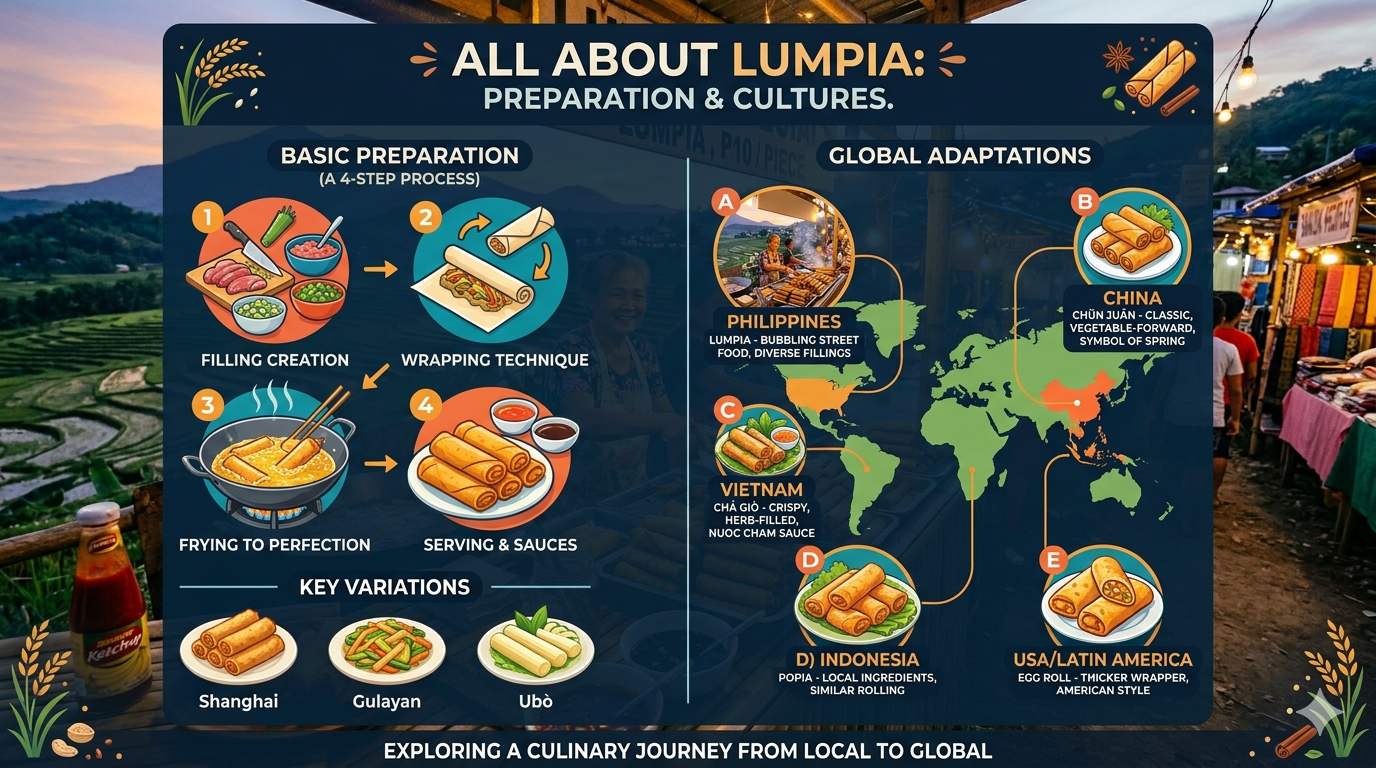
Illustrative infographic of lumpia ingredients and cooking methods.
Disclaimer
This article is for general informational and educational purposes only. It does not constitute professional medical, nutrition, or dietary advice. References to lumpia or its ingredients do not imply endorsement or guarantee of health outcomes. Readers are encouraged to consult licensed nutritionists, dietitians, or medical professionals for personalized guidance.
by Ramil Villar | Apr 6, 2026 | Food & Nutrition Basics
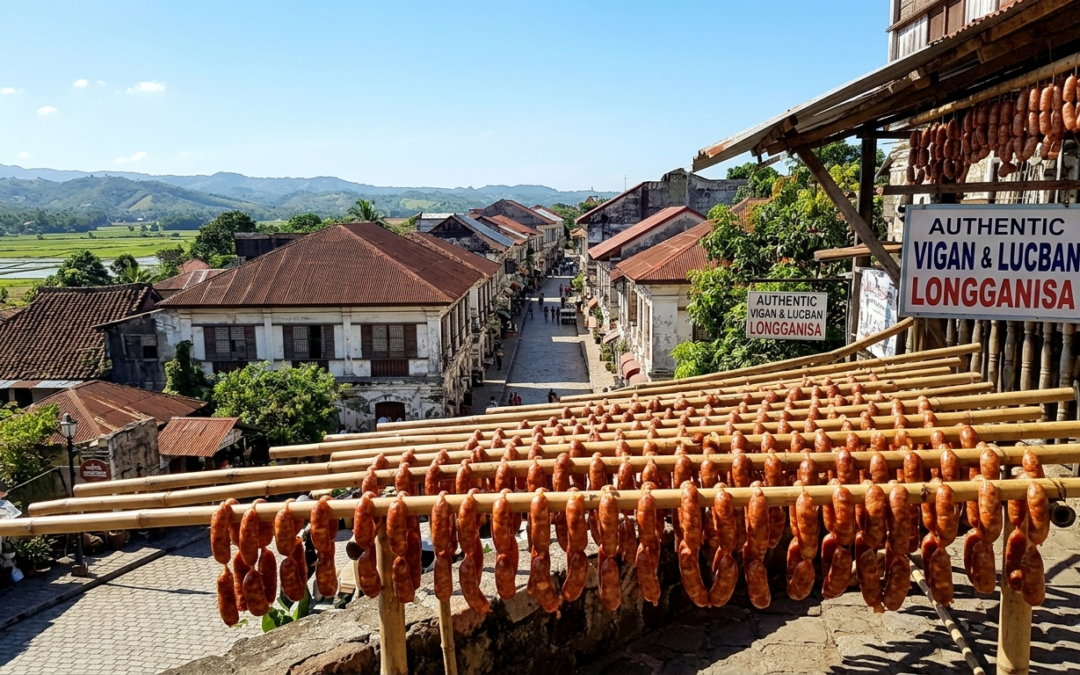
Understanding Longganisa Varieties in the Philippines: Vigan and Lucban
A Neutral Overview of Regional Filipino Sausages and Their Nutritional Aspects
Longganisa is a traditional Filipino sausage with regional variations, often characterized by different flavor profiles and ingredient compositions. Two widely recognized types are Vigan longganisa from Ilocos Sur and Lucban longganisa from Quezon province. This article provides an educational overview of these varieties, their typical ingredients, and considerations for balanced consumption.
Nutritional and Food Composition Details
Vigan Longganisa
- Typically garlicky and slightly sweet.
- Made from ground pork, vinegar, garlic, sugar, salt, and spices.
- Often pan-fried or simmered before frying.
Lucban Longganisa
- Known for its garlicky and salty flavor.
- Made with ground pork, garlic, salt, pepper, sugar, and sometimes paprika.
- Commonly cooked by frying or boiling first.
Nutritional Considerations
- Longganisa is primarily a source of protein and fat, depending on the meat-to-fat ratio.
- Sodium content may be relatively high due to salt and curing ingredients.
- Caloric content can vary based on preparation method (frying vs. boiling).
- While it contains protein and iron from pork, portion control is recommended to manage overall intake of saturated fat and sodium.
Safe Consumption and Meal Planning
- Including longganisa occasionally as part of a balanced diet can contribute to protein intake.
- Pairing with vegetables, fruits, and whole grains supports nutrient balance.
- Cooking methods affect nutrient retention; boiling before lightly frying can reduce added fat.
- Reading labels for packaged longganisa helps monitor sodium and preservative content.
Hypothetical Serving Example (Informational Only)
- 2 links of Vigan longganisa (approximately 100g)
- 1 cup steamed vegetables
- ½ cup cooked brown rice
This combination illustrates balanced portioning of protein, carbohydrates, and vegetables, without implying any weight or health outcomes.
Context
In nutrition science studies, processed meats are a recognized source of protein, iron, and certain B vitamins. Under Philippine food safety and labeling standards, consumers are advised to check for ingredient lists, sodium content, and proper handling to prevent foodborne illness. Dietary results vary individually, and personal health conditions may influence appropriate intake. Consulting licensed nutritionists or dietitians is recommended for personalized guidance.
FAQs
What is longganisa?
Longganisa is a Filipino sausage made from ground pork, spices, and other ingredients, with regional variations in flavor and preparation.
How do Vigan and Lucban longganisa differ?
Vigan longganisa is slightly sweet and garlicky, while Lucban longganisa is typically salty and garlicky. Ingredients and seasoning proportions vary regionally.
Can longganisa be part of a balanced meal?
Yes. Including moderate portions alongside vegetables, grains, and fruits supports nutrient balance. Cooking method and portion size influence overall dietary considerations.
Trusted Sources
- Department of Health Philippines (DOH) – Food Safety and Nutrition Guidelines
- FDA Philippines – Processed Meat Labeling and Standards
- Academic journals on Philippine regional foods and nutritional content (e.g., Philippine Journal of Science)
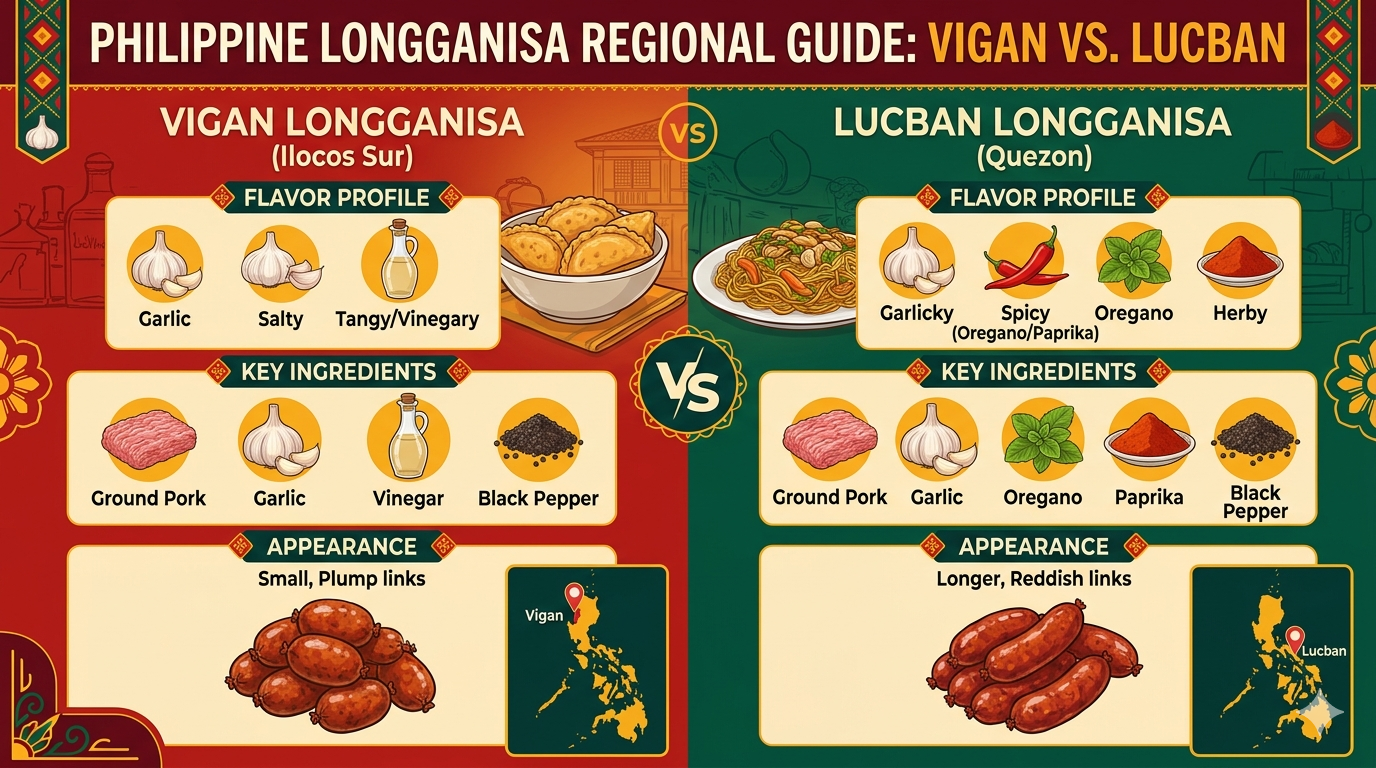
Visual comparison of ingredients used in Vigan and Lucban longganisa.
Disclaimer
This article is for general informational and educational purposes only. It does not constitute professional medical, nutrition, or dietary advice. References to foods or preparation methods do not imply endorsement or guarantee of health outcomes. Readers are encouraged to consult licensed nutritionists, dietitians, or medical professionals for personalized guidance.
by Ramil Villar | Apr 6, 2026 | Food & Nutrition Basics
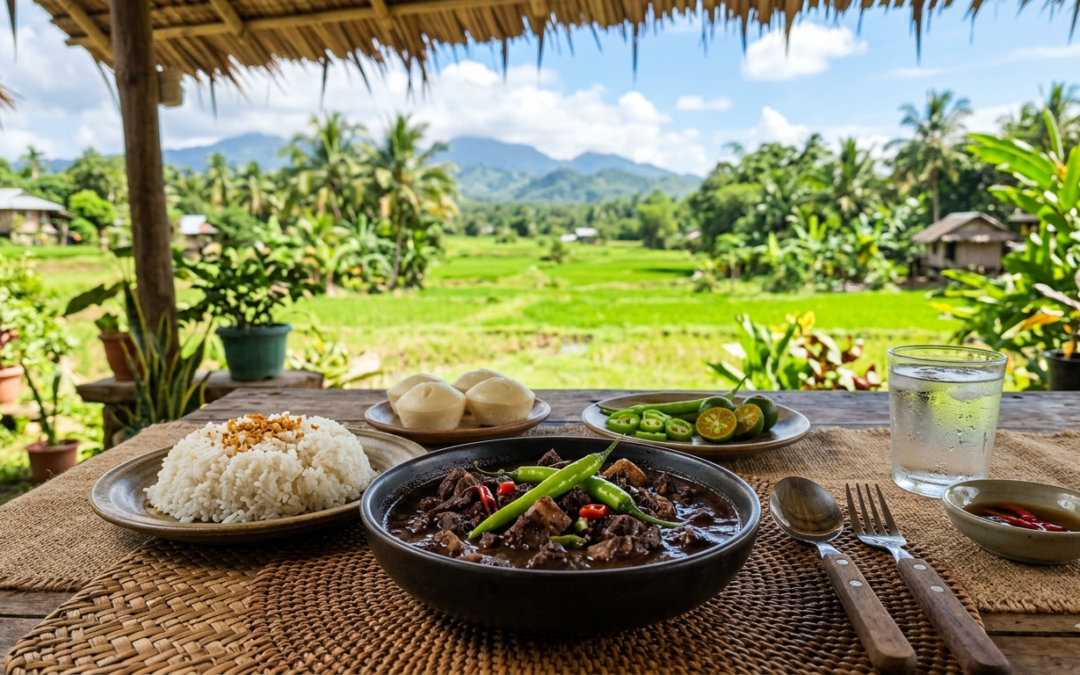
Dinuguan: Nutritional Overview and Dietary Considerations
A neutral look at the traditional Filipino pork blood stew, its nutrients, and safe preparation practices.
Dinuguan is a traditional Filipino stew made with pork, pig’s blood, vinegar, garlic, and spices. It is commonly consumed with rice or rice cakes. This article provides a neutral overview of its nutritional components, macronutrient contributions, and considerations for safe consumption under Philippine food safety standards. Information is aligned with DOH and FDA guidelines.
Nutritional Principles
Dinuguan contains protein primarily from pork, and a small amount of fat depending on the cut used. Pig’s blood is a source of iron, which is an essential mineral that contributes to hemoglobin formation. Additional micronutrients, such as B vitamins, may be present in pork.
Macronutrients and Portioning
A typical serving (approximately 150–200 grams) can contribute to daily protein needs, though it may also contain saturated fats depending on the pork cut. Sodium levels may vary based on added salt or soy sauce. Moderation and balanced portions are recommended in the context of overall diet.
Food Safety
Preparation should comply with Philippine food safety regulations:
- Cook pork and blood thoroughly to avoid bacterial contamination.
- Use fresh ingredients and store leftovers appropriately.
- Follow LGU hygiene and handling standards in home or commercial settings.
Hypothetical Meal Example
- Breakfast: Plain rice, fresh fruit, and a small serving of dinuguan (100 g)
- Lunch: Brown rice, mixed vegetables, and 100–150 g dinuguan
- Snack: Fresh fruit or unsalted nuts
This example illustrates nutrient balance without making health or weight claims.
Context
In nutrition science studies, protein-rich meals contribute to satiety and muscle maintenance, while iron from animal sources like pork blood can support daily iron intake. Under consumer protection and labeling standards, food safety and ingredient awareness are emphasized. Dietary results vary individually, and consumption should be adapted to personal nutritional requirements. Licensed dietitians or medical professionals provide guidance for individual dietary planning.
FAQs
Q: What nutrients are in dinuguan?
A: Dinuguan contains protein, iron, some B vitamins, and variable amounts of fat depending on the pork cut used.
Q: Is dinuguan safe to eat?
A: When prepared with fresh ingredients and cooked thoroughly, dinuguan is safe according to DOH and LGU food handling standards.
Q: Can it be part of a balanced diet?
A: Dinuguan can be included in meals in moderate portions alongside vegetables, grains, or other nutrient-dense foods.
Trusted Sources
- Department of Health (DOH Philippines) – Food Safety Guidelines
- Food and Drug Administration Philippines – Safe Handling of Meat Products
- Philippine Food Composition Tables – Institute of Human Nutrition and Food, UPLB
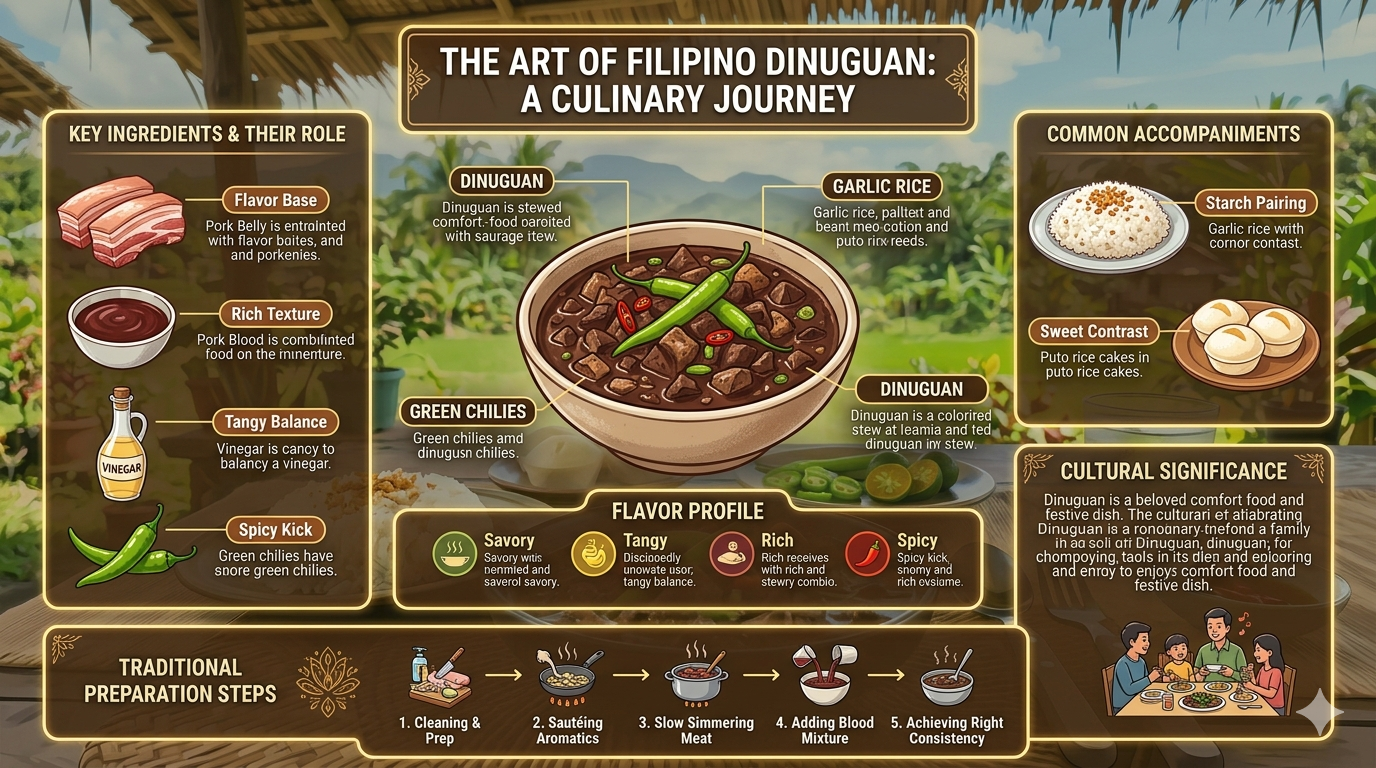
Infographic displaying the components and cooking process of Dinuguan without interpretive claims.
Disclaimer
This article is for general informational and educational purposes only. It does not constitute professional medical, nutrition, or dietary advice. References to foods or ingredients do not imply endorsement or guarantee of health outcomes. Readers are encouraged to consult licensed nutritionists, dietitians, or medical professionals for personalized guidance.