Regulatory Oversight in the Philippines
Under Philippine law, dietary supplements are regulated as food products. Oversight involves the:
Supplements must:
-
Comply with labeling standards
-
Avoid disease treatment or prevention claims
-
Provide accurate ingredient disclosure
-
Follow advertising and consumer protection laws
Product registration or notification indicates regulatory compliance requirements have been met. It does not imply guaranteed effectiveness or health outcomes.
International safety discussions on supplement use are also addressed in guidance materials from the World Health Organization.
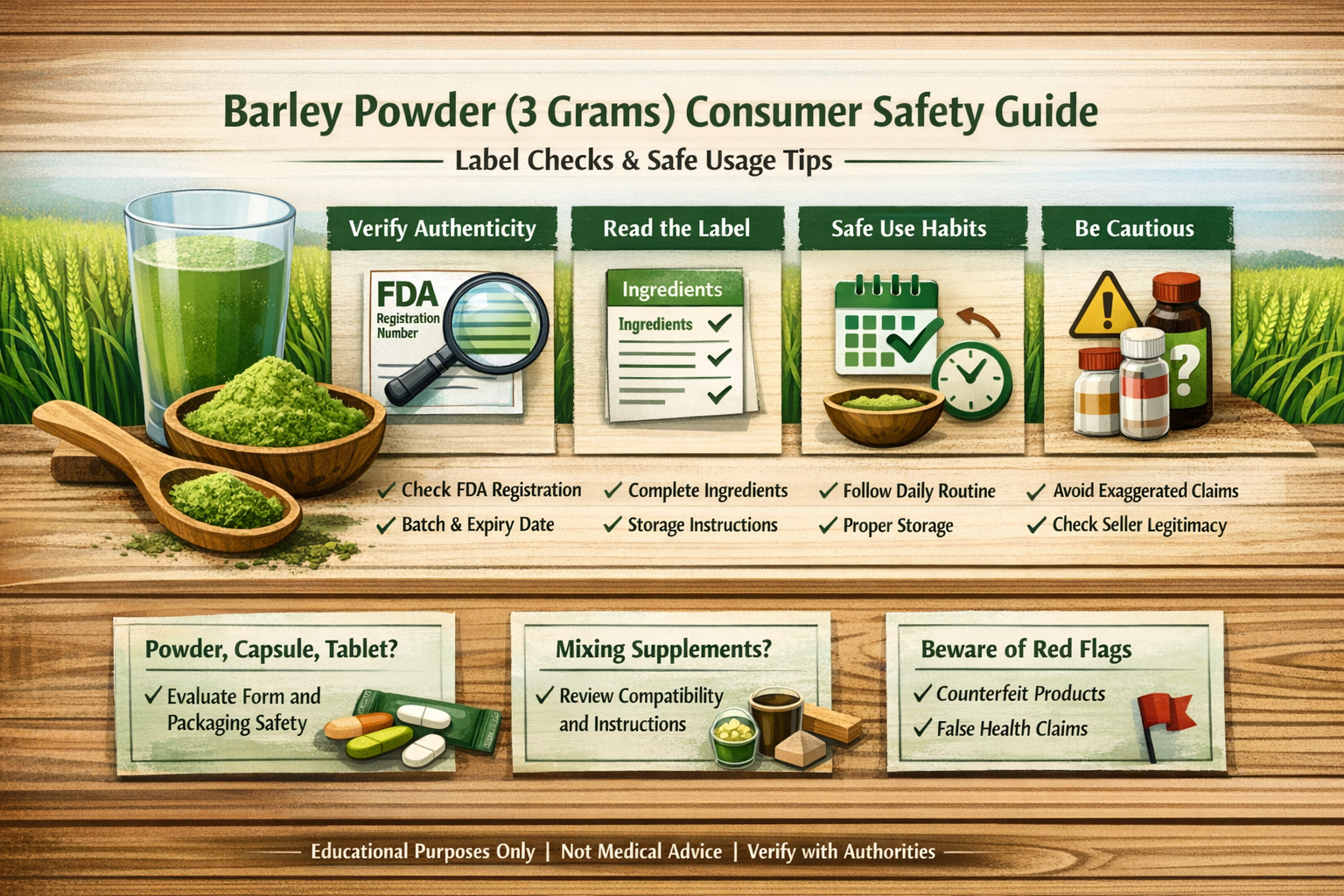
Consumer Label-Reading Checklist
Before using a barley powder product daily, consumers may review:
Regulatory & Transparency Indicators
-
Product registration or notification number (if applicable)
-
Complete ingredient list (not “proprietary blend” only)
-
Net weight and serving format
-
Manufacturer, importer, or distributor details
-
Batch or lot number
-
Expiration date
-
Storage instructions
Clear labeling supports transparency and accountability.
Authenticity and Counterfeit Risk Awareness
In supplement markets, common risks may include:
-
Counterfeit products
-
Incomplete labeling
-
Poor print quality or inconsistent packaging
-
Exaggerated health claims
-
Missing batch or lot codes
To reduce risk, consumers may check:
If packaging appears inconsistent or lacks required details, it may be safer not to use the product.
Powder, Capsules, or Tablets: Is One Safer?
Safety does not depend solely on product format. Each has different consumer considerations:
-
Powder: Easier to mix; sensitive to moisture and storage conditions
-
Capsules: Pre-measured portions; contents not visually inspectable
-
Tablets: Stable form; may contain binders or coatings
Transparency, verified sourcing, packaging integrity, and regulatory compliance are generally stronger safety indicators than format alone.
Building a Responsible Daily Habit
If consumers choose to incorporate a supplement into a daily routine, a safer approach emphasizes consistency and compliance rather than increasing frequency or quantity.
General awareness-based routine strategies include:
-
Linking supplement use to an existing daily activity (e.g., meal preparation)
-
Following storage instructions exactly as stated on the label
-
Tracking expiration dates
-
Avoiding introduction of multiple new supplements simultaneously
-
Ensuring the product is not treated as a substitute for balanced meals or medical care
Supplements are optional consumer products and should not replace professional healthcare.
Common Consumer Mistakes
Consumers sometimes:
-
Purchase from unofficial sellers
-
Ignore expiration or batch details
-
Use multiple similar supplements without reviewing overlapping ingredients
-
Assume “natural” automatically means risk-free
-
Rely on social media claims instead of regulatory verification
Label transparency and regulatory verification are typically stronger safety indicators than price or popularity.
Mixing Barley Powder With Other Products
Some consumers mix powders with beverages for convenience. Considerations may include:
If preparation instructions are unclear, maintaining simple and consistent usage may reduce confusion.
Why Verification Matters in Supplements
In supplement evaluation, common consumer risks often involve:
-
Counterfeit products
-
Misleading marketing claims
-
Incomplete ingredient disclosure
-
Poor storage and repackaging
-
Lack of regulatory documentation
A safety-focused approach treats supplements as optional products and prioritizes traceability, transparency, and compliance.
FAQ
1. Does FDA registration mean a barley supplement is effective?
No. Registration indicates regulatory compliance, not guaranteed effectiveness or health outcomes.
2. Is price more important than labeling transparency?
Label transparency, verifiable sourcing, and regulatory compliance are typically stronger safety indicators than price alone.
3. What is a major red flag when buying barley supplements online?
Missing manufacturer information, unclear batch numbers, and exaggerated health claims are common warning signs.
Trusted Institutional References
-
Food and Drug Administration Philippines — product verification tools and advisories
-
Department of Health Philippines — consumer health guidance
-
World Health Organization — supplement safety and nutrition references
-
Consumer Act of the Philippines (RA 7394)
Additional Educational Resources
The following resources provide extended informational discussions about barley-based products and consumer considerations. These are private educational articles and are not official regulatory authorities:
Consumers are encouraged to verify claims through official regulatory portals before making decisions.
Disclaimer
Disclaimer: This content is provided for general public awareness and educational purposes only. It does not constitute medical, nutritional, or consumer purchasing advice. Mentions of vitamins, supplements, nutrients, ingredients, or brands do not imply endorsement, effectiveness, or guaranteed health outcomes. Individuals are encouraged to consult qualified healthcare professionals and official regulatory sources when making health or supplement-related decisions.
#BarleyPowder, #GrainProducts, #FoodLabeling, #ConsumerAwareness, #PlantBasedIngredients, #ProductTransparency, #NutritionInformation, #SustainableAgriculture, #IngredientInsights, #EverydayProducts
Explore the full article for a detailed, neutral overview of 3-gram barley powder composition, labeling structure, and product presentation insights.