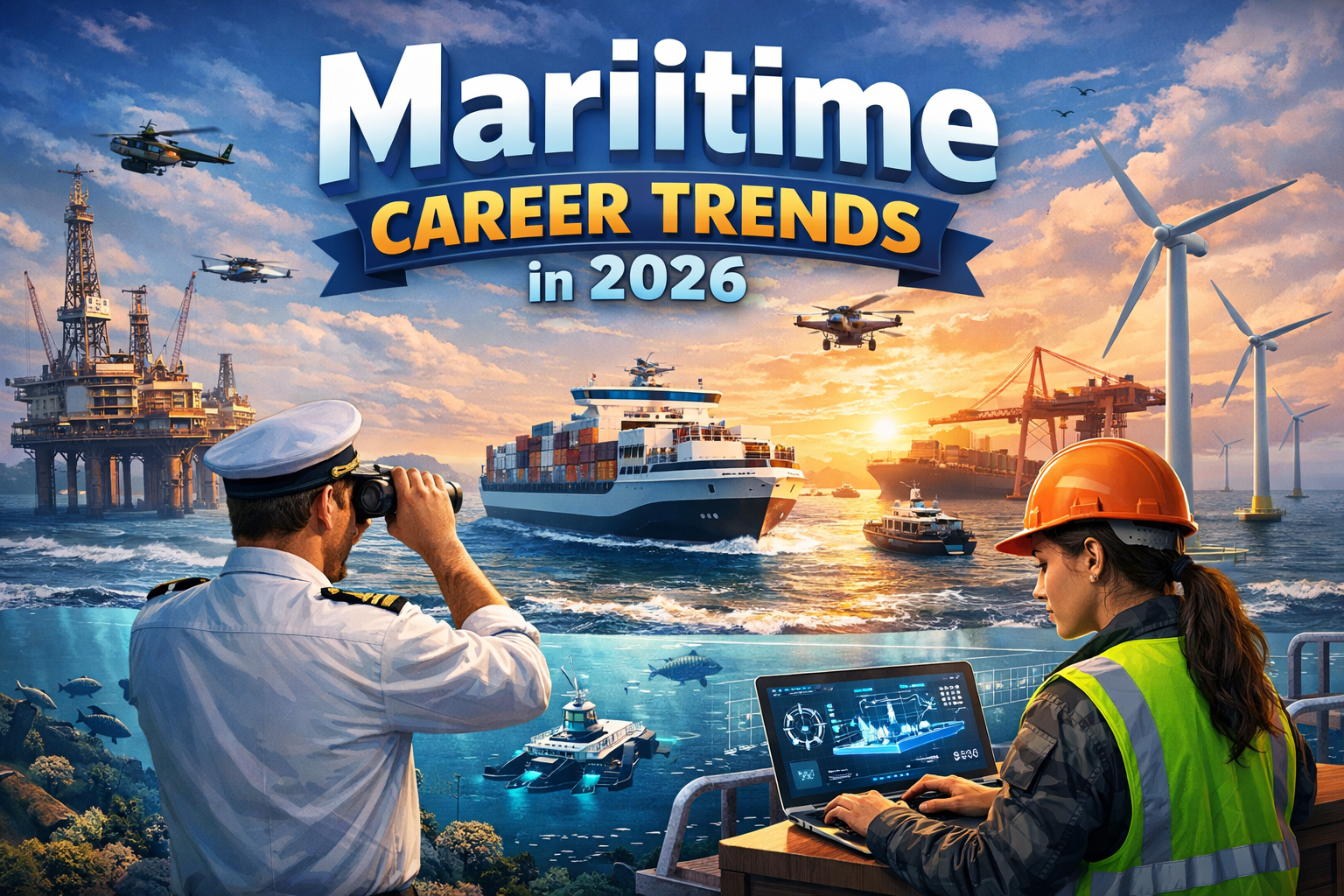
1. Continued Officer and Skilled Seafarer Shortages
Global shipping projections indicate that by 2026 there may be a significant shortfall of qualified officers, particularly at management and technical ranks. This gap stems from increasing demand for certified crew and slower growth in seafarer supply. Qualified officers, especially those with advanced technical or tanker experience, remain in high demand.
Implication for careers: Demand for seafarer roles such as deck officers and engineers may remain strong where safety and compliance standards are upheld.
2. Emphasis on Broader Competencies and Reliability
Maritime employers are placing greater emphasis on up‑to‑date safety training, compliance documentation, operational coordination skills, and reliability in day‑to‑day shipboard performance. Formal certification (e.g., STCW) remains foundational, but broader operational competencies are increasingly valued.
Trend insight: Prospective seafarers may find value in diversified training that supports both technical and procedural competence.
3. Digitalisation and Automation in Maritime Operations
Digital tools, including AI‑driven recruitment platforms, automated documentation systems, and data‑focused technologies, are reshaping how maritime roles are filled and how crew and shore teams operate. Remote hiring processes, predictive analytics, and digital tracking systems are becoming more common.
Operational effect: Shore‑based and hybrid roles linked to digital competence (e.g., digital compliance reporting, automated navigation systems) are emerging.
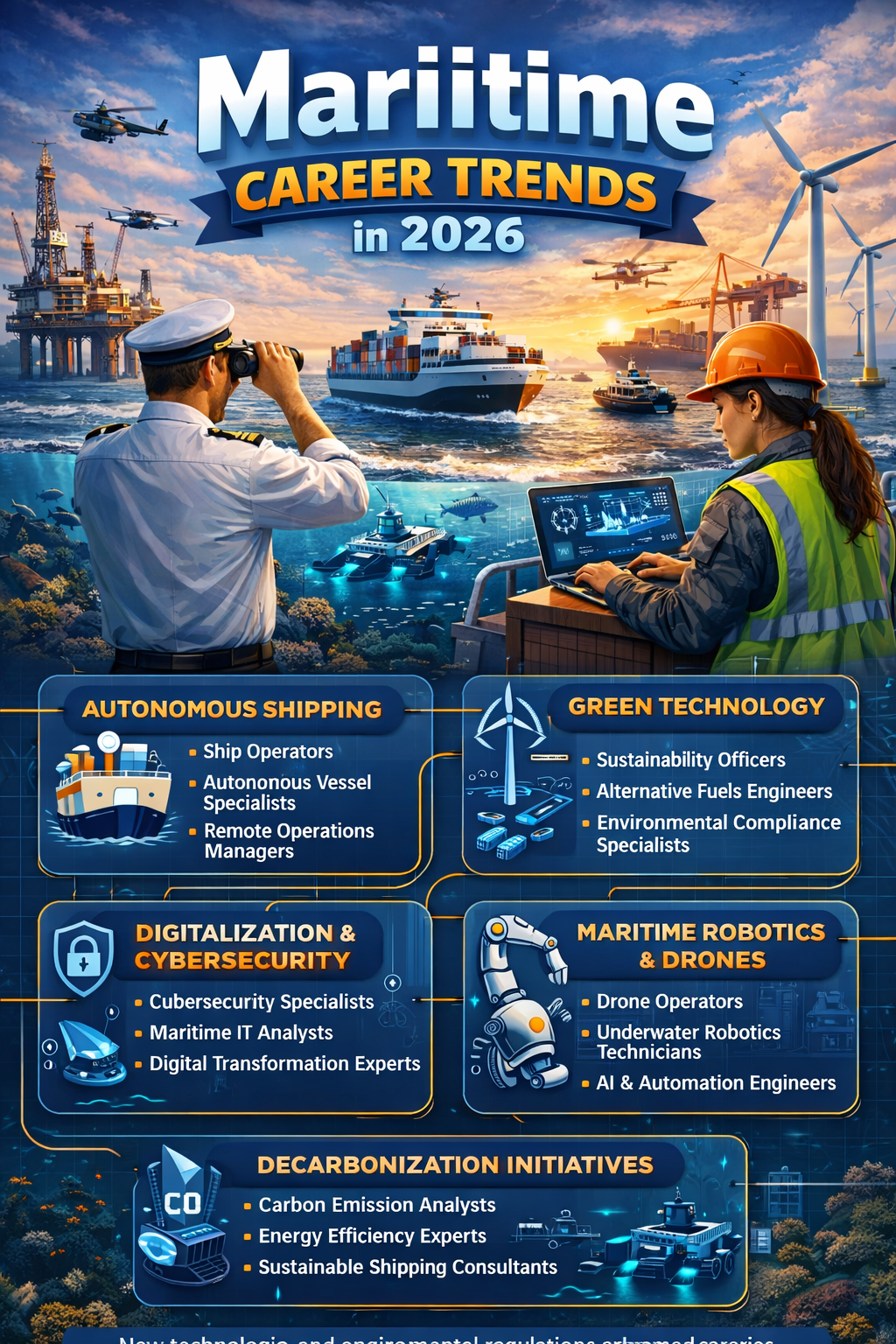
Descriptive infographic outlining sea-based professions, training, and certifications.
4. Welfare, Wellbeing and Advanced Training Tools
Seafarer welfare — including mental health support and training enhancements such as simulation‑based learning (VR/AR) — is gaining attention in workforce planning. Digital wellbeing platforms may support crew performance in extended voyages and isolated environments.
Workforce insight: Structured training and wellbeing support are increasingly part of professional development frameworks.
5. Emerging Technologies and Vessel Operations
2026 sees growing maritime discussion around semi‑autonomous vessels and remote operational technologies. Although fully unmanned deep‑sea operations are still developing, controlled remote operations are gaining regulatory and industry interest.
Career context: Traditional roles may evolve as vessels adopt new technologies, with some tasks shifting toward remote or shore‑based support.
6. ESG, Green Shipping and Compliance Roles
Environmental requirements, such as reporting under IMO’s decarbonisation frameworks and managing emissions‑related data, are shaping new roles tied to environmental, social, and governance (ESG) compliance. Regulatory focus on sustainable shipping practices may influence training and job functions.
Sector trend: Experts in environmental compliance and fuel handling may be increasingly relevant across both sea and shore‑based roles.
7. Recruitment Innovation and Talent Management
Platforms that support remote recruitment, skill matching, and digital onboarding are gaining broader adoption. These tools aim to make hiring more efficient and transparent across global labour markets.
📊 High‑Level Patterns (Non‑Promotional)
-
Workforce demand vs supply: Officer and technical role shortages continue to influence labour markets.
-
Skills evolution: Broader skill sets — from digital literacy to ESG reporting — are increasingly relevant.
-
Technology integration: Automation and digital platforms are shaping how maritime jobs are advertised and managed.
-
Wellbeing & training: Simulation training and telehealth services are part of career support frameworks.
🧭 Summary
In 2026, maritime careers continue to evolve in response to workforce supply challenges, digital transformation, environmental regulations, and operational innovations. Sea‑based work remains governed by international safety and certification standards, even as technology and recruitment systems change how roles are filled and supported.
Disclaimer: This information is educational and summarises general industry developments. It does not predict individual career outcomes or offer personalised maritime training or job advice. Trends may vary by region and require verification with local maritime authorities and accredited sources.