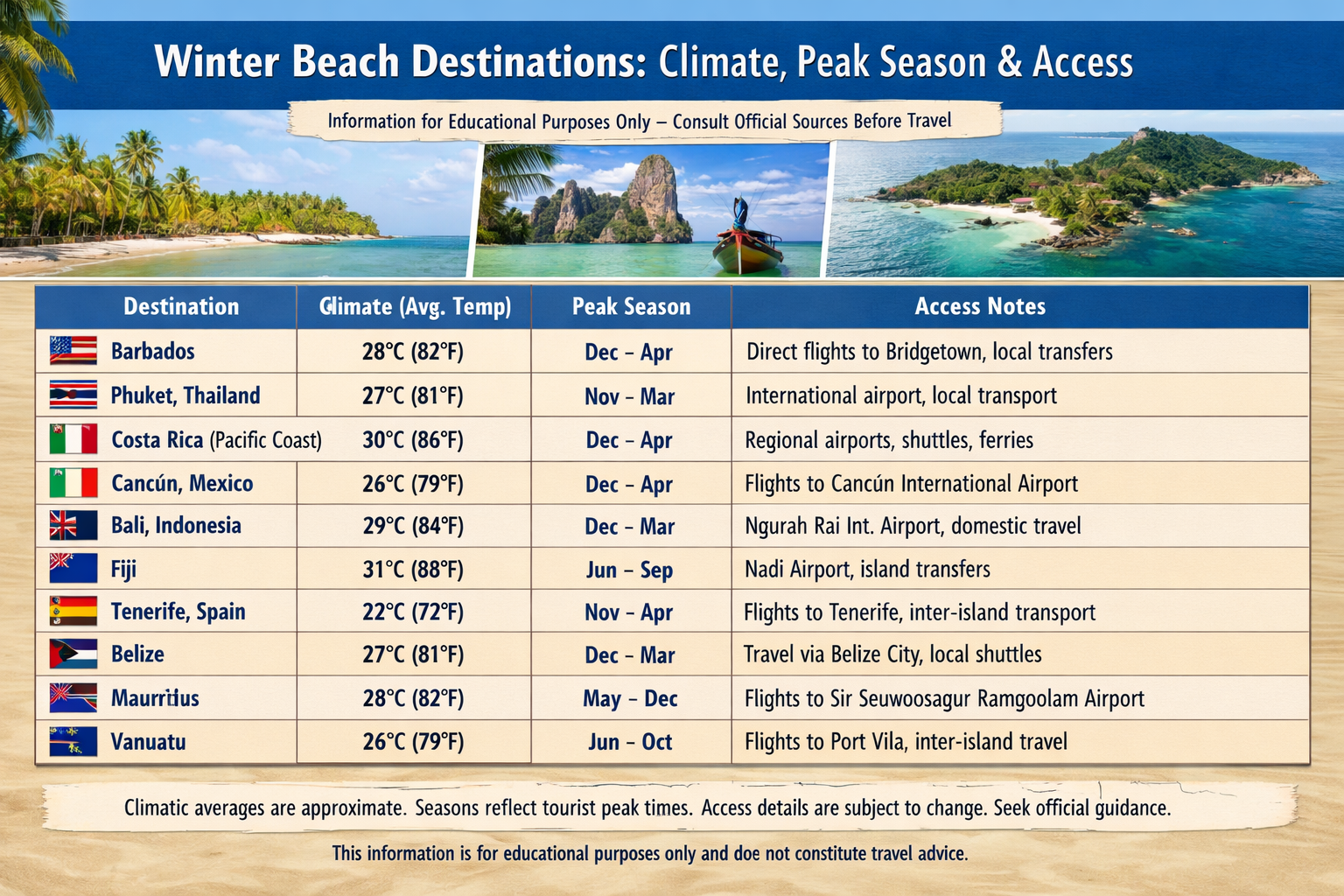
An educational overview of warmer coastal locations, transportation options, and travel considerations.
This article provides an overview of coastal destinations that typically have warmer climates during the northern hemisphere winter months. It describes geographic and climate context, transportation accessibility, cultural background, and regulatory considerations. Sources include publicly available meteorological data and tourism authorities. Readers will learn about travel logistics, seasonal weather patterns, and local travel regulations.
Destination Overview
- Caribbean Islands
The Caribbean region, including islands such as Barbados, Antigua, and Saint Lucia, experiences warm temperatures during December through March. Popular activities include beach-based recreation, boating, and snorkeling. Transportation is typically via commercial airlines to main international airports, followed by local ferry or road connections to specific accommodations. - Southeast Asia Coastal Areas
Countries such as Thailand, Vietnam, and Indonesia have tropical coastal regions that maintain warm temperatures in the northern winter months. Key beach areas include Phuket (Thailand), Nha Trang (Vietnam), and Bali (Indonesia). Travelers may access these locations via international airports with connecting domestic transport. Local regulations and entry requirements vary by country and are published by official immigration authorities. - Central America
Coastal destinations in Costa Rica, Belize, and Panama have warm climates during the northern winter. Beaches along the Pacific and Caribbean coasts are accessible through regional airports, with further transport via buses, shuttles, or ferries. Some regions observe rainy season variability, which can affect travel conditions. - Oceania – Northern Australia and Pacific Islands
Northern Queensland in Australia and Pacific islands such as Fiji and Vanuatu have tropical summer conditions during December to February. Main airports provide commercial flight access, often requiring connecting flights from larger hubs. Local authorities provide information on seasonal weather patterns, visa requirements, and travel safety.
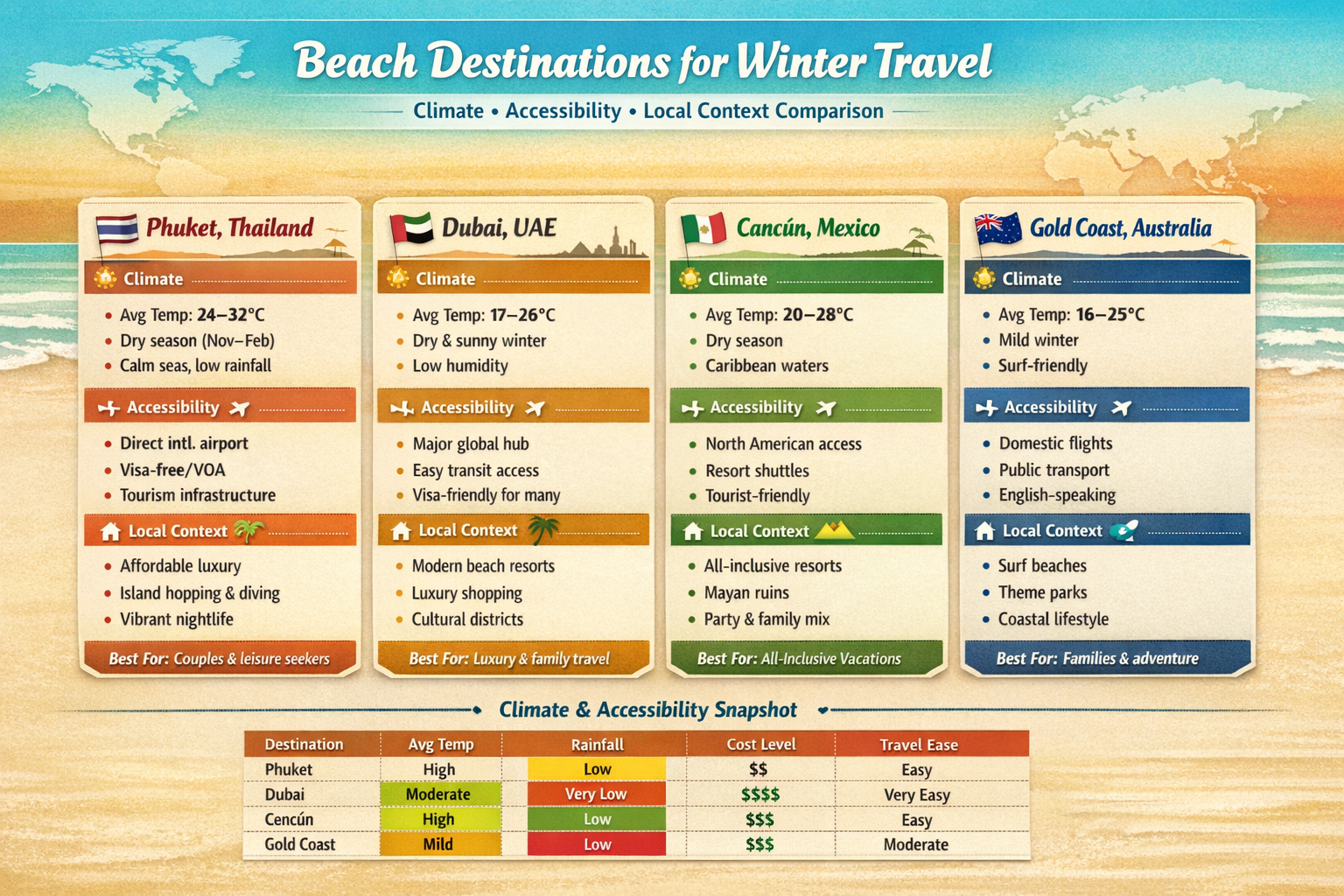
Educational infographic showing beach destinations, average climate, peak season, and travel options.
Travel Logistics
-
Transportation: Air travel is the primary access method. Local transfers may include buses, taxis, ferries, or rental vehicles.
-
Accommodation Verification: Travelers can verify accommodations through official tourism boards or recognized booking platforms that display regulatory compliance information.
-
Documentation: Entry requirements such as visas, passports, or health documentation are defined by local governments. Checking official government sources is recommended prior to travel.
Cultural and Environmental Context
-
Many coastal destinations are located in ecologically sensitive areas. Sustainable tourism practices, including responsible waste management, wildlife protection, and minimizing resource consumption, are encouraged.
-
Beaches may have different social or cultural norms; publicly available local guidance should be consulted to respect local practices.
Hypothetical Example
-
A traveler seeking warmer temperatures in January may hypothetically fly to Phuket, Thailand, and transfer via local transport to a beach resort. Seasonal rainfall and regional regulations could affect the itinerary, and official sources should be reviewed prior to planning.
Context
-
According to publicly available meteorological data, tropical and subtropical coastal regions maintain higher temperatures during the northern winter months.
-
International sustainable tourism frameworks recommend low-impact travel to preserve coastal ecosystems.
FAQ
What documents are commonly required for international travel to tropical beach destinations?
Travelers typically need a valid passport, any required visas, and, in some regions, health documentation such as vaccination certificates. Specific requirements are provided by local immigration authorities.
What is sustainable tourism in beach areas?
Sustainable tourism involves travel practices that minimize environmental impact, protect local wildlife and ecosystems, and respect cultural norms.
How can travelers verify accommodation legitimacy?
Verification can be done through official tourism boards, recognized hotel associations, and booking platforms that provide regulatory compliance information.
Trusted Source References
-
Caribbean Tourism Organization – Public Data Resources
-
Tourism Authority of Thailand – Official Visitor Guidance
-
Costa Rica Tourism Board – Entry and Travel Regulations
-
Australian Government – Department of Foreign Affairs and Trade – Travel Advice
-
United Nations World Tourism Organization – Sustainable Tourism Guidelines
Disclaimer
This article is for general informational and educational purposes only. It does not constitute professional travel, legal, immigration, health, or safety advice. References to destinations, accommodations, or services do not imply endorsement or guarantee outcomes. Travelers are encouraged to consult official government and regulatory sources when making travel decisions.