A neutral overview of linen blazers as lightweight outerwear for warm and transitional weather.
This article explains the characteristics of linen blazers as summer-transition jackets, focusing on fabric properties, garment structure, and typical styling applications. It follows Philippine consumer protection standards, including the Consumer Act of the Philippines (RA 7394), and aligns with global ethical content and EEAT principles. Readers will learn how linen blazers are constructed, how the material behaves in warm climates, and how they are generally used in seasonal wardrobe planning.
Educational Details
A linen blazer is a lightweight jacket typically made from linen or linen-blend fabric. Linen is derived from flax fibers and is known for its breathable weave, natural texture, and moisture-absorbing properties. These material qualities make linen garments commonly associated with warm or humid weather conditions.
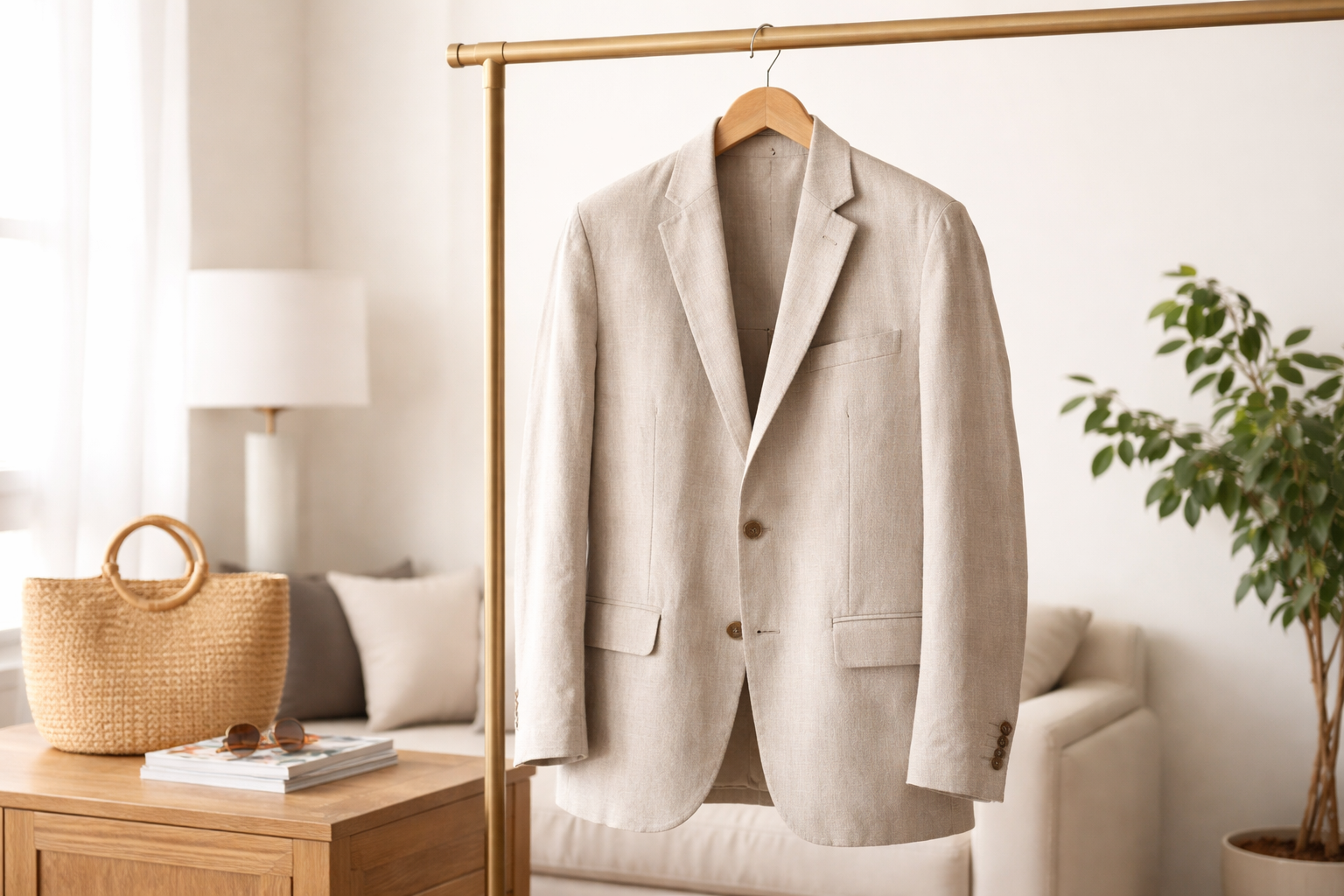
In garment construction, linen blazers often feature unstructured or lightly structured designs. Some include minimal padding, partial linings, or softer shoulder construction to reduce weight. These design choices influence how the blazer drapes and how air circulates through the fabric.
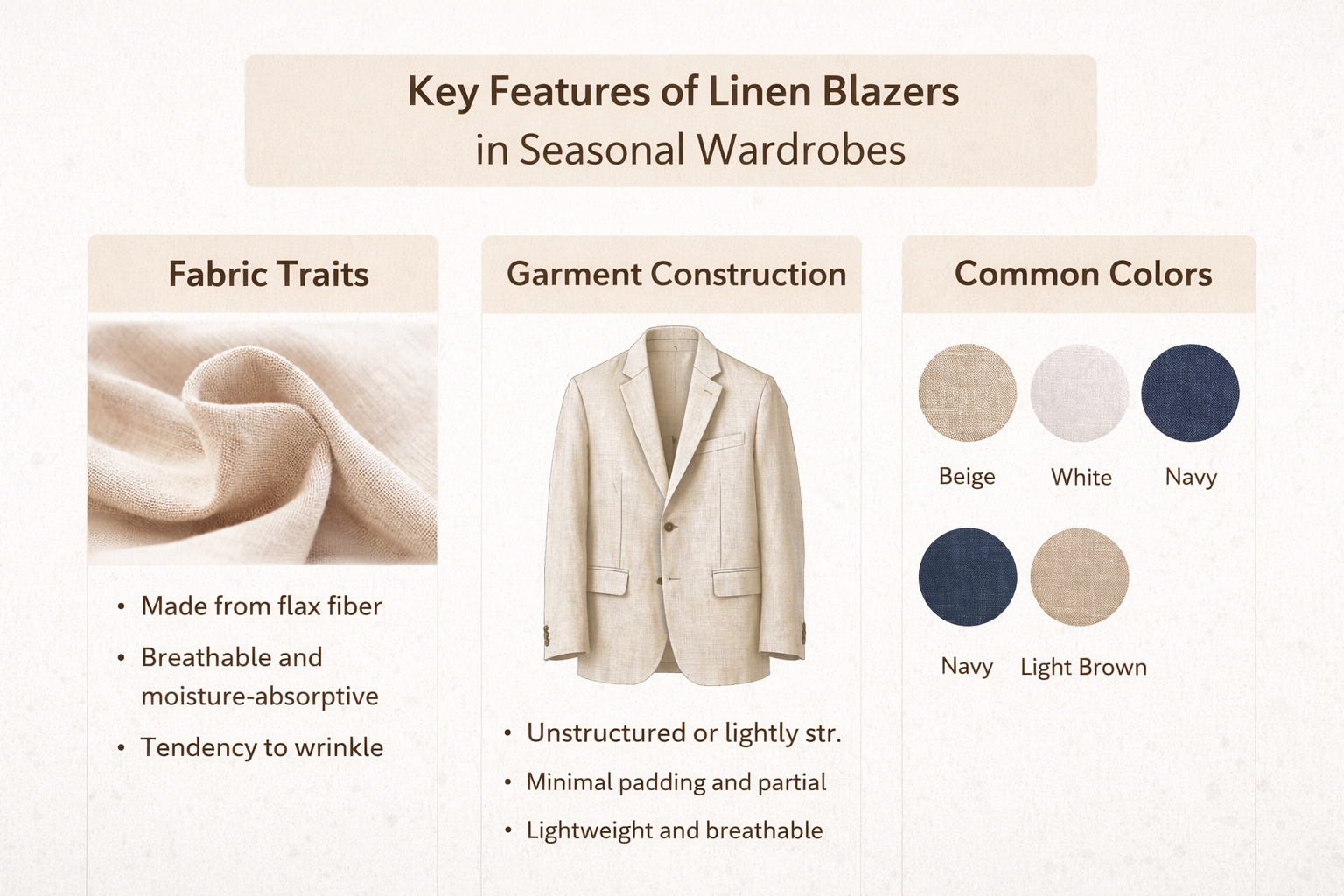
A visual outline of linen blazer characteristics and design elements.
Linen blazers are frequently used as transitional outerwear between hot and cooler periods, such as early summer mornings or air-conditioned indoor settings. They may be worn over shirts, blouses, or lightweight tops, depending on wardrobe coordination preferences.
From a fabric care perspective, linen is prone to visible creasing due to its fiber composition. This is a known material characteristic rather than a defect. Washing, ironing, and storage methods can affect the texture and longevity of linen garments, though outcomes vary based on fabric quality and handling.
Color options for linen blazers often include neutral tones such as beige, white, gray, navy, and earth shades. These colors are commonly chosen for their adaptability within a range of outfit combinations, without implying aesthetic or social outcomes.
Context
In fashion history, linen has been used in clothing for centuries due to its availability, durability, and comfort in warm climates. Ancient civilizations incorporated linen into daily wear, ceremonial garments, and trade textiles.
In general styling practice, lightweight jackets like linen blazers serve functional and structural purposes rather than aesthetic guarantees. Wardrobe coordination involving blazers typically considers climate, layering needs, garment proportion, and textile compatibility.
Under consumer awareness standards, understanding fabric type, fiber origin, and construction methods can support more informed interpretation of product descriptions and labeling. This background knowledge does not imply quality ranking or purchasing endorsement.
FAQ
What is a linen blazer?
A linen blazer is a lightweight jacket made primarily from linen fabric. It is commonly worn in warm or transitional weather.
Why does linen wrinkle easily?
Linen fibers have low elasticity, which makes creases more visible. This is a natural property of the material.
Is linen suitable for hot climates?
Linen is generally considered breathable and moisture-absorbent. These traits describe fabric performance rather than personal comfort outcomes.
Trusted Sources
-
Consumer Act of the Philippines (RA 7394)
-
Fashion Institute of Technology (FIT) — Textile and Apparel Studies
-
Smithsonian — Historical Textile Collections
-
UNESCO — Traditional Fabric and Clothing Archives
-
Academic journals on fabric science and garment construction
Disclaimer
This article is for general informational and educational purposes only. It does not constitute professional styling, psychological, medical, or consumer purchasing advice. References to fashion trends, brands, or styling methods do not imply endorsement or guarantee of results. Readers are encouraged to rely on personal preference, verified product information, and official consumer protection resources when making fashion or purchasing decisions.