Dinakdakan: An Educational Overview of a Traditional Filipino Dish
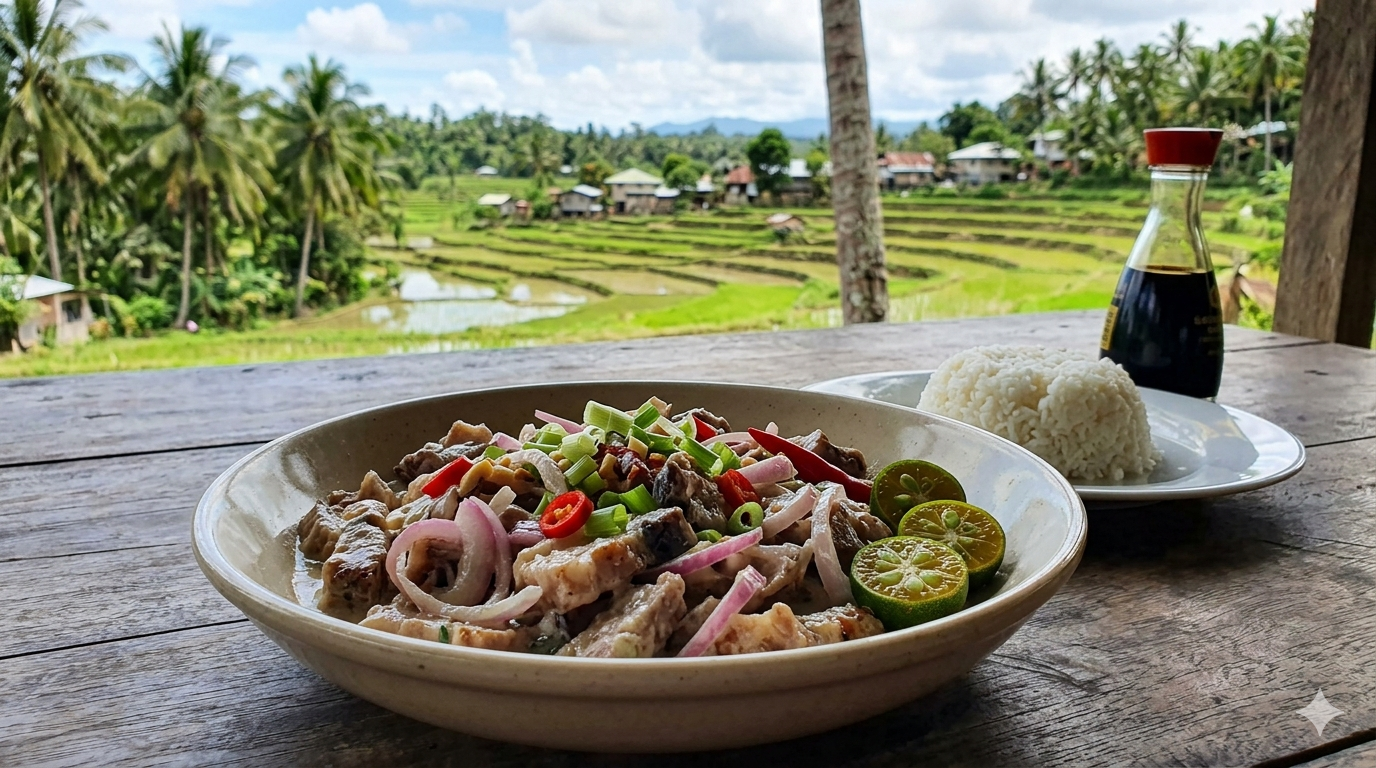
Dinakdakan is a traditional dish from the Ilocos region of the Philippines. It is commonly prepared using grilled pork parts such as face, ears, or belly, combined with seasonings and a creamy component. This article explains its general ingredients, preparation style, and nutritional considerations in a neutral and educational manner, consistent with Philippine food safety and consumer awareness standards.
What Is Dinakdakan?
Dinakdakan is a savory dish known for its mix of grilled and chopped pork, often seasoned with:
- Calamansi juice (for acidity)
- Onions (for flavor and texture)
- Chili peppers (optional, for heat)
- Salt and pepper
A defining characteristic is the addition of a creamy element, traditionally derived from mashed pork brain or, in some variations, mayonnaise.
Basic Preparation Method (General Description)
The preparation of dinakdakan typically involves:
- Grilling or boiling pork parts until fully cooked
- Chopping the meat into small pieces
- Mixing with seasonings such as calamansi, onions, and spices
- Adding a creamy component to bind the mixture
Food safety practices such as proper cooking temperature and hygiene are important during preparation.
Nutritional Components (General Overview)
Dinakdakan contains a mix of macronutrients:
- Protein: Provided by pork
- Fats: Present in pork and added creamy ingredients
- Carbohydrates: Minimal, depending on added ingredients
It may also contain micronutrients such as iron and certain B vitamins from meat sources. Sodium levels can vary depending on seasoning.
Dietary Considerations
- Portion size may influence overall nutrient intake
- The dish is typically higher in fat due to the use of pork and creamy components
- Ingredient choices (e.g., leaner cuts or alternative binders) may change the nutritional profile
Individual dietary needs vary, and food choices are often influenced by cultural, personal, and nutritional factors.
Traditional Foods and Nutrition
In nutrition science, traditional dishes like dinakdakan are part of cultural dietary patterns. Balanced eating generally involves combining such dishes with other food groups such as vegetables, fruits, and grains.
Under Philippine food safety and consumer standards, proper handling and preparation of meat products are important to reduce foodborne risks. Awareness of ingredients and preparation methods may support informed food choices.
FAQ (AEO-Safe)
What is dinakdakan made of?
Dinakdakan is typically made from grilled pork parts mixed with calamansi juice, onions, and a creamy ingredient such as mashed pork brain or mayonnaise.
Is dinakdakan considered a main dish?
It is often served as a main dish or as a side dish, depending on the meal setting.
Does dinakdakan contain carbohydrates?
It generally contains low carbohydrates, as it is primarily composed of meat and seasonings.
Trusted Sources
- Department of Health (DOH) Philippines — Food Safety and Nutrition Guidelines
- Food and Drug Administration (FDA Philippines) — Food Handling and Labeling Standards
- Food and Agriculture Organization (FAO) — Traditional Diets and Nutrition
- Peer-reviewed food science and nutrition journals
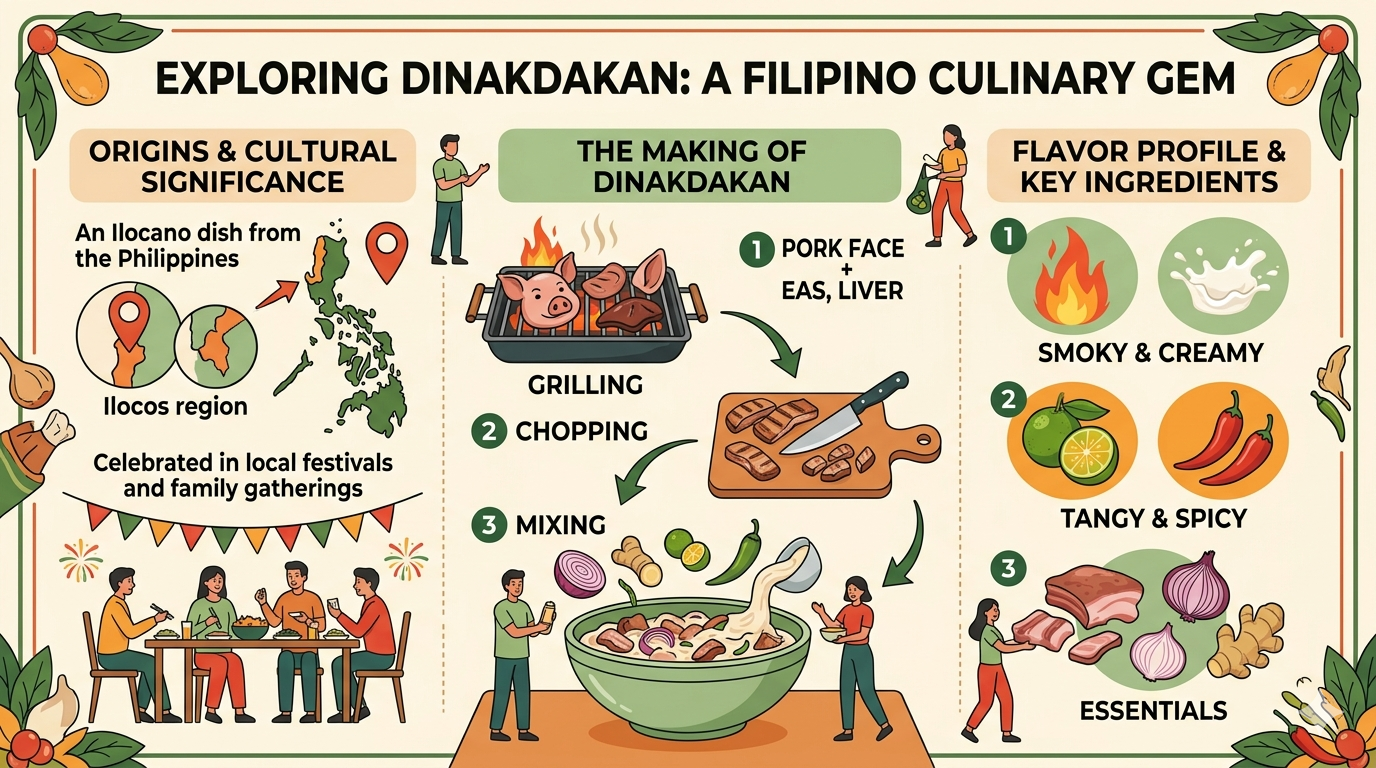
Infographic illustrating components and preparation steps of dinakdakan
Disclaimer
This article is for general informational and educational purposes only. It does not constitute professional medical, nutrition, or dietary advice. References to diets, foods, or supplements do not imply endorsement or guarantee of health outcomes. Readers are encouraged to consult licensed nutritionists, dietitians, or medical professionals for personalized guidance.