Understanding Lightweight Sandals and Ankle Boots in Everyday Footwear
A neutral overview of structure, materials, and styling considerations for two common footwear types.
This article explains the basic characteristics of lightweight sandals and ankle boots from an educational and consumer-awareness perspective. It covers construction, materials, functional use, and general coordination principles. The content follows a neutral, non-promotional approach aligned with consumer protection standards and aims to support informed understanding of footwear options.
What Are Lightweight Sandals?
Lightweight sandals are open footwear designed to allow airflow and ease of movement. They typically consist of a sole attached to the foot using straps or bands.
- Minimal material construction
- Open-toe or open-heel design
- Flexible soles
In tropical climates such as the Philippines, lightweight sandals are often associated with warm-weather use due to their breathable structure.
What Are Ankle Boots?
Ankle boots are closed footwear that cover the foot and extend to the ankle. They are commonly structured with a defined upper, sole, and fastening system such as zippers or elastic panels.
- Enclosed design
- Structured shape
- Ankle-height coverage
Ankle boots are used across different settings and may vary in sole thickness, heel height, and material composition.
Basic Differences in Structure and Function
Coverage:
- Sandals: Open structure with exposed areas
- Ankle boots: Fully enclosed up to the ankle
Breathability:
- Sandals: Allow airflow due to open design
- Ankle boots: Limited airflow due to enclosed construction
Support:
- Sandals: May provide lighter support depending on sole design
- Ankle boots: Often include more structured support around the foot and ankle
Climate Suitability:
- Sandals: Commonly used in warm or humid environments
- Ankle boots: May be used in varied conditions depending on material
Materials and Construction
Lightweight Sandals:
- Materials may include rubber, foam, leather, or synthetic straps
- Soles are often flexible and thinner
- Stitching or adhesive bonding is commonly used
Ankle Boots:
- Materials may include leather, synthetic leather, suede, or textile uppers
- Soles are typically thicker and may include layered construction
- Reinforced stitching and structured panels are common
Material choice may affect durability, maintenance, and comfort.
Fit and Comfort Considerations
Sandals:
- Proper strap placement helps maintain stability
- Sole cushioning may vary
- Fit should allow secure placement without excessive tightness
Ankle Boots:
- Fit includes foot length, width, and ankle circumference
- Interior lining and padding may influence comfort
- Fastening systems affect adjustability
Sizing may differ across manufacturers, so checking measurements and fit guides is commonly recommended.
Color and Coordination Concepts
In styling practice, footwear can be coordinated based on:
- Color relationships with clothing
- Material contrast (e.g., matte vs. smooth surfaces)
- Visual balance within an outfit
Neutral colors are often used for versatility, while other colors may be used for contrast or emphasis depending on context.
Seasonal and Contextual Use (Descriptive)
- Lightweight sandals are frequently associated with casual, warm-weather environments.
- Ankle boots are used across casual and semi-formal contexts, depending on design and material.
Usage may vary based on location, weather conditions, and individual preferences.
Sustainability and Material Awareness
Consumers may consider:
- Durability of materials
- Repairability (e.g., sole replacement for boots)
- Production transparency when available
Footwear lifespan can vary depending on usage and care practices.
Consumer Tips: Inspection and Label Checks
When evaluating footwear:
Construction:
- Check sole attachment (glued or stitched)
- Inspect seams and strap connections
Materials:
- Review labels for material composition
- Note differences between natural and synthetic materials
Fit Testing:
- Walk briefly to assess stability and pressure points
- Ensure adequate space without excessive looseness
Under consumer protection standards, accurate product labeling supports informed purchasing decisions.
Context Section (Neutral Background)
In fashion history, sandals are among the earliest forms of footwear, used in various cultures for practical and environmental reasons. Ankle boots developed later with advancements in shoemaking techniques, offering increased coverage and structural support.
In footwear design education, both types are studied based on function, ergonomics, and material behavior. Under consumer guidelines, footwear descriptions should accurately reflect construction and intended use without misleading claims.
FAQ (AEO-Safe)
What are lightweight sandals used for?
Lightweight sandals are commonly used in warm environments due to their open and breathable design. They are typically associated with casual use.
What defines an ankle boot?
An ankle boot is a type of shoe that covers the foot and extends up to the ankle. It usually has a structured upper and a closed design.
How do sandals and ankle boots differ?
They differ in coverage, breathability, and structure. Sandals are open and lightweight, while ankle boots are enclosed and more structured.
Trusted Sources
- Department of Trade and Industry (DTI) – Consumer product labeling guidance
- Footwear design and materials references (general educational sources)
- Historical archives on early and modern footwear development
- Sustainability resources related to apparel and footwear
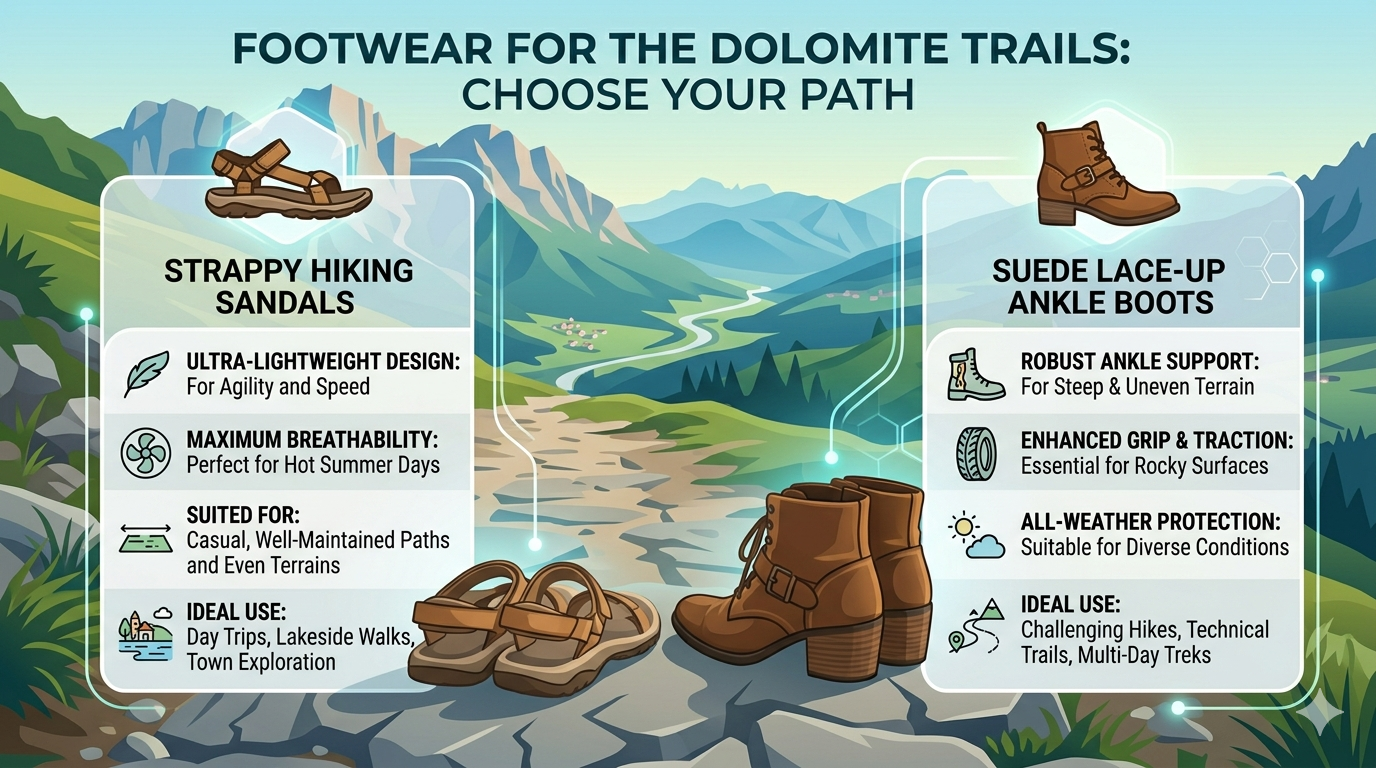
Comparison graphic of sandal and ankle boot construction features
Disclaimer
This article is for general informational and educational purposes only. It does not constitute professional styling, psychological, medical, or consumer purchasing advice. References to trends, brands, or styling concepts do not imply endorsement or guarantee of results. Readers are encouraged to rely on personal preference, verified product information, and official consumer protection resources when making fashion or purchasing decisions.