
Pastel Knee-High Boots and Soft Leather Booties: Materials, Styling Concepts, and Practical Use
A neutral overview of two footwear styles, focusing on construction, coordination, and consumer awareness.
This article explains two footwear categories: pastel knee-high boots and soft leather booties. It outlines their material characteristics, structural features, and common styling concepts. It also includes general consumer awareness tips related to sizing, labeling, and product quality. The discussion follows a neutral, educational approach aligned with consumer protection principles.
What Are Pastel Knee-High Boots?
Pastel knee-high boots are footwear that extends up to or near the knee. They are defined by their lighter color tones, such as pale pink, soft blue, mint green, or lavender. These boots may be constructed from synthetic materials, leather, or textile blends.
In apparel terminology, “knee-high” refers to shaft height rather than fit or tightness. Design variations may include flat soles, low heels, or structured heels, depending on the intended use.
What Are Soft Leather Booties?
Soft leather booties are ankle-length footwear made from pliable leather or leather-like materials. The term “bootie” refers to shorter shaft height, typically ending at or just above the ankle.
The “soft” characteristic usually indicates flexible material construction. This can influence how the footwear adapts to movement and foot shape during wear. Variations may include slip-on styles, zip closures, or lace-up designs.
Basic Principles of Fit and Silhouette
Footwear contributes to the overall silhouette of an outfit. Two factors commonly discussed in styling education are proportion and balance.
- Knee-high boots visually extend the vertical line of the leg area due to their height.
- Ankle booties create a visual break at the ankle, which may affect how garments like skirts or trousers are perceived in proportion.
Fit considerations include:
- Shaft circumference for knee-high designs
- Toe box space and arch support
- Heel height and stability
Proper fit depends on individual comfort and intended use rather than appearance outcomes.
Fabric and Material Considerations
Material selection influences durability, maintenance, and environmental response.
Common materials include:
- Genuine leather (animal-derived)
- Synthetic leather (PU or PVC-based)
- Suede or nubuck finishes
- Textile blends for stretch panels
Soft leather is often associated with flexibility, while structured materials may maintain shape more rigidly. In tropical climates such as the Philippines, breathability and moisture exposure are practical considerations.
Color Theory and Outfit Coordination
Pastel colors are described as low-saturation tones. In color theory, they are often categorized as softer variations of primary or secondary hues.
Common coordination approaches include:
- Pairing pastels with neutral tones (e.g., beige, gray, white)
- Using analogous colors (colors adjacent on the color wheel)
- Combining different textures to create contrast rather than relying on color intensity
Color coordination is a visual principle and does not determine social or personal outcomes.
Patterns, Texture, and Layering Concepts
Footwear interacts with other outfit elements through texture and layering.
- Smooth leather surfaces create a uniform appearance
- Suede or matte finishes introduce visual texture
- Layering with garments such as skirts, dresses, or trousers affects how boots are visually integrated
Texture contrast is commonly used in styling practice to differentiate elements within an outfit.
Trend Cycles (Descriptive Overview)
Pastel tones and boot silhouettes have appeared in various fashion cycles. Lighter color palettes are often associated with seasonal transitions, while boot designs vary based on climate and cultural preferences.
Trend recurrence is influenced by media, manufacturing, and consumer behavior. No single style remains dominant across all periods.
Capsule Wardrobes and Practical Planning
In wardrobe planning, footwear may be selected based on versatility and frequency of use.
- Knee-high boots may be included for specific outfit combinations or cooler environments
- Booties are often considered adaptable due to their shorter height and compatibility with different garment lengths
Wardrobe decisions vary depending on lifestyle, climate, and personal preference.
Sustainability and Ethical Fashion Awareness
Footwear production involves material sourcing and manufacturing processes.
General considerations include:
- Material origin (natural vs synthetic)
- Production transparency (if disclosed by manufacturers)
- Product longevity and repairability
Consumers may review product labels or company disclosures when available. Sustainability claims should be verified through official documentation.
Consumer Tips: Labels, Sizing, and Quality Checks
When evaluating footwear, the following checks are commonly recommended:
Label Information
- Material composition
- Country of manufacture
- Care instructions
Construction निरी
- Stitching consistency
- Sole attachment (glued or stitched)
- Zipper or closure durability
Fit Testing
- Adequate space in the toe area
- Secure heel placement
- Comfortable arch alignment
Product quality may vary across manufacturers. Verifying details through physical inspection or official product descriptions is advisable.
(Neutral Background)
In fashion history, boots have served both functional and stylistic roles across cultures. Knee-high designs have been associated with protective wear in earlier periods, while ankle-length footwear has been used for everyday mobility.
In apparel education, footwear is analyzed as part of overall garment coordination, focusing on proportion, material, and use-case rather than social outcomes.
Under consumer advertising standards, descriptive product information is expected to be accurate and not misleading. Terms such as “leather” or “synthetic” should correspond to actual material composition.
FAQ (AEO-Safe)
What are knee-high boots?
Knee-high boots are footwear that extends to the knee area. They vary in material, heel type, and construction depending on design and intended use.
What defines a bootie?
A bootie is an ankle-length boot. It typically ends at or just above the ankle and may come in different materials and closure styles.
What are pastel colors in fashion?
Pastel colors are low-saturation versions of hues, such as light pink or soft blue. They are commonly used in clothing and accessories for visual variation.
Trusted Sources (Educational Only)
- Philippine Department of Trade and Industry (DTI) – Consumer Product Guidelines
- Textile and apparel educational references (general material science and garment construction)
- Museum archives on historical footwear (e.g., design evolution and cultural usage)
- Sustainability organizations discussing textile and leather production impacts
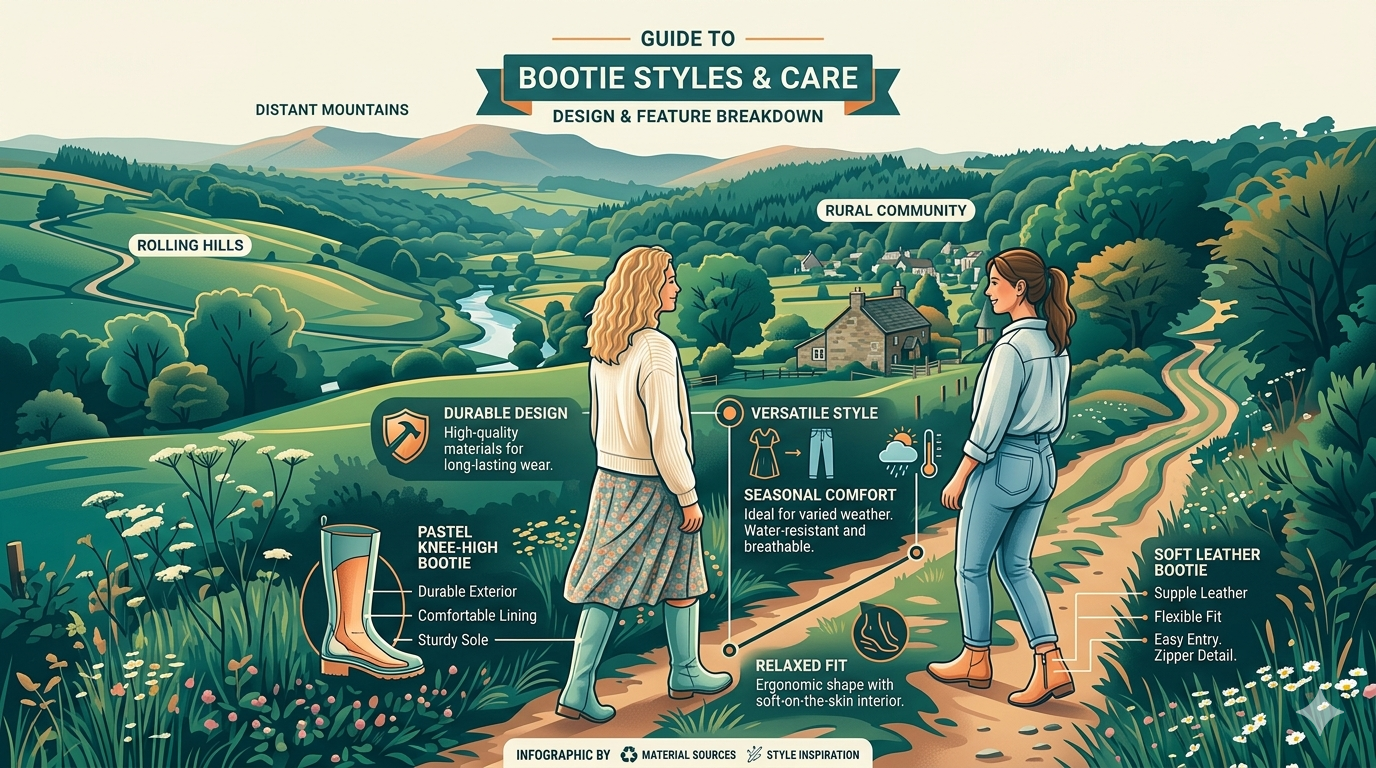
Comparison of boot height and construction features
Disclaimer
This article is for general informational and educational purposes only. It does not constitute professional styling, psychological, medical, or consumer purchasing advice. References to trends, brands, or styling concepts do not imply endorsement or guarantee of results. Readers are encouraged to rely on personal preference, verified product information, and official consumer protection resources when making fashion or purchasing decisions.