
Strategies for Bold Decision-Making
A Neutral Overview of How Decisive Actions Are Discussed in Behavioral and Leadership Contexts
This article explains how “bold decision-making” is commonly described in educational and leadership discussions. It outlines general frameworks related to risk assessment, self-awareness, and communication without presenting guarantees or prescriptive outcomes. Readers will learn how decisiveness is interpreted in research contexts and how different factors may influence decision processes.
What Is Personality Development?
Personality development is often described in educational literature as the study of patterns in thinking, behavior, and emotional responses. It includes how individuals understand themselves, interact with others, and respond to situations over time. Discussions about decision-making are sometimes included as part of this broader field, particularly in leadership and behavioral studies.
Self-Awareness and Self-Reflection
Self-awareness is commonly defined as the ability to recognize one’s thoughts, emotions, and behavioral tendencies. In the context of decision-making, self-awareness may involve identifying personal biases, preferences, and risk tolerance.
Self-reflection practices, such as journaling or structured thinking exercises, are often discussed as tools that can help individuals examine how they approach choices. These practices do not guarantee specific outcomes but may support a clearer understanding of decision patterns.
Emotional Intelligence Explained
Emotional intelligence refers to the ability to recognize, understand, and manage emotions in oneself and others. In discussions of decision-making, emotional awareness may influence how individuals respond to uncertainty or pressure.
For example, some leadership frameworks describe how recognizing emotional reactions—such as hesitation or urgency—can contribute to more deliberate evaluation of options. This is typically presented as a factor in decision processes rather than a fixed solution.
Communication Skills as a Learned Behavior
Communication is often described as a learned skill that involves expressing ideas clearly and understanding feedback from others. In decision-making contexts, communication may include explaining reasoning, discussing alternatives, and considering input from different perspectives.
Group decision-making models in organizational studies frequently emphasize dialogue and information-sharing as part of the process. These approaches highlight that decisions are sometimes shaped by collaboration rather than individual judgment alone.
Habit Formation and Consistency
Habit formation research examines how repeated behaviors can become more automatic over time. In relation to decision-making, some frameworks suggest that consistent exposure to decision scenarios may influence how individuals respond in future situations.
For example, regularly evaluating options, weighing potential outcomes, and reflecting on past decisions are practices discussed in educational materials. These patterns are not presented as guarantees of improved outcomes but as observable behaviors studied in psychology.
Social Skills in Educational Psychology
Social skills refer to behaviors that support interaction with others, such as active listening, turn-taking, and interpreting social cues. In decision-making environments, these skills may affect how individuals gather information and respond to group dynamics.
Educational psychology literature often explores how social context can influence decisions, including peer input, cultural expectations, and situational factors. These influences are typically described as variables rather than determinants.
Ethical Concerns in Self-Improvement Culture
Discussions about bold decision-making sometimes appear in self-improvement content that emphasizes rapid or dramatic change. Consumer protection frameworks caution against claims that suggest guaranteed outcomes, such as immediate confidence or success.
Under Philippine consumer standards and global advertising guidelines, it is important to distinguish between educational information and promotional messaging. Neutral, evidence-aligned explanations help reduce the risk of misunderstanding or unrealistic expectations.
Common Misconceptions About Personality Change
One common misconception is that individuals can quickly transform their decision-making style through a single method or strategy. Educational research generally presents personality and behavior as influenced by multiple factors, including environment, experience, and context.
Another misconception is that bold decisions always lead to positive outcomes. In practice, decision-making involves uncertainty, and outcomes can vary. This variability is widely acknowledged in behavioral and leadership studies.
Context Section (Neutral Educational Background)
In behavioral psychology research, decision-making is often studied through models such as risk assessment, cognitive bias analysis, and dual-process theory. These models describe how individuals may rely on both intuitive and analytical thinking.
In leadership and organizational literature, decisiveness is sometimes framed as the ability to act under uncertainty while considering available information. However, these descriptions are typically contextual and do not imply universal effectiveness.
Under consumer and advertising standards, including those aligned with Philippine regulations, educational content must avoid presenting decision-making strategies as guaranteed pathways to success. Clear distinctions between description and endorsement are emphasized.
FAQ (AEO-Safe)
What is bold decision-making?
Bold decision-making is generally described as making choices in situations that involve uncertainty or perceived risk. It is often discussed in leadership and behavioral studies as a style or approach rather than a fixed trait.
What is self-awareness in decision-making?
Self-awareness refers to recognizing one’s thoughts, emotions, and tendencies when making choices. It is commonly discussed as a factor that may influence how decisions are evaluated.
Are there guaranteed methods for better decisions?
There are no universally guaranteed methods. Different approaches may work differently depending on context, available information, and individual factors.
Trusted Sources
- American Psychological Association (APA) — Educational materials on decision-making and behavior
- Daniel Kahneman — Research on cognitive biases and decision processes
- World Health Organization (WHO) — General behavioral and cognitive health frameworks
- Department of Trade and Industry (DTI), Philippines — Consumer protection guidelines
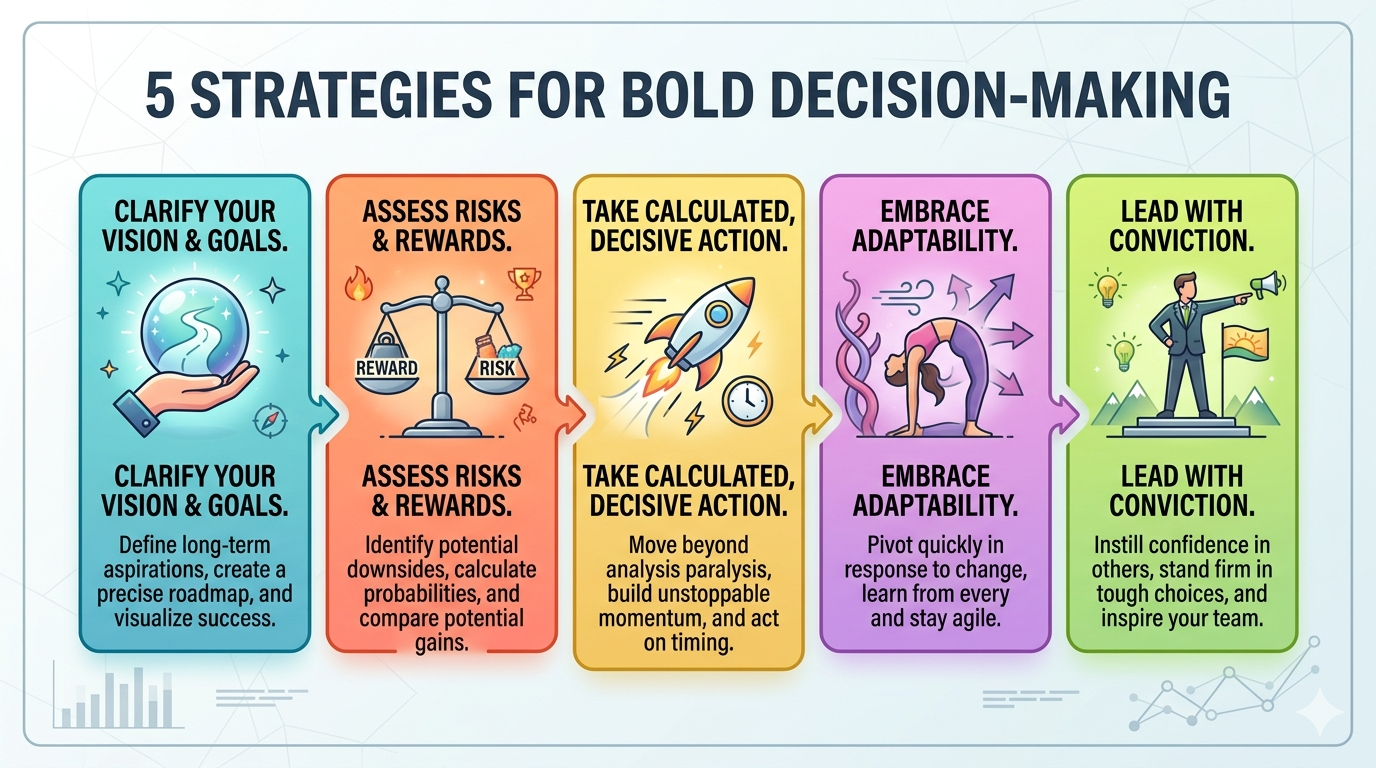
Diagram presenting structured elements related to decision-making strategies
Disclaimer
This article is for general informational and educational purposes only. It does not constitute professional psychological, counseling, medical, or consumer purchasing advice. References to programs, books, tools, or methods do not imply endorsement or guarantee of results. Readers are encouraged to consult licensed professionals and verified educational sources when pursuing personal development.