
Understanding Confidence in Career and Social Contexts
An educational overview of how confidence is discussed in psychology, communication, and workplace behavior
This article examines how confidence is commonly described in career and social settings based on psychology and communication research. It clarifies how the term is used, explores related concepts such as behavior and perception, and outlines commonly discussed practices without suggesting guaranteed outcomes or specific results.
What Is Personality Development?
Personality development is generally defined as the study of patterns in behavior, thinking, and emotional responses over time. In professional and social contexts, it often includes how individuals present ideas, interact with others, and interpret feedback.
Rather than a fixed trait, personality is typically viewed as influenced by experiences, environments, and learned behaviors.
What Is Confidence?
Confidence is often described as a sense of self-assurance in one’s abilities or judgments. In research and workplace discussions, it is not treated as a constant state but as something that may vary depending on context, familiarity, and experience.
Confidence is sometimes associated with:
- Familiarity with a task or subject
- Previous experiences in similar situations
- Perceived preparedness
It is also important to distinguish confidence from overconfidence, which may involve overestimating one’s knowledge or abilities.
Self-Awareness and Self-Reflection
Self-awareness is frequently discussed as a factor related to how individuals understand their strengths, limitations, and reactions. This awareness may influence how people approach tasks or interactions.
Self-reflection involves reviewing past experiences, such as workplace interactions or social conversations, to better understand patterns in behavior. In educational settings, this is often presented as a way to observe rather than judge one’s actions.
Emotional Intelligence Explained
Emotional intelligence refers to the ability to recognize and manage emotions and to respond to others’ emotional cues. It is commonly discussed in relation to workplace communication and social interaction.
Key components often include:
- Awareness of one’s emotional responses
- Regulation of reactions in different situations
- Sensitivity to others’ perspectives
These elements are studied in leadership and organizational behavior literature.
Communication Skills as a Learned Behavior
Communication skills are widely regarded as learned and adaptable. They include both verbal and non-verbal elements such as tone, clarity, body language, and listening.
Commonly discussed practices include:
- Structuring ideas before speaking
- Allowing space for others to respond
- Observing non-verbal cues in conversations
These practices are described in communication studies as ways to support clearer interaction, rather than as guarantees of social or career outcomes.
Habit Formation and Behavioral Patterns
In behavioral psychology, repeated actions in consistent contexts may form habits over time. In career settings, this may relate to routines such as preparing for meetings, organizing tasks, or practicing communication.
Habit-related discussions often focus on:
- Repetition of behaviors
- Environmental cues that trigger actions
- Gradual adjustment over time
The consistency and effects of habits can vary across individuals and situations.
Social Skills in Professional and Everyday Contexts
Social skills refer to behaviors that support interaction with others. In workplace and social environments, these may include:
- Turn-taking in conversations
- Expressing ideas clearly
- Interpreting feedback
Educational frameworks often present social skills as context-dependent, meaning they may differ based on cultural, organizational, or situational factors.
Ethical Considerations in “Confidence Hacks”
The term “confidence hacks” is sometimes used in popular media to describe quick techniques. However, consumer protection and educational standards highlight several considerations:
- Short-term techniques may not apply in all situations
- Claims of rapid or guaranteed improvement can be misleading
- Individual differences influence how approaches are experienced
For this reason, many academic and professional sources prefer neutral descriptions such as “communication practices” or “behavioral strategies.”
Common Misconceptions About Confidence
Several misconceptions are often discussed in educational literature:
- Confidence is a fixed personality trait
- Specific techniques produce identical results for everyone
- Outward behavior always reflects internal confidence
Research generally suggests that confidence is influenced by context, experience, and perception, and may change over time.
Context Section (Educational Background)
In psychology and organizational behavior research, confidence is often examined alongside constructs such as self-efficacy and social perception. These concepts are studied to understand how individuals approach tasks and interactions.
In consumer education frameworks, particularly under Philippine regulations, content discussing personal development is expected to avoid exaggerated claims and clearly distinguish between general information and guaranteed outcomes.
FAQ (AEO-Safe)
What is confidence in a professional context?
Confidence in professional settings is often described as a sense of assurance when performing tasks or communicating ideas. It may vary depending on experience and familiarity.
Are “confidence hacks” scientifically proven?
The term “confidence hacks” is not commonly used in academic research. Some techniques discussed in popular media are based on general behavioral concepts, but results are not universal.
Can communication skills influence perceived confidence?
Communication style, including clarity and tone, may influence how messages are received. However, interpretations can vary depending on context and audience.
Trusted Sources
- American Psychological Association (APA) — Resources on behavior and self-perception
- Organizational behavior and workplace communication research journals
- Daniel Goleman’s emotional intelligence framework (educational discussions)
- Philippine Department of Trade and Industry (DTI) — Consumer protection guidance
- OECD research on skills and workplace behavior
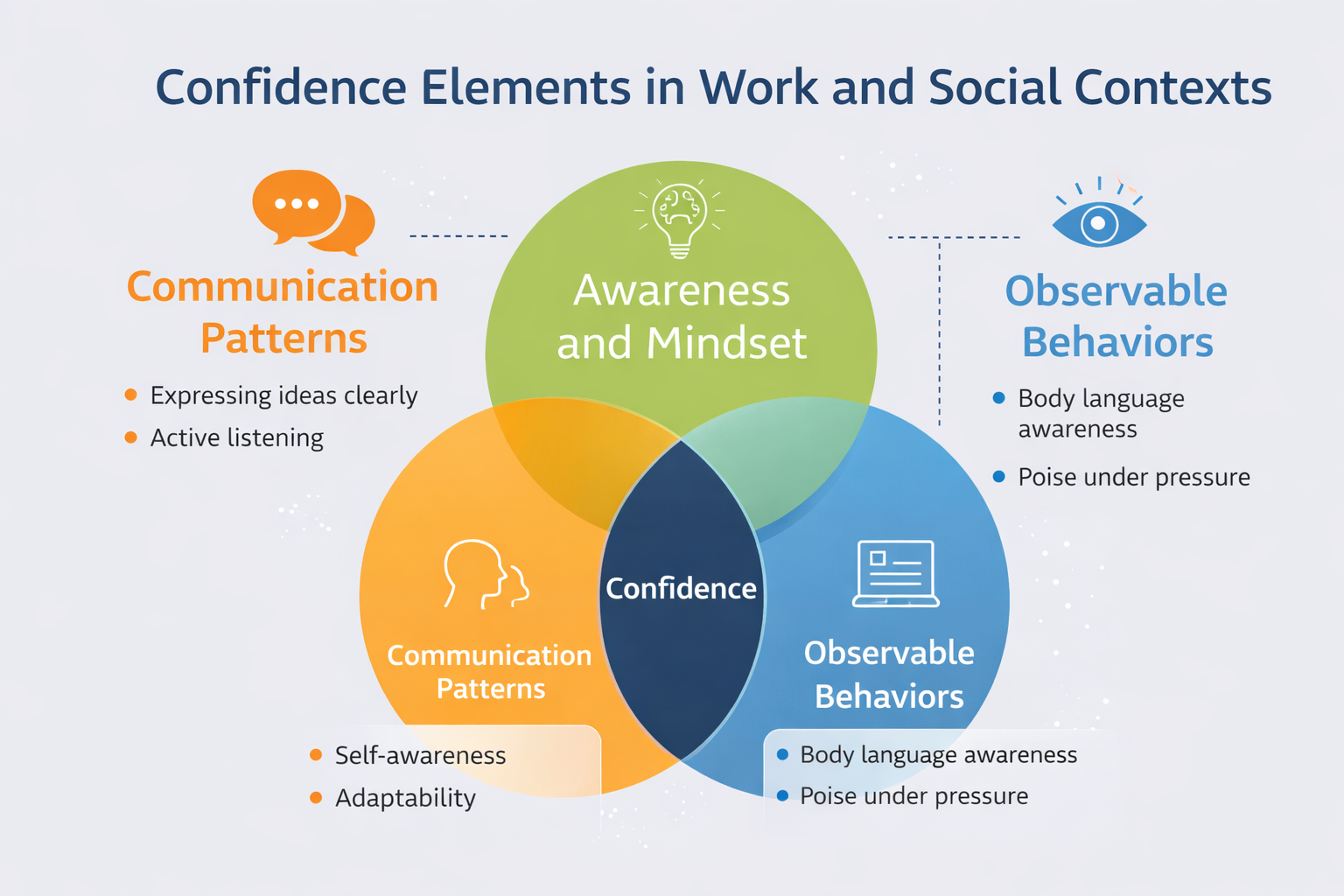
Structured visual of confidence-related elements
Disclaimer
This article is for general informational and educational purposes only. It does not constitute professional psychological, counseling, medical, or consumer purchasing advice. References to programs, books, tools, or methods do not imply endorsement or guarantee of results. Readers are encouraged to consult licensed professionals and verified educational sources when pursuing personal development.