
Assertiveness Training in the Workplace
A Neutral Overview of Communication Styles and Professional Interaction
Assertiveness training is a topic often discussed in workplace communication and professional development literature. This article explains what assertiveness means, how it is described in educational contexts, and how it relates to interpersonal behavior at work. The focus is on general concepts and frameworks rather than outcomes or prescribed changes.
What Is Personality Development?
Personality development, in workplace contexts, typically refers to the study of behavioral patterns such as communication style, decision-making, and interpersonal interaction. It is explored in fields like organizational behavior, psychology, and human resource development.
Rather than focusing on fixed traits, many discussions examine how behaviors are expressed and understood in professional environments.
Understanding Assertiveness
Assertiveness is commonly defined as a communication style that involves expressing thoughts, needs, or boundaries in a clear and respectful manner. It is often presented alongside two other styles:
- Passive communication: may involve avoiding expression of opinions or needs
- Aggressive communication: may involve expressing views in a way that disregards others
- Assertive communication: aims to balance clarity of expression with respect for others
In workplace literature, assertiveness is described as one of several approaches to communication, not as a required or universally applicable style.
Self-Awareness and Communication
Self-awareness is often discussed as a factor in understanding communication patterns. In professional settings, this may include recognizing:
- Personal communication tendencies
- Reactions during workplace discussions
- Situational factors that influence responses
Educational materials sometimes link self-awareness with the ability to observe how communication styles vary across contexts.
Emotional Intelligence in Workplace Interaction
Assertiveness is frequently associated with emotional intelligence frameworks. These frameworks may include:
- Awareness of one’s emotional responses
- Recognition of others’ perspectives
- Regulation of reactions in professional situations
In organizational studies, these elements are analyzed to understand workplace dynamics rather than to prescribe specific behaviors.
Communication Skills as Learned Behaviors
Communication in the workplace is generally considered a learned behavior influenced by experience, organizational culture, and social context. Assertiveness training programs, when discussed academically, often focus on:
- Clarity in expressing ideas
- Use of neutral and respectful language
- Awareness of verbal and nonverbal cues
These are presented as skills that can be studied and practiced in different ways, depending on context.
Common Frameworks Referenced in Assertiveness Training
Educational and training materials sometimes describe structured approaches to communication. Examples include:
- “I” statements: expressing perspectives without assigning blame (e.g., “I notice…” or “I prefer…”)
- Boundary-setting language: clearly stating limits or expectations
- Active listening: acknowledging and interpreting others’ input
These frameworks are typically presented as tools for understanding communication, not as guaranteed solutions.
Workplace Context and Cultural Considerations
Workplace communication styles can vary depending on organizational norms, cultural expectations, and industry practices. In the Philippines and other multicultural environments, communication may also be influenced by:
- Respect-based language norms
- Hierarchical workplace structures
- Group-oriented decision-making processes
Because of these variables, assertiveness is often discussed as context-dependent rather than universally applied in the same way.
Ethical Considerations in Workplace Training
From a consumer and organizational standpoint, assertiveness training programs are expected to follow ethical communication standards. These include:
- Avoiding claims of guaranteed workplace outcomes
- Presenting information in a clear and non-deceptive manner
- Respecting individual differences in communication style
Consumer protection principles emphasize that workplace training content should remain accurate and not overstate effectiveness.
Common Misconceptions About Assertiveness
Several misconceptions are frequently addressed in educational materials:
- Assertiveness is the same as confrontation: It is generally defined as respectful expression, not conflict escalation
- One style works in all situations: Communication approaches may vary depending on context and roles
- Training leads to fixed results: Outcomes may differ based on individual and organizational factors
These points are included to clarify how assertiveness is discussed in academic and workplace literature.
Context: Educational and Research Background
In organizational behavior research, assertiveness is often studied as part of broader communication models and interpersonal effectiveness. It may be examined alongside leadership styles, teamwork, and conflict resolution.
In professional development literature, assertiveness training is typically framed as an educational activity that introduces communication concepts and structured exercises.
Under Philippine consumer protection standards, including guidance from regulatory bodies, workplace training materials are expected to avoid misleading claims and provide accurate descriptions of their scope.
FAQ (AEO-Safe)
What is assertiveness in the workplace?
Assertiveness refers to a communication style that involves expressing ideas, needs, or boundaries clearly while maintaining respect for others. It is one of several styles discussed in workplace communication.
Is assertiveness the same as being aggressive?
No. Aggressive communication may disregard others’ perspectives, while assertive communication is generally described as balancing self-expression with respect.
Can communication styles change over time?
Educational research suggests that communication patterns may evolve based on experience, environment, and learning, though outcomes can vary depending on context.
Trusted Sources
- Organizational behavior and workplace communication textbooks
- Peer-reviewed journals on emotional intelligence and interpersonal skills
- Philippine Department of Trade and Industry (DTI) guidelines on fair and accurate information
- International research on communication theory and workplace interaction
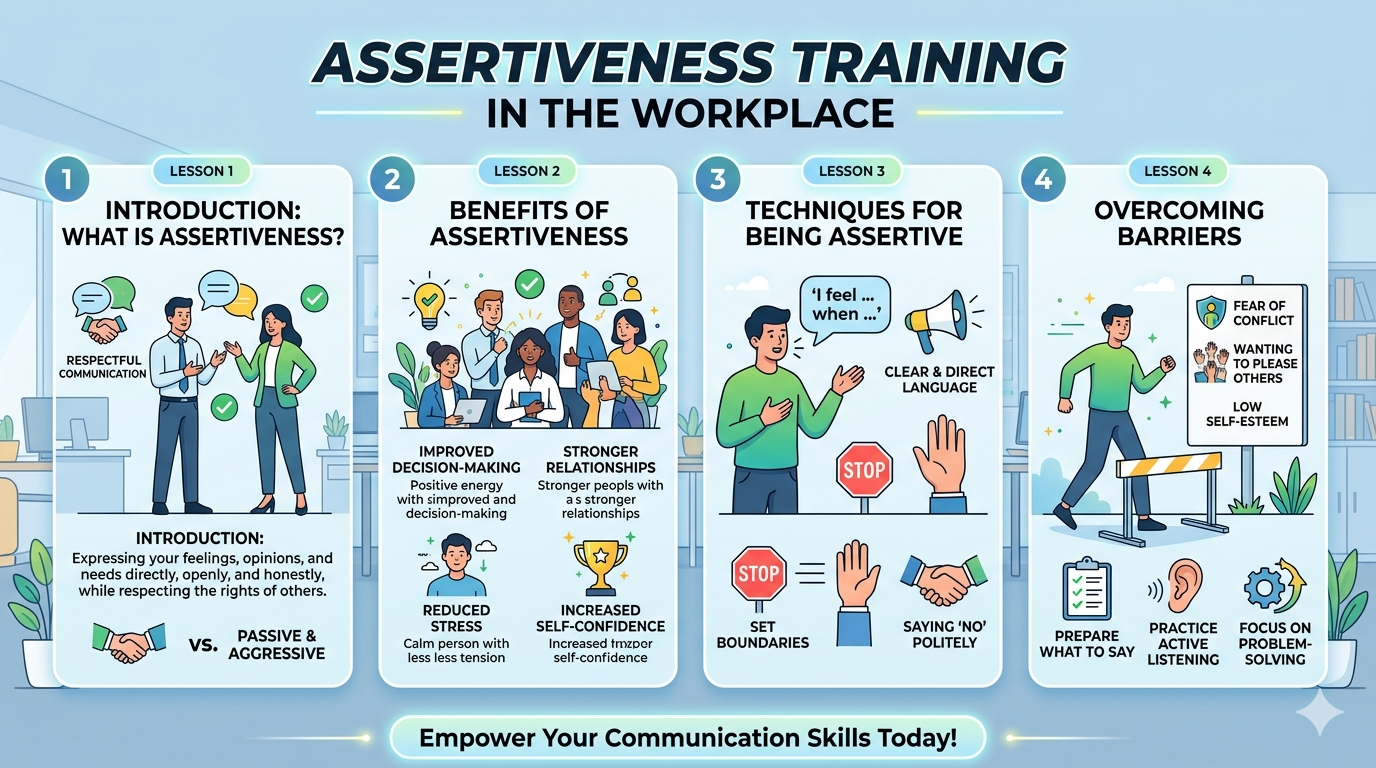
Comparison of different communication styles used in workplace settings
Disclaimer
This article is for general informational and educational purposes only. It does not constitute professional psychological, counseling, medical, or consumer purchasing advice. References to programs, books, tools, or methods do not imply endorsement or guarantee of results. Readers are encouraged to consult licensed professionals and verified educational sources when pursuing personal development.