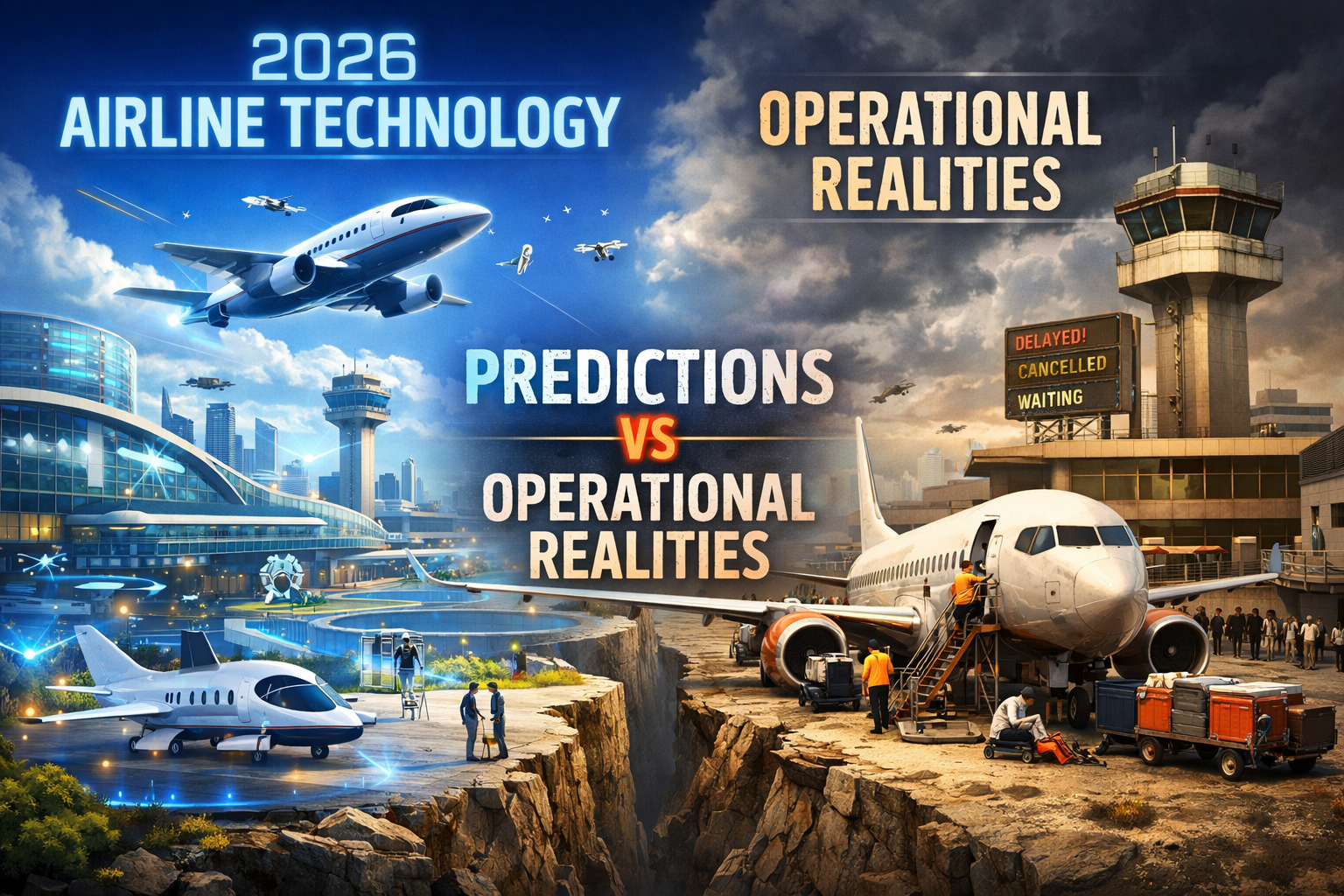
An educational overview of airline technology trends, practical adoption, and global regulatory considerations.
Airline technology evolves rapidly, but not all predicted innovations achieve practical or widespread operational impact. This article examines major 2026 technology forecasts for airlines, comparing them with technologies that demonstrably enhance safety, efficiency, and passenger service. References align with ICAO, IATA, FAA, and EASA guidance to ensure factual, neutral, and jurisdiction-neutral coverage.
Predicted Airline Technologies for 2026
-
Autonomous Flight Systems: Some forecasts anticipated fully autonomous or pilot-assist aircraft.
-
AI-Based Customer Service: Chatbots and automated systems expected to replace most human interactions.
-
Electric and Hybrid Aircraft: Predictions suggested near-term adoption of large-scale electric passenger aircraft.
-
Supersonic Travel: Commercial supersonic flights were projected to re-enter service.
-
Advanced Biometrics: Seamless passenger identity verification through facial recognition at all airport touchpoints.
Operational Realities and Practical Adoption
-
Pilot Assistance vs Full Autonomy: While autopilot and augmented decision-support systems are widely implemented, ICAO and national regulations still require human oversight for safety-critical decisions. Fully autonomous commercial aircraft remain experimental.
-
AI Customer Service: Automation supports routine inquiries, but human staff remain essential for complex passenger needs, security compliance, and safety communication.
-
Electric/Hybrid Aircraft: Currently limited to small regional aircraft. Regulatory certification and energy density constraints restrict widespread adoption for commercial airliners.
-
Supersonic Travel: Regulatory noise, emissions standards, and operational costs limit re-entry to niche routes. Supersonic travel is not yet mainstream.
-
Biometric Identity Systems: Growing implementation in airports globally, but integration with security regulations varies by country. Data privacy and passenger consent remain mandatory under ICAO, IATA, and national law.
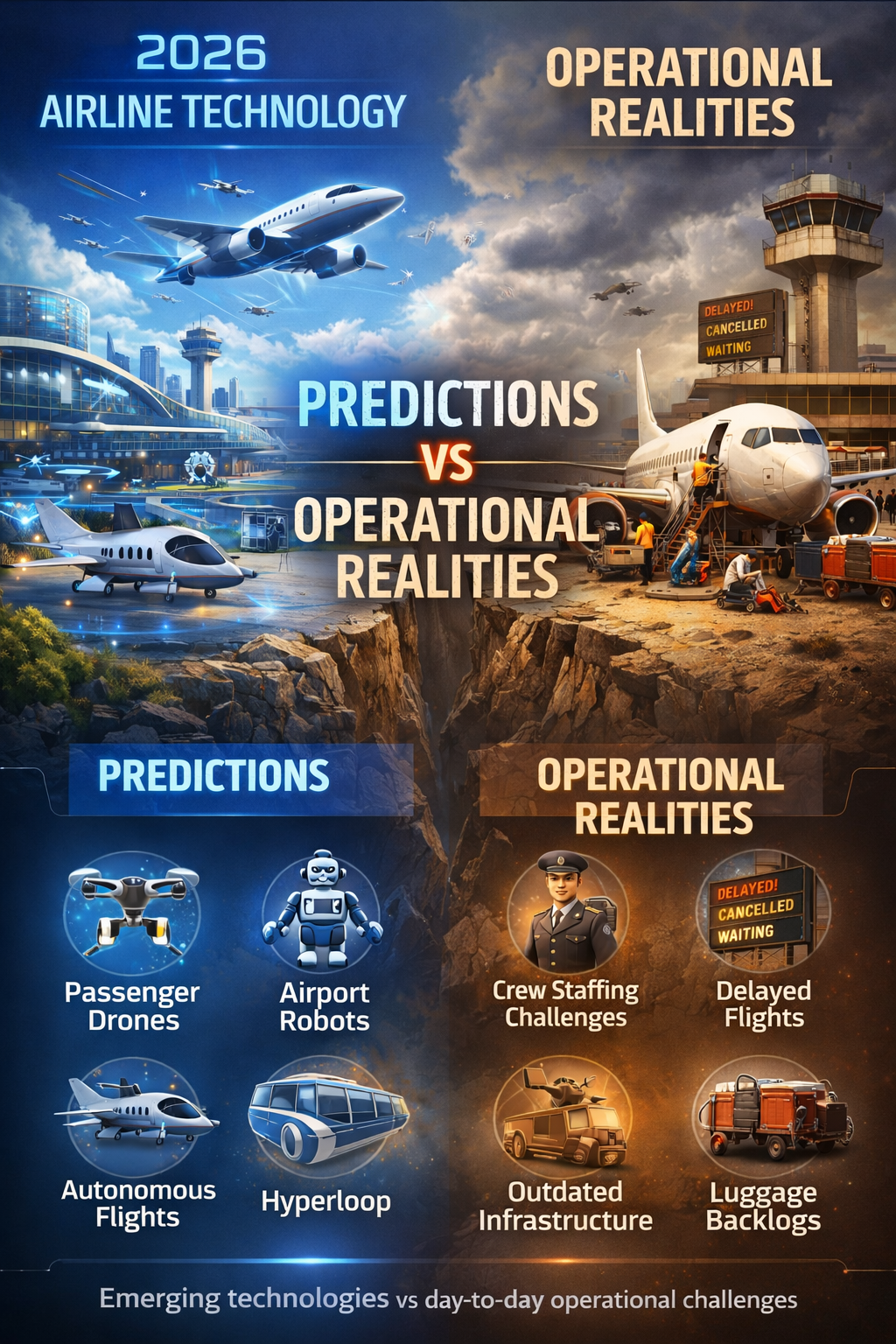
Infographic showing predicted airline innovations and operational realities.
Key Technologies That Actually Matter
-
Enhanced Safety Systems
-
Advanced avionics, real-time aircraft health monitoring, and predictive maintenance improve reliability and reduce operational risk.
-
-
Digital Flight Operations
-
Integrated flight planning tools, weather prediction software, and electronic flight bags enhance efficiency and crew decision-making.
-
-
Passenger Experience Enhancements
-
Mobile apps for boarding, baggage tracking, and personalized in-flight services improve operational effectiveness without replacing essential staff.
-
-
Sustainability Initiatives
-
Incremental fuel-efficient designs, carbon-offset programs, and sustainable aviation fuels (SAF) are practical near-term measures aligned with global emission standards.
-
Hypothetical Scenario
Scenario: An airline predicted widespread adoption of electric narrow-body aircraft by 2026. In practice, routes still rely on conventional jet fuel aircraft due to limited battery capacity and certification delays. Safety systems remain unchanged, while digital monitoring enhances flight efficiency. Regulatory authorities require incremental approval before introducing electric aircraft to commercial operations.
Context
-
ICAO Annex 6 and 8 regulate aircraft certification, ensuring technology integration does not compromise safety.
-
IATA provides operational guidelines for emerging technology adoption.
-
FAA and EASA review pilot-assist systems, sustainable fuel usage, and advanced avionics before allowing commercial deployment.
-
National authorities enforce compliance with security, noise, and emissions standards, moderating adoption speed.
FAQ
Q: Are fully autonomous commercial flights in service in 2026?
A: No. Current systems assist pilots but do not replace human oversight. Regulatory standards mandate certified flight crew for all commercial operations.
Q: How widely are electric aircraft used for commercial flights?
A: Limited use exists for small regional aircraft. Widespread adoption is constrained by energy density, range, and regulatory certification requirements.
Q: What technologies have the most operational impact today?
A: Safety management systems, predictive maintenance, digital flight operations, and sustainable aviation fuels are demonstrably impactful.
Trusted Sources
-
ICAO: Aircraft operations and technology safety manuals
-
IATA: Technology implementation and safety guidelines
-
FAA: U.S. pilot assistance and avionics regulations
-
EASA: European aircraft certification and technology oversight
-
National Civil Aviation Authorities
Disclaimer
This article is for general informational and educational purposes only. It does not constitute professional career, legal, regulatory, or aviation advice. References to airline technology and operational practices do not imply endorsement or guarantee outcomes. Readers are encouraged to consult official aviation authorities and qualified professionals for jurisdiction-specific guidance.
#AirlineTechnology, #AviationInnovation, #FlightSafety, #DigitalAviation, #SustainableAviation, #ICAOStandards, #IATACompliance, #FAARegulations, #EASACompliance, #OperationalAviation
Compare 2026 airline technology predictions with operational realities to understand which innovations genuinely impact aviation safety, efficiency, and passenger experience. Explore the evolution of airline tech today.