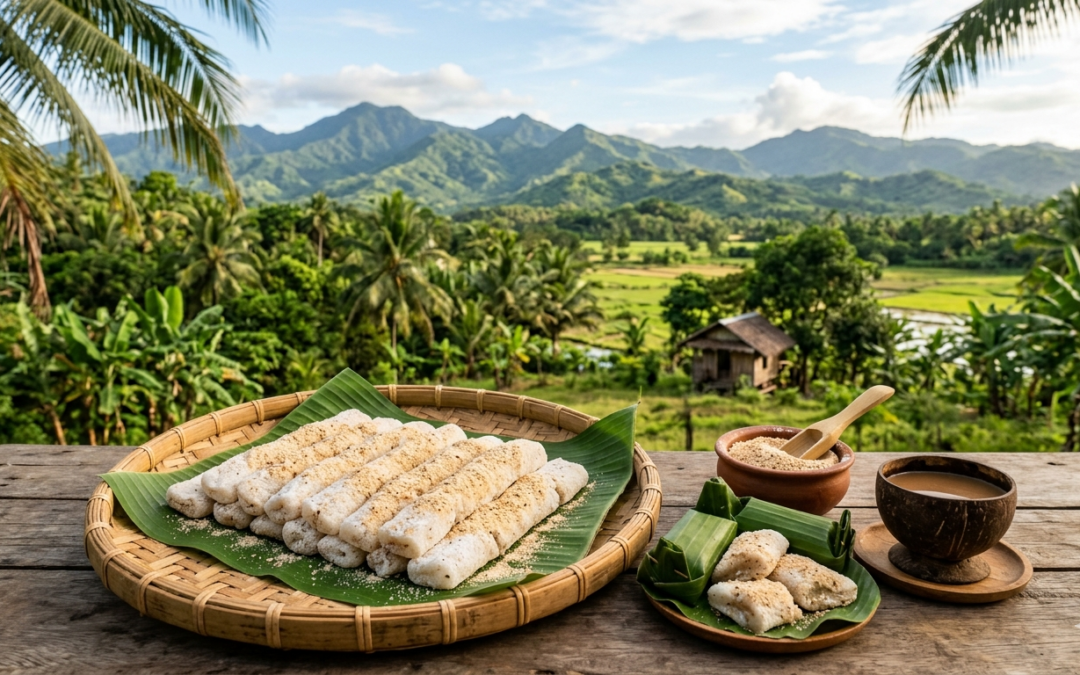
Espasol
Understanding Espasol: A Traditional Filipino Rice Cake
A neutral overview of espasol, its ingredients, and nutritional considerations
Espasol is a traditional Filipino rice cake commonly made from glutinous rice flour, coconut milk, and sugar, lightly coated with toasted rice flour. This article provides an educational overview of espasol, its key ingredients, nutritional components, and considerations for incorporating it into meals. Information aligns with guidance from the Department of Health (DOH) and the Food and Drug Administration (FDA Philippines) on food safety and labeling.
Ingredients and Composition
Espasol typically contains:
- Glutinous rice flour – provides carbohydrates as the main macronutrient
- Coconut milk – contributes small amounts of fat and minor protein
- Sugar – adds simple carbohydrates
- Toasted rice flour coating – primarily carbohydrates
The nutritional content of espasol varies based on preparation methods, portion size, and specific recipes. It is generally considered an energy-dense snack due to its carbohydrate and fat content.
Hypothetical Portion Example
A single piece of espasol (approximately 50 grams) may contain roughly:
- 100–120 kcal
- 20–25 grams of carbohydrates
- 2–3 grams of fat
- <1 gram of protein
These values are illustrative and can vary depending on ingredients and preparation. Portion control is one factor to consider when including traditional snacks like espasol in a meal plan.
Food Safety and Labeling Considerations
- Espasol prepared for sale should follow local food handling and hygiene regulations.
- Packaged espasol should include ingredient labels and, if applicable, allergen information, in line with FDA Philippines guidelines.
- Consumers should check expiration dates, storage instructions, and packaging integrity.
Context Section
In nutrition science, carbohydrate-rich foods like espasol can provide energy, but excessive intake of sugar and fats may impact overall dietary balance. Under consumer protection and labeling standards in the Philippines, the nutritional value of snacks is dependent on ingredients and preparation, and results of consumption vary individually. Licensed nutritionists or dietitians can provide personalized guidance on integrating traditional foods into balanced meals.
FAQ
What is espasol?
Espasol is a Filipino rice cake made from glutinous rice flour, coconut milk, sugar, and toasted rice flour coating. It is traditionally enjoyed as a snack or dessert.
What are the main nutrients in espasol?
Espasol is primarily a source of carbohydrates and provides small amounts of fat and protein. Nutrient composition depends on the recipe.
Is espasol safe to eat?
When prepared following proper hygiene and food safety standards, espasol is safe to consume. Nutritional content and portion size should be considered as part of a balanced diet.
Trusted Sources
- Department of Health Philippines – Food Safety Advisories
- FDA Philippines – Guidelines on Packaged Food Labeling
- Academic sources on Filipino traditional foods and nutritional analysis
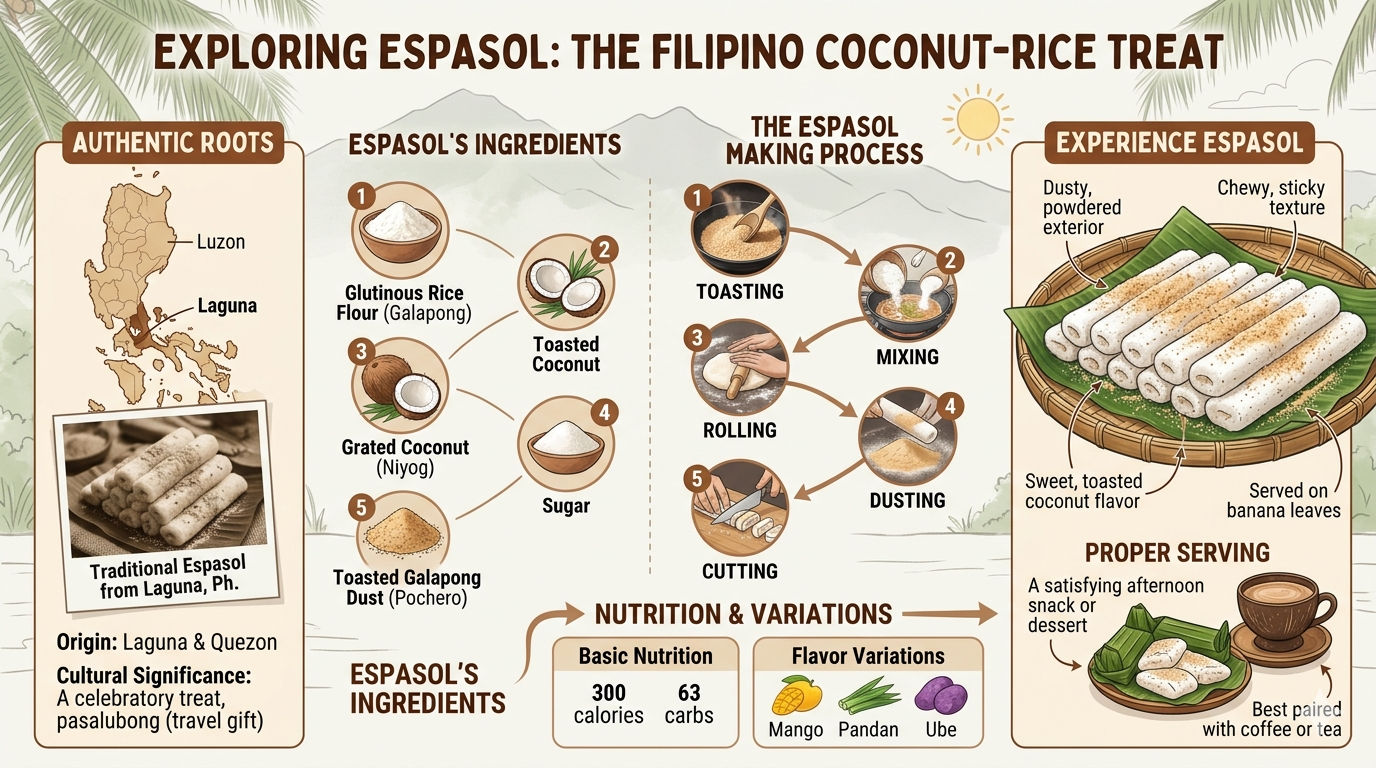
Illustrative infographic of typical espasol ingredients.
Disclaimer
This article is for general informational and educational purposes only. It does not constitute professional medical, nutrition, or dietary advice. References to foods do not imply endorsement or guarantee of health outcomes. Readers are encouraged to consult licensed nutritionists, dietitians, or medical professionals for personalized guidance.