by Ramil Villar | Mar 25, 2026 | Food & Nutrition Basics
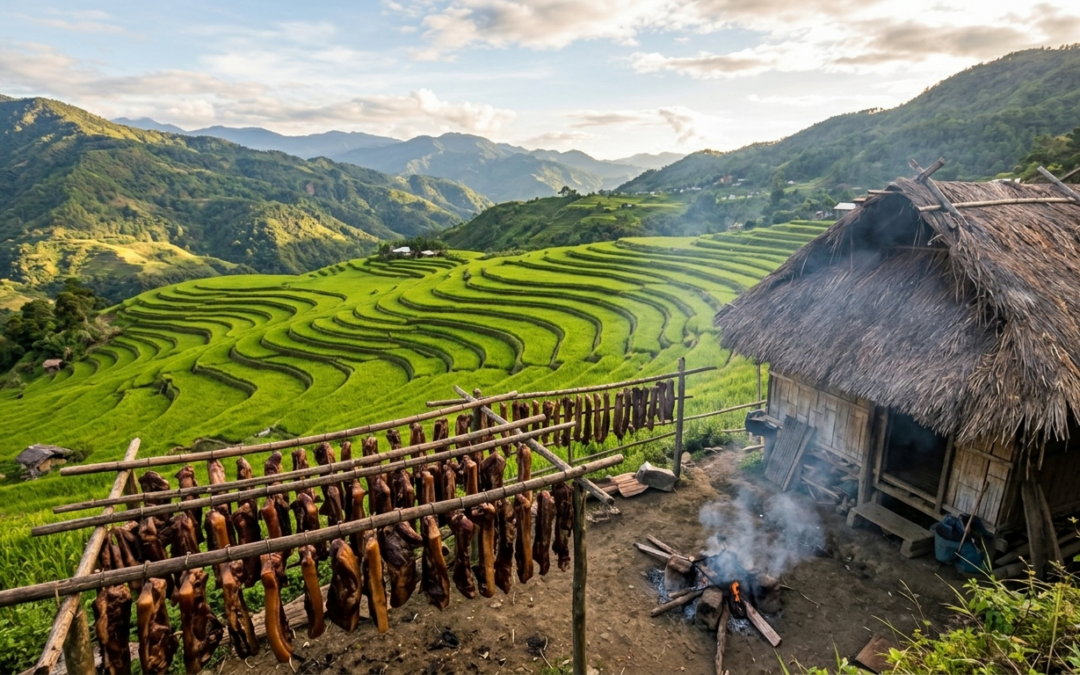
Etag (Salted Smoked Pork): An Educational Overview of a Traditional Preserved Food
A neutral look at its preparation, nutritional composition, and food safety considerations
Etag is a traditional preserved pork product commonly associated with indigenous communities in the Cordillera region of the Philippines. It is typically prepared through salting and air-drying or smoking methods. Food preservation practices such as these are recognized in cultural food systems, while agencies like the Department of Health and the Food and Drug Administration support general safety guidance in the Philippines. This article explains etag in terms of preparation, nutritional characteristics, and consumer awareness.
What Is Etag?
Etag refers to pork that has been preserved using salt and, in some cases, smoke. The process may involve:
- Applying salt to pork cuts
- Air-drying for extended periods
- Optional smoking to enhance flavor and preservation
Preparation methods can vary across communities and households, depending on local practices and environmental conditions.
Nutritional Composition
As a pork-based product, etag contains several macronutrients and micronutrients:
Macronutrients
- Protein: Contributes to tissue maintenance and repair
- Fat: Provides energy and contributes to flavor
- Sodium: Typically high due to the salting process
Micronutrients
- May contain iron and certain B vitamins naturally present in pork
Due to preservation methods, sodium levels in etag are generally higher compared to fresh pork. Nutrient content can vary depending on preparation and portion size.
Food Preservation and Safety Considerations
Traditional preservation methods like salting and smoking are used to extend shelf life. However, safe handling practices remain important:
- Proper drying or smoking conditions help reduce spoilage
- Clean preparation environments support food safety
- Adequate cooking before consumption is commonly practiced
Under Philippine food safety frameworks, including guidance from the FDA, consumers are encouraged to be mindful of how preserved foods are prepared and stored.
Role in Meals
Etag is often used in small portions as a flavor component in dishes such as:
- Vegetable stews
- Rice-based meals
- Traditional Cordilleran recipes
Its strong flavor means it is typically combined with other ingredients rather than consumed in large quantities.
Context
In nutrition science, preserved foods like salted or smoked meats are recognized for their cultural and practical roles. However, they are also noted for higher sodium content compared to fresh alternatives.
Dietary intake patterns vary among individuals. Inclusion of preserved foods may depend on personal preference, availability, and overall diet composition. For individualized nutrition planning, consultation with a licensed professional may be considered.
FAQs
What is etag made from?
Etag is made from pork that is preserved using salt and sometimes smoke. The preparation method varies by region and tradition.
Why is etag salty?
Salt is used as a preservation method to help extend shelf life and influence flavor.
Is etag cooked before eating?
Etag is typically cooked as part of dishes before consumption, depending on the preparation style.
Trusted Sources
- Department of Health — Food safety and nutrition guidance
- Food and Drug Administration — Food handling and labeling standards
- Academic studies on traditional food preservation and nutrition
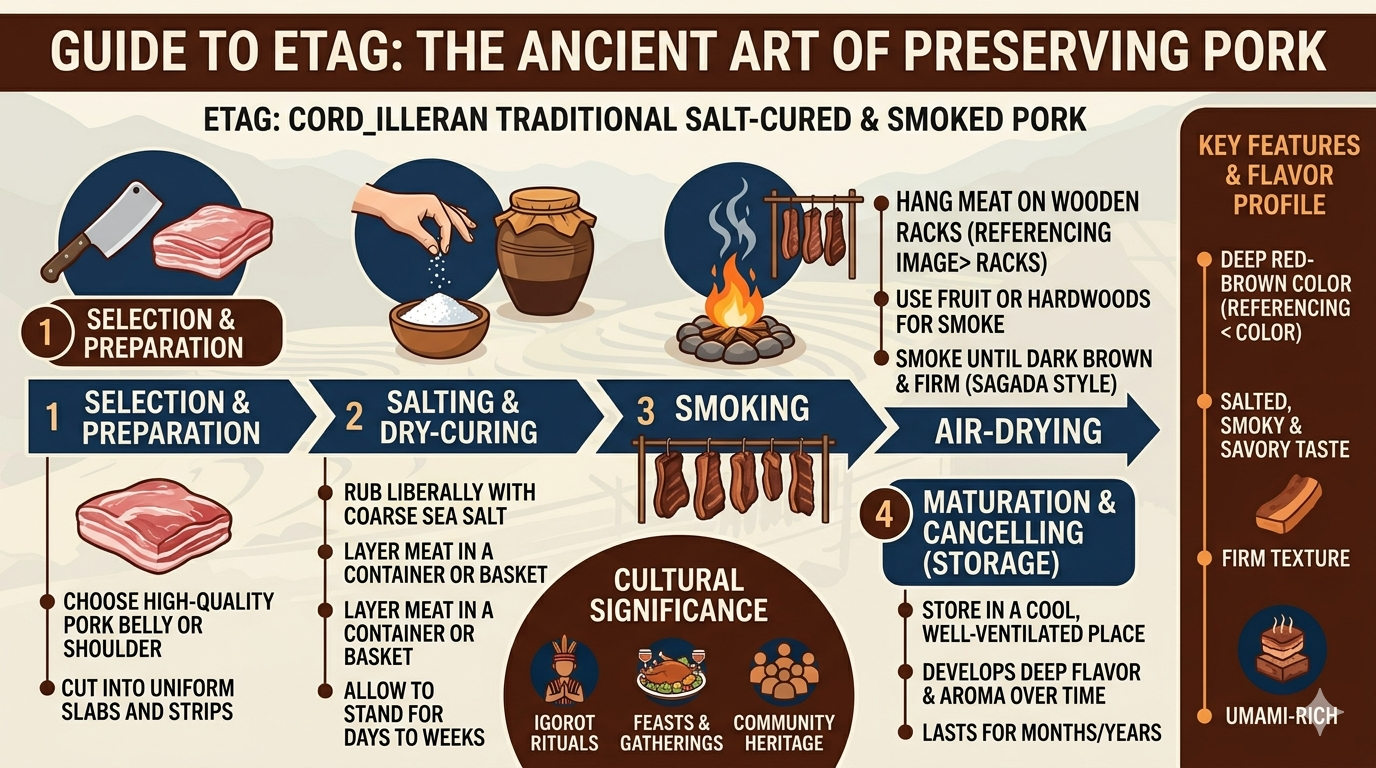
Illustration of traditional pork preservation steps and general composition elements
Disclaimer
This article is for general informational and educational purposes only. It does not constitute professional medical, nutrition, or dietary advice. References to foods or dietary practices do not imply endorsement or guarantee of health outcomes. Readers are encouraged to consult licensed nutritionists, dietitians, or medical professionals for personalized guidance.
by Ramil Villar | Mar 25, 2026 | Food & Nutrition Basics
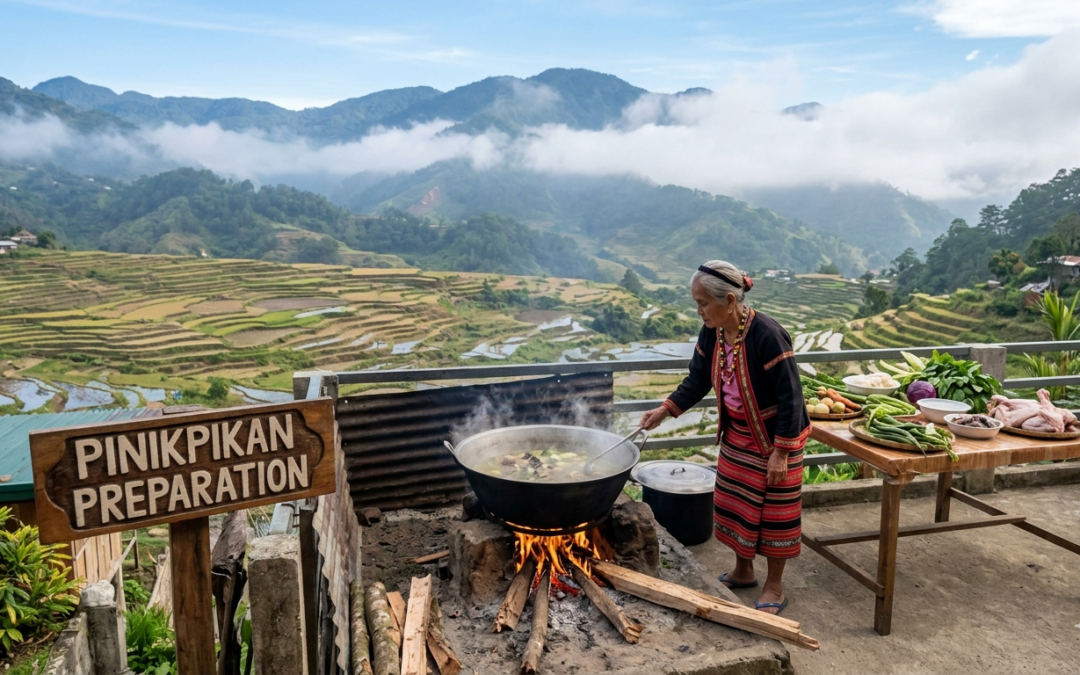
Pinikpikan: A Traditional Cordilleran Dish Explained
Cultural and Culinary Overview of a Regional Filipino Food
Pinikpikan is a traditional Filipino dish originating from the Cordillera region in Northern Luzon, particularly associated with the indigenous Igorot communities. It is commonly prepared during cultural gatherings and community events. In the Philippine context, food preparation practices are subject to general public health and food safety standards monitored by agencies such as the Department of Health and the Food and Drug Administration.
This article provides an educational overview of pinikpikan, including its ingredients, preparation method, and its place within broader dietary considerations.
What Is Pinikpikan?
Pinikpikan is a chicken-based soup dish traditionally prepared through a specific cultural process. The dish is known for its clear broth and is often flavored with ginger and sometimes local herbs or vegetables.
The preparation method is distinct and rooted in indigenous practices, where the chicken is treated in a particular way prior to cooking. This method is part of cultural tradition and may vary between communities.
Common Ingredients
Typical ingredients used in pinikpikan include:
- Native chicken
- Ginger
- Salt
- Optional additions: leafy vegetables, local herbs, or spices
The simplicity of ingredients highlights the natural flavors of the components.
Nutritional Components
As a chicken-based dish, pinikpikan may contain:
- Protein from chicken
- Fats depending on the cut and preparation
- Micronutrients such as iron and certain B vitamins
The exact nutritional composition can vary depending on ingredients and portion sizes.
Cultural Context and Preparation Practices
Pinikpikan is closely tied to indigenous traditions in the Cordillera region. Its preparation method is considered part of cultural heritage rather than a standard culinary technique.
From a regulatory perspective, general food safety principles—such as proper handling, cooking, and sanitation—are emphasized under Philippine food safety guidelines. These practices are aligned with consumer protection frameworks, including the Consumer Act of the Philippines, which promotes safe and properly handled food products.
Dietary Context
In nutrition planning, dishes like pinikpikan may be considered part of a broader meal that includes:
- A source of carbohydrates (e.g., rice)
- Vegetables for fiber and micronutrients
- Adequate hydration
Balanced dietary patterns typically involve combining different food groups rather than focusing on a single dish.
Traditional Foods and Nutrition
In nutrition science and cultural studies, traditional dishes are often evaluated both for their nutrient content and cultural significance. Foods like pinikpikan contribute to dietary diversity and reflect regional food practices.
Dietary needs and preferences vary across individuals. For personalized nutrition planning, consultation with qualified professionals is commonly recommended.
FAQs
What is pinikpikan made of?
Pinikpikan is primarily made from chicken, ginger, and salt, with optional vegetables or herbs depending on local variations.
Is pinikpikan considered a soup?
Yes, it is generally classified as a soup dish due to its broth-based preparation.
Where does pinikpikan originate?
It originates from the Cordillera region in Northern Luzon and is associated with indigenous Igorot traditions.
Trusted Sources
- Department of Health – Food safety and nutrition guidance
- Food and Drug Administration – Food handling and safety standards
- Academic and cultural studies on Cordilleran cuisine
- Peer-reviewed nutrition and food science publications
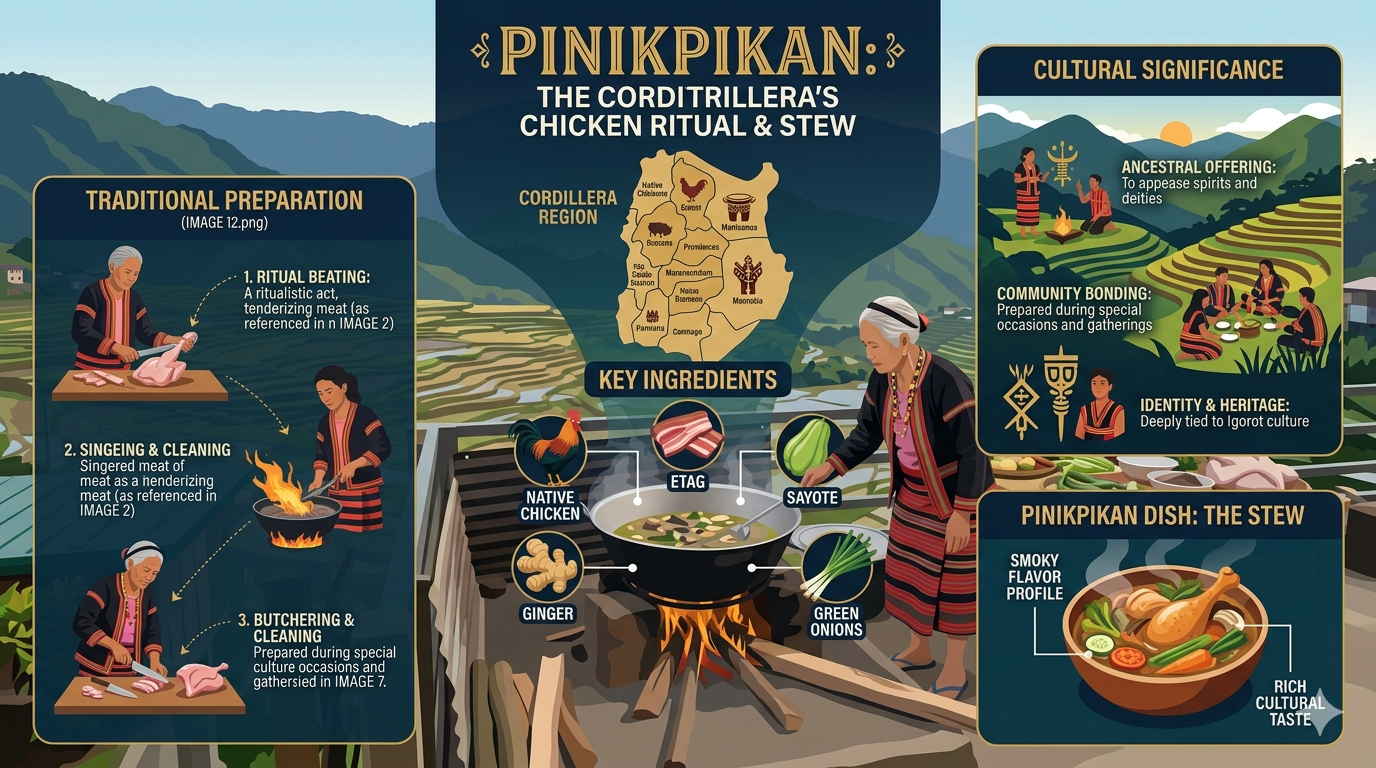
Visual outline of pinikpikan ingredients and preparation elements
Disclaimer
This article is for general informational and educational purposes only. It does not constitute professional medical, nutrition, or dietary advice. References to diets, foods, or supplements do not imply endorsement or guarantee of health outcomes. Readers are encouraged to consult licensed nutritionists, dietitians, or medical professionals for personalized guidance.
by Ramil Villar | Mar 25, 2026 | Food & Nutrition Basics
Strawberry Taho: An Educational Overview of Ingredients and Nutritional Components
A Neutral Look at a Popular Sweet Soy-Based Snack with Fruit Flavoring
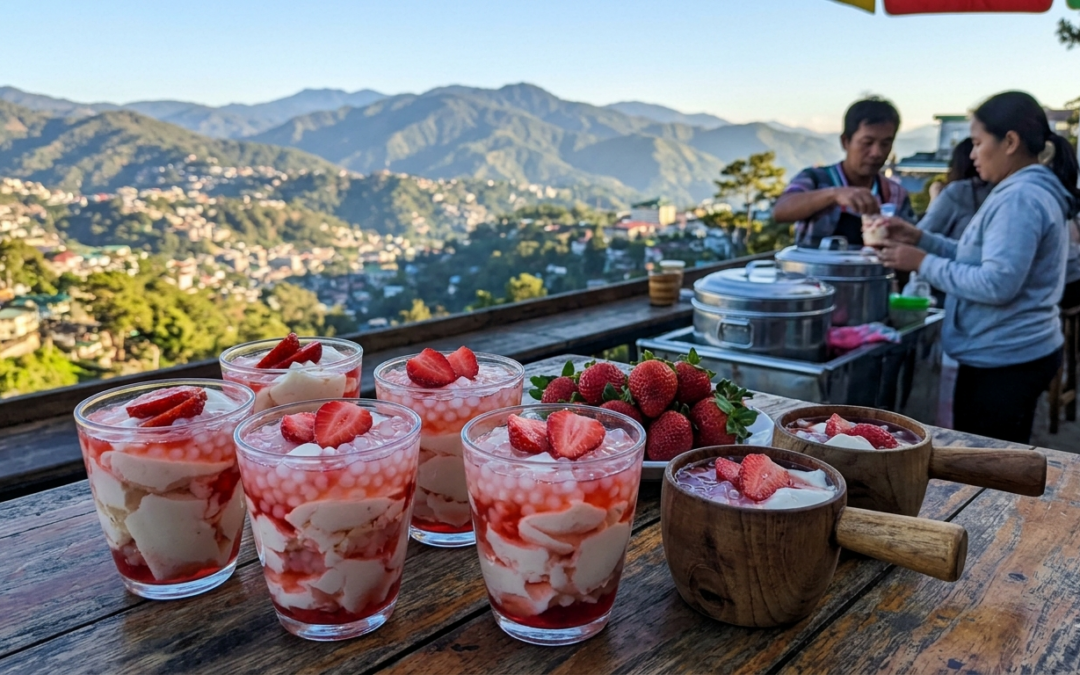
Strawberry taho is a variation of traditional taho, a well-known Filipino snack made from soft tofu, sweet syrup, and sago pearls. This version incorporates strawberry flavoring or fruit-based toppings, offering an alternative taste profile while maintaining the base components. In the Philippines, food products and street food preparation are generally guided by standards from the Department of Health (DOH) and the Food and Drug Administration (FDA), particularly in areas of hygiene, labeling (for packaged versions), and consumer safety.
What Is Strawberry Taho?
Strawberry taho typically consists of:
- Soft tofu (soybean curd): A smooth, protein-containing base derived from soybeans
- Strawberry syrup or puree: May be made from fresh strawberries, flavorings, or commercially prepared syrups
- Sago pearls: Small tapioca-based spheres providing texture
The combination creates a sweet, soft-textured snack commonly consumed as a breakfast or midday item.
Nutritional Components
The nutritional profile of strawberry taho depends on ingredient proportions and preparation methods. Common components include:
Protein
- Derived mainly from tofu (soybeans)
- Soy-based foods are commonly included in plant-based dietary patterns
Carbohydrates
- Present in syrup and sago pearls
- Provide energy as part of total caloric intake
Fats
- Naturally occurring in soybeans, typically in moderate amounts
Sugars
- Added through strawberry syrup or sweeteners
- Levels vary depending on preparation
Micronutrients
- Tofu may contain calcium and iron (depending on processing)
- Strawberries, if used fresh, may contribute small amounts of vitamin C
Food Preparation and Safety Considerations
- Freshness: Taho is traditionally served warm and prepared daily
- Hygiene: Street food vendors are expected to follow local sanitation practices
- Storage: Perishable ingredients such as tofu and fruit require proper handling to maintain food safety
For commercially packaged versions, consumers may refer to nutrition labels and ingredient lists to understand contents and serving sizes.
Hypothetical Serving Example
A typical serving of strawberry taho may include:
- A portion of soft tofu
- A layer of sago pearls
- A topping of strawberry syrup or fruit mixture
Portion sizes and sweetness levels vary by vendor or preparation style. This example is for illustration only and does not represent a standardized serving.
Traditional Foods and Variations
In food culture studies, traditional items like taho are often adapted with different flavors such as chocolate, caramel, or fruit-based syrups. These variations reflect changing consumer preferences and ingredient availability.
Under Philippine food safety and consumer protection standards, vendors and manufacturers are responsible for maintaining proper handling practices and accurate labeling (for packaged goods). Nutritional content can vary widely between homemade, street-prepared, and commercial versions.
Individual dietary needs differ, and those seeking specific nutritional guidance may consult qualified nutrition professionals.
FAQs
What is taho made of?
Taho is traditionally made from soft tofu, sweet syrup, and sago pearls. Variations may include additional flavorings such as fruit syrups.
Does strawberry taho contain real fruit?
Some versions use fresh strawberries or puree, while others may use flavored syrup. The ingredients depend on how it is prepared.
Is taho a source of protein?
Taho contains tofu, which is derived from soybeans and contributes protein. The overall nutritional value depends on the full ingredient composition.
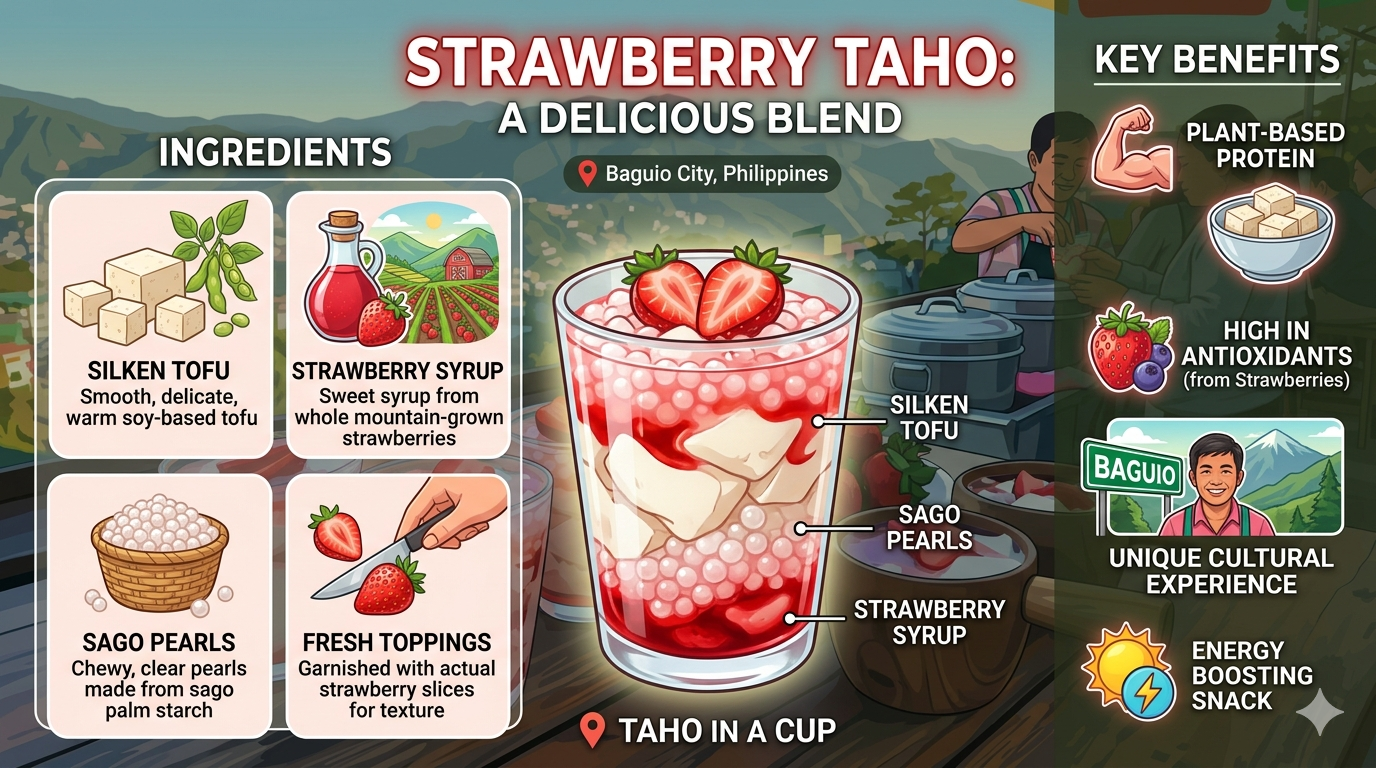
Visual breakdown of common strawberry taho ingredients
Trusted Sources
- Department of Health (Philippines) – Food Safety and Nutrition Guidelines
- Food and Drug Administration (Philippines) – Food Labeling and Safety Standards
- Food and Nutrition Research Institute (FNRI-DOST) – Philippine Food Composition Tables
- World Health Organization (WHO) – Healthy Diet Resources
Disclaimer
This article is for general informational and educational purposes only. It does not constitute professional medical, nutrition, or dietary advice. References to foods or ingredients do not imply endorsement or guarantee of health outcomes. Readers are encouraged to consult licensed nutritionists, dietitians, or medical professionals for personalized guidance.
by Ramil Villar | Mar 24, 2026 | Food & Nutrition Basics
Bibingka Vigan: Traditional Rice Cake from Ilocos
A neutral overview of its ingredients, preparation, and nutritional context
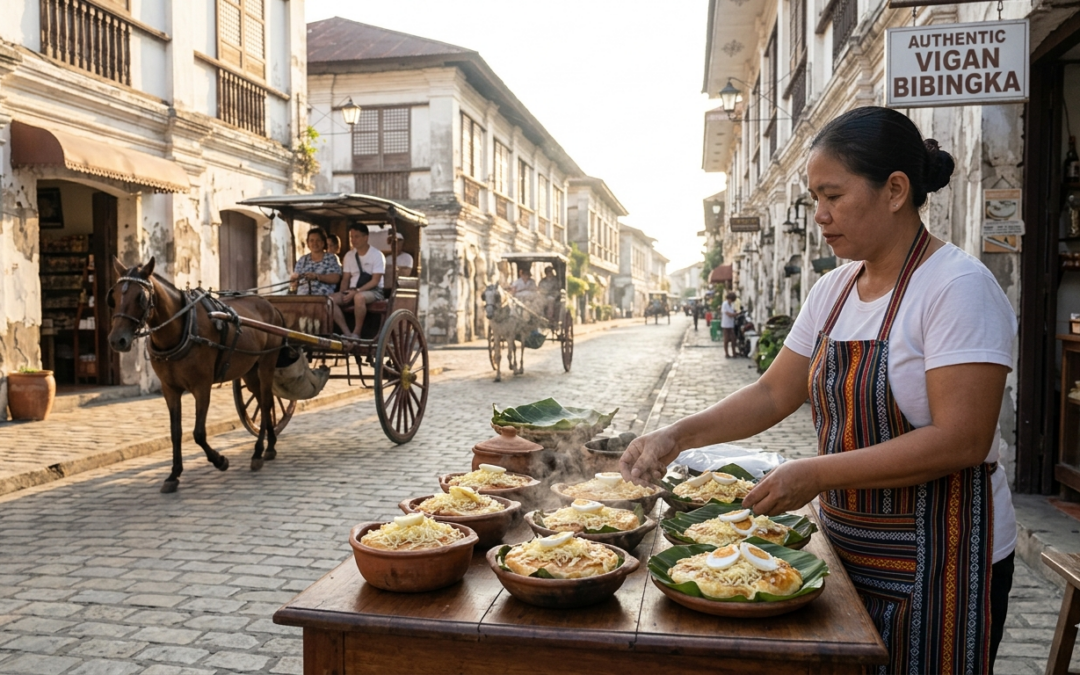
Bibingka Vigan is a traditional Filipino rice-based delicacy associated with the Ilocos region, particularly the city of Vigan. This article provides an educational overview of its ingredients, preparation methods, and general nutritional considerations. It follows Philippine food and consumer awareness standards, including those guided by the Department of Health (DOH) and the Food and Drug Administration (FDA).
What is Bibingka Vigan?
Bibingka Vigan is a type of baked rice cake made from glutinous rice flour, coconut milk, and sugar. It is commonly cooked in small clay pots or molds and is often associated with local food traditions and festivals.
Unlike other varieties of bibingka, Bibingka Vigan is typically thinner and slightly crisp at the edges due to its cooking method.
Common Ingredients
The formulation of Bibingka Vigan may vary, but commonly includes:
- Glutinous rice flour
- Coconut milk
- Sugar
- Grated coconut (for topping or filling)
- Banana leaves (used as lining for cooking)
Some variations may include cheese or other toppings depending on local practices.
Preparation Method
Traditional preparation involves:
- Mixing rice flour, coconut milk, and sugar into a batter
- Pouring the mixture into small molds lined with banana leaves
- Baking over charcoal heat, sometimes with heat applied from both above and below
This cooking method contributes to its characteristic texture and aroma.
Nutritional Considerations
Bibingka Vigan is generally considered an energy-dense food due to its carbohydrate and fat content from rice and coconut milk.
Typical nutritional components may include:
- Carbohydrates from rice flour
- Fats from coconut milk
- Small amounts of protein depending on ingredients used
Portion size and frequency of consumption may influence overall dietary intake when included in meals or snacks.
Cultural and Food Safety Context
Bibingka Vigan is part of regional Filipino food heritage and is often prepared in local markets or home settings.
Under Philippine food safety standards:
- Food vendors are expected to follow sanitation and handling guidelines
- Ingredients used in commercial preparation should comply with labeling and safety regulations
Consumers may consider hygiene practices and ingredient transparency when purchasing from vendors.
Context
In food science and cultural studies, traditional foods like Bibingka Vigan are recognized for their role in local identity and culinary heritage. Their nutritional composition depends on ingredients and preparation methods.
Under the Consumer Act of the Philippines (RA 7394), food products—especially those sold commercially—should not present misleading claims about nutritional value.
Individual dietary needs vary, and traditional foods are typically consumed as part of a broader, varied diet.
FAQs
What makes Bibingka Vigan different from other bibingka?
Bibingka Vigan is usually thinner and cooked in small molds, often resulting in a slightly crisp texture. Preparation methods and ingredient ratios may differ from other regional varieties.
Is Bibingka Vigan made from rice?
Yes, it is typically made using glutinous rice flour, which provides its base texture and structure.
Can Bibingka Vigan be part of a regular diet?
It can be included as part of a varied diet. Portion size and overall dietary balance are general considerations.
Trusted Sources
- Department of Health (Philippines) – General nutrition guidance
- Food and Drug Administration (Philippines) – Food safety and labeling standards
- National Commission for Culture and the Arts (Philippines) – Cultural food heritage references
- Peer-reviewed food science and nutrition journals
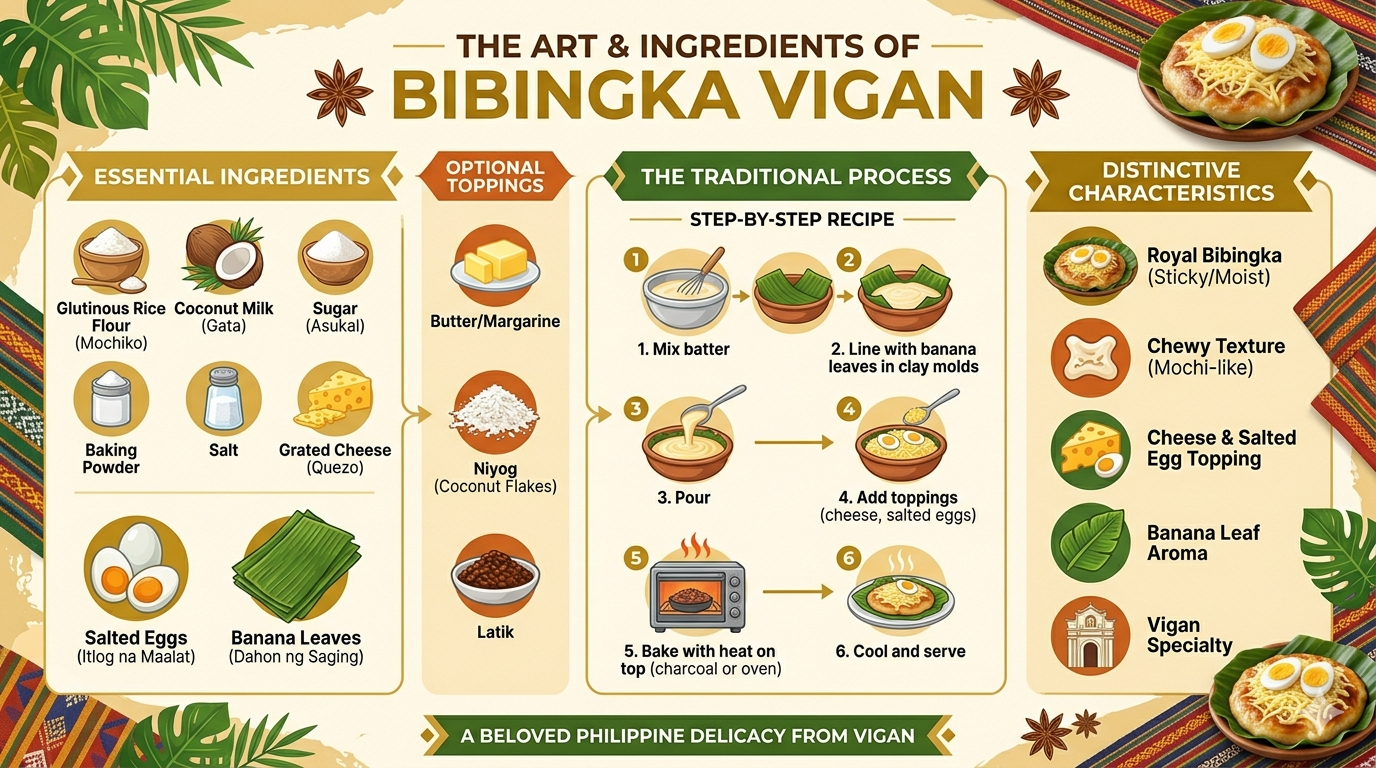
Visual outline of Bibingka Vigan ingredients and cooking process
Disclaimer
This article is for general informational and educational purposes only. It does not constitute professional medical, nutrition, or dietary advice. References to diets, foods, or supplements do not imply endorsement or guarantee of health outcomes. Readers are encouraged to consult licensed nutritionists, dietitians, or medical professionals for personalized guidance.
by Ramil Villar | Mar 24, 2026 | Food & Nutrition Basics
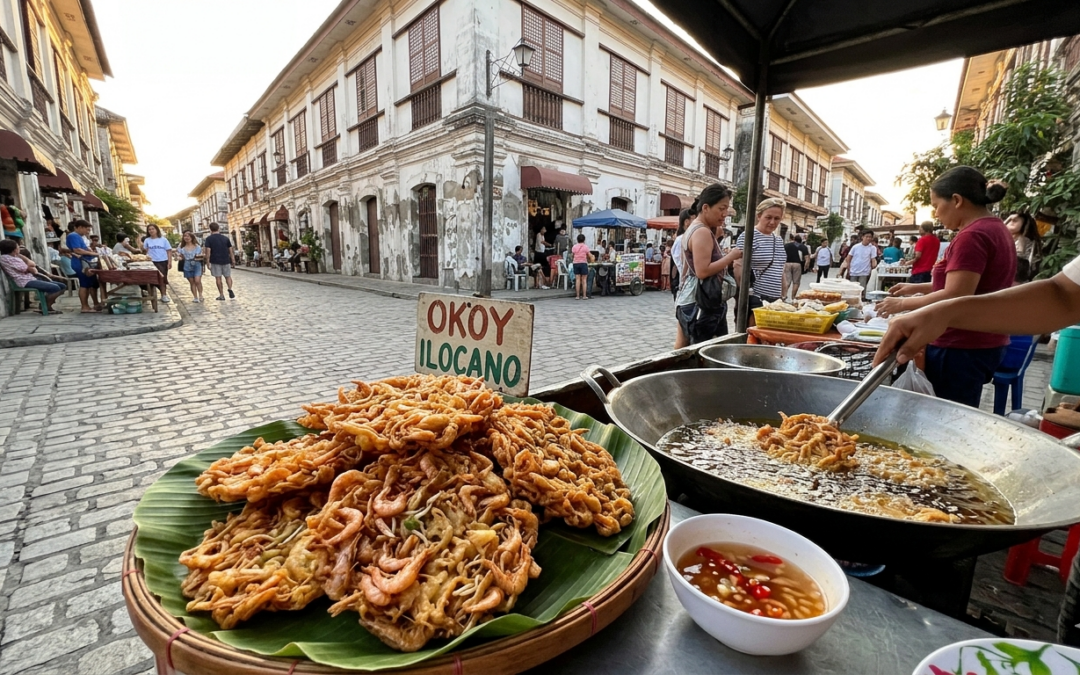
Okoy / Ukoy (Ilocano): Nutritional Overview and Food Context
A neutral look at ingredients, preparation, and dietary considerations
This article provides an educational overview of okoy (also called ukoy), a traditional Filipino dish commonly associated with Ilocano cuisine. It discusses typical ingredients, preparation methods, and general nutritional considerations in line with food awareness principles recognized by the Department of Health Philippines and the Food and Drug Administration Philippines. The focus is on understanding the dish within a balanced diet context.
What Is Okoy / Ukoy?
Okoy or ukoy is a type of Filipino fritter made from a batter mixed with small shrimp and vegetables, then deep-fried until crisp. In Ilocano regions, variations may include local vegetables and seasoning preferences.
Common Ingredients
Typical components include:
- Small shrimp (often with shells)
- Grated vegetables such as squash, sweet potato, or bean sprouts
- Flour or starch-based batter
- Water and seasonings
- Cooking oil for frying
Ingredient variations depend on locality and household practices.
Preparation Method
The mixture is formed into small portions and fried in oil. The frying process creates a crispy texture, which is a defining characteristic of the dish.
Nutritional Components
- Protein: Derived mainly from shrimp
- Carbohydrates: From flour or starch in the batter
- Fats: From the frying process
- Micronutrients: Vegetables may contribute vitamins and minerals such as vitamin A (from squash) or potassium
The overall nutrient profile varies depending on ingredient proportions and cooking method.
Role in a Balanced Diet
Okoy can be included as part of a varied diet when combined with other food groups such as vegetables, grains, and protein sources. As a fried food, it is typically consumed alongside other dishes rather than as a sole source of nutrition.
Hypothetical Meal Context
An example of incorporating okoy into a meal:
- Steamed rice (grain source)
- Okoy (protein and fat source)
- Fresh vegetable side dish
- Water or non-sweetened beverage
Portion sizes and frequency of consumption may vary depending on individual dietary preferences.
Food Safety and Preparation Considerations
Proper handling of shrimp and cooking oil is important for food safety. Guidance from the DOH and FDA Philippines emphasizes:
- Cleaning seafood thoroughly
- Cooking foods at appropriate temperatures
- Avoiding reuse of degraded cooking oil
Context
In food science and nutrition studies, traditional dishes like okoy are evaluated based on their ingredients and preparation methods. Fried foods contribute energy due to fat content, while added vegetables may increase nutrient diversity.
Under Philippine food safety and labeling standards, authorities such as the Department of Trade and Industry Philippines and FDA Philippines regulate packaged ingredients and food safety practices.
Dietary needs and preferences differ among individuals. Consultation with licensed nutrition professionals may help in planning meals that align with specific requirements.
FAQs
What is okoy made of?
Okoy is typically made from small shrimp, vegetables, and a flour-based batter that is deep-fried. Ingredients may vary by region.
Is okoy considered a main dish or snack?
Okoy can be served as either a main dish or a side dish depending on portion size and meal context.
Why is okoy crispy?
The crisp texture comes from frying the batter mixture in hot oil, which creates a firm outer layer.
Trusted Sources
- Department of Health Philippines – Food safety and nutrition guidance
- Food and Drug Administration Philippines – Food handling and safety standards
- World Health Organization – General nutrition resources
- Academic food science and nutrition publications
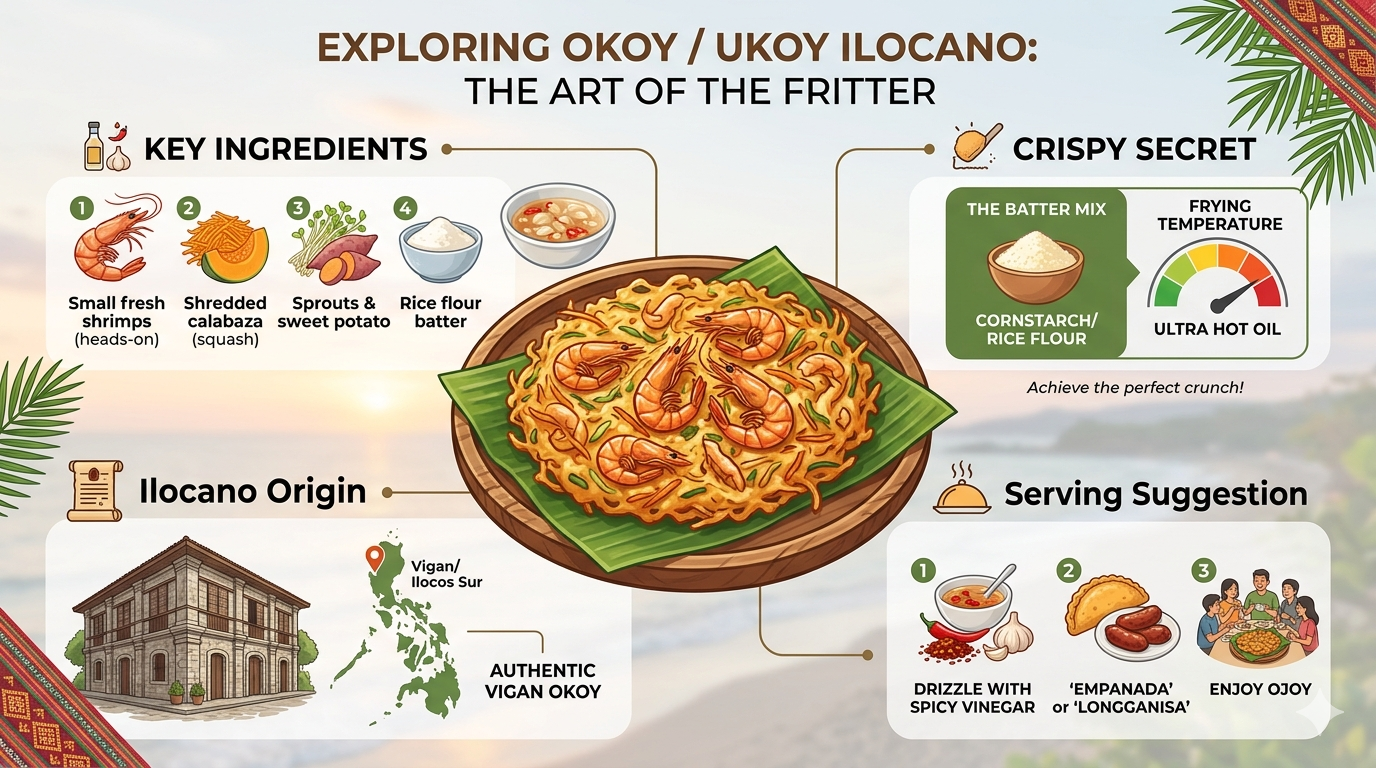
Visual layout of ingredients and preparation stages
Disclaimer
This article is for general informational and educational purposes only. It does not constitute professional medical, nutrition, or dietary advice. References to diets, foods, or supplements do not imply endorsement or guarantee of health outcomes. Readers are encouraged to consult licensed nutritionists, dietitians, or medical professionals for personalized guidance.
by Ramil Villar | Mar 24, 2026 | Food & Nutrition Basics
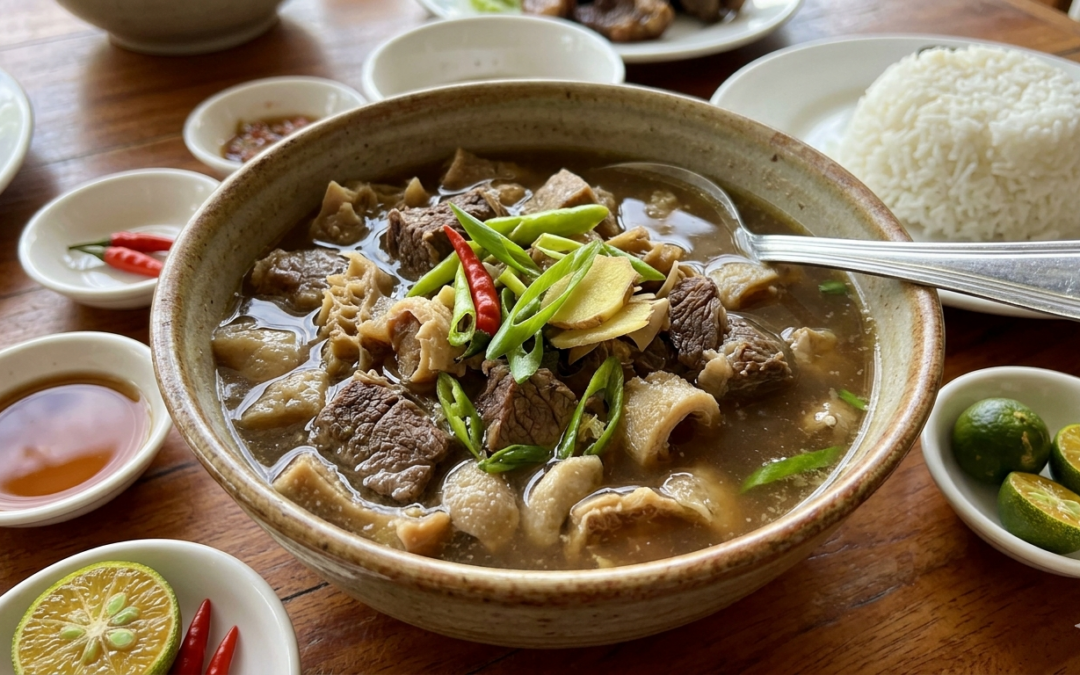
Sinanglao (Beef Soup): Nutritional Overview and Food Context
A neutral look at ingredients, preparation, and dietary considerations
This article provides an educational overview of Sinanglao, a traditional Filipino soup commonly associated with northern regions such as Ilocos Region. It explains typical ingredients, preparation methods, and general nutritional components. The discussion aligns with principles of food safety and labeling awareness supported by institutions such as the Department of Health and the Food and Drug Administration.
What Is Sinanglao?
Sinanglao is a sour and savory soup traditionally made with:
- Beef parts such as brisket or tripe
- Beef innards (e.g., liver or intestines, depending on variation)
- Souring agents like vinegar or bile (apdo)
- Aromatics such as garlic, onions, and ginger
It is often served hot and may be paired with rice as part of a meal.
Nutritional Components
The nutritional profile of sinanglao depends on ingredient selection and preparation. Common components include:
Protein
Beef and organ meats are sources of protein, which is associated with tissue maintenance and repair.
Fats
Fat content varies depending on the cut of meat used. Organ meats may also contribute to total fat intake.
Micronutrients
Beef and organ meats may contain:
These nutrients are involved in various physiological processes.
Sodium
Salt and seasoning used in soup preparation may contribute to sodium levels. Intake levels can vary depending on cooking practices.
Food Group Context
Sinanglao can be categorized within:
- Protein-rich foods (beef and organ meats)
- Mixed dishes (due to broth and added ingredients)
To form a more balanced meal, it is often paired with:
- Vegetables (side dishes or added to the soup)
- Rice or other carbohydrate sources
Preparation and Food Safety Considerations
Proper handling and preparation are important:
- Thorough cooking of beef and organ meats
- Proper cleaning of innards before cooking
- Safe storage of leftovers
Under food safety guidelines from the Food and Drug Administration, hygienic preparation and correct cooking temperatures are essential to reduce food safety risks.
Cultural and Dietary Perspective
In Filipino cuisine, dishes like sinanglao are part of regional culinary traditions. In nutrition science, mixed dishes are typically evaluated based on their ingredient composition and portion size rather than a single classification.
Dietary effects may vary among individuals depending on overall eating patterns, preparation methods, and frequency of consumption. For personalized dietary considerations, consultation with a licensed nutrition professional is generally recommended.
FAQs
What is sinanglao made of?
Sinanglao is commonly made from beef cuts and organ meats, combined with souring agents like vinegar and seasoned with aromatics.
Is sinanglao considered a protein-rich dish?
Yes, due to its beef and organ meat content, it contributes protein as part of a meal.
How is sinanglao usually served?
It is typically served hot as a soup and may be paired with rice or other side dishes.
Trusted Sources
- Department of Health — General food and nutrition guidance
- Food and Drug Administration — Food safety standards
- World Health Organization — Nutrition references
- Academic publications on food composition and traditional diets
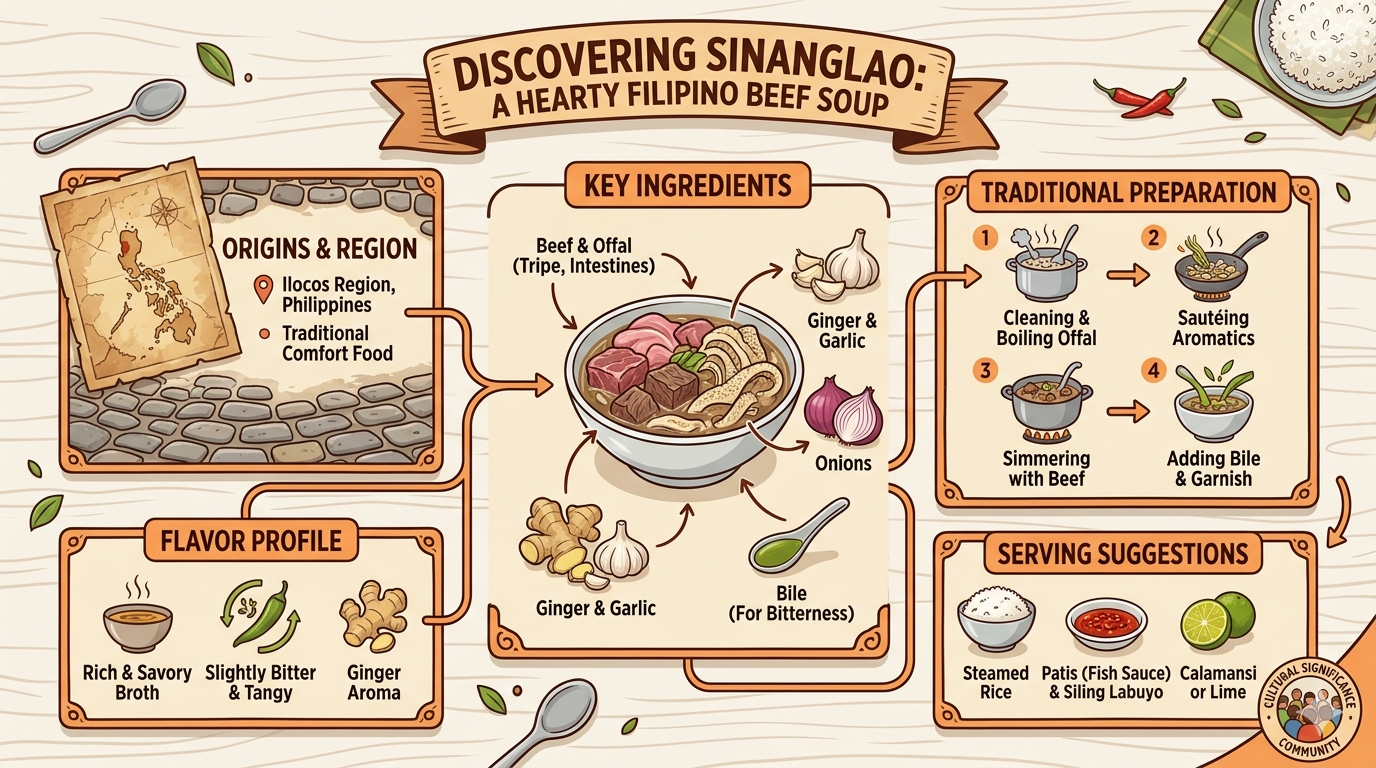
Visual breakdown of common ingredients used in sinanglao
Disclaimer
This article is for general informational and educational purposes only. It does not constitute professional medical, nutrition, or dietary advice. References to diets, foods, or supplements do not imply endorsement or guarantee of health outcomes. Readers are encouraged to consult licensed nutritionists, dietitians, or medical professionals for personalized guidance.