
Rhinoplasty Recovery Prep & Seasonal Considerations
Rhinoplasty Recovery Preparation and Seasonal Considerations
A general guide to planning for recovery and understanding environmental factors
Rhinoplasty recovery involves a period of healing that may be influenced by individual health, environment, and daily routines. This article provides a general overview of how individuals often prepare for recovery and how seasonal or climate-related factors may affect the healing process. The focus is on educational awareness, safety considerations, and practical planning without promoting specific medical decisions.
What is Rhinoplasty Recovery?
Rhinoplasty recovery refers to the healing period following surgical modification of the nose. It includes physical healing of tissues, reduction of swelling, and gradual stabilization of nasal structure. The duration and experience vary depending on the individual and the type of procedure performed.
General Recovery Preparation (Educational Overview)
Preparation for recovery is typically discussed during pre-procedure consultations. Common non-clinical considerations may include:
- Rest environment: Arranging a clean, quiet space to support limited activity
- Daily assistance: Planning for help with routine tasks during early recovery
- Work and schedule adjustments: Allowing time away from physically demanding activities
- Basic supplies: Keeping commonly used items accessible to reduce movement
Medical-specific instructions are provided by licensed professionals and may differ per case.
Early Recovery Phase (General Expectations)
The initial recovery period may involve:
- Swelling and mild discomfort
- Temporary nasal congestion
- Visible bruising around the nose or eyes
These effects are commonly discussed in patient education materials and typically improve over time. Individual experiences vary.
Seasonal Considerations in the Philippines
The Philippines has a tropical climate with two primary seasons: dry and rainy. Environmental conditions may influence general comfort during recovery.
Dry Season (Typically November to May)
- Higher temperatures may contribute to increased perspiration
- Warm conditions may require attention to maintaining a comfortable indoor environment
- Hydration is commonly emphasized in general recovery guidance
Rainy Season (Typically June to October)
- Higher humidity levels may affect overall comfort
- Increased rainfall may limit outdoor movement during recovery
- Air quality and ventilation may vary depending on location
These factors do not determine outcomes but may influence day-to-day recovery conditions.
Environmental Factors to Consider
Temperature
Moderate indoor temperatures are often considered more comfortable during recovery. Extreme heat or cold may affect general well-being.
Air Quality
Clean air environments may support comfort, especially when nasal sensitivity is present during early healing.
Sun Exposure
Direct sun exposure is generally discussed in post-procedure care contexts, as skin sensitivity may be heightened during healing.
Travel and Activity Timing (General Awareness)
Some individuals consider timing their procedure around:
- Work or school breaks
- Periods with fewer physical demands
- Travel schedules
Decisions about activity levels and travel are typically guided by professional advice and individual recovery progress.
Long-Term Healing Considerations
Healing continues beyond the initial recovery phase. Subtle swelling may persist for several months, and final structural stabilization may take longer. Environmental conditions generally have less impact during later stages compared to early recovery.
Context & Consumer Awareness
Under consumer protection and medical ethics standards in the Philippines, recovery-related information must remain general and not imply guaranteed timelines or outcomes.
In patient education literature:
- Recovery experiences differ between individuals
- Environmental comfort factors may vary by location
- Licensed professionals provide personalized recovery guidance
Consumers are encouraged to rely on verified medical advice for specific care instructions.
FAQs
Does the season affect rhinoplasty results?
Seasonal conditions may influence comfort during recovery, but they do not determine surgical outcomes.
Is it better to schedule rhinoplasty during a specific season?
There is no universally recommended season. Timing often depends on personal schedule and recovery planning considerations.
How long should recovery planning take before the procedure?
Preparation timelines vary. Planning is typically discussed during consultations based on individual circumstances.
Trusted Sources
- Philippine Department of Health (DOH) – Public health information
- U.S. Food and Drug Administration (FDA) – Safety and medical guidance resources
- Peer-reviewed journals such as Plastic and Reconstructive Surgery
- American Society of Plastic Surgeons (ASPS) – Educational materials
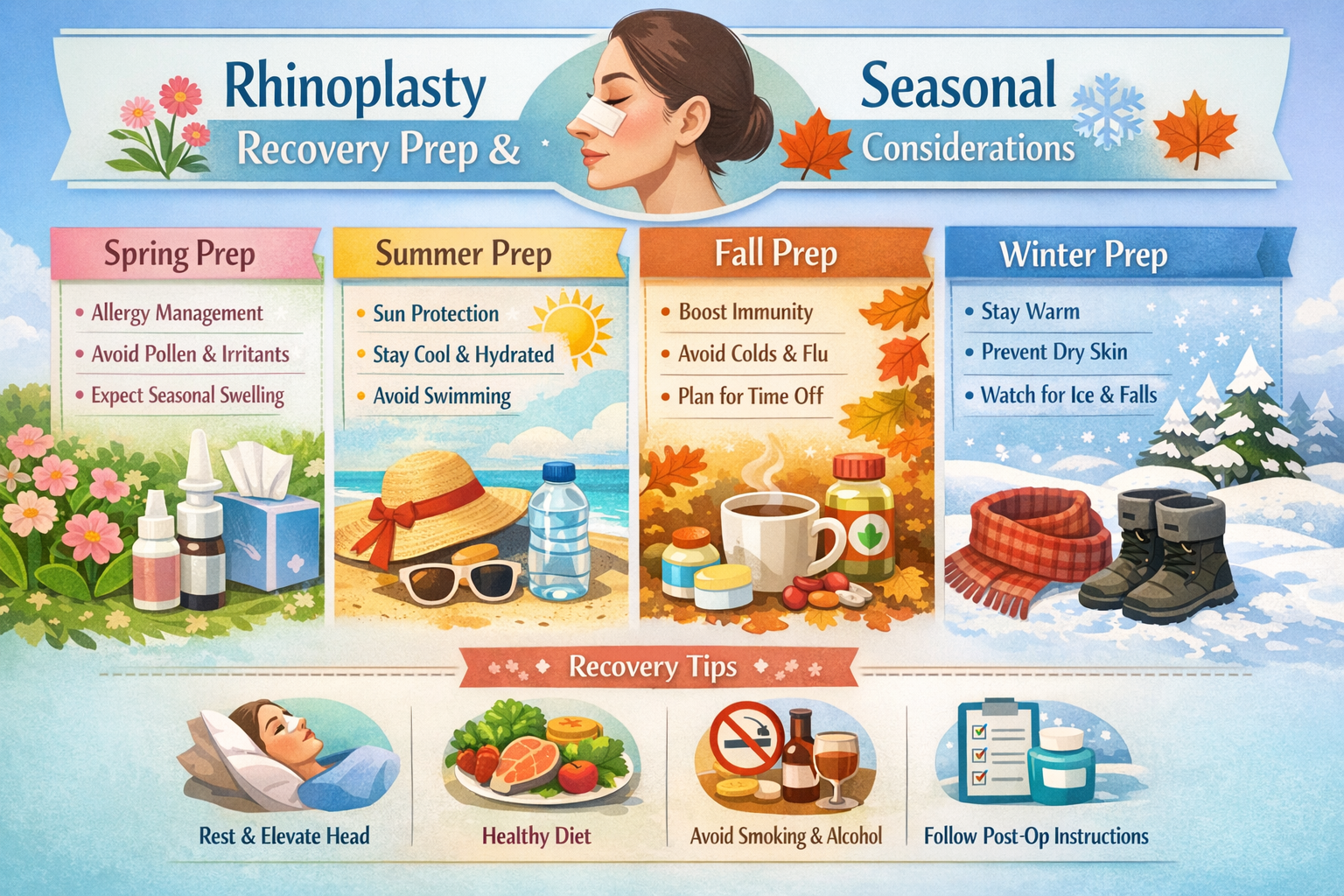
Visual layout combining preparation elements and seasonal conditions
Disclaimer
This article is for general informational and educational purposes only. It does not constitute professional medical, surgical, diagnostic, or consumer purchasing advice. References to procedures, providers, or methods do not imply endorsement or guarantee of results. Readers are encouraged to consult licensed medical professionals and official resources before making any medical decision.