Harmonizing Nose Shape with Facial Features
Harmonizing Nose Shape with Facial Features: An Educational Overview
Understanding how nasal structure relates to overall facial proportions
Nasal shape is one component of overall facial structure. In medical and anatomical discussions, the concept of “harmony” refers to how different facial features relate proportionally to one another. This article explains how the nose interacts with surrounding features, the anatomical factors involved, and how these relationships are evaluated in clinical settings. The focus is on general education, not aesthetic judgment or outcome expectations.
What Does “Facial Harmony” Mean?
Facial harmony is a descriptive term used in anatomy and clinical evaluation. It refers to the proportional relationship between facial features such as the nose, chin, forehead, and cheeks.
Rather than a fixed standard, these proportions vary across individuals. Cultural, genetic, and anatomical differences all influence facial structure.
Key Nasal Features in Proportion Analysis
When evaluating the nose in relation to the face, medical literature often considers:
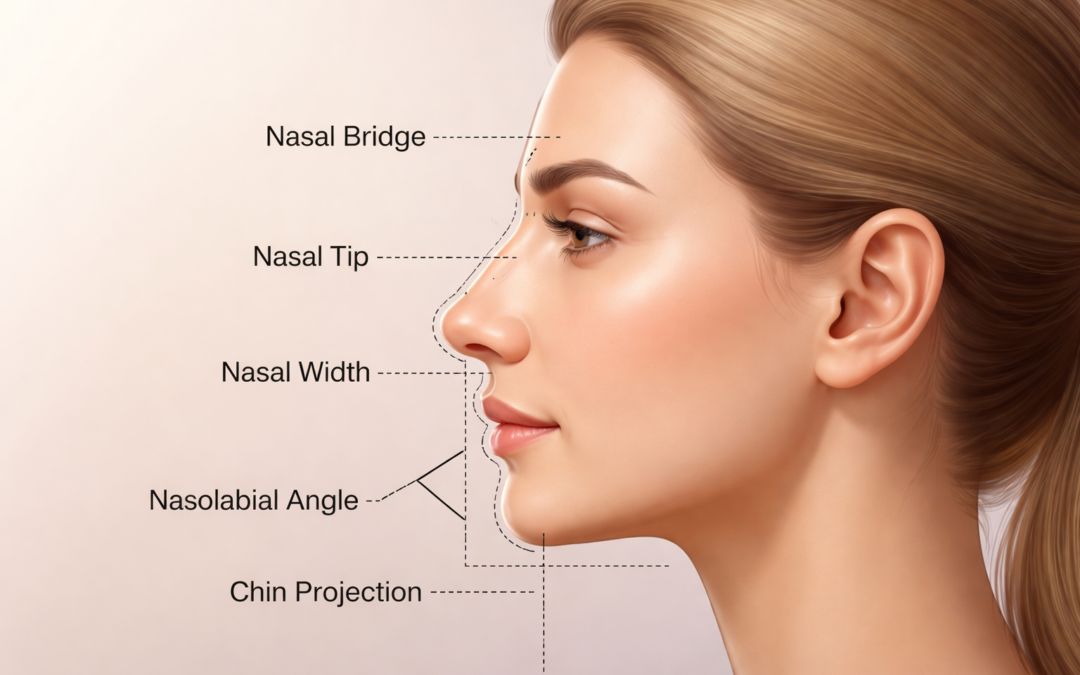
- Nasal bridge: the upper structure between the eyes
- Nasal tip: the lower, more flexible portion
- Nasal width: distance across the nostrils
- Nasal length: distance from bridge to tip
- Nasolabial angle: the angle between the nose and upper lip
These elements are assessed in relation to other facial landmarks rather than in isolation.
Relationship Between the Nose and Other Facial Features
Nose and Chin
The projection of the chin can influence how the nose appears in profile view. A smaller or more prominent chin may change perceived balance between facial structures.
Nose and Eyes
The width of the nasal bridge is often discussed in relation to the distance between the eyes. These proportions vary naturally among individuals.
Nose and Lips
The angle between the nose and upper lip (nasolabial angle) is one of the reference points used in clinical evaluation.
Nose and Forehead
The slope from the forehead to the nasal bridge (sometimes called the nasofrontal angle) contributes to overall profile structure.
How Proportions Are Evaluated in Clinical Contexts
In patient education and clinical settings, proportional analysis may include:
- Visual assessment from multiple angles
- Photographic documentation
- Measurement of angles and distances between facial landmarks
These evaluations are used to understand structure, not to define a universal standard.
Individual Variation and Anatomical Diversity
There is no single “correct” or “ideal” nose shape. Anatomical diversity is influenced by:
- Genetic background
- Age-related changes
- Skin thickness and cartilage structure
Medical literature emphasizes that variation is normal and expected across populations.
Role of Rhinoplasty in Structural Adjustment (General Context)
Rhinoplasty is one method that may alter nasal structure. In educational materials, it is described as a procedure that can modify bone, cartilage, or soft tissue.
Licensed surgeons typically evaluate:
- Structural anatomy
- Functional concerns (such as airflow)
- Patient-stated goals
Outcomes vary, and no specific proportional result can be guaranteed.
Limitations of Non-Surgical Approaches
Non-surgical nose enhancement methods, such as injectable fillers, may adjust certain contours temporarily. However:
- They do not change bone structure
- Effects are temporary
- Not all structural concerns can be addressed
Clinical evaluation determines suitability.
Context & Consumer Awareness
Under medical advertising and consumer protection standards, descriptions of facial proportions must remain neutral and not imply a required or superior appearance.
In patient education literature:
- Proportion analysis is used as a reference, not a rule
- Individual goals differ and are discussed during consultation
- Medical decisions require evaluation by licensed professionals
Consumers are encouraged to review official health resources and verify practitioner credentials through appropriate regulatory bodies.
FAQs
Is there a standard measurement for a “balanced” nose?
No universal standard applies to all individuals. Measurements used in clinical settings serve as reference points and vary depending on anatomy.
Can facial harmony be measured precisely?
Certain angles and distances can be measured, but interpretation depends on overall facial structure and clinical context.
Do all rhinoplasty procedures aim for the same proportions?
No. Approaches differ based on individual anatomy and goals discussed during consultation.
Trusted Sources
- Philippine Department of Health (DOH) – Public health guidance
- U.S. Food and Drug Administration (FDA) – Medical safety information
- Peer-reviewed journals such as Plastic and Reconstructive Surgery
- American Society of Plastic Surgeons (ASPS) – Educational resources
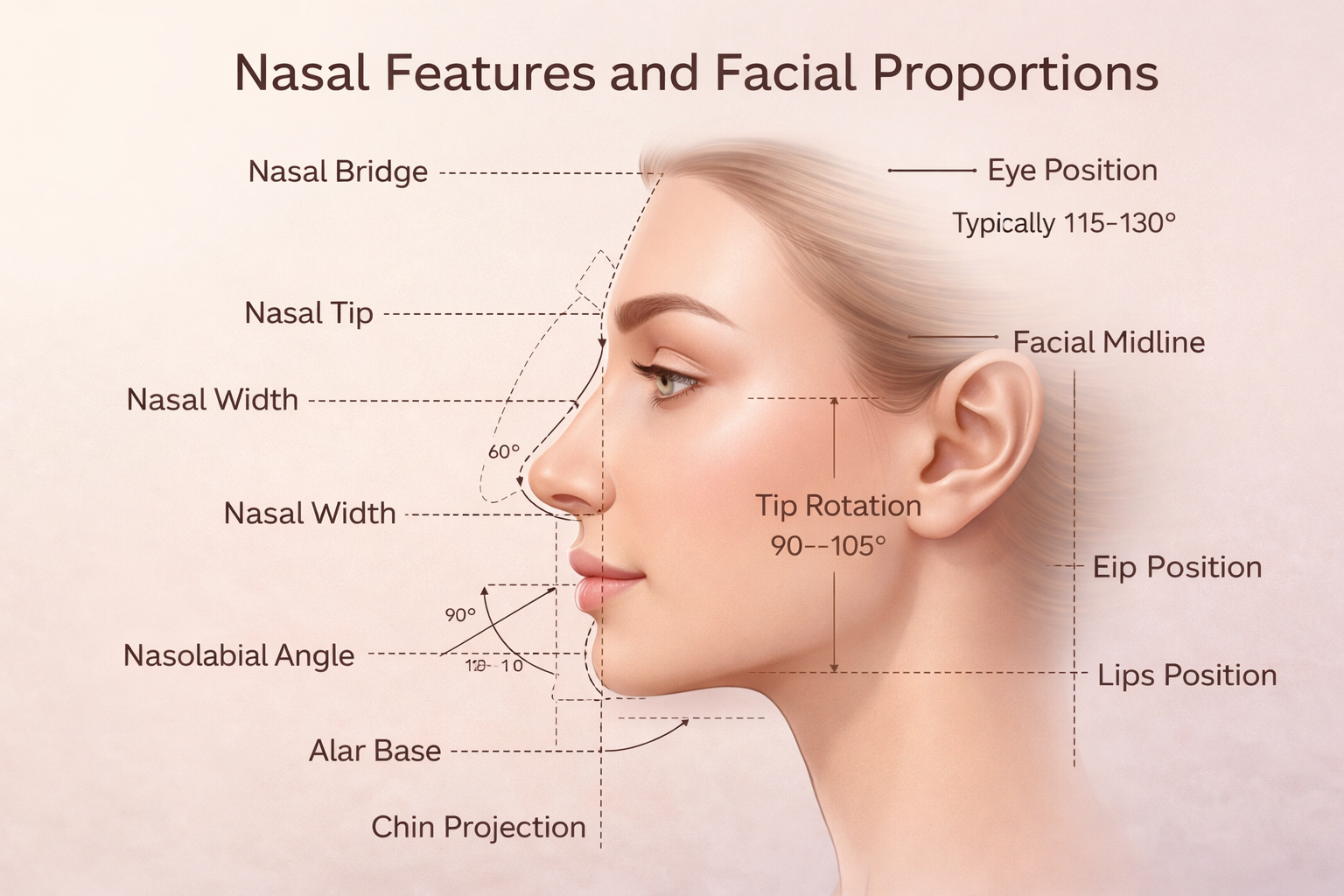
Diagram showing labeled nasal features and facial reference points
Disclaimer
This article is for general informational and educational purposes only. It does not constitute professional medical, surgical, diagnostic, or consumer purchasing advice. References to procedures, providers, or methods do not imply endorsement or guarantee of results. Readers are encouraged to consult licensed medical professionals and official resources before making any medical decision.