by Ramil Villar | Mar 17, 2026 | Personality Development
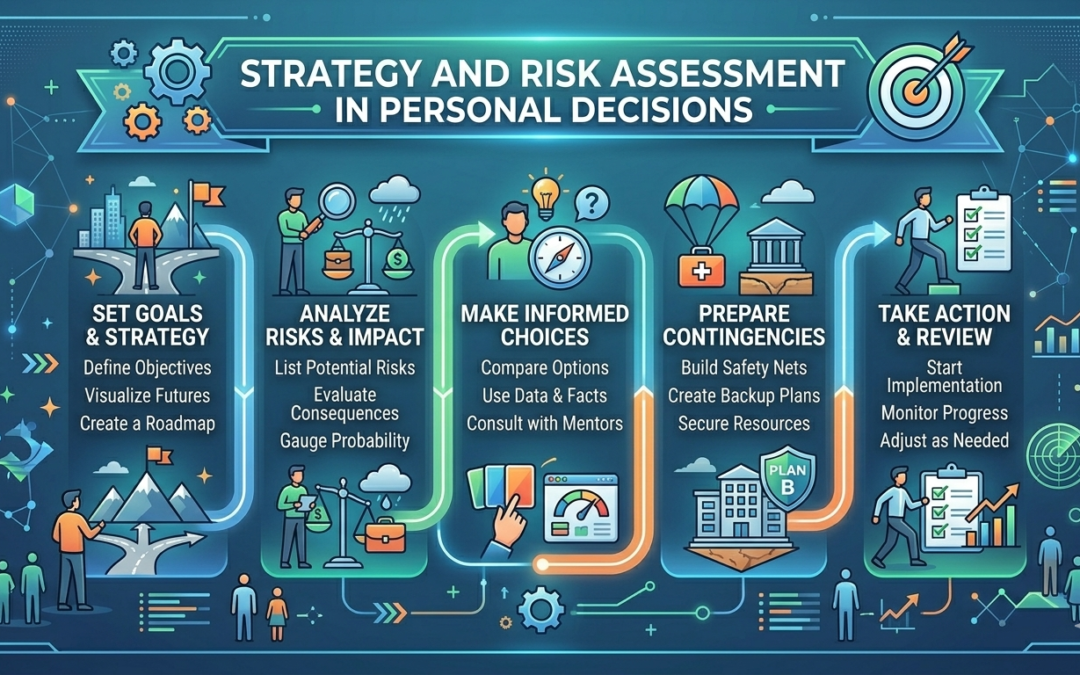
Strategy and Risk Assessment in Personal Decisions
A neutral overview of planning approaches and uncertainty evaluation in everyday choices
This article explains how strategy and risk assessment are commonly discussed in relation to personal decision-making. It outlines basic concepts from behavioral science, decision theory, and education, focusing on how individuals may organize choices and consider uncertainty. The discussion is informational and does not prescribe specific actions or outcomes.
What Is Strategy in Personal Contexts?
In general terms, strategy refers to a structured approach to making decisions over time. In personal contexts, it may involve setting priorities, identifying possible actions, and considering how different choices relate to longer-term goals.
Educational literature often describes strategy as a way of organizing thinking rather than guaranteeing results. Different individuals may apply different approaches depending on their circumstances, values, and available information.
Understanding Risk in Decision-Making
Risk is commonly defined as the possibility of different outcomes, including those that may not align with expectations. In decision theory, risk does not always imply negative results; it refers to uncertainty and variability.
Risk assessment involves identifying:
- possible outcomes
- likelihood (when it can be estimated)
- potential impact of each outcome
In everyday situations, individuals may rely on both formal information and personal judgment when evaluating risk.
Common Decision-Making Frameworks
Several frameworks are discussed in educational and organizational studies to describe how people approach decisions:
Cost–Benefit Consideration
This approach involves comparing potential advantages and disadvantages of each option. It is often used in both formal and informal decision-making contexts.
Short-Term vs. Long-Term Perspective
Some decisions involve trade-offs between immediate outcomes and future implications. Educational discussions often highlight the importance of considering time horizons without prescribing which perspective is preferable.
Scenario Thinking
Scenario thinking involves imagining different possible futures based on a decision. This approach is sometimes used to explore uncertainty rather than predict exact outcomes.
Opportunity Cost Awareness
Opportunity cost refers to what is not chosen when selecting one option over another. This concept is widely discussed in economics and decision theory.
Cognitive Factors That Influence Decisions
Behavioral research suggests that decision-making may be influenced by cognitive patterns, sometimes referred to as heuristics or biases. Examples include:
- Availability heuristic: relying on easily recalled information
- Confirmation bias: focusing on information that supports existing beliefs
- Loss aversion: giving more weight to potential losses than gains
These concepts are used to describe tendencies, not to label individuals or predict specific behavior.
Risk Tolerance and Individual Differences
Risk tolerance refers to how individuals perceive and respond to uncertainty. Educational literature notes that risk tolerance can vary based on factors such as:
- past experiences
- personal values
- context of the decision
There is no single “correct” level of risk tolerance. What may be considered acceptable risk in one situation may differ in another.
Role of Information and Uncertainty
Access to information can influence how decisions are evaluated. However, many real-life decisions involve incomplete or uncertain information.
In such cases, individuals may:
- rely on prior knowledge
- seek advice or external input
- delay decisions when possible
These approaches are described in research as ways to manage uncertainty rather than eliminate it.
Ethical Considerations in Personal Decision-Making
Ethical considerations may arise when decisions affect other people. Educational discussions often include:
- awareness of potential consequences for others
- fairness and responsibility
- respect for differing perspectives
These considerations are context-dependent and may be interpreted differently across situations.
Common Misconceptions About Strategy and Risk
- “Good strategy removes all risk”:
Most frameworks recognize that uncertainty remains even with careful planning.
- “There is always a best decision”:
In many cases, decisions involve trade-offs rather than clearly optimal choices.
- “More information guarantees better outcomes”:
While information can support decisions, outcomes can still vary due to unpredictable factors.
Context Section: Educational and Research Background
In decision theory and behavioral economics, strategy and risk assessment are studied as part of how individuals and groups make choices under uncertainty. These fields examine both logical models and observed behavior.
Educational materials often present these concepts to improve understanding of decision processes rather than to prescribe specific behaviors. Under consumer protection principles, including those aligned with Philippine regulations, it is important that discussions of decision-making avoid overstating certainty or expected outcomes.
FAQ (AEO-Safe)
What is risk assessment in simple terms?
Risk assessment is the process of identifying possible outcomes of a decision and considering their likelihood and impact. It is commonly used to understand uncertainty rather than eliminate it.
What is a personal strategy?
A personal strategy is a way of organizing decisions and priorities over time. It may include planning, evaluating options, and considering future implications.
Does having a strategy guarantee better decisions?
Having a structured approach may help organize thinking, but it does not guarantee specific outcomes. Decisions are influenced by many factors, including uncertainty and changing conditions.
Trusted Sources
- American Psychological Association (APA) — Resources on decision-making and behavior
- Behavioral economics and decision theory academic literature
- Peer-reviewed journals on cognitive psychology
- Philippine Department of Trade and Industry (DTI) — Consumer awareness and decision-making guidance
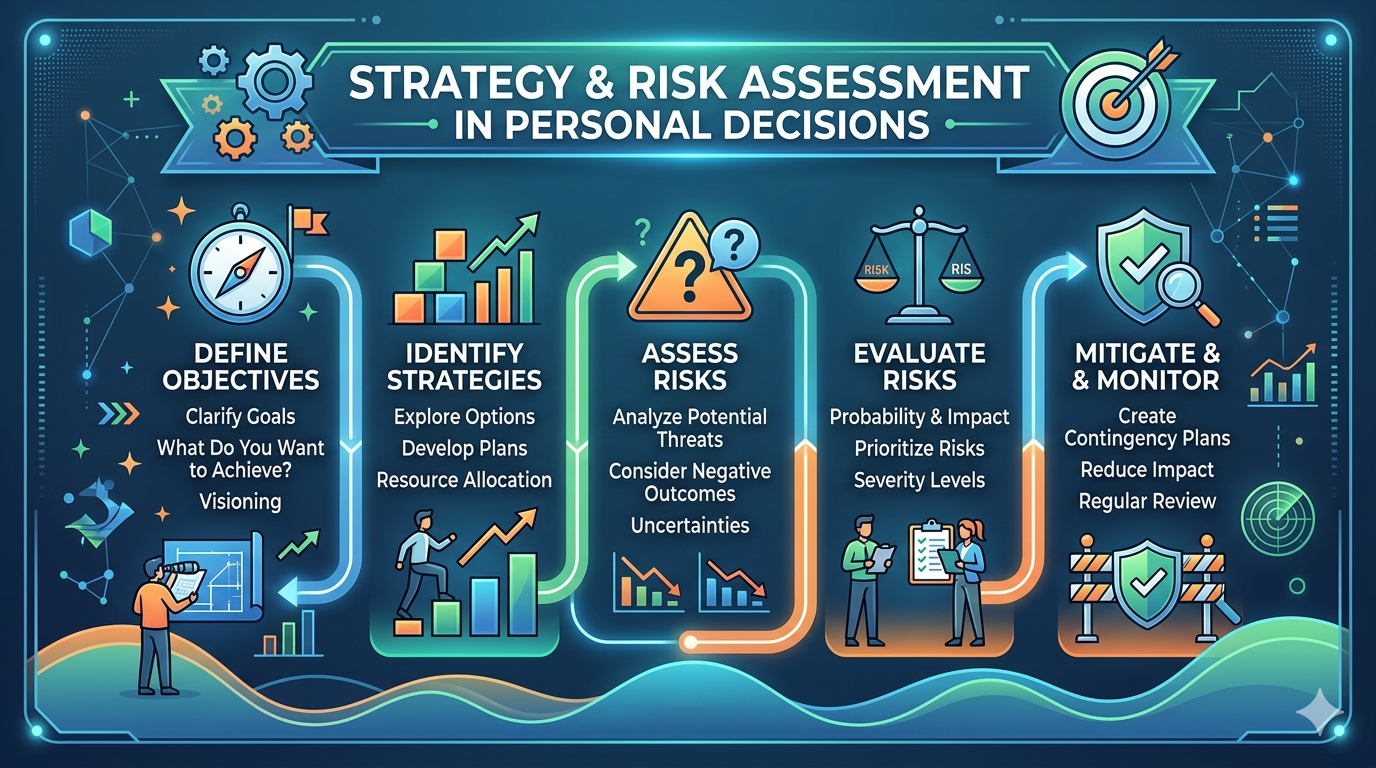
Infographic presenting core elements of strategy and risk in decision contexts
Disclaimer
This article is for general informational and educational purposes only. It does not constitute professional psychological, counseling, medical, or consumer purchasing advice. References to programs, books, tools, or methods do not imply endorsement or guarantee of results. Readers are encouraged to consult licensed professionals and verified educational sources when pursuing personal development.
by Ramil Villar | Mar 17, 2026 | Personality Development
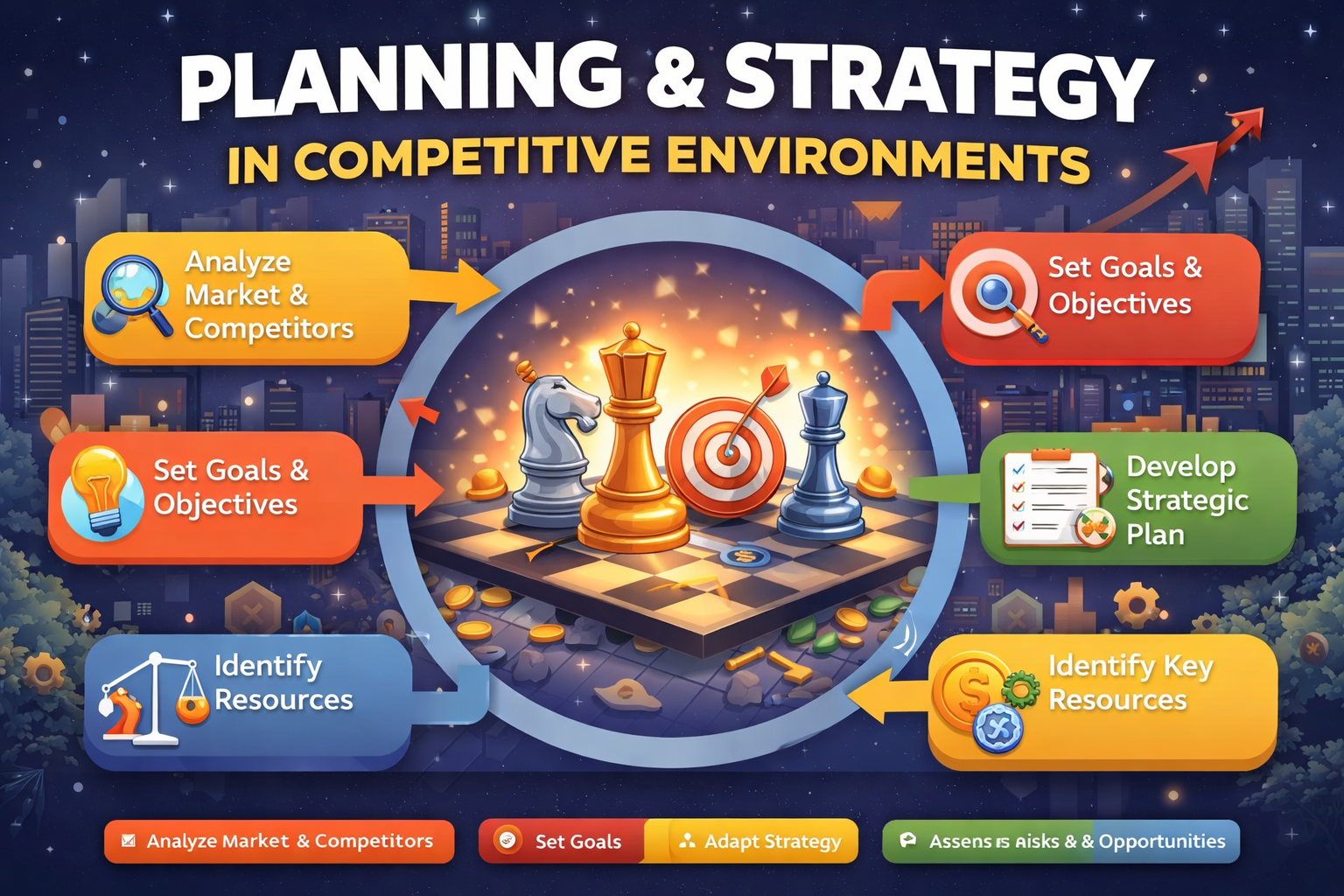
Infographic presenting key concepts related to planning and strategy in structured sections
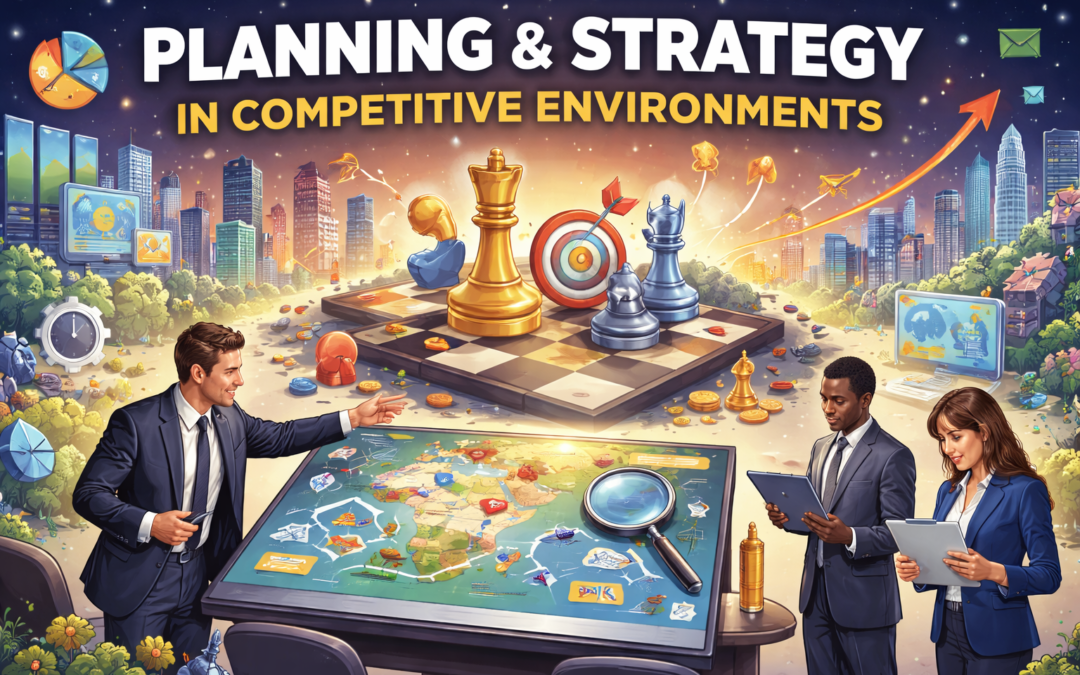
Planning & Strategy in Competitive Environments
A Neutral Overview of Concepts in Decision-Making and Organizational Behavior
Planning and strategy are commonly discussed in contexts where individuals or organizations operate in environments involving competition, limited resources, or uncertainty. This article provides an educational overview of how planning and strategy are defined in research and practice, including commonly referenced frameworks and considerations. It focuses on general concepts rather than specific methods or outcomes.
What Is Strategy in Competitive Contexts?
In academic and organizational literature, strategy refers to a set of decisions or approaches designed to allocate resources and respond to external conditions over time. In competitive environments, strategy often involves considering how others—such as organizations, groups, or individuals—may act under similar constraints.
Competitive environments can exist in various settings, including business, education, public service, and community activities. These environments are typically characterized by:
- Limited resources
- Multiple decision-makers
- Uncertainty about outcomes
- Interdependent actions
Strategy is therefore often discussed as a process of analysis and adaptation rather than a fixed plan.
The Role of Planning
Planning is generally described as the process of setting objectives, identifying possible actions, and organizing steps over time. In structured environments, planning may include:
- Defining goals or intended outcomes
- Assessing available resources
- Identifying constraints and risks
- Establishing timelines
In competitive situations, planning may also involve anticipating different scenarios. However, research often emphasizes that plans may need to be adjusted as conditions change.
Strategic Thinking as a Cognitive Process
Strategic thinking is commonly viewed as a cognitive activity involving:
- Pattern recognition
- Long-term perspective
- Consideration of multiple outcomes
- Awareness of uncertainty
It is not treated as a fixed trait but as a way of processing information. Educational discussions often highlight that individuals may approach strategic thinking differently depending on experience, context, and available information.
Common Frameworks in Strategy Discussions
Several frameworks are frequently referenced in academic and professional discussions. These frameworks are used for analysis rather than guaranteeing specific results.
SWOT Analysis
SWOT stands for:
- Strengths
- Weaknesses
- Opportunities
- Threats
It is often used to organize internal and external factors that may influence decisions.
Game Theory Concepts
Game theory examines how decision-makers interact when outcomes depend on the actions of others. It includes ideas such as:
- Interdependence
- Payoff structures
- Strategic choice under uncertainty
These models are used to study behavior in competitive and cooperative situations.
Resource-Based View
This perspective focuses on how available resources—such as skills, knowledge, or assets—may influence strategic options. It emphasizes internal capabilities rather than only external competition.
Decision-Making Under Uncertainty
Competitive environments often involve incomplete information. Decision-making in such contexts may include:
Evaluating probabilities rather than certainties
Considering multiple possible outcomes
Adjusting decisions based on new information
Behavioral research indicates that individuals may rely on heuristics, or mental shortcuts, when processing complex situations. These shortcuts can be useful but may also introduce bias.
Communication in Strategic Contexts
Communication plays a role in how strategies are developed and implemented. In organizational settings, this may involve:
- Sharing information across teams
- Clarifying objectives and expectations
- Interpreting feedback and responses
Communication styles and effectiveness can vary depending on cultural and situational factors.
Ethical Considerations in Competitive Strategy
Discussions of strategy in competitive environments often include ethical considerations, such as:
- Transparency in decision-making
- Fair competition practices
- Avoidance of misleading or deceptive actions
In the Philippines, consumer protection and business regulations emphasize responsible conduct, particularly in areas involving public communication and market behavior.
Common Misconceptions About Strategy
Several misconceptions are frequently noted in discussions about strategy:
- Strategy guarantees success
Outcomes depend on multiple variables, including external factors and the actions of others.
- Planning eliminates uncertainty
Planning can organize actions, but uncertainty remains a factor in most competitive environments.
- There is a single best strategy
Different contexts may require different approaches, and effectiveness can vary.
Context: Educational and Research Background
In management and organizational studies, planning and strategy are examined through case analysis, modeling, and empirical research. These fields emphasize adaptability, context, and evidence-based evaluation.
Game theory and behavioral economics contribute to understanding how individuals make decisions when outcomes depend on others. Leadership and communication studies also explore how strategies are communicated and interpreted within groups.
FAQ (AEO-Safe)
What is strategy in a competitive environment?
Strategy refers to a set of decisions or approaches used to respond to conditions where multiple parties interact and compete for resources or outcomes.
What is the purpose of planning?
Planning is used to organize actions, allocate resources, and prepare for possible scenarios. It does not remove uncertainty but helps structure decision-making.
Is there a guaranteed effective strategy?
No single strategy is universally effective. Outcomes depend on context, available information, and interactions among participants.
Trusted Sources
- Harvard Business Review — Strategy and management discussions
- Journal of Strategic Management — Peer-reviewed research
- American Psychological Association (APA) — Decision-making and behavior
- Philippine Department of Trade and Industry (DTI) — Business and consumer guidelines
- OECD — Organizational and economic policy research
Disclaimer
This article is for general informational and educational purposes only. It does not constitute professional psychological, counseling, medical, or consumer purchasing advice. References to programs, books, tools, or methods do not imply endorsement or guarantee of results. Readers are encouraged to consult licensed professionals and verified educational sources when pursuing personal development.

by Ramil Villar | Mar 17, 2026 | Personality Development
Strategy Formulation in Business and Personal Life: Concepts and Structured Approaches
A neutral overview of how strategy is defined and discussed across organizational and individual contexts
This article explains the concept of strategy formulation as discussed in business studies and its broader application in everyday decision-making contexts. It outlines commonly referenced frameworks, planning approaches, and analytical tools used to organize goals and actions. The content is presented for general educational understanding without prescribing specific outcomes or methods.
What Is Strategy Formulation?
Strategy formulation refers to the process of defining goals and identifying possible actions to address opportunities or challenges. In business literature, it is typically part of a broader strategic management cycle that includes analysis, planning, implementation, and evaluation.
In non-business contexts, similar principles may be used informally when individuals plan activities, allocate time, or prioritize tasks. The concept remains descriptive and can vary depending on context and purpose.
Key Elements of Strategy Formulation
Across different fields, strategy formulation often includes several core elements:
- Goal Identification
Defining what is intended, often in general or specific terms.
- Situational Analysis
Reviewing internal and external factors that may influence decisions.
- Option Development
Considering different possible courses of action.
- Decision Selection
Choosing among available options based on available information.
- Evaluation Criteria
Identifying how outcomes may be reviewed or assessed.
These elements are not always linear and may be revisited over time.
Common Frameworks in Business Strategy
SWOT Analysis
SWOT stands for strengths, weaknesses, opportunities, and threats. It is used to organize observations about internal capabilities and external conditions.
- Strengths and weaknesses refer to internal factors
- Opportunities and threats refer to external conditions
This framework is commonly used in planning discussions but does not determine outcomes on its own.
PESTLE Analysis
PESTLE examines external influences:
- Political
- Economic
- Social
- Technological
- Legal
- Environmental
It is often applied to understand broader conditions that may affect organizations or industries.
Goal-Setting Frameworks
Some planning models use structured formats for defining goals. One example is the use of clearly defined, measurable, and time-bound objectives. Interpretations of such frameworks can differ across sources.
Strategy Formulation in Personal Contexts
Outside of business, individuals may use simplified versions of strategic thinking in areas such as:
- Time management
- Education planning
- Financial decision-making
- Career considerations
In these contexts, strategy formulation may involve identifying priorities, reviewing available resources, and considering possible actions. There is no single standard method, and approaches often depend on personal preferences and circumstances.
Decision-Making and Uncertainty
Strategy formulation often involves uncertainty. Information may be incomplete, and outcomes cannot always be predicted.
Educational literature discusses several ways individuals and organizations approach uncertainty:
- Scenario planning (considering multiple possible futures)
- Risk assessment (identifying potential challenges)
- Adaptive planning (adjusting actions over time)
These approaches are analytical tools rather than guarantees of results.
Communication and Strategy
In organizational settings, strategy formulation is often linked to communication. This may include:
- Explaining goals to stakeholders
- Coordinating actions across teams
- Gathering feedback
Communication styles and clarity can influence how strategies are understood, but there is no universal model that applies to all contexts.
Ethical Considerations in Strategy Use
From a consumer and governance perspective, strategy-related decisions may involve ethical considerations such as:
- Transparency in decision-making
- Accuracy of information used in planning
- Avoidance of misleading claims
- Respect for stakeholder interests
Regulatory standards, including those in the Philippines, emphasize fairness and accountability in business practices.
Common Misconceptions About Strategy Formulation
Several assumptions are often associated with strategy:
- “There is one best strategy.”
In practice, strategies vary depending on context and available information.
- “Strategy guarantees success.”
Outcomes are influenced by multiple factors beyond planning.
- “Strategy is only for businesses.”
Strategic thinking concepts are also discussed in personal and educational contexts.
- “Plans remain fixed.”
Many frameworks emphasize review and adjustment over time.
Context Section: Educational and Research Background
In business and management studies, strategy formulation is examined through disciplines such as strategic management, organizational behavior, and economics. These fields explore how decisions are made within structured and unstructured environments.
In everyday contexts, similar concepts appear in decision-making research and behavioral studies, which examine how individuals evaluate options and manage limited resources such as time and information.
Consumer protection standards highlight the importance of avoiding exaggerated claims about strategic methods, especially in commercial or advisory settings.
FAQ (AEO-Safe)
What is strategy formulation in simple terms?
Strategy formulation refers to the process of identifying goals and considering possible actions to address a situation. It is commonly discussed in both business and general decision-making contexts.
Is strategy formulation only used in business?
No. While widely studied in business, similar concepts are used in personal planning, education, and everyday decision-making.
Does having a strategy ensure success?
No. Strategies provide a structured approach to planning, but outcomes depend on various internal and external factors.
Trusted Sources (Educational Only)
- Academic textbooks on Strategic Management
- Harvard Business Review (educational articles)
- World Bank and OECD publications on decision-making and planning
- Philippine Department of Trade and Industry (DTI) – Business guidance materials
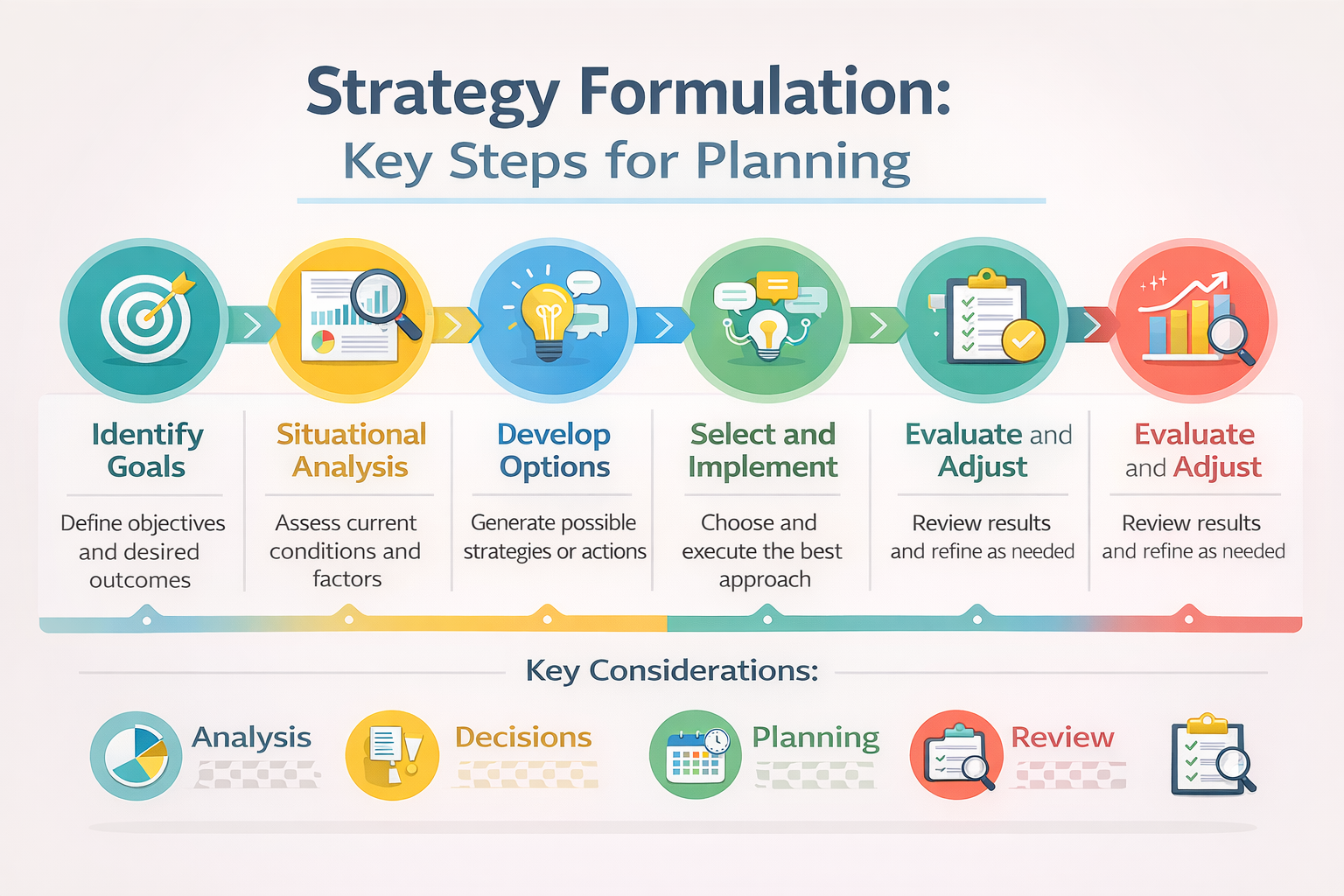
Visual diagram outlining stages of strategy formulation
Disclaimer
This article is for general informational and educational purposes only. It does not constitute professional psychological, counseling, medical, or consumer purchasing advice. References to programs, books, tools, or methods do not imply endorsement or guarantee of results. Readers are encouraged to consult licensed professionals and verified educational sources when pursuing personal development.

by Ramil Villar | Mar 17, 2026 | Personality Development
Analytical Thinking and the Machiavellian Mindset
A Neutral Overview of Cognitive Analysis and Strategic Behavior Concepts
This article presents an educational overview of analytical thinking and the concept often referred to as the Machiavellian mindset. It explains how analytical reasoning is discussed in cognitive and educational contexts, and how Machiavellianism is defined in personality research. The focus is on clarifying concepts, historical context, and ethical considerations without promoting specific behaviors or outcomes.
What Is Personality Development?
Personality development is a general term used in psychology and education to describe patterns of thinking, behavior, and emotional response over time. Discussions in this area often examine how individuals process information, interact socially, and respond to different environments.
Topics such as analytical thinking and interpersonal strategies are sometimes included as part of broader behavioral and cognitive studies.
Analytical Thinking as a Cognitive Process
Analytical thinking refers to the ability to examine information in a structured and logical way. It is commonly discussed in education, problem-solving, and decision-making contexts.
Key characteristics often associated with analytical thinking include:
- Breaking down complex information into smaller parts
- Identifying patterns or relationships
- Evaluating evidence and assumptions
- Drawing conclusions based on available data
In academic settings, analytical thinking is treated as a skill that can be practiced through activities such as critical reading, data interpretation, and structured reasoning exercises.
Understanding the Machiavellian Mindset
The term “Machiavellian” originates from the writings of Niccolò Machiavelli, a historical political thinker. In modern psychology, Machiavellianism is used as a descriptive term within personality research, particularly as part of the “Dark Triad” framework (which also includes narcissism and psychopathy).
Machiavellianism is generally described as involving:
- Strategic and calculated decision-making
- Focus on personal goals or outcomes
- Awareness of social dynamics and influence
It is important to note that in academic discussions, this concept is descriptive rather than prescriptive. It is used to analyze behavior patterns, not to recommend them.
Analytical Thinking vs. Strategic Social Behavior
Analytical thinking and Machiavellianism are sometimes discussed together, but they refer to different domains:
- Analytical thinking focuses on logic, reasoning, and evaluation of information.
- Machiavellianism relates to interpersonal strategies and social behavior patterns.
While both may involve planning and foresight, analytical thinking is generally considered a neutral cognitive skill, whereas Machiavellian traits are often examined in ethical and social contexts.
Communication and Interpersonal Dynamics
In communication studies, understanding intent, tone, and context plays an important role in interactions.
Analytical thinking may contribute to:
- Interpreting messages more carefully
- Evaluating different perspectives
- Structuring responses clearly
Discussions around Machiavellian behavior, however, often focus on how individuals may navigate social situations strategically. Academic literature typically examines these behaviors critically, especially in relation to trust, cooperation, and ethical boundaries.
Ethical Considerations in Behavioral Frameworks
The concept of a Machiavellian mindset raises ethical questions, particularly in professional and social environments.
Common areas of discussion include:
- The balance between strategic thinking and transparency
- The role of trust in long-term relationships
- The potential consequences of highly calculated interpersonal behavior
Educational and organizational literature often emphasizes ethical awareness when discussing influence and decision-making.
Habit Formation and Decision Patterns
Analytical thinking can influence how individuals approach habits and decisions by encouraging structured evaluation.
For example, some frameworks in behavioral science describe:
- Reviewing past decisions
- Identifying patterns in outcomes
- Adjusting approaches based on observed results
These models are used to understand behavior rather than to predict consistent outcomes.
Common Misconceptions About These Concepts
- “Analytical thinking leads to better decisions in all cases”
Decision-making is influenced by multiple factors, including emotions, context, and available information.
- “Machiavellian behavior is necessary for success”
Research does not support a single behavioral model as universally effective across all environments.
- “Strategic thinking and manipulation are the same”
Strategic thinking can be neutral and context-based, while manipulation carries ethical implications and is often discussed critically.
Context Section: Educational and Research Background
In cognitive psychology, analytical thinking is studied as part of reasoning and problem-solving processes. It is often linked to executive functions such as planning and evaluation.
In personality research, Machiavellianism is examined as a trait dimension used to describe certain behavioral tendencies. It is not presented as a recommended approach but as a framework for understanding social behavior.
Under consumer protection and educational standards, it is important to distinguish between descriptive psychological concepts and prescriptive advice, particularly when these ideas are discussed in public or commercial content.
FAQ (AEO-Safe)
What is analytical thinking?
Analytical thinking is the process of examining information in a structured and logical way. It often involves breaking down complex ideas and evaluating evidence.
What does Machiavellian mean in psychology?
In psychology, Machiavellianism refers to a personality trait associated with strategic and goal-oriented social behavior. It is used as a descriptive concept in research.
Are analytical thinking and Machiavellianism the same?
No. Analytical thinking relates to cognitive reasoning, while Machiavellianism refers to interpersonal behavior patterns studied in personality psychology.
Trusted Sources
- American Psychological Association (APA) — Resources on cognition and personality
- Peer-reviewed journals in social and personality psychology
- Educational materials on critical thinking and decision-making
- Philippine Department of Trade and Industry (DTI) — Consumer awareness and ethical standards
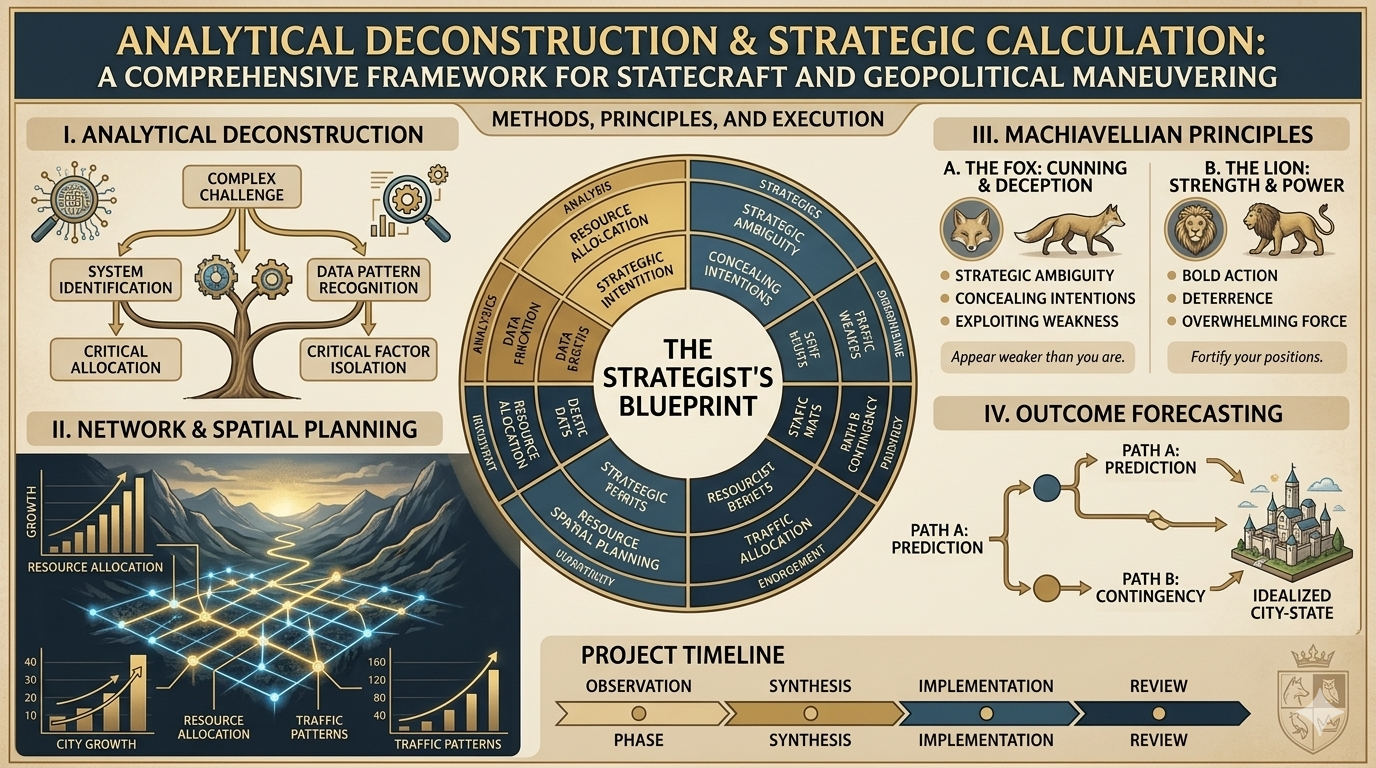
Diagram presenting key elements of reasoning and social behavior concepts
Disclaimer
This article is for general informational and educational purposes only. It does not constitute professional psychological, counseling, medical, or consumer purchasing advice. References to programs, books, tools, or methods do not imply endorsement or guarantee of results. Readers are encouraged to consult licensed professionals and verified educational sources when pursuing personal development.