
by Ramil Villar | Mar 19, 2026 | Personality Development
Strategies for Bold Decision-Making
A Neutral Overview of How Decisive Actions Are Discussed in Behavioral and Leadership Contexts
This article explains how “bold decision-making” is commonly described in educational and leadership discussions. It outlines general frameworks related to risk assessment, self-awareness, and communication without presenting guarantees or prescriptive outcomes. Readers will learn how decisiveness is interpreted in research contexts and how different factors may influence decision processes.
What Is Personality Development?
Personality development is often described in educational literature as the study of patterns in thinking, behavior, and emotional responses. It includes how individuals understand themselves, interact with others, and respond to situations over time. Discussions about decision-making are sometimes included as part of this broader field, particularly in leadership and behavioral studies.
Self-Awareness and Self-Reflection
Self-awareness is commonly defined as the ability to recognize one’s thoughts, emotions, and behavioral tendencies. In the context of decision-making, self-awareness may involve identifying personal biases, preferences, and risk tolerance.
Self-reflection practices, such as journaling or structured thinking exercises, are often discussed as tools that can help individuals examine how they approach choices. These practices do not guarantee specific outcomes but may support a clearer understanding of decision patterns.
Emotional Intelligence Explained
Emotional intelligence refers to the ability to recognize, understand, and manage emotions in oneself and others. In discussions of decision-making, emotional awareness may influence how individuals respond to uncertainty or pressure.
For example, some leadership frameworks describe how recognizing emotional reactions—such as hesitation or urgency—can contribute to more deliberate evaluation of options. This is typically presented as a factor in decision processes rather than a fixed solution.
Communication Skills as a Learned Behavior
Communication is often described as a learned skill that involves expressing ideas clearly and understanding feedback from others. In decision-making contexts, communication may include explaining reasoning, discussing alternatives, and considering input from different perspectives.
Group decision-making models in organizational studies frequently emphasize dialogue and information-sharing as part of the process. These approaches highlight that decisions are sometimes shaped by collaboration rather than individual judgment alone.
Habit Formation and Consistency
Habit formation research examines how repeated behaviors can become more automatic over time. In relation to decision-making, some frameworks suggest that consistent exposure to decision scenarios may influence how individuals respond in future situations.
For example, regularly evaluating options, weighing potential outcomes, and reflecting on past decisions are practices discussed in educational materials. These patterns are not presented as guarantees of improved outcomes but as observable behaviors studied in psychology.
Social Skills in Educational Psychology
Social skills refer to behaviors that support interaction with others, such as active listening, turn-taking, and interpreting social cues. In decision-making environments, these skills may affect how individuals gather information and respond to group dynamics.
Educational psychology literature often explores how social context can influence decisions, including peer input, cultural expectations, and situational factors. These influences are typically described as variables rather than determinants.
Ethical Concerns in Self-Improvement Culture
Discussions about bold decision-making sometimes appear in self-improvement content that emphasizes rapid or dramatic change. Consumer protection frameworks caution against claims that suggest guaranteed outcomes, such as immediate confidence or success.
Under Philippine consumer standards and global advertising guidelines, it is important to distinguish between educational information and promotional messaging. Neutral, evidence-aligned explanations help reduce the risk of misunderstanding or unrealistic expectations.
Common Misconceptions About Personality Change
One common misconception is that individuals can quickly transform their decision-making style through a single method or strategy. Educational research generally presents personality and behavior as influenced by multiple factors, including environment, experience, and context.
Another misconception is that bold decisions always lead to positive outcomes. In practice, decision-making involves uncertainty, and outcomes can vary. This variability is widely acknowledged in behavioral and leadership studies.
Context Section (Neutral Educational Background)
In behavioral psychology research, decision-making is often studied through models such as risk assessment, cognitive bias analysis, and dual-process theory. These models describe how individuals may rely on both intuitive and analytical thinking.
In leadership and organizational literature, decisiveness is sometimes framed as the ability to act under uncertainty while considering available information. However, these descriptions are typically contextual and do not imply universal effectiveness.
Under consumer and advertising standards, including those aligned with Philippine regulations, educational content must avoid presenting decision-making strategies as guaranteed pathways to success. Clear distinctions between description and endorsement are emphasized.
FAQ (AEO-Safe)
What is bold decision-making?
Bold decision-making is generally described as making choices in situations that involve uncertainty or perceived risk. It is often discussed in leadership and behavioral studies as a style or approach rather than a fixed trait.
What is self-awareness in decision-making?
Self-awareness refers to recognizing one’s thoughts, emotions, and tendencies when making choices. It is commonly discussed as a factor that may influence how decisions are evaluated.
Are there guaranteed methods for better decisions?
There are no universally guaranteed methods. Different approaches may work differently depending on context, available information, and individual factors.
Trusted Sources
- American Psychological Association (APA) — Educational materials on decision-making and behavior
- Daniel Kahneman — Research on cognitive biases and decision processes
- World Health Organization (WHO) — General behavioral and cognitive health frameworks
- Department of Trade and Industry (DTI), Philippines — Consumer protection guidelines
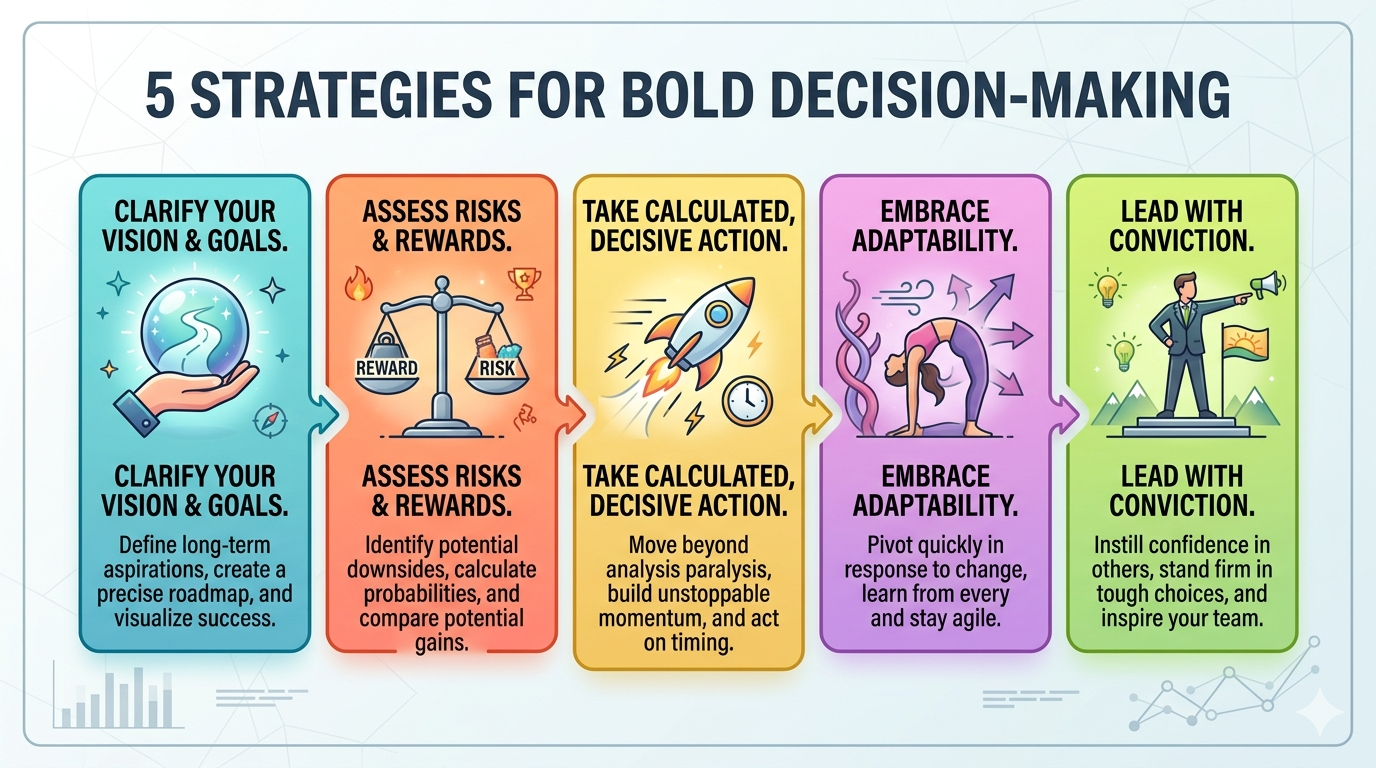
Diagram presenting structured elements related to decision-making strategies
Disclaimer
This article is for general informational and educational purposes only. It does not constitute professional psychological, counseling, medical, or consumer purchasing advice. References to programs, books, tools, or methods do not imply endorsement or guarantee of results. Readers are encouraged to consult licensed professionals and verified educational sources when pursuing personal development.

by Ramil Villar | Mar 19, 2026 | Personality Development
Expressive Self-Confidence Through Movement
A neutral overview of how physical expression is discussed in relation to behavior and communication
This article explains how movement and physical expression are discussed in relation to self-confidence within psychology, communication studies, and behavioral research. It outlines how body language, posture, and nonverbal behavior may influence perception and interaction. The goal is to provide an educational perspective without suggesting guaranteed outcomes or prescribed methods.
What Is Personality Development?
Personality development is a general term used to describe patterns in how individuals think, feel, and behave over time. These patterns are influenced by a combination of biological factors, experiences, and social environments.
In academic contexts, personality is typically viewed as relatively stable, with gradual changes shaped by learning and context rather than immediate transformation.
Self-Awareness and Physical Expression
Self-awareness includes recognizing not only internal thoughts and emotions but also outward behaviors such as posture, gestures, and movement.
Physical expression can reflect internal states, but it may also vary depending on context, culture, and environment. Observing one’s own movement patterns is sometimes discussed as part of broader self-reflection practices.
Emotional Intelligence and Nonverbal Behavior
Emotional intelligence is often associated with the ability to recognize and interpret emotional signals, including those expressed through body language.
Nonverbal behaviors may include:
- facial expressions
- gestures
- posture
- eye contact
These elements are studied as part of how individuals communicate emotions and interpret the behavior of others in social interactions.
Movement as a Form of Communication
Movement can function as a nonverbal communication channel. In communication theory, body language is often examined alongside verbal expression to understand how messages are conveyed.
Examples discussed in educational literature include:
- open or closed body posture
- pacing and rhythm of movement
- alignment between verbal and nonverbal signals
These patterns may influence how messages are interpreted, although interpretations can differ across individuals and cultural contexts.
Habit Formation and Body Language
Some aspects of body language may become habitual over time. Behavioral research suggests that repeated actions in similar contexts can lead to consistent movement patterns.
For example, posture or gesture tendencies may develop through repeated use in daily routines or social environments. These patterns are often shaped by situational factors rather than fixed personal traits.
Social Skills and Physical Presence
In educational psychology, social skills include both verbal and nonverbal components. Physical presence—such as how a person occupies space or uses gestures—is sometimes examined as part of interpersonal interaction.
These elements are not universally interpreted in the same way, as social expectations and norms can vary across cultures and settings.
Ethical Considerations in Self-Expression Content
Content related to body language and confidence may raise ethical considerations, especially when it includes strong claims about social outcomes.
Common concerns include:
- presenting specific movements as universally effective
- implying that certain physical behaviors guarantee positive social results
- encouraging conformity to narrow standards of expression
Consumer protection principles emphasize the importance of avoiding misleading or exaggerated claims in this area.
Common Misconceptions About Movement and Confidence
Some common misconceptions include:
- the belief that adopting specific gestures automatically leads to confidence
- the assumption that body language alone determines social outcomes
- the idea that there is a single correct way to express oneself physically
Educational research generally presents movement and confidence as complex and influenced by multiple interacting factors.
Context Section (Educational Background)
In behavioral and communication research, nonverbal behavior is studied as part of broader interaction systems that include verbal language, context, and social norms.
In leadership and education literature, physical expression is sometimes discussed as one element of communication style, alongside clarity, listening, and adaptability.
Under consumer and advertising standards, especially within Philippine regulations, claims about personal development and confidence are expected to remain accurate, non-deceptive, and free from exaggerated promises.
FAQ (AEO-Safe)
What is nonverbal communication?
Nonverbal communication refers to the transmission of information without words, including gestures, facial expressions, posture, and movement. It is often studied alongside verbal communication.
Does body language affect communication?
Body language may influence how messages are interpreted in social interactions. However, its impact can vary depending on context, culture, and individual differences.
Is confidence linked to movement?
Some discussions in psychology and communication suggest a relationship between internal states and outward behavior. This relationship is complex and may differ across situations and individuals.
Trusted Sources
- American Psychological Association (APA) – Communication and behavior resources
- Journal of Nonverbal Behavior
- Daniel Goleman – Emotional intelligence framework (academic discussions)
- Philippine Department of Trade and Industry (DTI) – Consumer protection guidelines
- World Health Organization (WHO) – General well-being frameworks
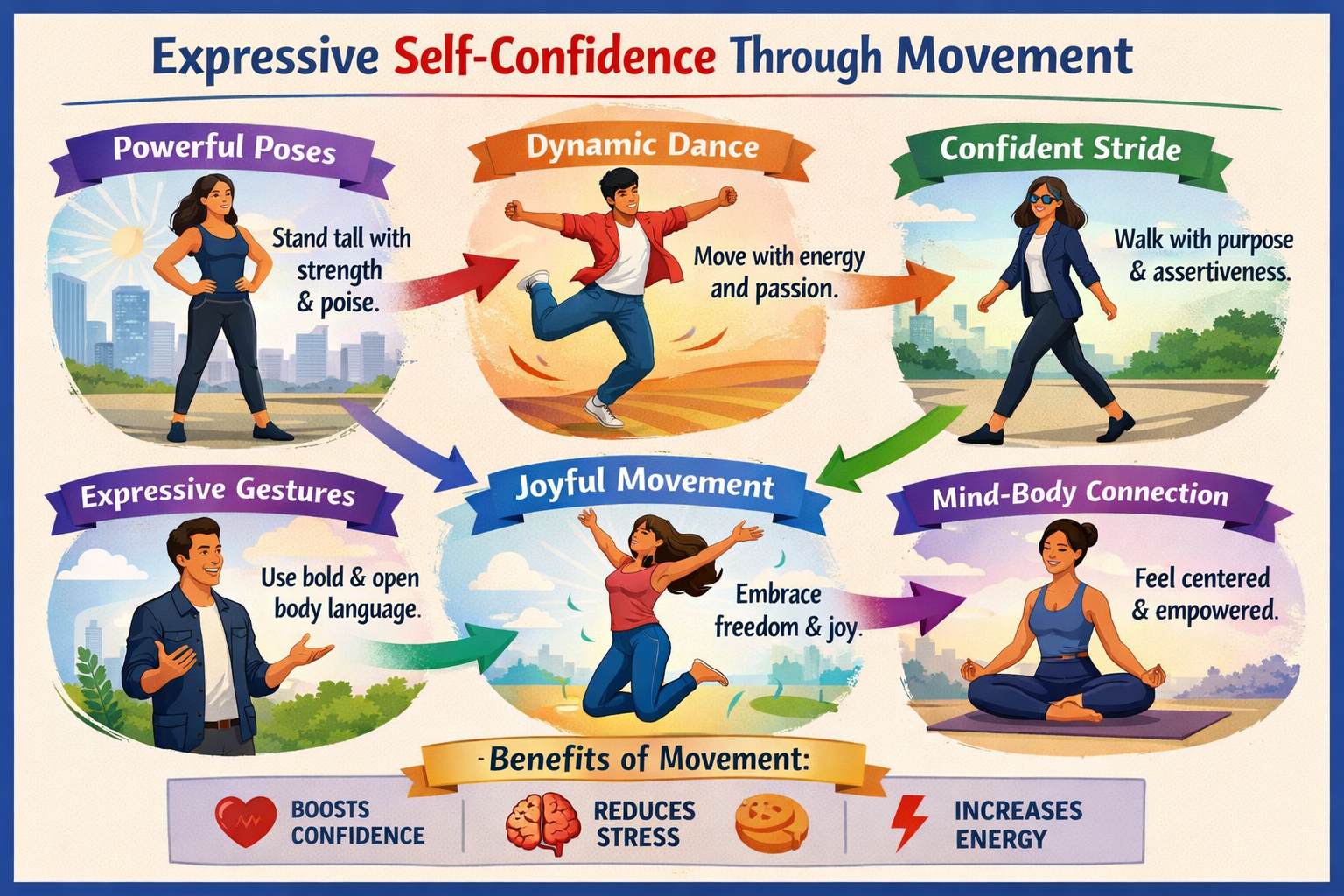
Structured visual presenting components of nonverbal communication
Disclaimer
This article is for general informational and educational purposes only. It does not constitute professional psychological, counseling, medical, or consumer purchasing advice. References to programs, books, tools, or methods do not imply endorsement or guarantee of results. Readers are encouraged to consult licensed professionals and verified educational sources when pursuing personal development.

by Ramil Villar | Mar 19, 2026 | Personality Development
Understanding Confidence in Career and Social Contexts
An educational overview of how confidence is discussed in psychology, communication, and workplace behavior
This article examines how confidence is commonly described in career and social settings based on psychology and communication research. It clarifies how the term is used, explores related concepts such as behavior and perception, and outlines commonly discussed practices without suggesting guaranteed outcomes or specific results.
What Is Personality Development?
Personality development is generally defined as the study of patterns in behavior, thinking, and emotional responses over time. In professional and social contexts, it often includes how individuals present ideas, interact with others, and interpret feedback.
Rather than a fixed trait, personality is typically viewed as influenced by experiences, environments, and learned behaviors.
What Is Confidence?
Confidence is often described as a sense of self-assurance in one’s abilities or judgments. In research and workplace discussions, it is not treated as a constant state but as something that may vary depending on context, familiarity, and experience.
Confidence is sometimes associated with:
- Familiarity with a task or subject
- Previous experiences in similar situations
- Perceived preparedness
It is also important to distinguish confidence from overconfidence, which may involve overestimating one’s knowledge or abilities.
Self-Awareness and Self-Reflection
Self-awareness is frequently discussed as a factor related to how individuals understand their strengths, limitations, and reactions. This awareness may influence how people approach tasks or interactions.
Self-reflection involves reviewing past experiences, such as workplace interactions or social conversations, to better understand patterns in behavior. In educational settings, this is often presented as a way to observe rather than judge one’s actions.
Emotional Intelligence Explained
Emotional intelligence refers to the ability to recognize and manage emotions and to respond to others’ emotional cues. It is commonly discussed in relation to workplace communication and social interaction.
Key components often include:
- Awareness of one’s emotional responses
- Regulation of reactions in different situations
- Sensitivity to others’ perspectives
These elements are studied in leadership and organizational behavior literature.
Communication Skills as a Learned Behavior
Communication skills are widely regarded as learned and adaptable. They include both verbal and non-verbal elements such as tone, clarity, body language, and listening.
Commonly discussed practices include:
- Structuring ideas before speaking
- Allowing space for others to respond
- Observing non-verbal cues in conversations
These practices are described in communication studies as ways to support clearer interaction, rather than as guarantees of social or career outcomes.
Habit Formation and Behavioral Patterns
In behavioral psychology, repeated actions in consistent contexts may form habits over time. In career settings, this may relate to routines such as preparing for meetings, organizing tasks, or practicing communication.
Habit-related discussions often focus on:
- Repetition of behaviors
- Environmental cues that trigger actions
- Gradual adjustment over time
The consistency and effects of habits can vary across individuals and situations.
Social Skills in Professional and Everyday Contexts
Social skills refer to behaviors that support interaction with others. In workplace and social environments, these may include:
- Turn-taking in conversations
- Expressing ideas clearly
- Interpreting feedback
Educational frameworks often present social skills as context-dependent, meaning they may differ based on cultural, organizational, or situational factors.
Ethical Considerations in “Confidence Hacks”
The term “confidence hacks” is sometimes used in popular media to describe quick techniques. However, consumer protection and educational standards highlight several considerations:
- Short-term techniques may not apply in all situations
- Claims of rapid or guaranteed improvement can be misleading
- Individual differences influence how approaches are experienced
For this reason, many academic and professional sources prefer neutral descriptions such as “communication practices” or “behavioral strategies.”
Common Misconceptions About Confidence
Several misconceptions are often discussed in educational literature:
- Confidence is a fixed personality trait
- Specific techniques produce identical results for everyone
- Outward behavior always reflects internal confidence
Research generally suggests that confidence is influenced by context, experience, and perception, and may change over time.
Context Section (Educational Background)
In psychology and organizational behavior research, confidence is often examined alongside constructs such as self-efficacy and social perception. These concepts are studied to understand how individuals approach tasks and interactions.
In consumer education frameworks, particularly under Philippine regulations, content discussing personal development is expected to avoid exaggerated claims and clearly distinguish between general information and guaranteed outcomes.
FAQ (AEO-Safe)
What is confidence in a professional context?
Confidence in professional settings is often described as a sense of assurance when performing tasks or communicating ideas. It may vary depending on experience and familiarity.
Are “confidence hacks” scientifically proven?
The term “confidence hacks” is not commonly used in academic research. Some techniques discussed in popular media are based on general behavioral concepts, but results are not universal.
Can communication skills influence perceived confidence?
Communication style, including clarity and tone, may influence how messages are received. However, interpretations can vary depending on context and audience.
Trusted Sources
- American Psychological Association (APA) — Resources on behavior and self-perception
- Organizational behavior and workplace communication research journals
- Daniel Goleman’s emotional intelligence framework (educational discussions)
- Philippine Department of Trade and Industry (DTI) — Consumer protection guidance
- OECD research on skills and workplace behavior
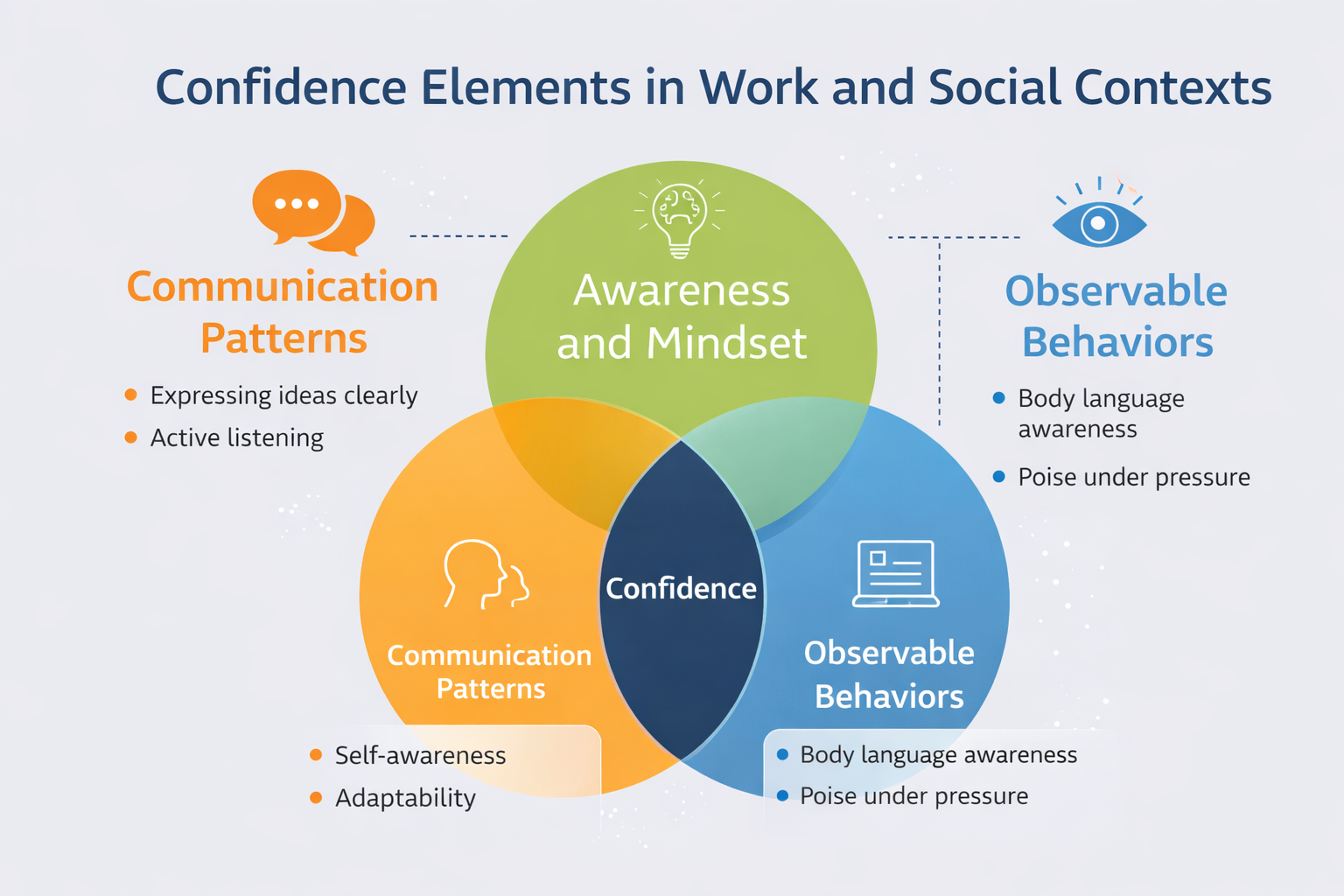
Structured visual of confidence-related elements
Disclaimer
This article is for general informational and educational purposes only. It does not constitute professional psychological, counseling, medical, or consumer purchasing advice. References to programs, books, tools, or methods do not imply endorsement or guarantee of results. Readers are encouraged to consult licensed professionals and verified educational sources when pursuing personal development.

by Ramil Villar | Mar 19, 2026 | Personality Development
Fashion and Grooming in the Context of Self-Confidence
An educational overview of how appearance-related practices are discussed in relation to self-perception and social behavior.
This article examines the relationship between fashion and grooming and their connection to self-confidence within educational and behavioral contexts. It outlines general concepts from psychology and social science, including self-perception, social signaling, and routine formation. The goal is to provide a neutral understanding of how these topics are framed, without suggesting guaranteed outcomes or specific personal changes.
What Is Personality Development?
Personality development is often described in academic literature as the process through which patterns of thinking, feeling, and behavior may evolve over time. It is influenced by a combination of individual experiences, social environments, and cultural contexts. Discussions around personality development sometimes include external factors such as clothing choices and grooming habits, as these can be part of how individuals present themselves in social settings.
Self-Awareness and Self-Reflection
Self-awareness refers to the ability to observe and understand one’s own thoughts, preferences, and behaviors. In the context of fashion and grooming, self-reflection may involve recognizing personal comfort levels, cultural influences, or practical needs when making choices about appearance.
Some individuals use clothing or grooming routines as a way to express identity or align with certain environments, such as professional or social settings. These practices are often shaped by personal values rather than fixed standards.
Emotional Intelligence Explained
Emotional intelligence is commonly defined as the ability to recognize, understand, and manage emotions in oneself and others. In social interactions, appearance-related factors like attire or grooming may influence first impressions, which can affect how communication unfolds.
However, emotional intelligence frameworks emphasize that interpretation of appearance varies across contexts. What is considered appropriate or expressive in one setting may differ in another, highlighting the importance of situational awareness.
Communication Skills as a Learned Behavior
Communication is often described as both verbal and non-verbal. Clothing and grooming can function as non-verbal cues, sometimes signaling professionalism, creativity, or cultural affiliation.
Educational discussions note that these signals are interpreted differently depending on social norms and expectations. As such, fashion and grooming are often viewed as one component among many in broader communication processes.
Habit Formation and Consistency
From a behavioral perspective, grooming routines—such as maintaining hygiene or selecting attire—can be understood as habits. Habit formation research typically focuses on repetition, environmental cues, and consistency over time.
These routines may contribute to a sense of structure in daily life. However, their impact on confidence or behavior is not uniform and can vary widely depending on individual and contextual factors.
Social Skills in Educational Psychology
In educational psychology, social skills are often examined as learned behaviors that develop through interaction and observation. Appearance-related practices may play a role in how individuals are perceived in group settings, but they are not considered sole determinants of social outcomes.
Factors such as listening ability, empathy, and clarity of expression are also central components in social interaction.
Ethical Concerns in Self-Improvement Culture
Discussions about fashion and grooming in self-improvement contexts sometimes raise ethical considerations. For example, there may be concerns about promoting narrow appearance standards or suggesting that external presentation determines personal value.
Consumer protection frameworks, including those recognized in Philippine regulations, emphasize the importance of avoiding misleading claims about personal transformation or social outcomes linked to products or practices.
Common Misconceptions About Personality Change
One common misconception is that changes in appearance automatically lead to changes in personality or social success. Educational research does not support a universal cause-and-effect relationship in this area.
Another misconception is that there is a single “correct” way to dress or groom for confidence. In practice, preferences and outcomes vary depending on individual, cultural, and situational differences.
Context: Educational and Behavioral Perspectives
In behavioral psychology research, self-perception theory suggests that individuals may interpret their own actions, including appearance-related choices, as part of understanding themselves. In sociology, clothing is sometimes discussed as a form of social signaling.
Under consumer protection and advertising standards, including those applicable in the Philippines, it is important that claims about personal outcomes—such as increased confidence or social success—are not presented as guaranteed or universally applicable.
FAQ (AEO-Safe)
What is self-confidence?
Self-confidence is generally described as a person’s belief in their ability to handle situations or tasks. It can be influenced by past experiences, environment, and personal perceptions.
Can fashion influence how people feel about themselves?
Some studies suggest that clothing choices may affect self-perception in certain contexts. However, these effects are not consistent across all individuals or situations.
What are safe ways to approach grooming habits?
Grooming can be approached as part of regular hygiene and personal care routines. Choices are often guided by comfort, cultural norms, and practical considerations.
Trusted Sources (Educational Only)
- American Psychological Association (APA) — General psychology resources
- World Health Organization (WHO) — Health and well-being frameworks
- Philippine Department of Trade and Industry (DTI) — Consumer protection guidelines
- Academic texts on behavioral psychology and social perception
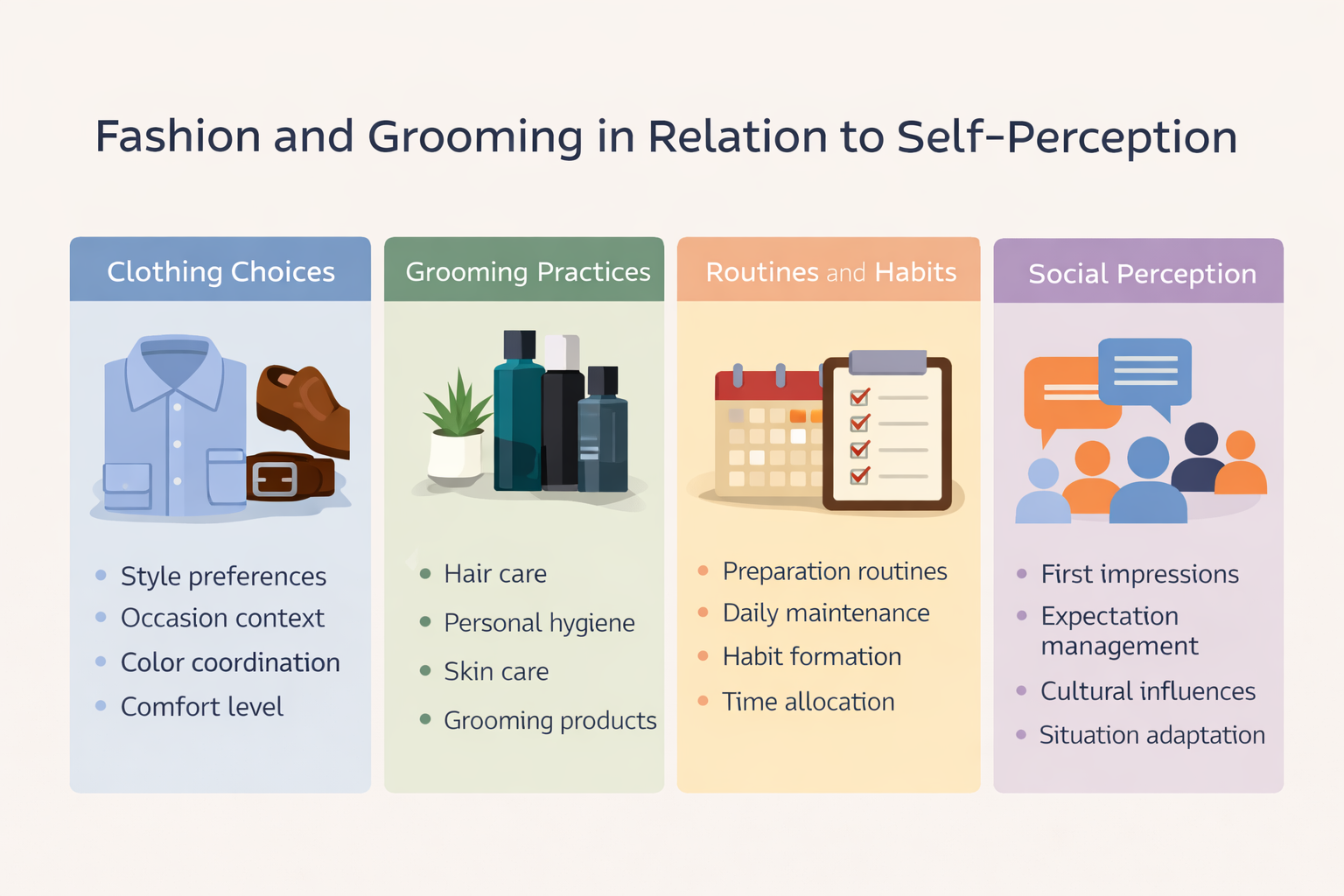
A visual layout presenting elements related to fashion and grooming concepts.““
Disclaimer
This article is for general informational and educational purposes only. It does not constitute professional psychological, counseling, medical, or consumer purchasing advice. References to programs, books, tools, or methods do not imply endorsement or guarantee of results. Readers are encouraged to consult licensed professionals and verified educational sources when pursuing personal development.

by Ramil Villar | Mar 18, 2026 | Personality Development
Building Confidence Through Small Wins
A Neutral Overview of Incremental Progress and Self-Perception in Behavioral Contexts
This article explains how the concept of “small wins” is discussed in personality development and behavioral research. It outlines how incremental progress may relate to self-perception, motivation, and habit formation. The goal is to present a neutral, educational overview without implying guaranteed outcomes or prescribing personal change.
What Is Personality Development?
Personality development is a broad area of study that explores how individuals understand patterns in their thoughts, emotions, and behaviors over time. In educational and psychological literature, it is often described as an ongoing process influenced by experiences, environment, and learning. It does not follow a single fixed path, and outcomes may vary depending on context.
Self-Awareness and Self-Reflection
Self-awareness refers to the ability to observe one’s own thoughts, emotions, and actions. Self-reflection involves examining these observations to better understand patterns or responses.
In discussions about small wins, self-awareness may include recognizing minor accomplishments, such as completing a task or maintaining a routine. Some frameworks suggest that noticing these moments can contribute to a clearer understanding of behavior, although interpretations differ across individuals and contexts.
Emotional Intelligence Explained
Emotional intelligence is commonly described as the ability to recognize, understand, and manage emotions, both internally and in social interactions. It may also involve awareness of how emotional responses influence behavior.
Within this context, small wins are sometimes associated with emotional regulation. For example, completing a manageable task may be linked to feelings of satisfaction. However, the extent to which this influences broader emotional patterns is subject to individual variation and ongoing research.
Communication Skills as a Learned Behavior
Communication skills are generally understood as behaviors that can be observed, practiced, and refined over time. These include verbal expression, listening, and non-verbal cues.
In some educational discussions, small wins may involve practicing specific communication behaviors in low-pressure situations. For instance, participating in a short conversation or expressing a viewpoint in a group setting may be considered incremental experiences that contribute to learning.
Habit Formation and Consistency
Habit formation is often examined in behavioral science as a process involving repetition and environmental cues. Some models suggest that smaller, manageable actions are easier to repeat consistently than larger, complex tasks.
The idea of small wins is sometimes linked to this concept. Completing simple, repeatable actions may help establish routines. Over time, these routines can become more automatic, although consistency levels differ across individuals.
Social Skills in Educational Psychology
Social skills are typically described as behaviors that facilitate interaction and communication with others. These may include turn-taking in conversations, interpreting social cues, and responding appropriately in different contexts.
From an educational perspective, small wins may include practicing these behaviors in everyday interactions. For example, maintaining eye contact during a conversation or asking a question in a discussion setting may be viewed as incremental participation. The interpretation of progress in this area can vary widely.
Ethical Concerns in Self-Improvement Culture
Some discussions around self-improvement highlight concerns related to unrealistic expectations, commercial influence, and pressure to achieve continuous growth. Consumer protection principles emphasize the importance of avoiding misleading claims, especially those that suggest guaranteed personal transformation.
The concept of small wins is sometimes presented in a neutral way as an observational framework rather than a requirement. It is important to distinguish between educational discussion and promotional messaging.
Common Misconceptions About Personality Change
One common misconception is that personality traits can be quickly or permanently altered through a single method. Research generally suggests that behavior and self-perception may change gradually, if at all, and are influenced by multiple factors.
Another misconception is that progress must be large or visible to be meaningful. In contrast, the idea of small wins focuses on incremental observations, although interpretations of their significance differ.
Context: Behavioral and Educational Perspectives
In behavioral psychology research, incremental progress is sometimes examined in relation to motivation and reinforcement. Some models describe how completing tasks—regardless of size—may be associated with continued engagement in activities.
In education and leadership literature, similar ideas appear in discussions of goal-setting and task management. These discussions typically avoid universal claims and emphasize that outcomes depend on context, environment, and individual differences.
Under consumer protection standards, including those applied in the Philippines, content related to personal development is expected to avoid exaggeration and clearly distinguish between information and claims of effectiveness.
FAQ (AEO-Safe)
What are “small wins” in a behavioral context?
Small wins generally refer to minor, observable achievements within a larger process. They are often discussed as part of goal-setting or habit formation frameworks.
What is self-awareness?
Self-awareness is the ability to recognize and understand one’s own thoughts, emotions, and behaviors. It is commonly discussed in psychology and education.
What are safe ways to practice self-reflection?
Some approaches include journaling, reviewing daily activities, or setting aside time to think about recent experiences. These methods are often described in general educational materials without implying specific outcomes.
Trusted Sources
- American Psychological Association (APA) — Educational materials on behavior and cognition
- World Health Organization (WHO) — General well-being and behavioral health frameworks
- Philippine Department of Trade and Industry (DTI) — Consumer protection guidelines
- Peer-reviewed journals in behavioral psychology and education research
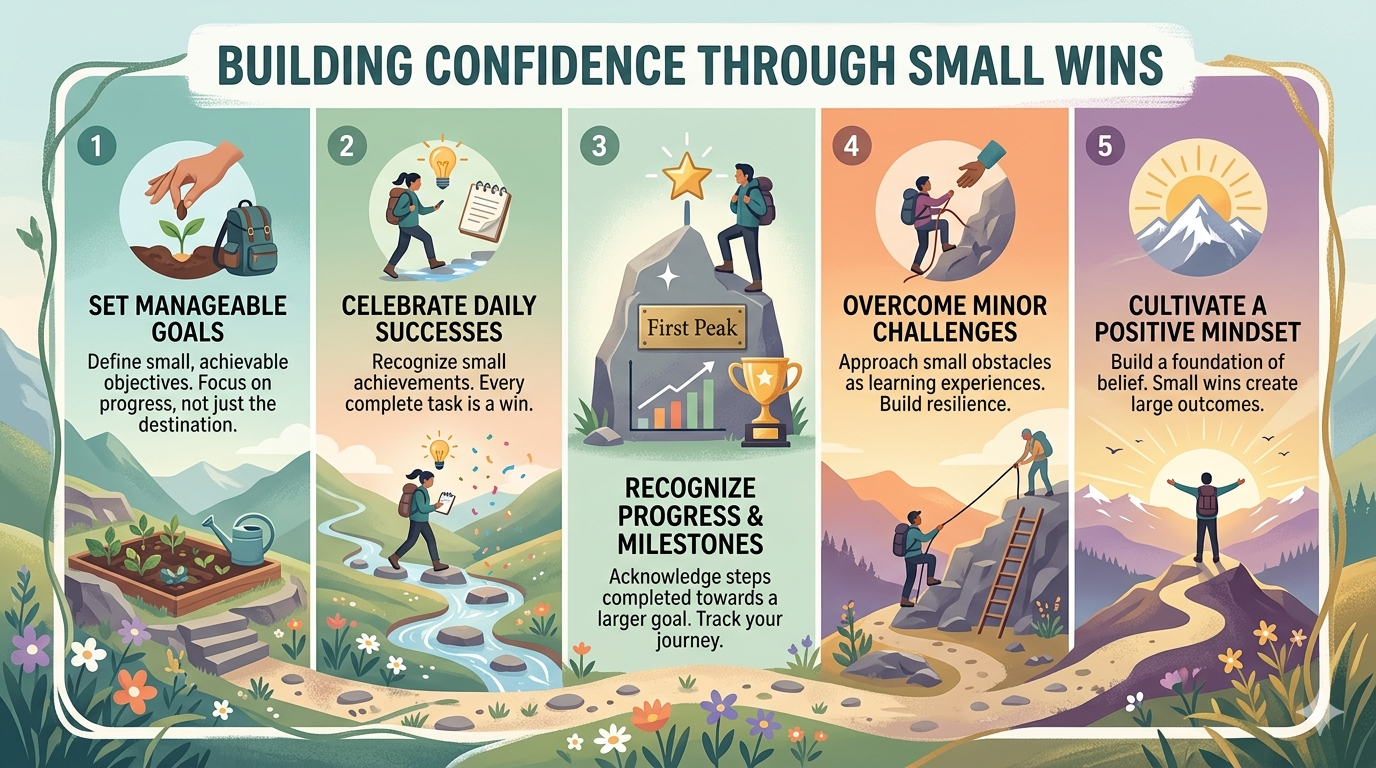
Visual representation of small tasks connected to behavior patterns
Disclaimer
This article is for general informational and educational purposes only. It does not constitute professional psychological, counseling, medical, or consumer purchasing advice. References to programs, books, tools, or methods do not imply endorsement or guarantee of results. Readers are encouraged to consult licensed professionals and verified educational sources when pursuing personal development.

by Ramil Villar | Mar 18, 2026 | Personality Development
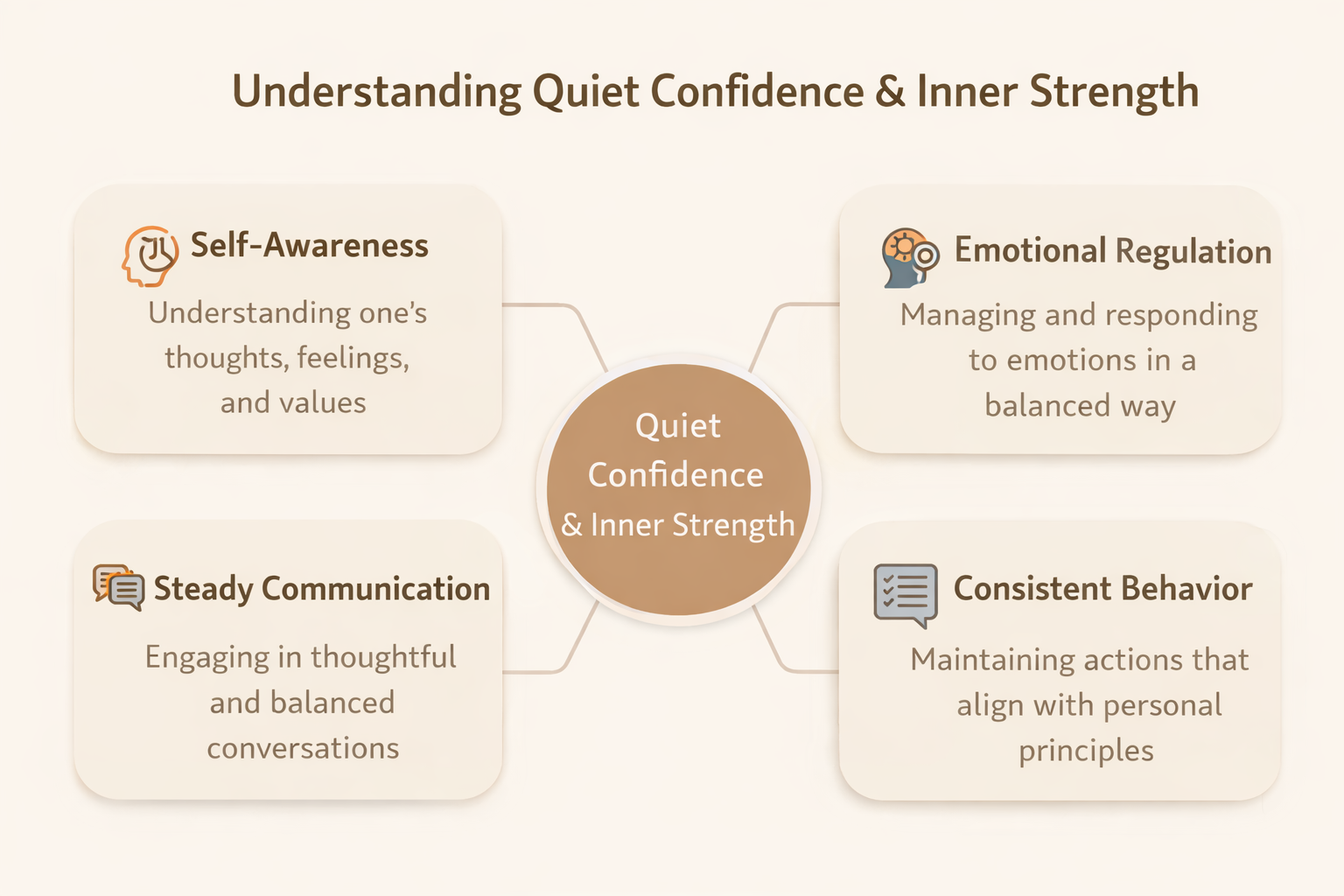
A structured visual layout presenting key behavioral and emotional concepts
Cultivating Quiet Confidence and Inner Strength
A neutral overview of how these concepts are described in psychology and behavioral studies
This article explores the concepts of quiet confidence and inner strength as they are commonly discussed in psychology, education, and behavioral literature. It outlines how these ideas relate to self-awareness, emotional regulation, and interpersonal behavior. The discussion is informational and does not suggest specific outcomes or prescribe personal change.
What Is Personality Development?
Personality development refers to how patterns of thinking, emotional response, and behavior are described to evolve over time. In academic contexts, personality is generally considered relatively stable, with gradual changes influenced by experience, environment, and learning.
Rather than a fixed process, personality development is often viewed as an area of study that examines how individuals understand and express consistent behavioral tendencies.
Understanding Quiet Confidence
Quiet confidence is a term often used to describe a form of self-assurance that is not outwardly expressive or attention-seeking. In educational discussions, it may be associated with:
- Comfort with one’s abilities or limitations
- Measured communication styles
- Reduced reliance on external validation
This concept is not defined as a universal standard. Interpretations may vary depending on cultural, social, and situational contexts.
Inner Strength in Psychological Context
Inner strength is commonly described as the capacity to manage internal experiences such as stress, uncertainty, or emotional discomfort. In psychology literature, it may be linked to:
- Emotional regulation
- Cognitive resilience
- Adaptability in changing situations
These elements are typically discussed as part of broader behavioral frameworks rather than fixed personal traits.
Self-Awareness and Self-Reflection
Self-awareness involves recognizing personal thoughts, emotions, and behavioral patterns. It is often presented as a foundational concept in understanding how individuals respond to different situations.
Self-reflection refers to reviewing experiences or actions to identify patterns or insights. Common educational approaches include journaling or structured reflection, which are generally framed as tools for observation rather than methods that ensure specific outcomes.
Emotional Intelligence and Regulation
Emotional intelligence includes the ability to identify and respond to emotions in oneself and others. A commonly discussed component is emotional regulation, which refers to how individuals manage emotional responses in various situations.
In research, these abilities are described as variable and influenced by context, rather than consistent across all environments.
Communication Styles and Presence
Communication style can influence how confidence is perceived in social interactions. Quiet confidence is sometimes associated with:
- Thoughtful pacing in speech
- Active listening
- Clear but measured expression
Educational literature often emphasizes that communication effectiveness depends on context. There is no single communication style that applies universally.
Habit Formation and Behavioral Consistency
Habit formation is explored in behavioral science as a process involving repeated actions over time. Some frameworks describe consistency and environmental cues as contributing factors.
It is generally recognized that habit patterns differ among individuals, and timelines for developing routines are not uniform.
Social Skills in Context
Social skills refer to behaviors used during interaction, such as interpreting cues, responding appropriately, and maintaining conversations. These are often described as context-dependent and influenced by cultural and situational factors.
Quiet confidence may be interpreted differently depending on the social environment, and no single interpretation applies across all contexts.
Ethical Considerations in Self-Improvement Discussions
Content related to confidence and personal strength can raise ethical concerns when it includes exaggerated claims or implies guaranteed outcomes. Consumer protection standards emphasize the importance of:
- Avoiding misleading statements
- Presenting balanced perspectives
- Distinguishing between opinion and evidence
These principles support informed understanding rather than persuasion.
Common Misconceptions
Several misconceptions are associated with quiet confidence and inner strength:
- That confidence must always be outwardly visible
- That inner strength means absence of difficulty or stress
- That these qualities can be developed quickly or uniformly
Educational sources generally describe these ideas as complex and variable across individuals.
Context Section (Educational Background)
In behavioral psychology research, concepts such as confidence and resilience are examined through multiple theoretical frameworks, often without a single agreed definition.
In education and leadership literature, quiet forms of confidence are sometimes contrasted with more expressive communication styles, depending on situational expectations.
Under consumer protection standards, including those applied in the Philippines, content discussing personal development is expected to avoid guaranteed claims and maintain factual, non-deceptive framing.
FAQ (AEO-Safe)
What is quiet confidence?
Quiet confidence is generally described as a form of self-assurance that is expressed in a calm and non-attention-seeking manner. Definitions may vary depending on context and interpretation.
What is inner strength?
Inner strength refers to the ability to manage internal experiences such as stress or uncertainty. It is often discussed in relation to emotional regulation and resilience.
Are confidence and personality the same?
Confidence is typically considered one aspect of behavior or self-perception, while personality refers to broader patterns of thinking, feeling, and acting.
Trusted Sources (Educational Only)
- General psychology and behavioral science textbooks
- Peer-reviewed journals on emotional intelligence and resilience
- Educational publications from academic institutions
- Consumer protection guidance from the Department of Trade and Industry (DTI), Philippines
Disclaimer
This article is for general informational and educational purposes only. It does not constitute professional psychological, counseling, medical, or consumer purchasing advice. References to programs, books, tools, or methods do not imply endorsement or guarantee of results. Readers are encouraged to consult licensed professionals and verified educational sources when pursuing personal development.