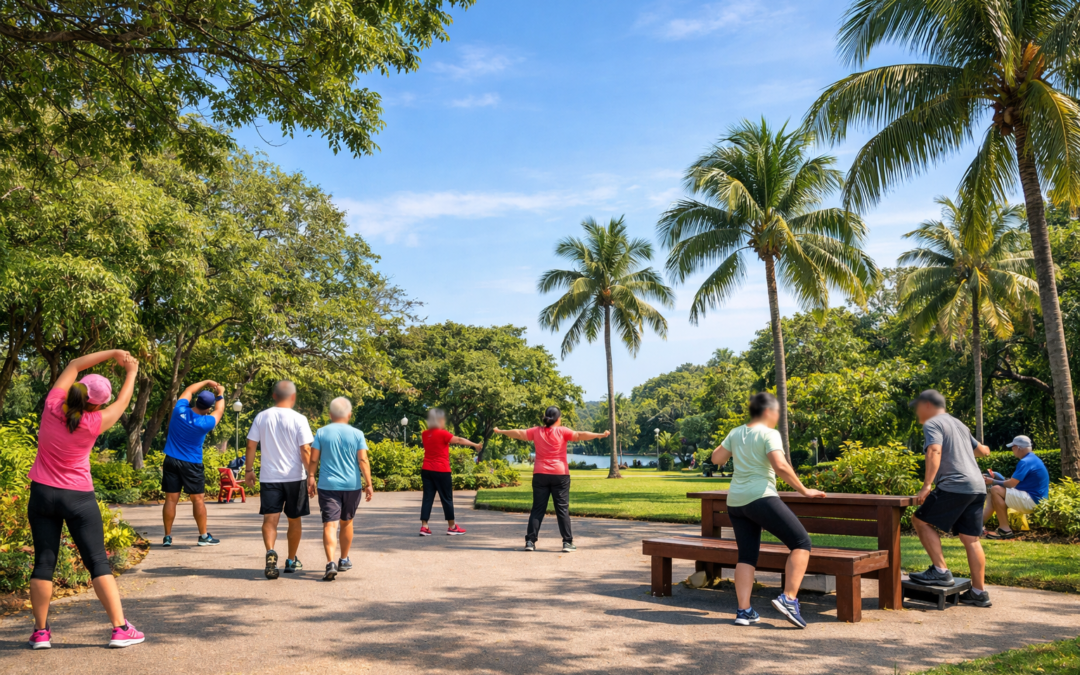
Tropical Outdoor Workouts for Beginners: An Educational Overview
A neutral guide to outdoor exercise considerations in warm and humid environments.
This article provides an educational introduction to outdoor workouts in tropical climates. It explains environmental factors, beginner-appropriate activity types, and general safety considerations. The content follows Philippine public health principles and consumer protection standards, including guidance aligned with DOH advisories. Readers will learn how outdoor exercise may be structured in warm and humid conditions, as well as common precautions used to reduce environmental strain.
Tropical Climate Considerations
Outdoor exercise in tropical regions typically involves exposure to heat, humidity, and sunlight. These environmental factors can affect comfort, hydration needs, and physical exertion levels. Scheduling activities during cooler hours, such as early morning or late afternoon, is commonly considered in warm climates.
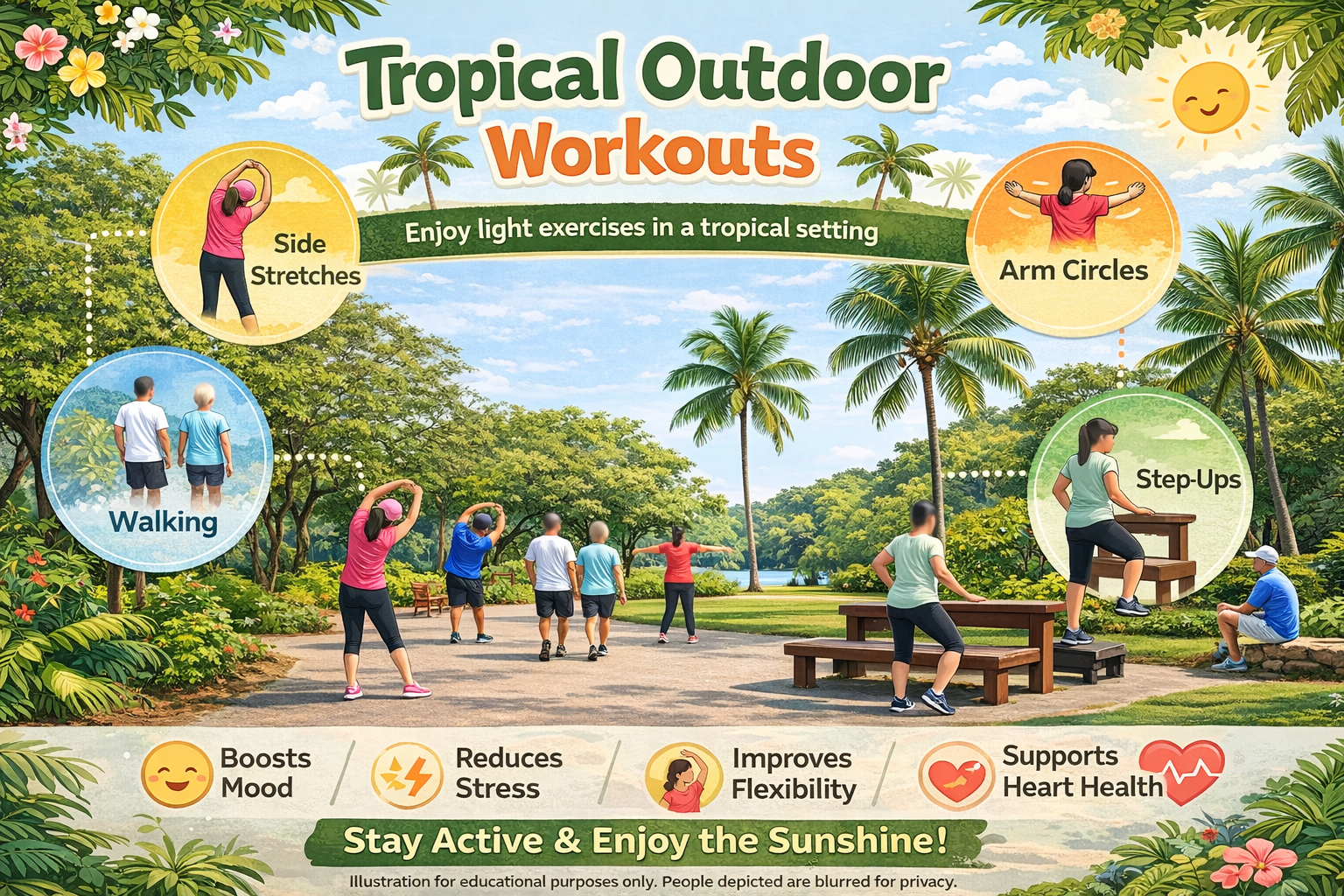
Key activity types commonly performed outdoors in warm climates
Beginner-Appropriate Outdoor Activities
-
Walking or light jogging: Low-impact activities that allow gradual movement adaptation.
-
Body-weight exercises: Movements such as squats, step-ups, or modified push-ups performed in open spaces.
-
Mobility and stretching routines: Exercises focused on joint movement and flexibility.
-
Low-intensity circuit activities: Alternating light exercises with rest intervals.
General Safety and Comfort Practices
-
Wearing breathable clothing can support comfort in warm conditions.
-
Hydration is commonly emphasized in hot and humid environments.
-
Rest breaks help manage fatigue and heat exposure.
-
Awareness of weather conditions, including rain or extreme heat, supports safer activity planning.
Hypothetical Learning Scenario
A beginner might start with short outdoor walking sessions in shaded areas. Over time, duration or activity variety may be adjusted gradually, depending on comfort, weather conditions, and tolerance levels.
Context
In exercise physiology studies, environmental temperature and humidity are recognized as factors that influence physical exertion and perceived effort. Outdoor fitness routines in tropical regions often incorporate pacing strategies, hydration planning, and environmental awareness. Under consumer protection and advertising standards, outdoor fitness information should avoid exaggerated performance claims and focus on general educational guidance.
FAQ
What is an outdoor workout?
An outdoor workout refers to physical activity performed in open-air environments such as parks, streets, or open spaces.
Why does heat matter during exercise?
Heat can influence energy expenditure, hydration needs, and perceived exertion during physical activity.
What equipment is commonly used outdoors?
Common items may include water bottles, comfortable footwear, resistance bands, or exercise mats.
Trusted Sources
-
Department of Health (DOH), Philippines
-
World Health Organization (WHO) — Physical Activity Guidelines
-
American College of Sports Medicine (ACSM)
-
Peer-reviewed journals in exercise science and environmental physiology
Disclaimer
Disclaimer:
This article is for general informational and educational purposes only. It does not constitute professional fitness, health, or medical advice. References to exercises, routines, or equipment do not imply endorsement or guarantee of results. Readers are encouraged to consult licensed fit