
by iamrolanddiaz | Feb 10, 2026 | Financial Freedom
Table of Contents
- God Is Knocking — This Is Your Financial Freedom Moment
- What If the Opportunity You’ve Been Praying For Is Already Here?
- Reset Your Mindset: Open Mind, Open Heart, Open Faith
- The Reality Most People Are Living Today
- My Journey: Becoming a Non-Replaceable Full-Stack Developer
- The Hard Truth: A Single Income Is a Single Point of Failure
- What Happens If Your Job Disappears?
- What Financial Freedom Really Means
- Financial Freedom Is Peace, Power, and Protection
- Are You Financially Secure or Financially Exposed?
- This May Be the Opportunity God Sent You
- Why Those Who Act Early Win Bigger
- Would You Be Willing to Secure Your Financial Future?
- Your Next Move Starts Here
- How to Start Building Multi-Stream Income
- Why This Is Strategy — Not Hype or Luck
- The Door Is Open: Step Into Your Financial Destiny
- Frequently Asked Questions (FAQs) About Financial Freedom
God Is Knocking — This Is Your Financial Freedom Moment
What if the opportunity you’ve been praying for is already in front of you — and this is the exact moment you finally say yes?
Not later. Not someday. Not when it feels safer. Now.
This message is both a wake-up call and an invitation. An invitation to step into higher financial awareness, greater responsibility, and a future where you are no longer limited by a single source of income.
Sometimes, God does not just bless — He invites. He invites you to rise, to break cycles, to think beyond survival, and to build a legacy of financial wisdom and security.
The question is simple: Will you recognize the knock?
What If the Opportunity You’ve Been Praying For Is Already Here?
Many people pray for provision, stability, growth, and financial breakthroughs. But often, the answer to those prayers does not arrive as instant miracles — it arrives as opportunities.
A conversation. A message. A door. A decision.
Sometimes, the difference between struggle and freedom is not talent or luck — it is timing and courage. Courage to act when the door opens.
If you feel a sense of urgency, curiosity, or conviction reading this, it may not be coincidence. It may be direction.
Reset Your Mindset: Open Mind, Open Heart, Open Faith
Before financial freedom becomes a reality, it must first become a mindset.
Today is a moment to reset — to approach life with:
- Open minds to new possibilities
- Open hearts to wisdom and growth
- Open vision to long-term thinking
- Open faith to divine timing and guidance
Growth begins the moment you become willing to see beyond your current limits.
The Reality Most People Are Living Today
Millions of people are working harder than ever before — waking up early, sleeping late, sacrificing rest, and pushing through stress just to maintain stability.
They work not because they love pressure — but because they love their families, their responsibilities, and their dreams.
Yet, for many, hard work alone does not guarantee security. It only guarantees exhaustion.
The system teaches survival. Financial freedom requires strategy.
My Journey: Becoming a Non-Replaceable Full-Stack Developer
I understand the grind personally.
I once devoted years to mastering my craft — becoming a non-replaceable full-stack developer, expanding my technical skills, increasing my value, and ensuring I could not be easily replaced.
But along the journey, I realized an important truth:
Even high-income skills are still limited if they rely on one income stream.
True freedom requires more than expertise. It requires leverage.
The Hard Truth: A Single Income Is a Single Point of Failure
Most people rely on one source of income.
One job. One paycheck. One stream.
But what happens if:
- Your job disappears tomorrow?
- Technology replaces your role?
- A company downsizes or shuts down?
- Health challenges interrupt your ability to work?
- Market shifts reduce demand for your skills?
A single income is a single point of failure. And when that one source collapses, everything tied to it becomes vulnerable.
What Happens If Your Job Disappears?
Imagine losing your primary income unexpectedly.
Would you still be able to:
- Pay your bills?
- Support your family?
- Maintain your lifestyle?
- Handle emergencies?
Financial freedom is about preparing for the unexpected, not reacting to it.
What Financial Freedom Really Means
Financial freedom is not about ego or luxury. It is about control, resilience, and peace.
It means:
- Multiple income streams instead of one
- Backup systems that protect your lifestyle
- Money working for you even when you rest
- The ability to say yes to opportunities — and no to fear
Financial freedom is the ability to live without financial anxiety.
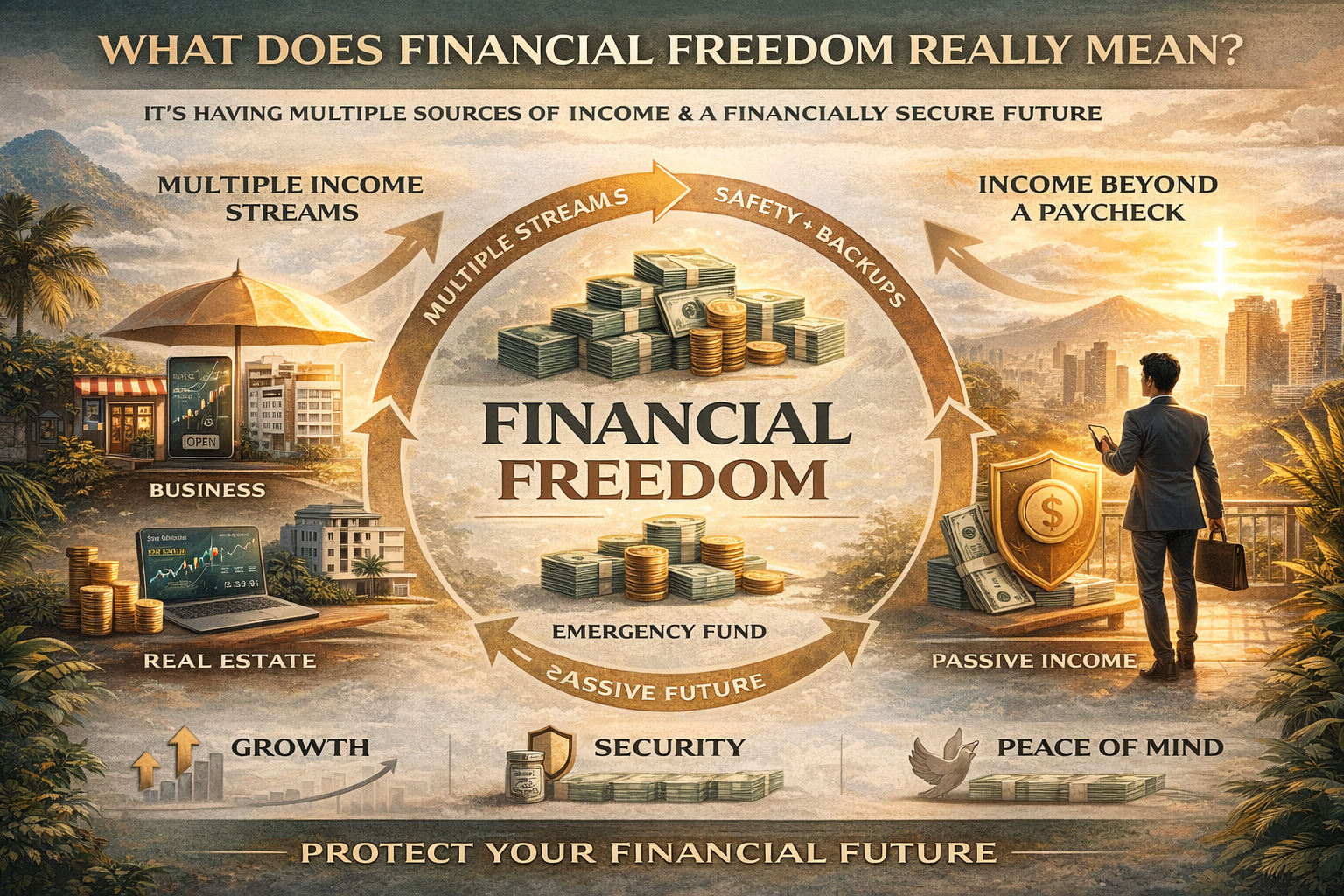
Overview of financial awareness and income structure concepts
Financial Freedom Is Peace, Power, and Protection
When your income is diversified, you gain:
- Peace in uncertain times
- Protection for your loved ones
- Power over your financial decisions
- Confidence to plan long-term
Freedom is not just wealth. Freedom is peace of mind.
Are You Financially Secure or Financially Exposed?
Ask yourself honestly:
- If your income stopped today, how long could you survive financially?
- Do you have multiple income streams?
- Are you building long-term financial protection?
If you feel secure — you are ahead.
If you feel exposed — this is your moment to take action.
This May Be the Opportunity God Sent You
Opportunities often arrive disguised as responsibility.
Sometimes God opens a door not to test comfort — but to reward courage.
If this message resonates, it may be because this is not random — it may be divinely aligned timing.
Why Those Who Act Early Win Bigger
Financial success favors those who act early.
Early movers:
- Gain better positioning
- Build momentum faster
- Compound growth over time
- Learn while others hesitate
Waiting for the perfect time often results in missing the opportunity entirely.
Would You Be Willing to Secure Your Financial Future?
Would you be willing to:
- Protect your family financially?
- Build income beyond your job?
- Escape paycheck dependency?
- Make money work for you?
If your answer is yes — then this is your signal.
Your Next Move Starts Here
If you are serious about:
- Building multi-stream income
- Creating financial protection
- Escaping paycheck dependency
- Joining high-potential financial opportunities
- Learning how to make money work for you
Message “FREEDOM” or comment “READY” — and you will receive full details.
How to Start Building Multi-Stream Income
Start with three foundations:
- Financial education and awareness
- Strategic income diversification
- Disciplined execution and long-term thinking
Small actions today can create massive financial impact tomorrow.
Why This Is Strategy — Not Hype or Luck
This is not gambling.
This is not hype.
This is not wishful thinking.
This is:
- Strategy
- Timing
- Faith
- Execution
The difference between struggle and success is often action.
The Door Is Open: Step Into Your Financial Destiny
The opportunity is here.
The door is open.
The moment is now.
Step forward — and change your financial destiny for life.
Frequently Asked Questions About Financial Freedom
What does financial freedom mean?
Financial freedom means having diversified income and savings so you are not dependent on a single paycheck.
Why is relying on one income risky?
Because job loss, automation, health issues, or economic shifts can remove your only financial support.
Can I build financial freedom while working full-time?
Yes. Many people build side income and passive income while keeping their primary job.
How do I start building multiple income streams?
Through investments, digital income, business opportunities, and scalable financial systems.
What mindset is needed for financial growth?
Long-term thinking, discipline, faith, adaptability, and consistent execution.
Final Call to Action:
Message “FREEDOM” or comment “READY” to take your next step toward financial independence.
#financialawareness, #personaldevelopment, #incomeplanning, #financialliteracyph, #moneyeducation, #lifeskills, #careerplanning, #wealthmindset, #financialfreedom, #phlifestyle
by iamrolanddiaz | Feb 9, 2026 | Financial Freedom
A neutral educational overview of how financial freedom is commonly defined, measured, and discussed using modern financial planning concepts.
Financial freedom is a widely used term in personal finance, but its meaning can vary depending on individual circumstances, lifestyle needs, family responsibilities, and local economic conditions. In 2026, the concept is increasingly discussed alongside inflation, digital banking, flexible work arrangements, and modern budgeting tools. This article explains what financial freedom generally means, how it is commonly defined in financial education, and what practical indicators are used to describe it in a measurable way.
1. What Financial Freedom Commonly Means
Financial freedom generally refers to a condition where a person has enough financial stability to cover essential expenses and planned life costs without depending entirely on a single source of active income.
In educational finance contexts, it often includes:
-
Having manageable debt levels
-
Having predictable cash flow
-
Having savings or assets that support future expenses
-
Having financial plans aligned with real-life obligations
It does not mean unlimited wealth. It is usually discussed as a level of financial stability and long-term sustainability.
2. Why Financial Freedom Definitions Differ Between People
Financial freedom is not a single fixed number. It is influenced by factors such as:
-
Household size and dependents
-
Housing costs (rent or mortgage)
-
Healthcare needs and insurance access
-
Education expenses
-
Work stability and income type (salary, freelance, business)
-
Location-based cost of living differences
-
Long-term financial goals (retirement, business expansion, property ownership)
For example, one person may define financial freedom as being able to cover monthly living costs without borrowing, while another may define it as reaching a retirement plan target or paying off major liabilities.
3. Common Financial Freedom Indicators Used in 2026
In 2026, financial freedom is often described using measurable indicators instead of vague lifestyle terms.
Common indicators include:
A. Emergency Fund Coverage
A frequently used metric is having enough liquid savings to cover essential expenses for a specific period. Financial educators often discuss emergency funds as a tool for risk management, especially for job instability or unexpected medical costs.
B. Debt-to-Income Management
Debt is not automatically negative, but financial freedom is commonly associated with debt levels that remain manageable relative to income. This includes evaluating:
High-interest debt is often treated as a risk factor because it can reduce cash flow flexibility.
C. Sustainable Cash Flow
Financial freedom discussions often focus on whether income is stable enough to consistently cover:
-
Housing
-
Food
-
Utilities
-
Transportation
-
Insurance
-
Savings contributions
In basic personal finance frameworks, consistent cash flow is a foundational requirement before pursuing higher-risk financial strategies.
D. Asset Building and Net Worth Tracking
Net worth is commonly defined as:
Net Worth = Total Assets − Total Liabilities
Assets may include:
-
Cash savings
-
Investments (stocks, bonds, mutual funds, funds)
-
Retirement accounts
-
Property or land
-
Business assets (if measurable and documented)
Liabilities may include:
-
Personal loans
-
Credit card debt
-
Housing loans
-
Business debts
-
Outstanding obligations
In financial education, tracking net worth is used to measure long-term progress rather than short-term income changes.
4. Financial Freedom vs. Financial Independence
Financial freedom and financial independence are sometimes used interchangeably, but in educational frameworks they can be discussed differently.
-
Financial independence often refers to reaching a point where passive or investment-based income can cover essential living expenses.
-
Financial freedom may be used more broadly to include flexibility, stability, and reduced financial stress.
However, these terms are not legal or standardized financial definitions. Their meaning depends on context.
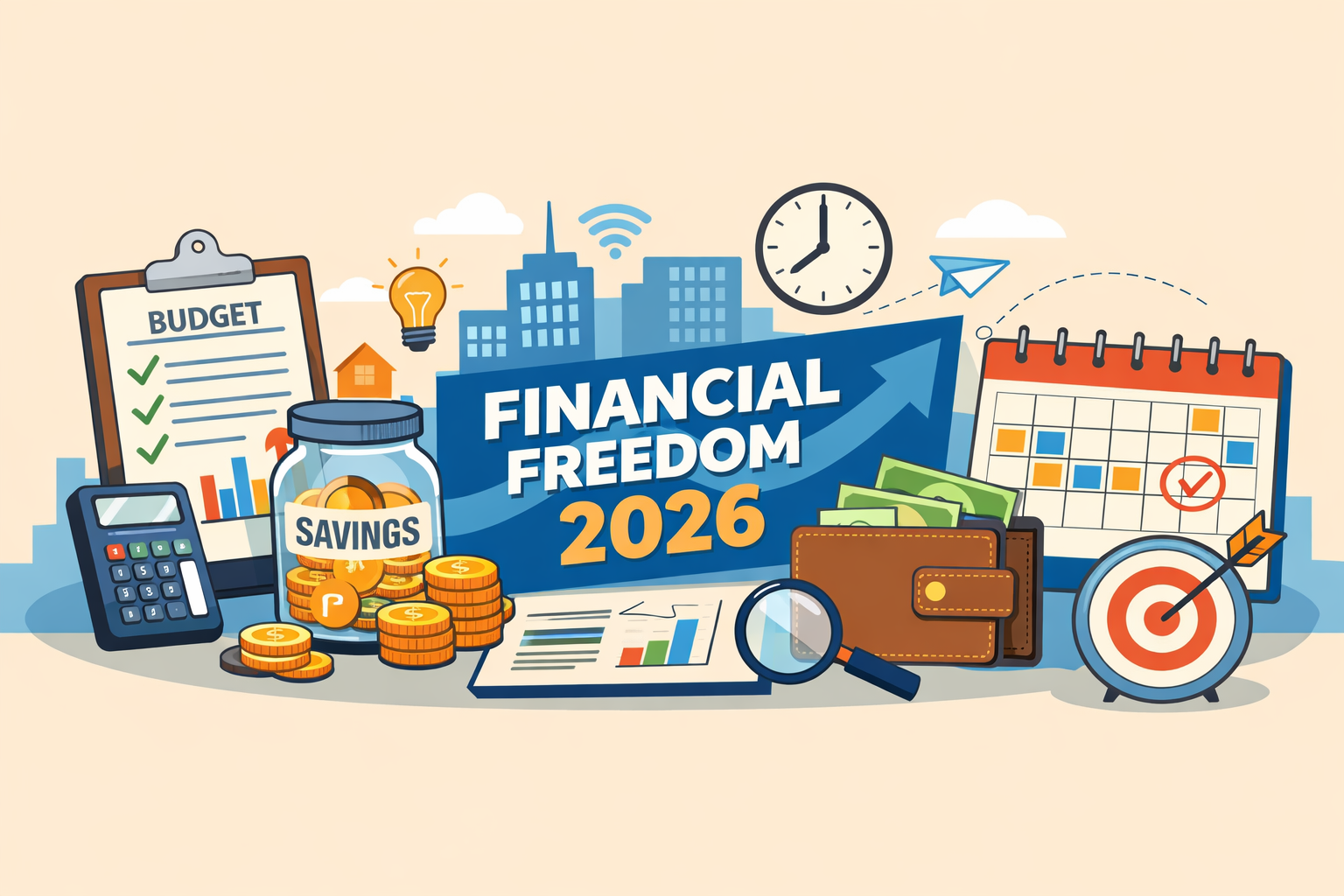
Infographic summary of common terms used in financial freedom discussions.
5. How Digital Finance Trends Shape Financial Freedom in 2026
Modern financial tools influence how people track and define financial freedom. In 2026, commonly used tools include:
-
Mobile banking and digital wallets
-
Automated budgeting apps
-
Spreadsheet-based financial tracking
-
Online investment platforms (where legally permitted and properly regulated)
-
Digital insurance services
-
Subscription-based expense monitoring
These tools can improve visibility over spending and savings behavior, but they do not remove financial risk. Users still need to evaluate fees, data privacy, and platform legitimacy.
Under consumer protection standards and the Data Privacy Act of 2012 (RA 10173), financial tools should be evaluated carefully, especially if they request sensitive personal information.
6. Legal and Consumer Safety Considerations in Financial Freedom Messaging
In the Philippines, consumers are protected under laws such as the Consumer Act of the Philippines (RA 7394) and relevant fraud-related provisions under the Revised Penal Code. These laws discourage deceptive marketing, misrepresentation, and misleading financial claims.
Educational discussions about financial freedom should avoid:
In 2026, regulators and consumer watchdogs continue to warn the public about online scams that misuse terms like “financial freedom” to create unrealistic expectations.
7. Hypothetical
A hypothetical example can help clarify how definitions differ:
Scenario:
A household defines financial freedom as having enough savings to handle emergencies, having stable monthly cash flow, and having long-term planning for education and retirement.
They measure progress by:
-
Maintaining an emergency fund
-
Paying debts on schedule
-
Tracking expenses monthly
-
Building long-term savings gradually
-
Reviewing insurance coverage annually
This definition focuses on stability and planning rather than lifestyle-based claims.
Context
In financial studies and personal finance education, financial freedom is typically discussed as a long-term planning concept rather than a quick achievement. Many frameworks emphasize budgeting discipline, risk management, consumer protection awareness, and consistent financial review. Under ethical advertising and consumer protection standards, the term should not be used to imply guaranteed wealth outcomes, as financial conditions vary by person and economic environment.
FAQ
Q1: What is financial freedom in simple terms?
Financial freedom generally means having enough financial stability to cover necessary expenses and planned obligations without relying entirely on one active income source. It is often measured through budgeting, savings, and debt management.
Q2: Is financial freedom the same as being rich?
Not necessarily. Financial freedom is commonly discussed as stability and sustainability, while being rich refers to having high income or large assets. A person can have financial stability without having extreme wealth.
Q3: What are common tools used to track financial freedom progress?
Common tools include budgeting apps, savings trackers, spreadsheets, and net worth calculators. Many people also use banking statements and expense reports to monitor spending patterns.
Trusted Sources
-
Bangko Sentral ng Pilipinas (BSP) — consumer advisories and financial education resources
-
Securities and Exchange Commission (SEC Philippines) — investment warnings and registration verification
-
Department of Trade and Industry (DTI) — consumer protection guidelines
-
Department of Finance (DOF) — economic policy and public finance information
-
National Privacy Commission (NPC) — Data Privacy Act guidance (RA 10173)
-
Basic personal finance textbooks and academic business finance references
Mandatory Disclaimer
Disclaimer:
This article is for general informational and educational purposes only. It does not constitute professional financial, investment, or business advice. References to methods, tools, or courses do not imply endorsement or guarantee of financial freedom. Readers are encouraged to consult licensed financial professionals and verified resources for personal finance decisions.