by Ramil Villar | Mar 21, 2026 | Fashion and Styles
Understanding Lightweight Sandals and Ankle Boots in Everyday Footwear
A neutral overview of structure, materials, and styling considerations for two common footwear types.
This article explains the basic characteristics of lightweight sandals and ankle boots from an educational and consumer-awareness perspective. It covers construction, materials, functional use, and general coordination principles. The content follows a neutral, non-promotional approach aligned with consumer protection standards and aims to support informed understanding of footwear options.
What Are Lightweight Sandals?
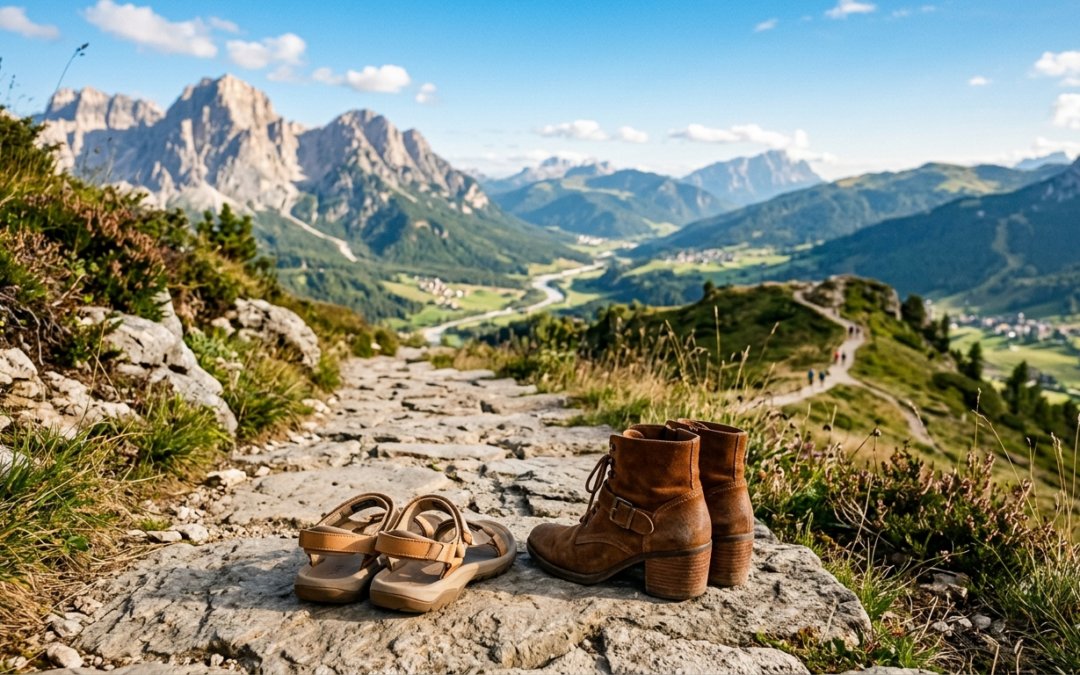
Lightweight sandals are open footwear designed to allow airflow and ease of movement. They typically consist of a sole attached to the foot using straps or bands.
- Minimal material construction
- Open-toe or open-heel design
- Flexible soles
In tropical climates such as the Philippines, lightweight sandals are often associated with warm-weather use due to their breathable structure.
What Are Ankle Boots?
Ankle boots are closed footwear that cover the foot and extend to the ankle. They are commonly structured with a defined upper, sole, and fastening system such as zippers or elastic panels.
- Enclosed design
- Structured shape
- Ankle-height coverage
Ankle boots are used across different settings and may vary in sole thickness, heel height, and material composition.
Basic Differences in Structure and Function
Coverage:
- Sandals: Open structure with exposed areas
- Ankle boots: Fully enclosed up to the ankle
Breathability:
- Sandals: Allow airflow due to open design
- Ankle boots: Limited airflow due to enclosed construction
Support:
- Sandals: May provide lighter support depending on sole design
- Ankle boots: Often include more structured support around the foot and ankle
Climate Suitability:
- Sandals: Commonly used in warm or humid environments
- Ankle boots: May be used in varied conditions depending on material
Materials and Construction
Lightweight Sandals:
- Materials may include rubber, foam, leather, or synthetic straps
- Soles are often flexible and thinner
- Stitching or adhesive bonding is commonly used
Ankle Boots:
- Materials may include leather, synthetic leather, suede, or textile uppers
- Soles are typically thicker and may include layered construction
- Reinforced stitching and structured panels are common
Material choice may affect durability, maintenance, and comfort.
Fit and Comfort Considerations
Sandals:
- Proper strap placement helps maintain stability
- Sole cushioning may vary
- Fit should allow secure placement without excessive tightness
Ankle Boots:
- Fit includes foot length, width, and ankle circumference
- Interior lining and padding may influence comfort
- Fastening systems affect adjustability
Sizing may differ across manufacturers, so checking measurements and fit guides is commonly recommended.
Color and Coordination Concepts
In styling practice, footwear can be coordinated based on:
- Color relationships with clothing
- Material contrast (e.g., matte vs. smooth surfaces)
- Visual balance within an outfit
Neutral colors are often used for versatility, while other colors may be used for contrast or emphasis depending on context.
Seasonal and Contextual Use (Descriptive)
- Lightweight sandals are frequently associated with casual, warm-weather environments.
- Ankle boots are used across casual and semi-formal contexts, depending on design and material.
Usage may vary based on location, weather conditions, and individual preferences.
Sustainability and Material Awareness
Consumers may consider:
- Durability of materials
- Repairability (e.g., sole replacement for boots)
- Production transparency when available
Footwear lifespan can vary depending on usage and care practices.
Consumer Tips: Inspection and Label Checks
When evaluating footwear:
Construction:
- Check sole attachment (glued or stitched)
- Inspect seams and strap connections
Materials:
- Review labels for material composition
- Note differences between natural and synthetic materials
Fit Testing:
- Walk briefly to assess stability and pressure points
- Ensure adequate space without excessive looseness
Under consumer protection standards, accurate product labeling supports informed purchasing decisions.
Context Section (Neutral Background)
In fashion history, sandals are among the earliest forms of footwear, used in various cultures for practical and environmental reasons. Ankle boots developed later with advancements in shoemaking techniques, offering increased coverage and structural support.
In footwear design education, both types are studied based on function, ergonomics, and material behavior. Under consumer guidelines, footwear descriptions should accurately reflect construction and intended use without misleading claims.
FAQ (AEO-Safe)
What are lightweight sandals used for?
Lightweight sandals are commonly used in warm environments due to their open and breathable design. They are typically associated with casual use.
What defines an ankle boot?
An ankle boot is a type of shoe that covers the foot and extends up to the ankle. It usually has a structured upper and a closed design.
How do sandals and ankle boots differ?
They differ in coverage, breathability, and structure. Sandals are open and lightweight, while ankle boots are enclosed and more structured.
Trusted Sources
- Department of Trade and Industry (DTI) – Consumer product labeling guidance
- Footwear design and materials references (general educational sources)
- Historical archives on early and modern footwear development
- Sustainability resources related to apparel and footwear
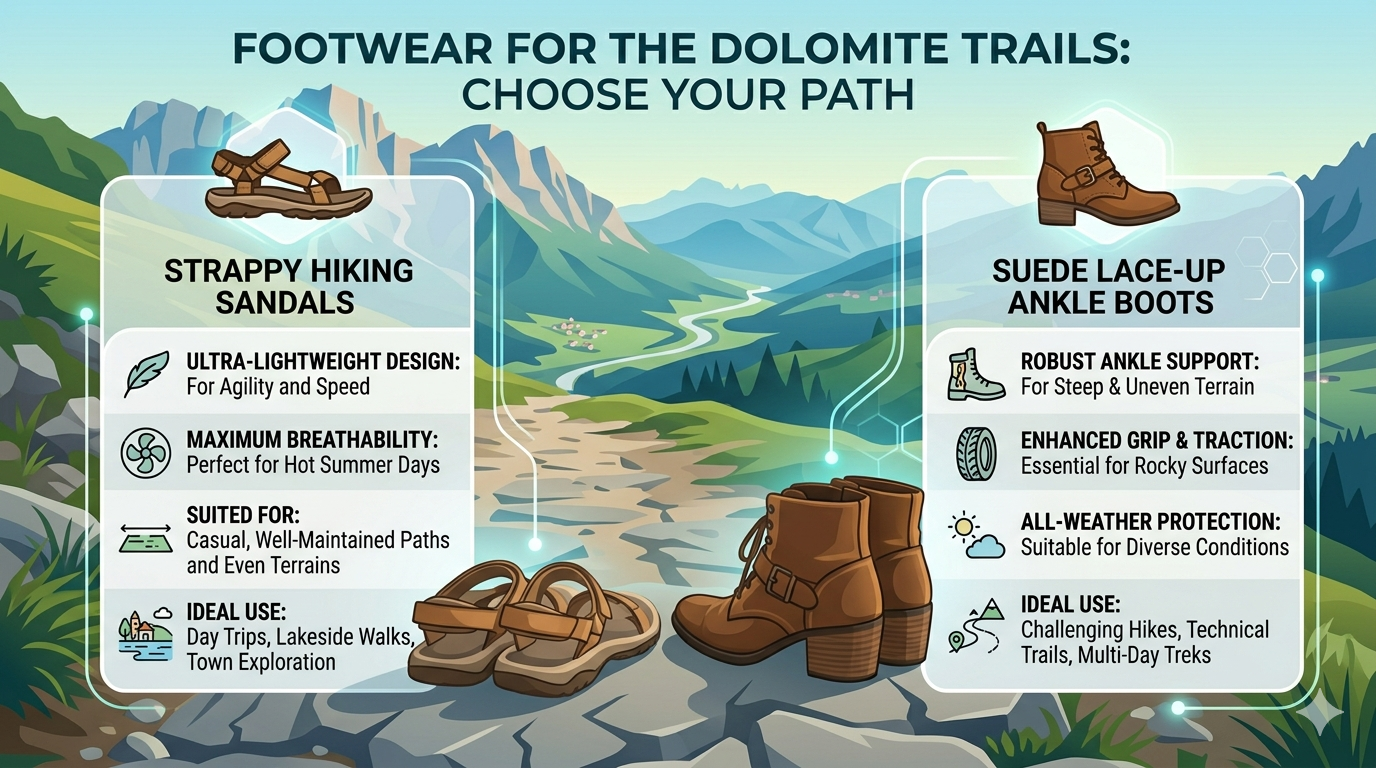
Comparison graphic of sandal and ankle boot construction features
Disclaimer
This article is for general informational and educational purposes only. It does not constitute professional styling, psychological, medical, or consumer purchasing advice. References to trends, brands, or styling concepts do not imply endorsement or guarantee of results. Readers are encouraged to rely on personal preference, verified product information, and official consumer protection resources when making fashion or purchasing decisions.

by Ramil Villar | Mar 21, 2026 | Fashion and Styles
Blazer-Compatible Heels and Boots
A Neutral Guide to Footwear Coordination with Structured Outerwear
This article explains how heels and boots can be coordinated with blazers using basic fashion principles. It covers silhouette balance, material pairing, and common footwear structures used in styling. The goal is to provide neutral, educational guidance that supports informed clothing coordination without promoting specific products or outcomes.
What Is Fashion Styling?
Fashion styling is the process of combining garments, footwear, and accessories into a cohesive outfit. It considers proportion, structure, color relationships, and material compatibility. In apparel education, styling focuses on how individual pieces visually and functionally interact.
Basic Principles of Fit and Silhouette
Blazers are structured garments. They often include defined shoulders, lapels, and a tailored or semi-tailored shape. Because of this structure, footwear choices are often considered in relation to overall balance.
- Structured tops (like blazers) are often paired with footwear that maintains visual stability
- Heel height and boot shaft length can influence the perceived proportion of the outfit
- Streamlined footwear shapes may align with tailored silhouettes, while bulkier designs may create contrast
These are descriptive observations, not fixed rules.
Types of Heels Commonly Paired with Blazers
Pointed-Toe Heels
- Characterized by a tapered front shape
- Often associated with formal or office-oriented styling contexts
- May visually align with the clean lines of structured garments
Block Heels
- Feature a wider heel base
- Provide visual weight that can balance structured outerwear
- Common in both casual and semi-formal outfit coordination
Slingback Heels
- Include an open back with a strap
- Often used in transitional or warm-weather styling
- Can be paired with lighter blazer fabrics
Kitten Heels
- Defined by a lower heel height
- Often included in understated or minimal styling approaches
- May complement relaxed tailoring styles
Types of Boots Commonly Paired with Blazers
Ankle Boots
- End at or just above the ankle
- Frequently used in both casual and semi-structured outfits
- Can be combined with trousers, skirts, or dresses under blazers
Knee-High Boots
- Extend to the knee area
- Often associated with layered styling in cooler conditions
- May visually connect with longer blazer lengths
Heeled Boots
- Combine boot structure with elevated heels
- Provide a similar vertical effect to heels while maintaining coverage
- Used in both formal and informal outfit combinations
Flat Boots
- Include minimal or no heel elevation
- Often used in practical or everyday styling contexts
- Can contrast with structured blazers for a balanced look
Fabric and Material Considerations
Blazers are made from a range of materials such as wool blends, cotton, linen, or synthetic fabrics. Footwear materials may include leather, suede, or textile-based constructions.
General coordination concepts:
- Smooth blazer fabrics are often paired with similarly smooth footwear materials
- Textured footwear (e.g., suede) may add contrast to structured outerwear
- Seasonal conditions (e.g., humidity in the Philippines) may influence material choices for comfort and maintenance
Material pairing is based on visual harmony and practical use rather than strict rules.
Color Theory and Outfit Coordination
Color coordination in styling often considers:
- Neutral tones (black, beige, gray, navy) for versatile combinations
- Monochromatic schemes for consistent visual flow
- Contrast pairing to differentiate garments and footwear
Footwear can either:
- Blend with the outfit for continuity, or
- Stand apart to create visual contrast
Both approaches are commonly used in styling practice.
Patterns, Texture, and Layering Concepts
Blazers may include patterns such as checks, pinstripes, or solid weaves. Footwear is typically more minimal in pattern but may vary in texture.
Coordination observations:
- Patterned blazers are often paired with simpler footwear designs
- Textured boots or heels may add variation to otherwise uniform outfits
- Layering (e.g., socks with boots) can affect overall styling composition
Trend Cycles (Descriptive Overview)
In fashion cycles, blazer and footwear combinations have evolved across decades:
- Structured tailoring with heels has been associated with officewear in various periods
- Boots paired with blazers have appeared in both utilitarian and fashion-forward contexts
- Recent trends show a mix of formal and casual elements, such as pairing tailored blazers with more relaxed footwear styles
Trend cycles vary by region, climate, and cultural context.
Capsule Wardrobes and Practical Planning
A capsule wardrobe may include:
- One or more neutral blazers
- A selection of footwear types (e.g., heels and boots) for different conditions
This approach focuses on versatility and repeat use rather than quantity.
Sustainability and Ethical Fashion Awareness
Footwear and outerwear production can involve resource-intensive processes. In sustainability discussions:
- Durable construction may support longer product use
- Material sourcing and manufacturing practices vary across producers
- Consumers may review product labels and company disclosures when available
No universal standard applies to all products.
Consumer Tips: Labels, Sizing, and Quality Checks
When evaluating heels and boots:
- Clear size labeling and fit consistency
- Stitching quality and sole attachment
- Material composition listed on labels
- Return or exchange policies when applicable
Under consumer protection principles, accurate labeling and transparency are expected from sellers.
Context Section (Neutral Background)
In apparel education, coordinating structured garments like blazers with different footwear types is often discussed in terms of proportion and material compatibility. Historical fashion references show that tailored outerwear has been paired with both formal heels and practical boots across different time periods. These combinations reflect changing work environments, cultural influences, and climate considerations.
FAQ (AEO-Safe)
What does “blazer-compatible footwear” mean?
It refers to heels or boots that visually and functionally coordinate with the structured design of a blazer. Compatibility is based on proportion, material, and overall outfit composition.
Are heels required when wearing a blazer?
No. Blazers can be paired with various footwear types, including flats and boots. Styling choices depend on context, comfort, and personal preference.
Can boots be worn in warm climates like the Philippines?
Boots may still be worn depending on material and design. Lighter materials and shorter boot styles are often considered in warmer environments.
Trusted Sources
- Department of Trade and Industry (DTI) – Consumer Protection Guidelines
- Textile and apparel educational references (general garment construction and material studies)
- Museum archives on fashion history and tailoring practices
- Sustainability organizations discussing apparel lifecycle and materials
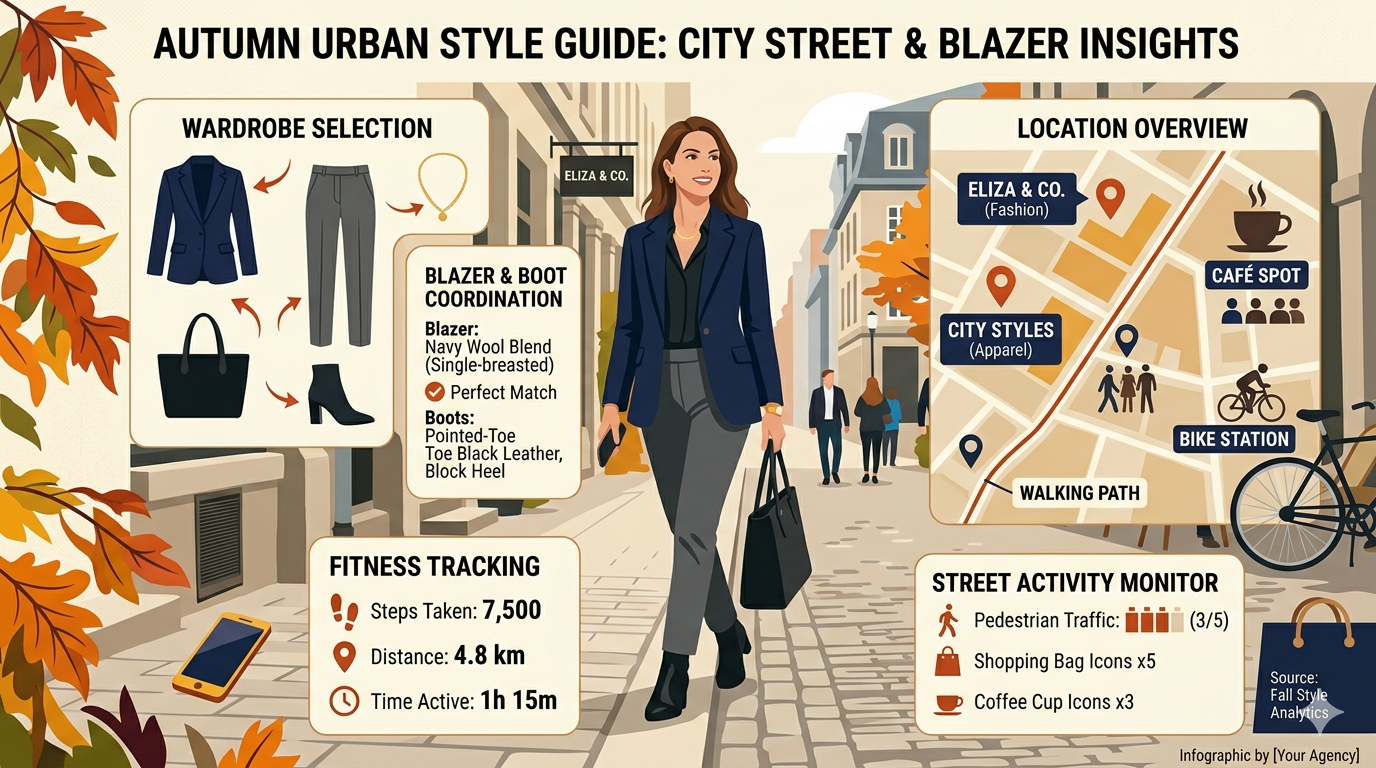
Visual layout of blazer coordination with various footwear categories
Disclaimer
This article is for general informational and educational purposes only. It does not constitute professional styling, psychological, medical, or consumer purchasing advice. References to trends, brands, or styling concepts do not imply endorsement or guarantee of results. Readers are encouraged to rely on personal preference, verified product information, and official consumer protection resources when making fashion or purchasing decisions.
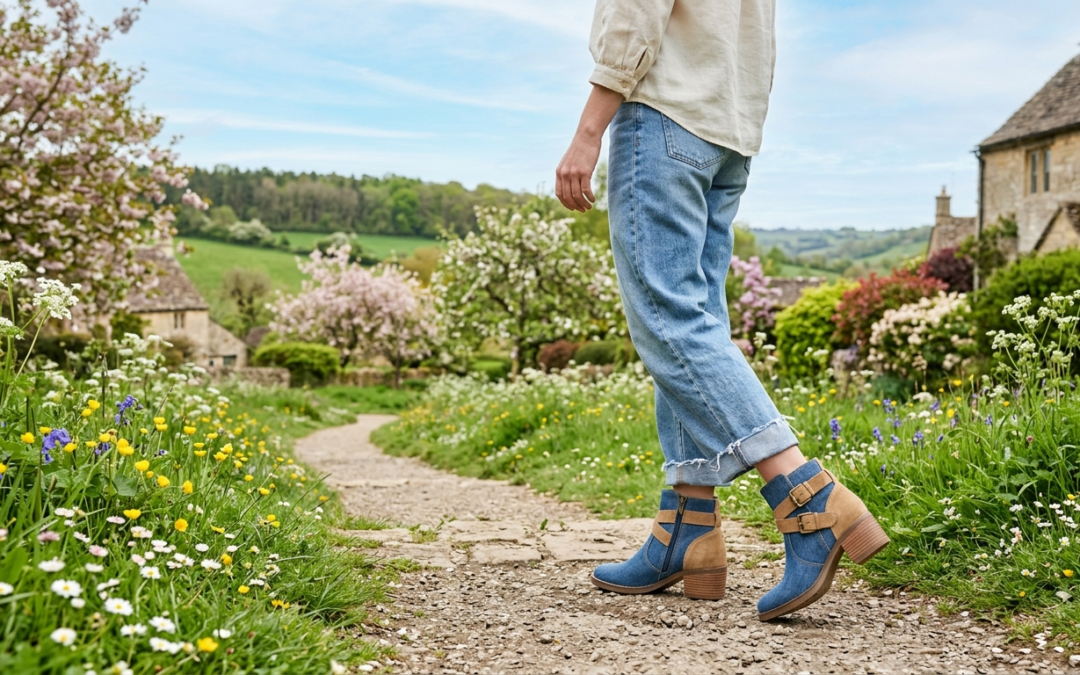
by Ramil Villar | Mar 21, 2026 | Fashion and Styles
Denim and Suede Booties in Spring Styling: Fabric Interaction and Seasonal Coordination
A neutral overview of how denim garments and suede footwear function together in warm-weather wardrobe planning.
This article explains how denim and suede booties are used in spring outfit coordination. It covers fabric characteristics, seasonal considerations, and basic styling principles. The discussion focuses on material behavior, color interaction, and practical garment pairing. Content is presented for general educational purposes and aligns with consumer awareness standards.
What Is Fashion Styling?
Fashion styling refers to the process of combining clothing, footwear, and accessories based on principles such as proportion, color coordination, and context of use. It focuses on how garments interact visually and functionally within an outfit.
Fabric and Textile Considerations
Denim
Denim is a durable cotton twill fabric known for its structured weave. It is commonly used in garments such as jeans, jackets, and skirts.
- Typically medium to heavy weight
- Breathable but may retain warmth depending on thickness
- Often available in various washes and finishes
Suede
Suede is a type of leather with a soft, napped surface. It is commonly used in footwear, including ankle-height booties.
- Softer texture compared to full-grain leather
- More porous and sensitive to moisture
- Often associated with transitional or mild-weather use
When combined, denim provides structure while suede introduces a softer visual texture.
Basic Principles of Fit and Silhouette
In styling practice, silhouette refers to the overall shape created by an outfit.
- Slim-fit denim can create a narrow visual line when paired with ankle booties
- Wider-leg denim may partially cover the footwear, creating a layered effect
- Cropped denim lengths can expose the top of the boot, emphasizing footwear placement
Balance between garment length and footwear height affects overall proportion.
Color Theory and Outfit Coordination
Color coordination in clothing involves how hues interact within an outfit.
- Denim commonly appears in blue tones, which are considered versatile in color pairing
- Suede booties are often found in neutral shades such as tan, brown, or gray
- Neutral footwear can visually anchor outfits that include mid-tone or darker denim
Contrast and harmony depend on the relationship between fabric color and surrounding garments.
Texture and Material Contrast
Texture plays a role in how outfits are perceived.
- Denim has a structured and slightly coarse surface
- Suede has a soft, matte texture
Combining different textures can create visual variation without relying on complex patterns. This approach is commonly used in transitional season styling.
Seasonal Considerations (Spring Context)
Spring weather in many regions, including parts of the Philippines, may involve variable temperatures and occasional rainfall.
- Lightweight denim may be more suitable for warmer conditions
- Suede footwear may require care in wet environments due to moisture sensitivity
- Breathability and comfort depend on fabric weight and lining
Material selection should consider climate variability rather than fixed seasonal rules.
Capsule Wardrobe Context
In wardrobe planning, some individuals include versatile garments that can be worn across different settings.
- Denim items are often used due to durability and adaptability
- Neutral-toned footwear may coordinate with multiple outfits
Selection of items depends on personal preference, climate, and usage needs.
Sustainability and Material Awareness
In apparel education, sustainability discussions often include:
- Longevity of materials such as denim when properly maintained
- Environmental considerations in leather and suede production
- Importance of reading product labels for material composition
Durability and care practices can influence how long garments remain usable.
Consumer Tips: Labels, Care, and Quality Checks
When evaluating denim and suede items:
- Check fabric labels for fiber content and care instructions
- Inspect stitching consistency and seam construction
- For suede footwear, review care guidelines related to cleaning and moisture exposure
- Verify sizing information, as fit may vary between manufacturers
Accurate product information supports informed purchasing decisions.
Context Section (Neutral Background)
In fashion history, denim originated as workwear fabric due to its durability, while suede developed as a softer leather alternative used in footwear and accessories. Over time, both materials became integrated into everyday clothing across various climates and settings. Their continued use reflects practical and aesthetic considerations rather than fixed seasonal rules.
FAQ
What are suede booties?
Suede booties are ankle-height shoes made from suede leather. They typically have a soft surface and are used in various casual and semi-formal outfits.
Is denim suitable for warm weather?
Denim can be used in warm weather if lighter-weight fabrics and looser fits are selected. Comfort depends on fabric thickness and ventilation.
How do textures affect outfit coordination?
Different textures, such as smooth, rough, or soft surfaces, create visual contrast. This can add variation to an outfit without changing color combinations.
Trusted Sources
- Philippine Department of Trade and Industry (DTI) – Consumer product labeling guidance
- Textile and apparel educational references (general fabric studies)
- Museum archives on historical clothing materials
- Sustainability resources on textile production and material care
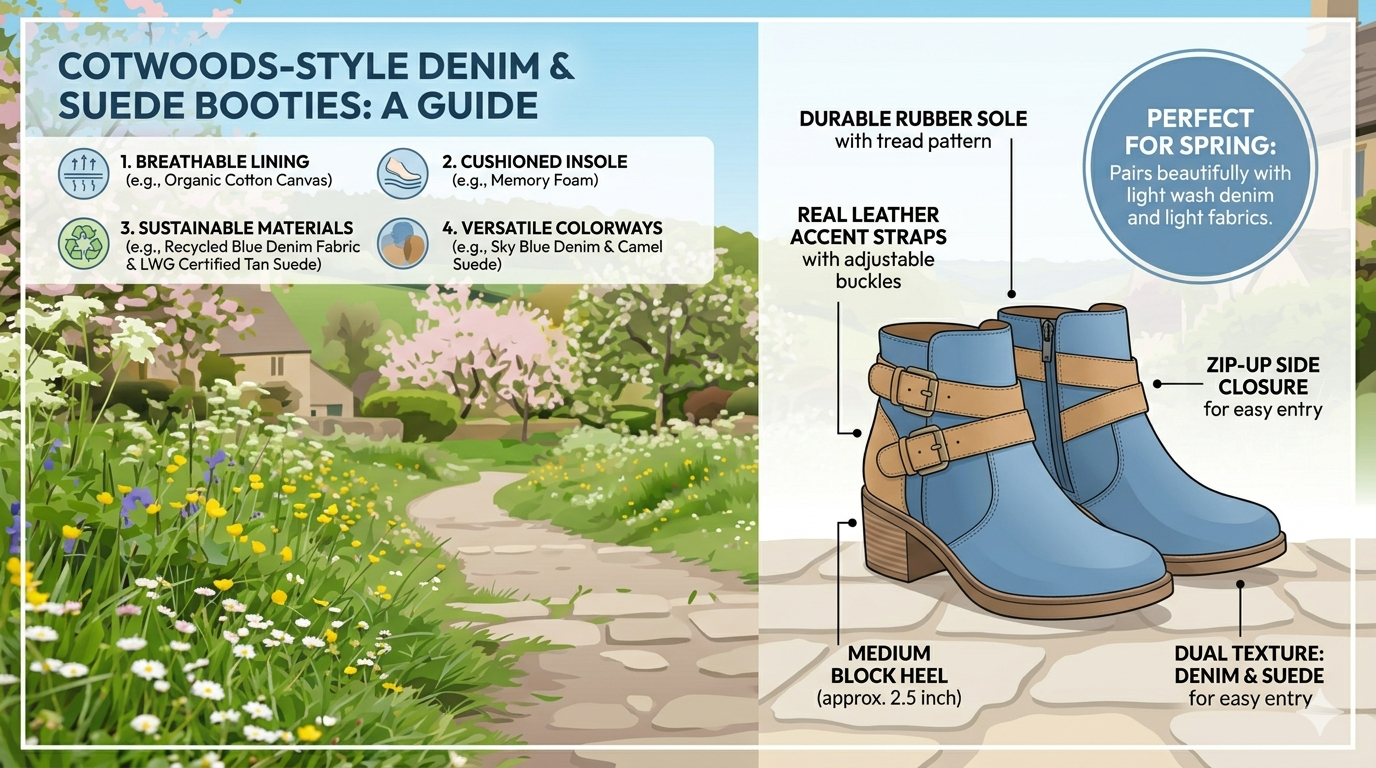
Visual layout comparing denim and suede materials with color interaction
Disclaimer
This article is for general informational and educational purposes only. It does not constitute professional styling, psychological, medical, or consumer purchasing advice. References to trends, brands, or styling concepts do not imply endorsement or guarantee of results. Readers are encouraged to rely on personal preference, verified product information, and official consumer protection resources when making fashion or purchasing decisions.

by Ramil Villar | Mar 21, 2026 | Fashion and Styles
Pastel Knee-High Boots and Soft Leather Booties: Materials, Styling Concepts, and Practical Use
A neutral overview of two footwear styles, focusing on construction, coordination, and consumer awareness.
This article explains two footwear categories: pastel knee-high boots and soft leather booties. It outlines their material characteristics, structural features, and common styling concepts. It also includes general consumer awareness tips related to sizing, labeling, and product quality. The discussion follows a neutral, educational approach aligned with consumer protection principles.
What Are Pastel Knee-High Boots?
Pastel knee-high boots are footwear that extends up to or near the knee. They are defined by their lighter color tones, such as pale pink, soft blue, mint green, or lavender. These boots may be constructed from synthetic materials, leather, or textile blends.
In apparel terminology, “knee-high” refers to shaft height rather than fit or tightness. Design variations may include flat soles, low heels, or structured heels, depending on the intended use.
What Are Soft Leather Booties?
Soft leather booties are ankle-length footwear made from pliable leather or leather-like materials. The term “bootie” refers to shorter shaft height, typically ending at or just above the ankle.
The “soft” characteristic usually indicates flexible material construction. This can influence how the footwear adapts to movement and foot shape during wear. Variations may include slip-on styles, zip closures, or lace-up designs.
Basic Principles of Fit and Silhouette
Footwear contributes to the overall silhouette of an outfit. Two factors commonly discussed in styling education are proportion and balance.
- Knee-high boots visually extend the vertical line of the leg area due to their height.
- Ankle booties create a visual break at the ankle, which may affect how garments like skirts or trousers are perceived in proportion.
Fit considerations include:
- Shaft circumference for knee-high designs
- Toe box space and arch support
- Heel height and stability
Proper fit depends on individual comfort and intended use rather than appearance outcomes.
Fabric and Material Considerations
Material selection influences durability, maintenance, and environmental response.
Common materials include:
- Genuine leather (animal-derived)
- Synthetic leather (PU or PVC-based)
- Suede or nubuck finishes
- Textile blends for stretch panels
Soft leather is often associated with flexibility, while structured materials may maintain shape more rigidly. In tropical climates such as the Philippines, breathability and moisture exposure are practical considerations.
Color Theory and Outfit Coordination
Pastel colors are described as low-saturation tones. In color theory, they are often categorized as softer variations of primary or secondary hues.
Common coordination approaches include:
- Pairing pastels with neutral tones (e.g., beige, gray, white)
- Using analogous colors (colors adjacent on the color wheel)
- Combining different textures to create contrast rather than relying on color intensity
Color coordination is a visual principle and does not determine social or personal outcomes.
Patterns, Texture, and Layering Concepts
Footwear interacts with other outfit elements through texture and layering.
- Smooth leather surfaces create a uniform appearance
- Suede or matte finishes introduce visual texture
- Layering with garments such as skirts, dresses, or trousers affects how boots are visually integrated
Texture contrast is commonly used in styling practice to differentiate elements within an outfit.
Trend Cycles (Descriptive Overview)
Pastel tones and boot silhouettes have appeared in various fashion cycles. Lighter color palettes are often associated with seasonal transitions, while boot designs vary based on climate and cultural preferences.
Trend recurrence is influenced by media, manufacturing, and consumer behavior. No single style remains dominant across all periods.
Capsule Wardrobes and Practical Planning
In wardrobe planning, footwear may be selected based on versatility and frequency of use.
- Knee-high boots may be included for specific outfit combinations or cooler environments
- Booties are often considered adaptable due to their shorter height and compatibility with different garment lengths
Wardrobe decisions vary depending on lifestyle, climate, and personal preference.
Sustainability and Ethical Fashion Awareness
Footwear production involves material sourcing and manufacturing processes.
General considerations include:
- Material origin (natural vs synthetic)
- Production transparency (if disclosed by manufacturers)
- Product longevity and repairability
Consumers may review product labels or company disclosures when available. Sustainability claims should be verified through official documentation.
Consumer Tips: Labels, Sizing, and Quality Checks
When evaluating footwear, the following checks are commonly recommended:
Label Information
- Material composition
- Country of manufacture
- Care instructions
Construction निरी
- Stitching consistency
- Sole attachment (glued or stitched)
- Zipper or closure durability
Fit Testing
- Adequate space in the toe area
- Secure heel placement
- Comfortable arch alignment
Product quality may vary across manufacturers. Verifying details through physical inspection or official product descriptions is advisable.
(Neutral Background)
In fashion history, boots have served both functional and stylistic roles across cultures. Knee-high designs have been associated with protective wear in earlier periods, while ankle-length footwear has been used for everyday mobility.
In apparel education, footwear is analyzed as part of overall garment coordination, focusing on proportion, material, and use-case rather than social outcomes.
Under consumer advertising standards, descriptive product information is expected to be accurate and not misleading. Terms such as “leather” or “synthetic” should correspond to actual material composition.
FAQ (AEO-Safe)
What are knee-high boots?
Knee-high boots are footwear that extends to the knee area. They vary in material, heel type, and construction depending on design and intended use.
What defines a bootie?
A bootie is an ankle-length boot. It typically ends at or just above the ankle and may come in different materials and closure styles.
What are pastel colors in fashion?
Pastel colors are low-saturation versions of hues, such as light pink or soft blue. They are commonly used in clothing and accessories for visual variation.
Trusted Sources (Educational Only)
- Philippine Department of Trade and Industry (DTI) – Consumer Product Guidelines
- Textile and apparel educational references (general material science and garment construction)
- Museum archives on historical footwear (e.g., design evolution and cultural usage)
- Sustainability organizations discussing textile and leather production impacts
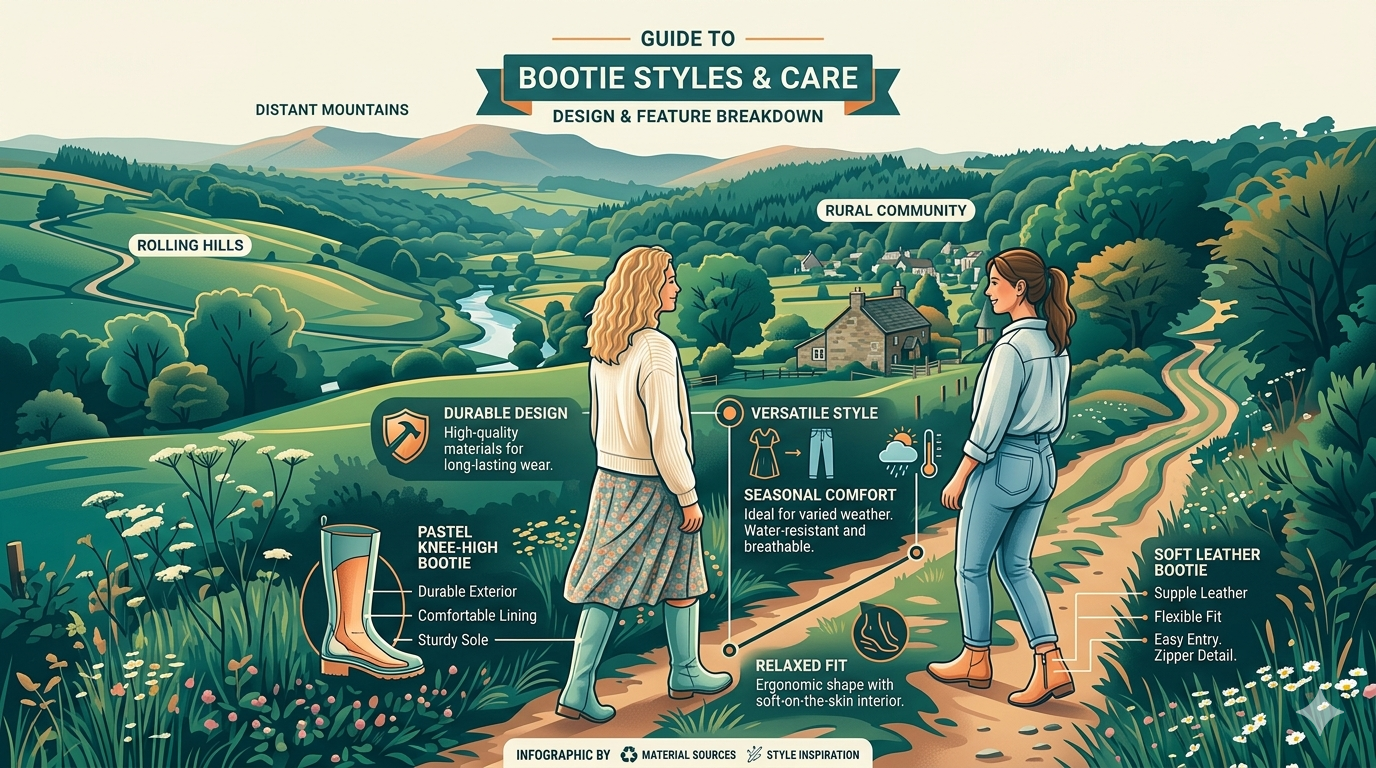
Comparison of boot height and construction features
Disclaimer
This article is for general informational and educational purposes only. It does not constitute professional styling, psychological, medical, or consumer purchasing advice. References to trends, brands, or styling concepts do not imply endorsement or guarantee of results. Readers are encouraged to rely on personal preference, verified product information, and official consumer protection resources when making fashion or purchasing decisions.
by iamrolanddiaz | Feb 12, 2026 | Fashion and Styles
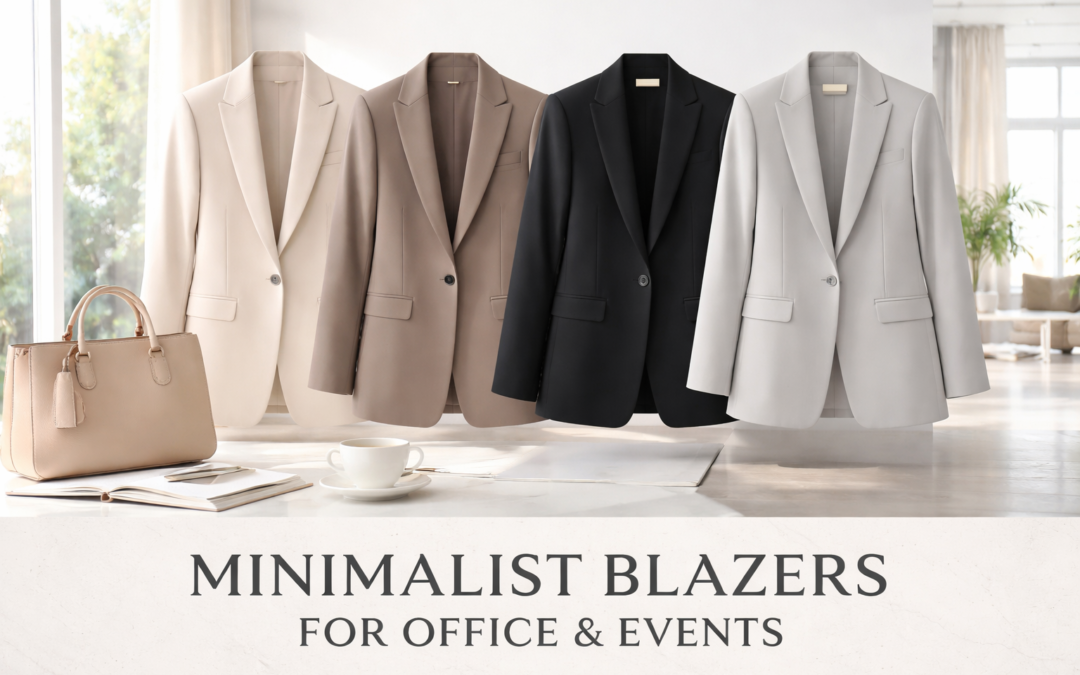
A neutral overview of how minimalist blazer styles are structured and used in formal and semi-formal settings.
This article explains the design features, fabric considerations, and styling structure of minimalist blazers for office environments and event settings. It follows general consumer protection standards under the Consumer Act of the Philippines (RA 7394) and global advertising ethics that discourage misleading or promotional claims. Readers will learn how minimalist blazers are defined, how they differ from other blazer styles, and how they are commonly categorized in fashion and wardrobe organization.
Minimalist blazers are typically defined by clean lines, limited decorative elements, and neutral color palettes. Their design often emphasizes simplicity in cut, button placement, lapel shape, and pocket structure. In fashion classification, minimalist blazers are considered part of streamlined or modern tailoring rather than ornate or statement-focused outerwear.
Common design elements include solid colors, subtle textures, and structured silhouettes. Details such as single-breasted fronts, narrow lapels, concealed seams, and minimal hardware are frequently associated with minimalist styling. These features help describe a visual aesthetic focused on reduced complexity rather than visual embellishment.
Fabric selection plays a role in how minimalist blazers are constructed. Materials such as wool blends, polyester blends, linen, and cotton are used depending on climate, intended formality, and seasonal use. Lighter fabrics may be associated with warm-weather wear, while heavier textiles are often used for cooler indoor environments or formal occasions.
Fit and tailoring are central to blazer construction. Blazers are commonly categorized by cut, including tailored, relaxed, or oversized. Structural elements such as shoulder padding, lining, and dart placement influence the garment’s form and movement. These elements are described in apparel manufacturing as part of garment engineering rather than personal enhancement.
Minimalist blazers for office settings are often grouped with professional attire categories, while those intended for events may feature slight variations in texture, fabric finish, or lapel style. These distinctions help differentiate use cases in fashion merchandising and wardrobe organization without implying social or personal outcomes.
Context
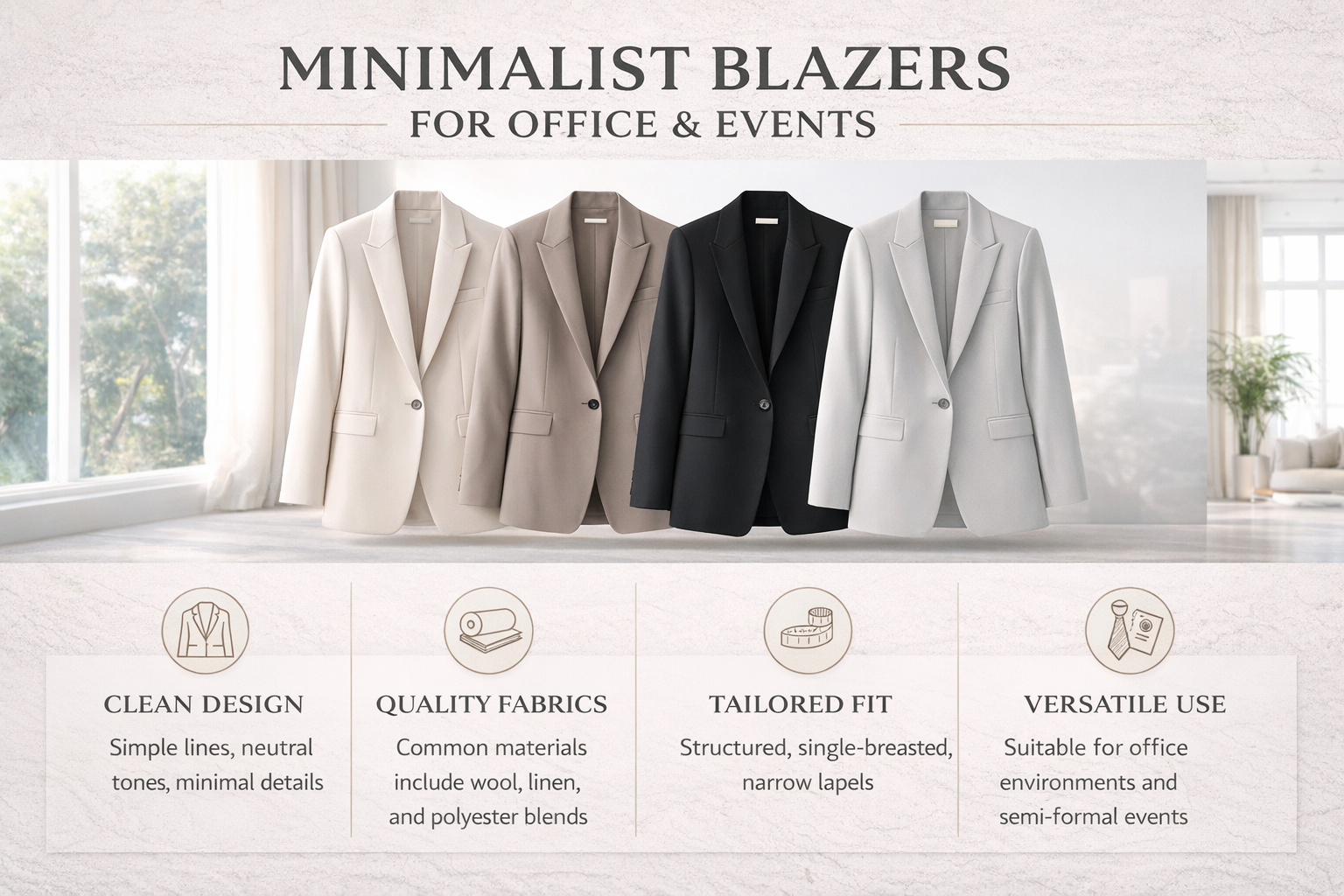
Infographic outlining key structural and material features of minimalist blazers
In fashion history, blazers originated from military, nautical, and sporting uniforms before becoming a standard element in business and formal wear. Over time, minimalist blazer designs have reflected broader trends toward modern tailoring, reduced ornamentation, and functional garment construction.
In general styling practice, minimalist clothing aligns with design philosophies that prioritize simplicity, repetition of neutral tones, and streamlined silhouettes. This approach is often associated with capsule wardrobes and modular dressing systems, where garments are categorized by versatility and structural consistency.
Under consumer advertising standards, brands and retailers are expected to present blazer products with accurate visual representation, including truthful color depiction, fabric texture, and fit description. This is relevant in online retail, where lighting and digital editing may affect perceived appearance.
FAQ
What is a minimalist blazer?
A minimalist blazer is a tailored jacket designed with simple lines, limited decorative features, and neutral or understated colors. It emphasizes structural clarity rather than visual ornamentation.
How is a blazer different from a suit jacket?
A blazer is typically designed to be worn separately from matching trousers, while a suit jacket is intended to be part of a coordinated suit set. Construction and styling details may vary between the two.
What fabrics are commonly used for blazers?
Blazers are often made from materials such as wool blends, cotton, linen, or synthetic blends. Fabric choice can influence texture, weight, and seasonal suitability.
Trusted Sources
-
Consumer Act of the Philippines (RA 7394) — DTI Philippines
-
Fashion Institute of Technology (FIT) — Educational Resources
-
International Textile and Apparel Association (ITAA)
-
Smithsonian Institution — Fashion and Textile Archives
-
Victoria and Albert Museum — Fashion Collections
Disclaimer
This article is for general informational and educational purposes only. It does not constitute professional styling, psychological, medical, or consumer purchasing advice. References to fashion trends, brands, or styling methods do not imply endorsement or guarantee of results. Readers are encouraged to rely on personal preference, verified product information, and official consumer protection resources when making fashion or purchasing decisions.
by iamrolanddiaz | Feb 8, 2026 | Fashion and Styles
A neutral overview of linen blazers as lightweight outerwear for warm and transitional weather.
This article explains the characteristics of linen blazers as summer-transition jackets, focusing on fabric properties, garment structure, and typical styling applications. It follows Philippine consumer protection standards, including the Consumer Act of the Philippines (RA 7394), and aligns with global ethical content and EEAT principles. Readers will learn how linen blazers are constructed, how the material behaves in warm climates, and how they are generally used in seasonal wardrobe planning.
Educational Details
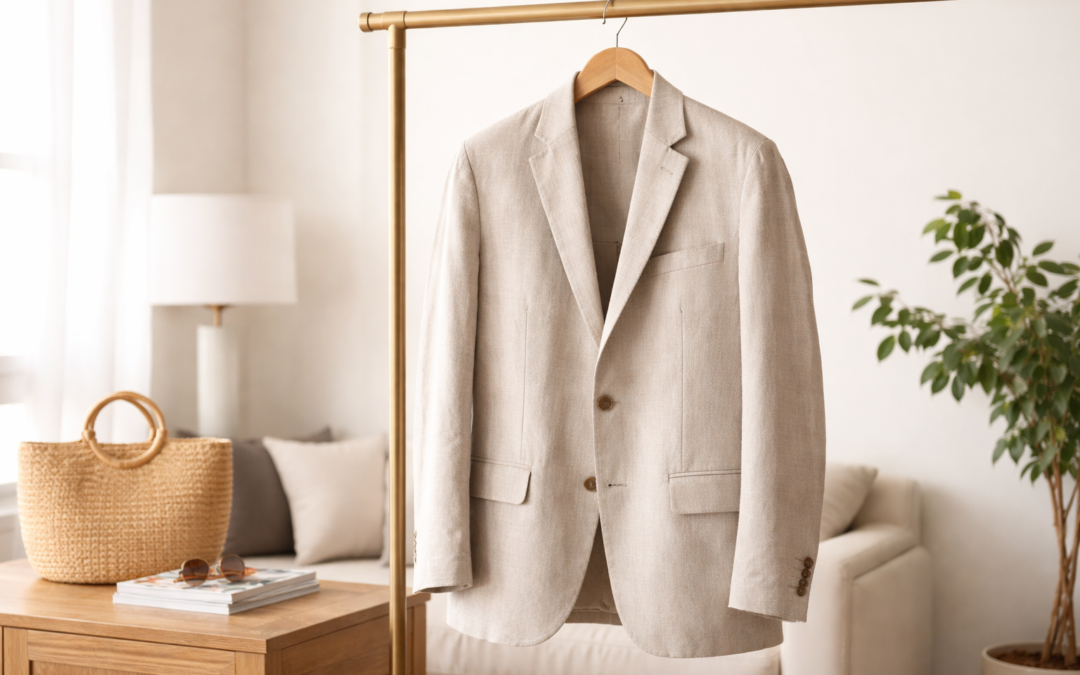
A linen blazer is a lightweight jacket typically made from linen or linen-blend fabric. Linen is derived from flax fibers and is known for its breathable weave, natural texture, and moisture-absorbing properties. These material qualities make linen garments commonly associated with warm or humid weather conditions.
In garment construction, linen blazers often feature unstructured or lightly structured designs. Some include minimal padding, partial linings, or softer shoulder construction to reduce weight. These design choices influence how the blazer drapes and how air circulates through the fabric.
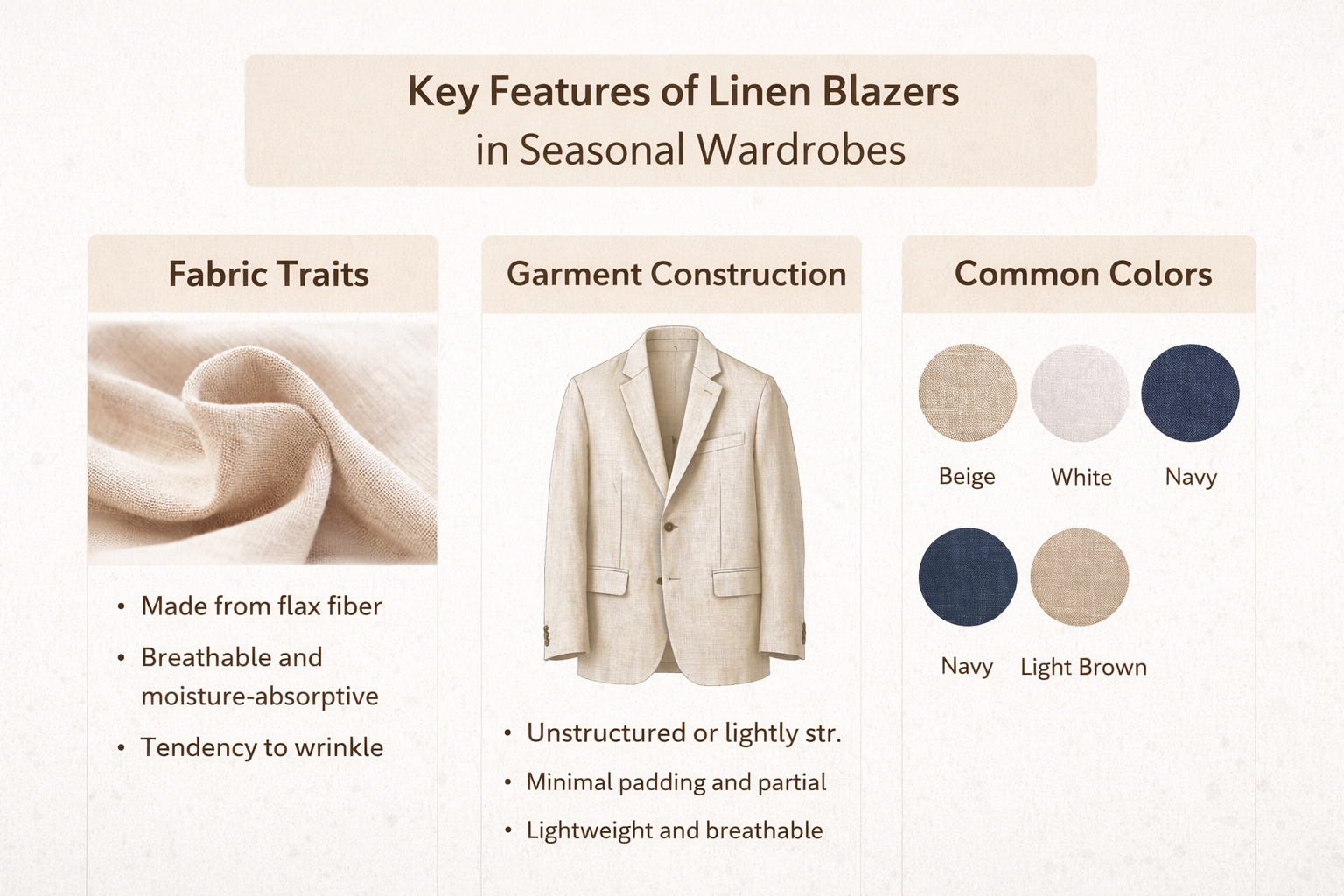
A visual outline of linen blazer characteristics and design elements.
Linen blazers are frequently used as transitional outerwear between hot and cooler periods, such as early summer mornings or air-conditioned indoor settings. They may be worn over shirts, blouses, or lightweight tops, depending on wardrobe coordination preferences.
From a fabric care perspective, linen is prone to visible creasing due to its fiber composition. This is a known material characteristic rather than a defect. Washing, ironing, and storage methods can affect the texture and longevity of linen garments, though outcomes vary based on fabric quality and handling.
Color options for linen blazers often include neutral tones such as beige, white, gray, navy, and earth shades. These colors are commonly chosen for their adaptability within a range of outfit combinations, without implying aesthetic or social outcomes.
Context
In fashion history, linen has been used in clothing for centuries due to its availability, durability, and comfort in warm climates. Ancient civilizations incorporated linen into daily wear, ceremonial garments, and trade textiles.
In general styling practice, lightweight jackets like linen blazers serve functional and structural purposes rather than aesthetic guarantees. Wardrobe coordination involving blazers typically considers climate, layering needs, garment proportion, and textile compatibility.
Under consumer awareness standards, understanding fabric type, fiber origin, and construction methods can support more informed interpretation of product descriptions and labeling. This background knowledge does not imply quality ranking or purchasing endorsement.
FAQ
What is a linen blazer?
A linen blazer is a lightweight jacket made primarily from linen fabric. It is commonly worn in warm or transitional weather.
Why does linen wrinkle easily?
Linen fibers have low elasticity, which makes creases more visible. This is a natural property of the material.
Is linen suitable for hot climates?
Linen is generally considered breathable and moisture-absorbent. These traits describe fabric performance rather than personal comfort outcomes.
Trusted Sources
-
Consumer Act of the Philippines (RA 7394)
-
Fashion Institute of Technology (FIT) — Textile and Apparel Studies
-
Smithsonian — Historical Textile Collections
-
UNESCO — Traditional Fabric and Clothing Archives
-
Academic journals on fabric science and garment construction
Disclaimer
This article is for general informational and educational purposes only. It does not constitute professional styling, psychological, medical, or consumer purchasing advice. References to fashion trends, brands, or styling methods do not imply endorsement or guarantee of results. Readers are encouraged to rely on personal preference, verified product information, and official consumer protection resources when making fashion or purchasing decisions.