
by Ramil Villar | Mar 14, 2026 | Awareness, Oral Hygiene Education
Hydration and Sensitive Tooth Care: An Educational Overview
Understanding the relationship between fluid intake and oral comfort
Hydration plays a role in several bodily processes, including saliva production and oral moisture balance. Dental education materials sometimes discuss hydration in the context of oral comfort and basic oral hygiene practices. Sensitive teeth, often described as a reaction to temperature or certain substances, may involve the inner structures of teeth becoming more exposed to external stimuli.
This article provides an educational overview of tooth sensitivity, the role of saliva and hydration in oral conditions, and commonly referenced oral hygiene considerations. The information is intended for general awareness and does not recommend specific treatments, products, or clinical procedures.
What Is Tooth Sensitivity?
Tooth sensitivity refers to a sensation that may occur when teeth encounter external stimuli such as cold temperatures, heat, sweet substances, or acidic foods. The sensation is often described in dental literature as occurring when underlying tooth layers become more responsive to external conditions.
Teeth contain multiple layers:
Enamel
The outer mineralized layer that helps protect inner tooth structures.
Dentin
A layer beneath the enamel containing microscopic channels that connect to the tooth’s inner pulp.
Pulp
The central area of the tooth that contains nerves and blood vessels.
In some situations, dentin may become more exposed due to changes in enamel thickness, gum position, or other oral conditions. When this occurs, external stimuli may reach the microscopic channels within dentin, which can lead to sensations commonly described as sensitivity.
The Role of Saliva in Oral Conditions
Saliva is a naturally occurring fluid in the mouth that contributes to several oral functions.
These functions may include:
- Moistening oral tissues
- Assisting in the breakdown of food during chewing
- Helping wash away food particles and certain acids
- Supporting the natural balance of oral microorganisms
Saliva production can vary depending on hydration levels, diet, medications, and general health conditions. Adequate fluid intake supports normal body hydration, which may influence saliva production.
Dental education sources often mention saliva as part of the mouth’s natural protective environment.
Hydration and Oral Moisture
Hydration refers to maintaining adequate levels of fluid within the body. In the context of oral health discussions, hydration is sometimes referenced in relation to oral dryness.
When oral dryness occurs, individuals may notice:
- Reduced saliva flow
- A feeling of dryness in the mouth
- Changes in oral comfort when eating or drinking
Hydration practices such as drinking water throughout the day are commonly described in general health materials as contributing to fluid balance. However, hydration alone does not address all causes of tooth sensitivity.
Hypothetical Example of Hydration and Oral Comfort
A hypothetical scenario may help illustrate how hydration may relate to oral comfort.
An individual notices occasional tooth sensitivity when drinking cold beverages. During a routine dental checkup, the dentist observes general oral health and reviews the individual’s daily habits, including fluid intake and oral hygiene practices. The dentist may also examine the gums and enamel surfaces to assess potential contributing factors.
In this situation, hydration may be discussed as one of several lifestyle factors related to oral moisture and saliva production. Additional evaluation may be conducted to identify structural or dental conditions that may contribute to sensitivity.
Tools Commonly Referenced in Sensitive Tooth Care
Dental education materials sometimes mention tools associated with oral hygiene routines for individuals experiencing sensitivity.
Examples include:
Soft-Bristled Toothbrushes
Toothbrushes with softer bristles are sometimes discussed in oral hygiene materials as a gentle cleaning option for tooth surfaces and gums.
Toothpaste Formulations for Sensitivity
Some toothpaste products are formulated with ingredients that dental manufacturers describe as designed for sensitive teeth. These products vary in composition and intended use.
Oral Hydration Practices
Regular water intake and general hydration habits may support normal saliva production and oral moisture levels.
The selection and use of oral care tools may vary depending on individual circumstances and professional dental guidance.
Context: Tooth Sensitivity in Dental Research
Dental literature often describes tooth sensitivity as a common oral condition observed in various populations. Studies have explored possible contributing factors, including enamel wear, gum recession, dietary acids, and oral hygiene habits.
Public health discussions frequently emphasize oral hygiene awareness and routine dental examinations as part of general oral health monitoring. Consumer protection standards also encourage clear communication about dental products and procedures to prevent misleading health claims.
Educational materials therefore tend to describe tooth sensitivity in terms of anatomy, hygiene practices, and observational monitoring rather than guaranteed outcomes.
Frequently Asked Questions
What causes tooth sensitivity?
Tooth sensitivity may occur when the inner dentin layer becomes more responsive to external stimuli such as temperature changes or acidic foods. This can happen when enamel becomes thinner or gum tissue shifts position.
Does hydration affect oral health?
Hydration supports general bodily functions, including saliva production. Saliva contributes to oral moisture and may help wash away food particles and certain acids.
What tools are associated with sensitive tooth care?
Oral hygiene materials often mention soft-bristled toothbrushes, toothpaste formulated for sensitive teeth, and routine dental observation as part of general oral care discussions.
Trusted Sources
- Philippine Department of Health (DOH) oral health education resources
- Philippine Dental Association educational publications
- World Health Organization oral health reports
- Peer-reviewed dental journals discussing dentin hypersensitivity and saliva function
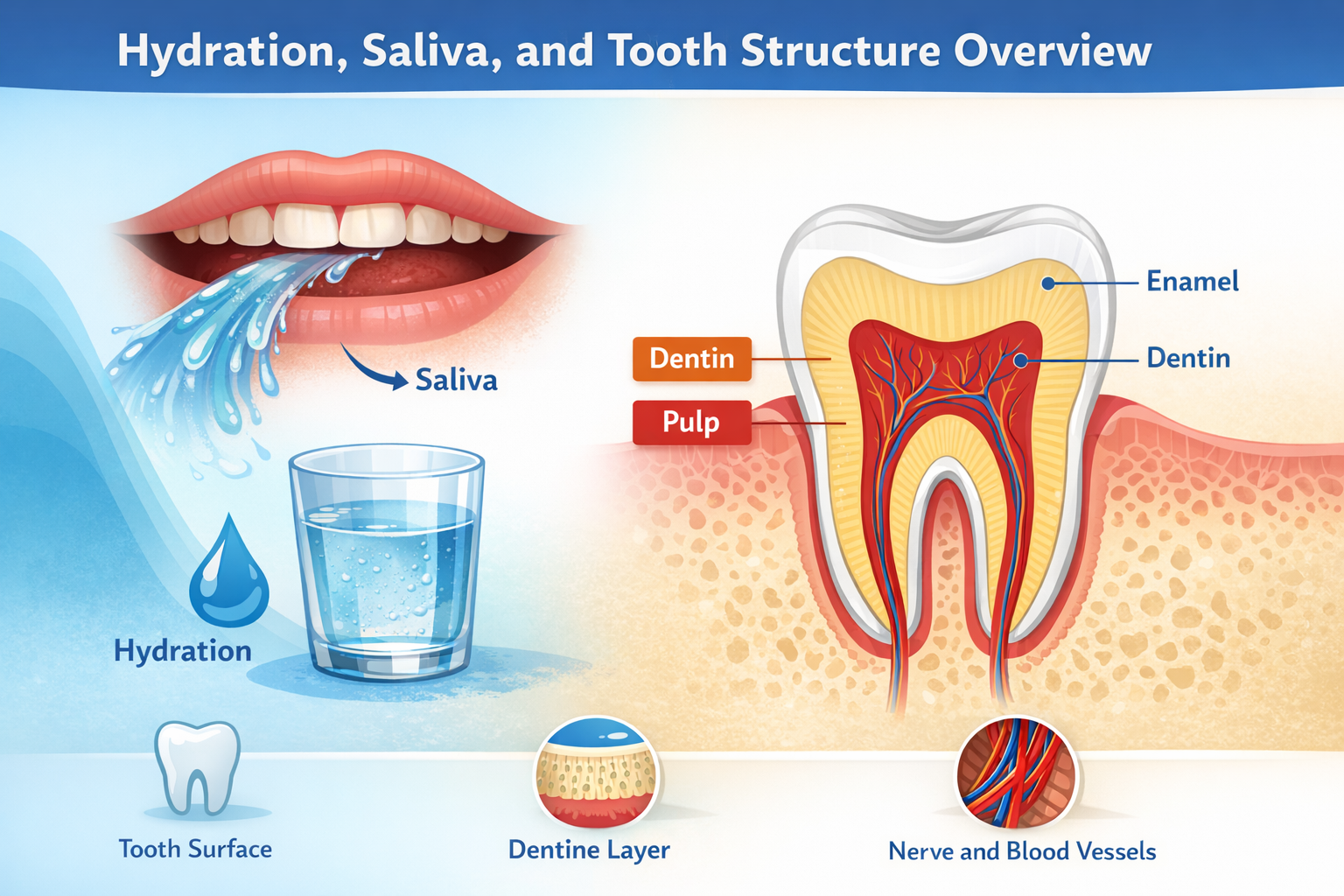
Illustrated diagram displaying labeled tooth layers and saliva presence within the mouth.
Disclaimer
This article is for general informational and educational purposes only. It does not constitute professional medical, dental, or consumer purchasing advice. References to procedures, products, or clinics do not imply endorsement or guarantee of results. Readers are encouraged to consult licensed dental professionals and verified resources for oral health decisions.

by iamrolanddiaz | Feb 22, 2026 | Awareness
This article provides an informational overview of New Year’s resolutions commonly identified in early 2026. It explains what New Year’s resolutions are, outlines frequently chosen goals, and describes general patterns of observance without implying cultural preference or social obligation. Content aligns with publicly observable behavioral trends and educational research principles.
What Are New Year’s Resolutions?
Definition:
A New Year’s resolution is a personal goal or intention an individual chooses to adopt at or near the beginning of a new calendar year. The practice is observed in a range of international contexts and is not tied to a single culture or belief system.
Cultural Note:
The phrase “New Year’s resolution” refers to a social convention of planning personal changes or improvements coinciding with the start of a new year in the Gregorian calendar. The practice varies widely among individuals, communities, and cultures.
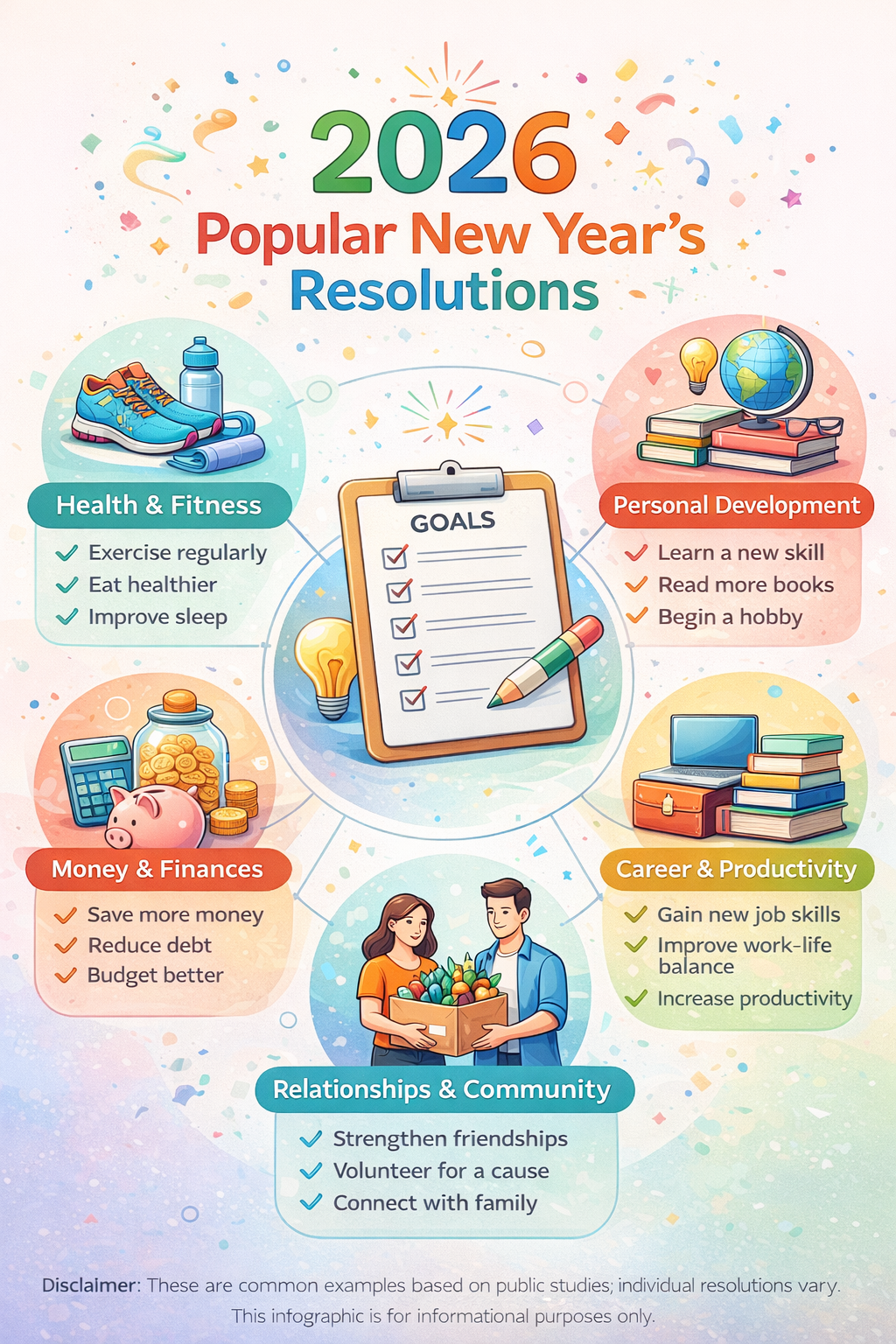
Visual summary of five common types of resolutions observed in 2026.
Common Types of Goals for 2026
The following are general categories of goals that individuals have been observed setting as New Year’s resolutions in 2026. These categories do not represent universal participation and are based on patterns in public surveys and behavior studies (hypothetical illustration follows).
1. Health and Well-Being
Goals under this category aim to support physical or mental health.
Hypothetical Example (Illustrative):
A person might plan to take 30 minutes of walking five days per week to support general fitness.
2. Personal Development and Learning
These goals focus on acquiring new skills or knowledge.
Hypothetical Example (Illustrative):
An individual may set a goal to complete an online course in digital literacy by mid-year.
3. Financial Management and Planning
Goals in this category relate to budgeting, saving, and financial organization.
-
Establishing a savings plan
-
Reducing discretionary spending
-
Planning for long-term financial goals
Hypothetical Example (Illustrative):
A saver might aim to deposit a fixed percentage of each paycheck into an emergency fund.
4. Social and Relationship Goals
Some resolutions focus on social connections and personal relationships.
-
Improving communication with family or friends
-
Expanding community involvement
-
Volunteering with charitable organizations
Hypothetical Example (Illustrative):
A goal could be to schedule regular virtual calls with distant relatives to maintain social connection.
5. Work, Career, and Productivity
Resolutions in this area address professional growth and time management.
-
Enhancing job-related skills
-
Establishing clearer work-life boundaries
-
Organizing daily routines for productivity
Hypothetical Example (Illustrative):
A professional may aim to complete time management training to support more structured daily workflow.
Trends and Observations
-
Variation Across Contexts:
New Year’s resolution practices differ across regions and individual priorities. Not all people observe or set resolutions.
-
Timing:
The practice is most commonly associated with the early calendar year transition (late December through January in many countries that follow the Gregorian calendar). Observance dates and cultural timing may vary.
-
Measurement:
Some goals are qualitative (e.g., “reduce stress”), others are quantitative (e.g., “read 12 books”). Public research often categorizes goals by theme rather than effectiveness outcomes.
Glossary of Relevant Terms
-
New Year’s Resolution: A self-chosen objective set at the start of a new calendar year to support personal change or improvement.
-
Goal Category: A thematic grouping of similar types of objectives (e.g., financial, health).
-
Observance Pattern: A descriptive term referring to how widely or commonly a practice is followed, without implying requirement or cultural uniformity.
FAQ
What is the origin of New Year’s resolutions?
The practice of making resolutions at the start of a new year has historical roots in various cultural traditions, often linked to reflection and renewal; specifics vary by society and historical period.
Are resolution goals the same worldwide?
No. Resolutions reflect individual preferences, cultural context, and societal norms; there is no single universal set of goals.
Do resolutions need to be measurable?
Resolution goals can be both qualitative and quantitative. The choice depends on how an individual frames their intention.
Disclaimer
This article is for general informational and educational purposes only. It does not constitute psychological, cultural, or behavioral guidance. Mentions of common goals or practices do not imply endorsement, guarantee of effectiveness, or universal relevance. Observance patterns may vary by individual choice and local context. Readers are encouraged to consult local or professional resources for personalized planning.
#NewYears2026, #Resolutions, #GoalSetting, #PersonalGrowth, #LifestyleTrends, #SelfImprovement, #FinanceGoals, #CareerDevelopment, #HealthyHabits, #SocialConnections
Explore the most common New Year’s resolutions for 2026 and learn how people are shaping their goals this year.
by iamrolanddiaz | Feb 16, 2026 | Awareness, Suppliment, Vitamins
A neutral comparison of ingredient composition, formulation type, labeling focus, and product format
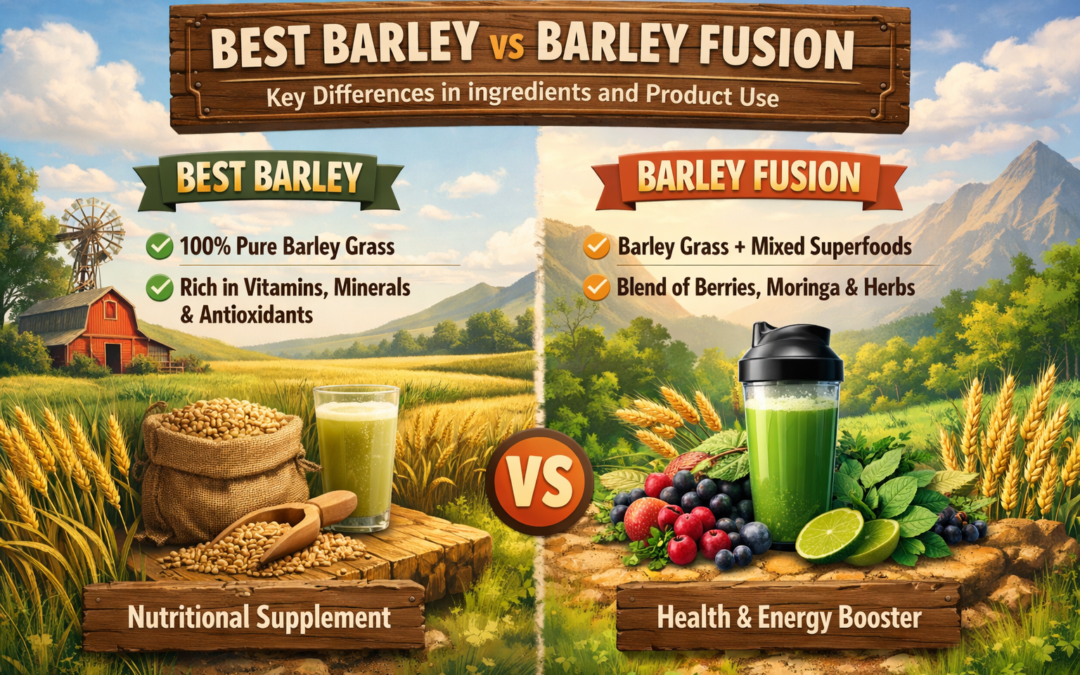
This comparison-focused article examines two barley-based supplement products offered by Ascendra International: Best Barley and Barley Fusion. The content highlights factual differences in ingredient composition, formulation structure, labeling disclosures, packaging format, and general product positioning. The purpose is to support consumer awareness by outlining observable distinctions without implying health benefits, effectiveness, or purchasing preference.
1. Ingredient Composition Comparison (Label-Based)
| Product |
Primary Ingredient |
Additional Listed Ingredients |
Ingredient Scope |
| Best Barley |
Barley grass (green barley) |
Typically positioned as single-ingredient |
Narrow (barley-focused) |
| Barley Fusion |
Barley (organic Australian barley) |
Additional ingredients such as fenugreek, glutathione, collagen (as listed) |
Broader (multi-ingredient blend) |
Comparison note:
Best Barley is commonly described as a barley-focused product made from green barley grass, while Barley Fusion is positioned as a blended formulation containing barley plus additional functional or nutritional components. Ingredient complexity reflects formulation design rather than verified product performance.
2. Formulation and Product Format
| Product |
Common Form |
Packaging Type |
Format Characteristics |
| Best Barley |
Powdered drink mix |
Packaged product (container or sachets, depending on listing) |
Plain barley-based powder |
| Barley Fusion |
Powdered drink mix |
Sachets or portioned packs |
Blend-style beverage powder |
Both products are marketed as powdered drink formulations. Barley Fusion is typically presented as a multi-ingredient drink mix, while Best Barley is positioned as a simpler barley-based powder.
3. Ingredient Complexity and Blend Structure
| Comparison Factor |
Best Barley |
Barley Fusion |
| Number of ingredients |
Fewer |
Multiple |
| Botanical components |
Primarily barley grass |
Barley plus additional plant-based ingredients |
| Added non-plant compounds |
Typically none |
Includes compounds such as collagen or glutathione (label-dependent) |
| Flavor or blend positioning |
Minimal or plain |
Blended or flavored formulation |
Ingredient complexity reflects formulation strategy and labeling disclosure rather than suitability or health-related outcomes.
4. Product Positioning
| Product |
Publicly Described Positioning |
Positioning Focus |
| Best Barley |
Barley-based nutritional supplement |
Simpler, barley-centered formulation |
| Barley Fusion |
Multi-ingredient wellness drink blend |
Combined ingredients in a single mix |
These descriptions reflect branding and product presentation rather than scientific validation or performance claims.
5. Packaging, Convenience, and Preparation Comparison
| Feature |
Best Barley |
Barley Fusion |
| Packaging format |
Container or sachets |
Sachets or portioned packs |
| Portability |
Moderate |
High (single-serve sachets) |
| Preparation style |
Mixing with liquid |
Mixing with liquid |
| Storage considerations |
Dry, sealed container |
Dry, sealed sachets |
6. Cost Range Awareness
| Product |
Observed Price Point (PHP) |
Price Influenced By |
| Best Barley |
Around ₱1,150 MSRP |
Ingredient simplicity, packaging, brand positioning |
| Barley Fusion |
Typically higher than Best Barley |
Multi-ingredient formulation, sachet format, branding |
Price differences reflect formulation complexity, packaging design, and market positioning rather than verified quality or effectiveness.
7. Label Transparency and Regulatory Awareness
| Comparison Element |
Best Barley |
Barley Fusion |
| Ingredient disclosure |
Lists barley-based content |
Lists barley plus added ingredients |
| FDA Philippines registration |
If listed |
If listed |
| Batch/expiry labeling |
Manufacturer-dependent |
Manufacturer-dependent |
| Marketing language |
General product positioning |
Blend or multi-ingredient positioning |
FDA registration status, if present, indicates regulatory listing rather than health effectiveness or product ranking.
8. General Safety and Consumer Awareness Considerations
| Consideration |
Relevance |
| Ingredient list review |
Helps identify allergens or additives |
| Multi-ingredient awareness |
Important for consumers sensitive to certain components |
| Authenticity verification |
Supports counterfeit risk reduction |
| Marketing claim evaluation |
Encourages reliance on verifiable label information |
| Storage and expiry checks |
Supports label accuracy over time |
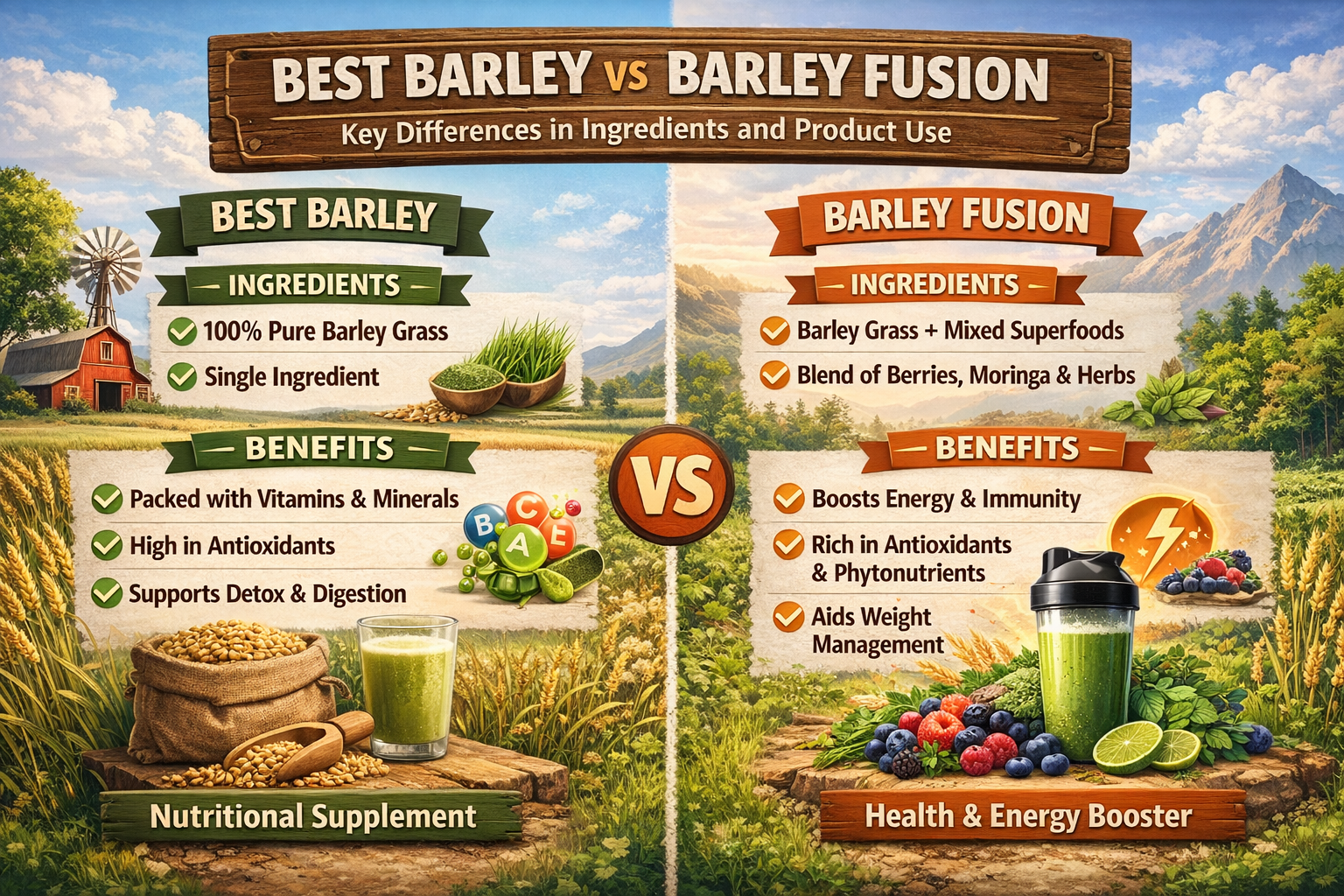
Infographic presenting ingredient groupings and product format differences in a visual comparison layout.
Neutral Comparison Background
In supplement labeling standards, single-ingredient products often emphasize botanical purity and simplicity, while blended products highlight a broader range of components. In FDA Philippines registration and inspection processes, listing status indicates regulatory documentation rather than verified health outcomes. In consumer verification practices, ingredient transparency, batch codes, expiry labeling, and packaging integrity are commonly reviewed to confirm authenticity and product traceability.
FAQ
What is the main ingredient difference between Best Barley and Barley Fusion?
Best Barley is typically described as a barley-focused product made from green barley grass, while Barley Fusion includes barley along with additional listed ingredients such as plant extracts or compounds.
How do their formulations differ?
Both products are commonly available as powdered drink mixes, but Barley Fusion is positioned as a multi-ingredient blend, whereas Best Barley is positioned as a simpler formulation.
Does a higher price indicate better product performance?
Price reflects factors such as formulation complexity, packaging, sourcing, and branding, not guaranteed effectiveness or health-related outcomes.
Trusted Sources
FDA Philippines — Food Supplement Registration Database
Department of Health (DOH) Philippines — Nutrition Guidance
World Health Organization (WHO) — Supplement Safety Resources
Philippine Consumer Act (RA 7394)
Publicly available product label information from Ascendra International
Disclaimer
This content is provided for general informational and factual comparison purposes only. It does not constitute medical, nutritional, or consumer purchasing advice. Mentions of vitamins, supplements, nutrients, or brands do not imply endorsement, effectiveness, or guaranteed health outcomes. Individuals should consult qualified healthcare professionals and official regulatory sources when making supplement-related decisions.

by iamrolanddiaz | Dec 15, 2025 | Awareness
Outdoor activities are part of daily life in the Philippines, shaped by tropical weather patterns and extended warm periods. Awareness of environmental conditions helps people better understand how outdoor routines, spaces, and products are commonly approached during hot weather. This article provides neutral, non-medical information for general awareness only.
Table of Contents
- Why This Topic Matters in the Philippines
- Understanding Hot Weather and Outdoor Living
- Common Outdoor Habits During Warm Conditions
- Comfort-Focused Outdoor Practices
- Simple Routines and Awareness Tips
- FAQs
- Trusted Sources
- Mandatory Disclaimer
- Outdoor Comfort Essentials
Why This Topic Matters in the Philippines
The Philippines experiences warm temperatures throughout much of the year, influenced by its tropical climate and seasonal weather patterns. Outdoor living—such as commuting, leisure, and household activities—often continues despite heat exposure. Awareness-focused information supports informed lifestyle understanding without implying health outcomes or personal suitability.
Understanding Hot Weather and Outdoor Living
Hot weather generally refers to periods of elevated temperature combined with humidity and sun exposure. In outdoor settings, these conditions influence how people plan activities, choose clothing, and use everyday items. Discussions around outdoor living in warm climates are typically descriptive rather than prescriptive.
Common Outdoor Habits During Warm Conditions
In hot weather, outdoor routines are often adjusted based on time of day, shade availability, and airflow. Activities may be scheduled earlier or later, while covered or ventilated spaces are commonly preferred. These patterns reflect environmental awareness rather than health-related decision-making.
Comfort-Focused Outdoor Practices
Outdoor comfort is usually described in terms of shade, breathable materials, hydration access, and rest areas. Products and setups used outdoors during hot weather are often grouped by their physical characteristics, such as lightness, portability, or airflow support. These descriptions do not imply benefits or outcomes.
Simple Routines and Awareness Tips
-
Checking daily weather updates before extended outdoor activities
-
Using shaded or covered outdoor areas when available
-
Storing outdoor items away from direct heat exposure
-
Rotating outdoor tasks based on environmental conditions
These points are informational and reflect common practices without instruction or advice.
FAQs
What does “hot weather” generally mean in outdoor contexts?
Hot weather typically refers to periods of elevated temperature, often combined with humidity and sun exposure. In outdoor contexts, it describes environmental conditions rather than personal experience. The term is commonly used in weather reporting and lifestyle discussions.
How are outdoor comfort products usually described?
Outdoor comfort products are often described based on material, ventilation, size, or portability. Labels commonly focus on physical features rather than performance claims. Descriptions are typically non-medical and general.
What should people check on labels for outdoor items?
Labels usually include material type, care instructions, and usage notes. Some also list storage recommendations or environmental exposure limits. Reading labels helps clarify product characteristics.
How are outdoor items commonly stored in hot climates?
Outdoor items are commonly stored in shaded, dry areas away from direct sunlight. Storage guidance often focuses on maintaining material condition. These practices are general and non-specific.
Are outdoor comfort items typically used daily or occasionally?
Usage frequency varies depending on activity and environment. Some items are used regularly, while others are reserved for specific outdoor situations. This varies by personal routine and setting.
Trusted Sources
Mandatory Disclaimer
This content is for general informational and educational purposes only. It does not provide medical advice, diagnosis, treatment, or recommendations. Product mentions are descriptive and do not imply suitability, effectiveness, or endorsement.
Outdoor Comfort Essentials
Outdoor Comfort Essentials is a general category used to describe non-medical items commonly associated with outdoor settings during warm weather. Products in this range are typically grouped by physical features such as material, design, or intended environment. Inclusion in this category does not imply recommendation or personal suitability.

by iamrolanddiaz | Dec 15, 2025 | Awareness
SPF numbers are a common feature on sun care product labels and packaging. In the Philippines, these numbers are often encountered in retail settings, online listings, and general consumer discussions. This article explains how SPF numbers are typically described and understood, without promoting products or implying use.
The focus is on label literacy and clear interpretation of commonly seen terms.
Table of Contents
- Why This Topic Matters in the Philippines
- What SPF Means on Labels
- How SPF Numbers Are Usually Presented
- Common Label Language Around SPF
- Simple Observations About SPF Labeling
- FAQs
- Trusted Sources
- Mandatory Disclaimer
- Sun Care Categories
Why This Topic Matters in the Philippines
Sun care products are widely available in the Philippines due to year-round daylight conditions. As a result, SPF numbers are frequently visible on shelves and digital storefronts. Understanding how these numbers are commonly explained helps consumers read labels more clearly without interpreting them as guidance.
Label literacy supports informed reading, not decision-making.
What SPF Means on Labels
SPF stands for Sun Protection Factor, a standardized labeling term used on sun care products. On packaging, it is shown as a number intended to represent laboratory-based testing conditions. The label itself does not describe personal outcomes or individual use.
How SPF Numbers Are Usually Presented
SPF values are typically displayed as whole numbers, such as SPF 15, SPF 30, or SPF 50. These numbers are often placed prominently on the front of packaging. Additional explanatory text may appear elsewhere on the label in standardized wording.
Common Label Language Around SPF
Labels often pair SPF numbers with terms like “broad spectrum” or “sun protection.” This language is generally descriptive and regulated. It reflects labeling standards rather than product performance in real-world settings.
Simple Observations About SPF Labeling
In everyday retail environments, SPF numbers are used as a quick reference point for categorizing products. They function as identifiers rather than instructions. Conversations about SPF in this context usually focus on label visibility and comparison, not outcomes.
FAQs
What does SPF mean in general?
SPF is an abbreviation for Sun Protection Factor. It is a standardized term used on sun care product labels. The number reflects controlled testing conditions.
How are SPF numbers usually shown on labels?
SPF numbers are commonly displayed as whole numbers on the front of packaging. They are designed to be easy to see at a glance. Additional details may appear in smaller text elsewhere on the label.
What should people check on an SPF label?
SPF labels typically include the SPF number, product category, and required regulatory statements. Ingredient lists and usage descriptions are usually placed in separate sections. Reading the full label provides context for how the number is presented.
What is the difference between SPF 30 and SPF 50 on a label?
The difference refers to the numerical value shown as part of standardized labeling. These numbers indicate different tested SPF levels. The label itself does not explain personal impact.
Are SPF numbers used year-round on products in the Philippines?
Yes, SPF numbers appear on products throughout the year. This reflects consistent market availability rather than seasonal labeling. The numbers remain part of standard packaging.
Trusted Sources
Mandatory Disclaimer
This content is for general information and educational purposes only. It does not provide medical, health, or personal guidance. No recommendations, suitability statements, or outcomes are implied.
Sun Care Categories
Sun care categories typically group products based on format, labeling, or intended general use. These categories are described for identification and organization only. Inclusion does not imply recommendation or suitability.

by iamrolanddiaz | Dec 15, 2025 | Awareness
Ultraviolet (UV) exposure is a topic that frequently appears in weather updates, public advisories, and everyday discussions in the Philippines. These references usually focus on environmental awareness rather than personal outcomes. Understanding how UV exposure is commonly described helps clarify public messaging without interpreting it as health guidance.
This article explains how UV exposure is generally discussed in a Philippine context, using neutral and descriptive language suitable for broad information access.
Table of Contents
- Why This Topic Matters in the Philippines
- How UV Exposure Is Commonly Defined
- UV Index Mentions in Local Weather Reports
- Environmental Factors Often Referenced
- Common Public Awareness Language
- Simple Routines or Observations
- FAQs
- Trusted Sources
- Mandatory Disclaimer
- UV Awareness Categories
Why This Topic Matters in the Philippines
The Philippines experiences consistent daylight intensity due to its geographic location near the equator. Because of this, UV exposure is often mentioned in climate-related discussions alongside temperature, humidity, and rainfall. These references are usually framed as environmental information rather than personal risk statements.
Public familiarity with UV-related terms supports clearer understanding of weather notices and general sun-awareness messaging.
How UV Exposure Is Commonly Defined
UV exposure is typically described as contact with ultraviolet radiation from sunlight. In public materials, it is framed as a natural environmental factor rather than a condition or diagnosis. Definitions often remain technical and measurement-based.
UV Index Mentions in Local Weather Reports
Local weather reports sometimes include the UV Index as part of daily forecasts. The index is usually presented as a numerical scale that describes sunlight intensity at a given time and place. It is shared as informational data without personal interpretation.
Environmental Factors Often Referenced
Discussions of UV exposure in the Philippines often appear alongside:
-
Clear or cloudless conditions
-
Seasonal weather patterns
-
Outdoor daytime activities
These mentions describe context rather than outcomes.
Common Public Awareness Language
Public-facing materials frequently use neutral terms such as “sun intensity,” “daytime exposure,” or “UV levels.” Messaging typically focuses on awareness and visibility rather than instruction. Language is kept general to suit wide audiences.
Simple Routines or Observations
In everyday conversation, UV exposure is commonly referenced when talking about time spent outdoors or changes in daylight conditions. These observations are descriptive and do not imply decisions, precautions, or benefits. They reflect routine awareness rather than guidance.
FAQs
What does UV exposure mean in general?
UV exposure refers to contact with ultraviolet radiation that comes from sunlight. It is commonly discussed as an environmental factor measured over time. The term itself does not describe effects or outcomes.
How is the UV Index usually described?
The UV Index is a numerical scale used to describe the intensity of ultraviolet radiation at a specific time and location. It is commonly shown in weather reports as reference information. The scale helps standardize how sunlight intensity is communicated.
What terms are commonly used when talking about UV exposure?
Common terms include UV levels, sun intensity, and ultraviolet radiation. These terms are used descriptively in forecasts and public materials. They are not personalized or outcome-based.
How is UV information typically shared in the Philippines?
UV-related information is usually shared through weather bulletins, public advisories, and educational materials. The focus is on environmental conditions rather than individual use or behavior. Messaging remains general and informational.
Is UV exposure discussed year-round?
Yes, UV exposure is referenced throughout the year due to consistent daylight conditions. Mentions may vary depending on weather patterns. The discussion remains climate-focused.
Trusted Sources
-
Department of Health (DOH) – Philippines
-
Philippine Atmospheric, Geophysical and Astronomical Services Administration (PAGASA)
-
Department of Science and Technology (DOST)
Mandatory Disclaimer
This content is for general information and educational purposes only. It does not provide medical, health, or personal guidance. No recommendations, suitability statements, or outcomes are implied.
UV Awareness Categories
UV awareness categories typically include informational materials, measurement references, and general sun-related product groupings. These categories are described based on labeling, format, or usage context. Inclusion does not imply recommendation or suitability.