
by Ramil Villar | Mar 28, 2026 | Awareness
Understanding Kalderetang Kambing: Nutritional Overview for Educational Purposes
A neutral look at the nutritional components, macronutrients, and dietary considerations of Kalderetang Kambing
Kalderetang Kambing is a traditional Filipino stew typically made with goat meat, vegetables, and tomato-based sauce. In nutrition science, such dishes can provide protein, fats, vitamins, and minerals depending on the ingredients used. This article provides a factual overview of the nutritional elements, hypothetical portioning, and considerations for meal planning under safe dietary practices. All information aligns with Philippine food safety standards and DOH/FDA guidelines.
Protein and Macronutrients
Goat meat is a source of animal protein, contributing essential amino acids important for body functions. It also contains saturated and unsaturated fats, which supply energy. The tomato sauce and vegetables add dietary fiber and carbohydrates, supporting digestion and energy metabolism.
| Nutrient (per 100g cooked goat meat, approximate) |
Amount |
| Protein |
25 g |
| Fat |
5–10 g |
| Saturated Fat |
2–3 g |
| Carbohydrates |
0 g |
| Calories |
~122 kcal |
Vegetables such as potatoes, carrots, and bell peppers contribute additional fiber, vitamin C, vitamin A (from carotenoids), and potassium.
Micronutrients
- Iron: Goat meat contains heme iron, which is generally well-absorbed by the body.
- Zinc: Present in moderate amounts, supporting cellular functions.
- Vitamins: Vitamin A from vegetables, B-complex vitamins from meat.
Cooking methods (stewing) may reduce some heat-sensitive nutrients, like vitamin C, but can enhance the bioavailability of others, such as lycopene from tomatoes.
Hypothetical Portioning Example (Educational)
A neutral meal plate could include:
- 100 g cooked goat meat (protein/fat)
- ½ cup carrots and potatoes (fiber, carbs, micronutrients)
- ½ cup tomato-based sauce (lycopene, flavor)
This example does not imply health outcomes, weight change, or portion requirements for individuals.
Food Safety and Label Awareness
- Verify freshness of meat through sensory checks (smell, color, texture).
- Wash and cook vegetables thoroughly to reduce microbial contamination.
- For commercially packaged tomato sauce or seasoning, review ingredient lists for sodium content, preservatives, or allergens under FDA labeling standards.
Context Section
In nutrition science studies, traditional Filipino dishes like Kalderetang Kambing are analyzed for nutrient balance, protein content, and fat profile. Under Philippine consumer protection and labeling standards, accurate ingredient and nutrition information are emphasized. Dietary results vary individually, depending on overall diet, portion sizes, and metabolism. Licensed nutrition or medical professionals should be consulted for personalized guidance.
FAQ (AEO-Safe)
Q1: What is Kalderetang Kambing?
A Filipino stew made with goat meat, vegetables, and tomato-based sauce, commonly cooked by stewing.
Q2: What nutrients are found in Kalderetang Kambing?
It provides protein, fats, fiber, vitamin A, vitamin C, iron, and zinc, depending on the ingredients.
Q3: How can it fit in a balanced meal plan?
It can be part of a meal providing protein and micronutrients. Portion control and variety with other foods support overall nutrient balance.
Trusted Sources
- Department of Health Philippines (DOH) – Nutrition Guidelines
- FDA Philippines – Food Labeling Standards
- Peer-reviewed journals on meat nutrition and traditional Filipino diets

Chart illustrating Kalderetang Kambing components and nutrient contributions
Disclaimer
This article is for general informational and educational purposes only. It does not constitute professional medical, nutrition, or dietary advice. References to foods or recipes do not imply endorsement or guarantee of health outcomes. Readers are encouraged to consult licensed nutritionists, dietitians, or medical professionals for personalized guidance.

by Ramil Villar | Mar 26, 2026 | Awareness
Tinuktok (Bicol Influence): A Traditional Coconut-Based Vegetable Dish
A neutral overview of ingredients, preparation, and nutritional context
This article provides an educational overview of Tinuktok, a traditional dish associated with the Bicol region of the Philippines. It focuses on ingredients, preparation methods, and general nutritional components. The discussion aligns with food awareness and safety principles recognized by the Department of Health (DOH) and the Food and Drug Administration (FDA Philippines).
What Is Tinuktok?
Tinuktok is a vegetable-based dish commonly prepared with finely chopped or grated ingredients, often including squash, malunggay (moringa leaves), and other local produce. It is typically combined with coconut milk (gata), which is widely used in Bicolano cuisine.
The name “Tinuktok” is associated with the method of finely chopping or mincing ingredients before cooking.
Common Ingredients
While recipes may vary, Tinuktok often includes:
- Squash (kalabasa)
- Malunggay leaves
- Coconut milk (gata)
- Garlic and onions
- Optional additions such as dried fish or shrimp
These ingredients reflect locally available produce and traditional cooking practices.
Preparation Overview (Generalized)
Preparation typically involves:
- Finely chopping or grating vegetables
- Sautéing garlic and onions
- Adding vegetables and optional protein sources
- Pouring in coconut milk and simmering until cooked
Cooking methods may differ depending on household or regional practices.
Nutritional Components (General Information)
Vegetables
Provide dietary fiber, vitamins, and minerals. Leafy greens like malunggay are commonly noted for their micronutrient content.
Coconut Milk
Contains fats that contribute to energy intake and texture. It also adds flavor and consistency to the dish.
Optional Protein Sources
Ingredients such as dried fish or shrimp can contribute protein and certain minerals.
This combination illustrates how traditional dishes may include multiple food groups in a single meal.
Role in Meal Planning
Tinuktok can be included as part of a meal that also contains:
- A staple grain (such as rice)
- Additional protein sources if needed
- Other vegetable dishes for variety
Portion sizes and combinations may vary depending on individual dietary preferences.
Context Section
In nutrition science, traditional dishes like Tinuktok are often viewed as examples of mixed meals that combine plant-based ingredients with fats and optional protein sources. Nutrient composition depends on preparation methods and ingredient proportions.
Under Philippine food safety and labeling frameworks, including the Consumer Act of the Philippines (RA 7394), awareness of ingredients and preparation methods supports informed consumption.
Dietary needs differ among individuals. Consultation with licensed nutrition or healthcare professionals may provide more specific guidance when needed.
FAQ
What makes Tinuktok unique?
Tinuktok is known for its finely chopped vegetables and the use of coconut milk, which contributes to its texture and flavor.
Is Tinuktok considered a vegetable dish?
Yes, it is primarily vegetable-based, although some versions include fish or shrimp.
What is the role of coconut milk in the dish?
Coconut milk adds fat, flavor, and consistency to the preparation.
Trusted Sources
- Department of Health (DOH) Philippines – Nutrition and Food Guidance
- Food and Drug Administration (FDA Philippines) – Food Safety Resources
- Philippine Food Composition Tables (FNRI-DOST)
- Academic publications on Southeast Asian food and nutrition
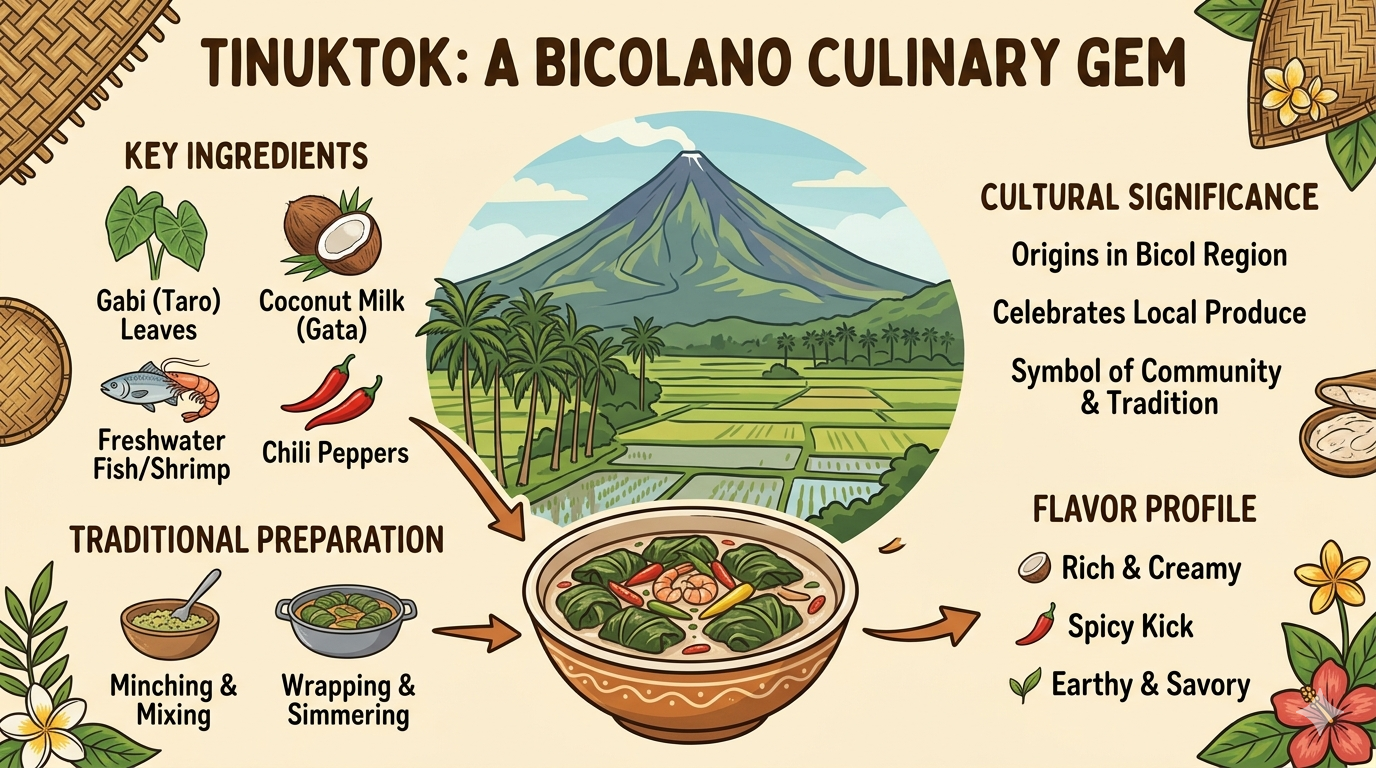
Visual summary of Tinuktok ingredients and preparation process.
Disclaimer
This article is for general informational and educational purposes only. It does not constitute professional medical, nutrition, or dietary advice. References to diets, foods, or supplements do not imply endorsement or guarantee of health outcomes. Readers are encouraged to consult licensed nutritionists, dietitians, or medical professionals for personalized guidance.

by Ramil Villar | Mar 21, 2026 | Awareness
Seasonal Considerations for Rhinoplasty: A General Safety Overview
How environmental factors across the year may relate to planning and recovery
Rhinoplasty is a procedure that modifies the structure of the nose for functional or structural purposes. While the procedure itself is not limited to a specific time of year, environmental conditions such as temperature, humidity, and seasonal health patterns may influence general comfort during recovery. This article outlines neutral, educational information on how seasonal factors may be considered in relation to rhinoplasty, with a focus on safety awareness and informed planning.
What is Rhinoplasty?
Rhinoplasty is a surgical procedure that alters the shape or internal structure of the nose. It may involve bone, cartilage, and soft tissue. The procedure is performed by licensed medical professionals, and outcomes vary depending on individual anatomy and healing response.
What Parts of the Nose Are Involved?
Key anatomical structures include:
- Nasal bones – upper structural support
- Cartilage – shapes the nasal tip and lower areas
- Septum – internal divider affecting airflow
- Skin and soft tissue – outer covering and support
Seasonal conditions do not change anatomy but may influence recovery comfort.
Rhinoplasty vs Septoplasty
- Rhinoplasty involves structural or external nasal changes
- Septoplasty focuses on correcting the nasal septum to improve airflow
Both procedures may be performed separately or together, depending on clinical evaluation.
Surgical vs Non-Surgical Nose Enhancement
Surgical Rhinoplasty
Involves permanent structural modification under controlled medical conditions.
Non-Surgical Nose Enhancement
Uses injectable materials to temporarily adjust contour. Effects are limited in scope and duration.
Typical Consultation Process (General Overview)
In educational settings, consultations typically include:
- Review of medical background
- Discussion of nasal structure
- Explanation of possible approaches
- General discussion of risks and recovery
Seasonal timing may be discussed, but decisions are based on medical considerations.
Seasonal Factors That May Affect Recovery (General Awareness)
Warm and Humid Conditions
In climates with higher temperatures and humidity, such as parts of the Philippines during summer months:
- Sweating may increase skin sensitivity
- Heat exposure may contribute to general discomfort
- Maintaining hygiene around the nasal area may require attention
Rainy Season Considerations
During periods of frequent rainfall:
- Higher incidence of respiratory infections may occur in the general population
- Environmental humidity remains elevated
- Travel conditions may be less predictable for follow-up visits
Cooler or Drier Periods
In relatively cooler or less humid periods:
- Some individuals report less sweating-related discomfort
- Dry air (in certain environments with air conditioning) may affect nasal passages
These factors do not determine outcomes but may influence personal comfort during recovery.
Common Risks and Complications (General Awareness)
Rhinoplasty may involve risks such as:
- Infection
- Bleeding
- Swelling and bruising
- Temporary or persistent breathing changes
- Structural irregularities
Seasonal conditions do not eliminate these risks but may interact with general health factors.
Recovery and Healing Timeline (General)
Typical recovery phases described in educational materials include:
- First 1–2 weeks: visible swelling and bruising
- Several weeks: gradual improvement
- Several months to one year: continued healing and tissue settling
Environmental comfort during these phases may vary depending on seasonal conditions.
Long-Term Considerations (Neutral)
Long-term results may be influenced by:
- Natural healing processes
- Individual biological variation
- Environmental exposure over time
Seasonal timing does not guarantee differences in long-term outcomes.
Context & Consumer Awareness
Under medical advertising and consumer protection standards, timing-related claims must avoid implying improved results based on season alone.
In patient education literature, it is generally noted that:
- There is no universally “ideal” season for rhinoplasty
- Medical readiness and professional evaluation are primary considerations
- Environmental comfort is a secondary, personal factor
Consumers are encouraged to verify medical information through licensed professionals and official health resources.
FAQ (Definition-Based)
Is there a specific season recommended for rhinoplasty?
There is no medically established “best” season. Timing depends on individual circumstances and clinical evaluation.
Can weather affect rhinoplasty recovery?
Weather may influence comfort levels, such as heat or humidity, but does not determine surgical outcomes.
Are respiratory conditions relevant when planning rhinoplasty?
General respiratory health may be discussed during consultation, as it can relate to overall readiness for procedures.
Trusted Sources
- Philippine Department of Health (DOH)
- U.S. Food and Drug Administration (FDA)
- Peer-reviewed journals such as Plastic and Reconstructive Surgery
- American Society of Plastic Surgeons (ASPS)
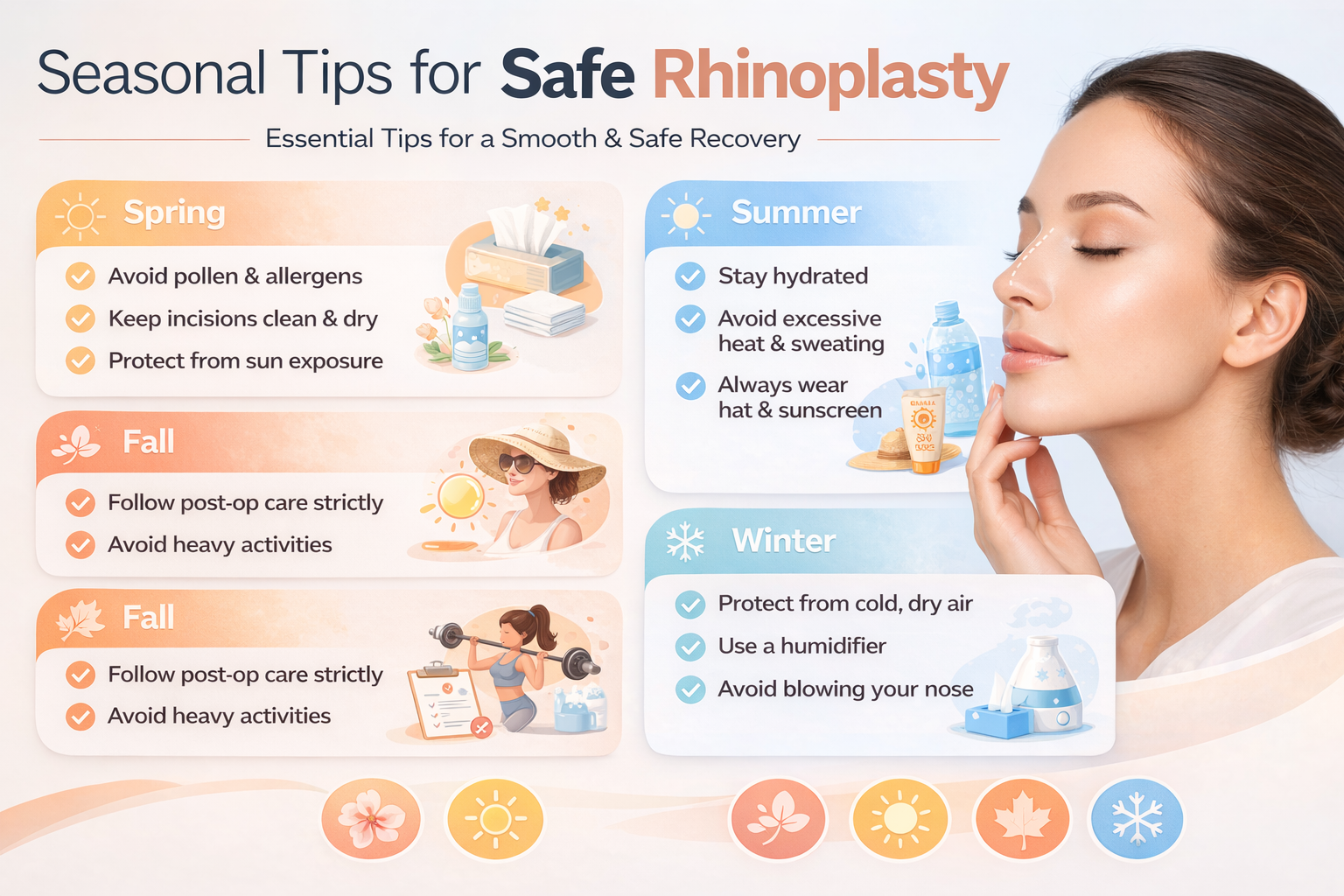
Infographic illustrating seasonal elements and general recovery phases
Disclaimer
This article is for general informational and educational purposes only. It does not constitute professional medical, surgical, diagnostic, or consumer purchasing advice. References to procedures, providers, or methods do not imply endorsement or guarantee of results. Readers are encouraged to consult licensed medical professionals and official resources before making any medical decision.

by Ramil Villar | Mar 21, 2026 | Awareness
Nose Surgery Planning for Summer Holidays: A General Educational Guide
A neutral overview of timing, recovery considerations, and planning factors for rhinoplasty around holiday periods.
Rhinoplasty is a procedure that modifies the structure of the nose for functional or structural reasons. Some individuals explore scheduling this procedure during extended breaks, such as summer holidays, due to potential flexibility in rest and recovery time. This article provides a general, non-promotional overview of planning considerations, recovery timelines, and consumer awareness factors when aligning rhinoplasty with holiday periods.
What is Rhinoplasty?
Rhinoplasty is a surgical procedure involving changes to nasal bone, cartilage, or soft tissue. It may address structural concerns affecting breathing or alter nasal shape. The procedure is performed by licensed medical professionals in appropriate clinical settings.
Why Timing is Considered in Planning
In general patient education discussions, timing may be considered for practical reasons such as:
- Availability of time for rest and reduced daily obligations
- Ability to attend follow-up visits
- Personal scheduling preferences
Summer holidays are one example of a period when some individuals have fewer work or school commitments. However, suitability depends on individual circumstances and medical evaluation.
General Recovery Timeline and Holiday Alignment
Recovery varies by individual, but general phases may include:
- First 7–10 days: Swelling, bruising, and possible use of nasal support devices
- 2–4 weeks: Gradual reduction in visible swelling
- Several months: Continued healing and structural settling
- Up to 1 year or more: Final outcomes stabilize
When aligning with a holiday period, individuals often consider whether the available time allows for initial recovery before resuming routine activities.
Environmental and Seasonal Considerations
During warmer months, general considerations may include:
- Increased exposure to sunlight
- Higher temperatures that may affect comfort during recovery
- Need for careful skin and wound care as advised by professionals
These factors are typically discussed during pre-procedure consultations.
Typical Planning Process (General Overview)
In educational settings, planning may involve:
- Scheduling a consultation in advance
- Reviewing medical history and current health status
- Discussing general recovery expectations
- Coordinating time for rest and follow-up visits
Licensed professionals determine appropriate timing based on clinical assessment.
Common Risks and Considerations
Rhinoplasty, like other surgical procedures, carries potential risks:
- Infection
- Bleeding
- Swelling or delayed healing
- Breathing-related concerns
- Structural irregularities
Risk awareness is part of informed decision-making and is typically discussed during consultation.
Long-Term Considerations
Outcomes may evolve over time due to:
- Natural aging
- Individual healing response
- Skin and tissue characteristics
Additional evaluation may be considered in some cases, depending on medical findings.
Context & Consumer Awareness
Under Philippine consumer protection and medical ethics standards, including guidance from the Department of Health, medical information must be accurate and not misleading.
Consumers are generally encouraged to:
- Verify the credentials of healthcare providers
- Confirm facility accreditation
- Review informed consent documents carefully
Planning around holidays should not replace individualized medical assessment.
FAQs
Is summer the required time for rhinoplasty?
No. Rhinoplasty can be scheduled at different times of the year depending on individual circumstances and medical advice.
How much time is usually needed before returning to normal activities?
Initial recovery may take a few weeks, but timelines vary depending on the individual and the procedure.
Does weather affect recovery?
Environmental factors such as heat and sun exposure may influence comfort during recovery, but effects vary and should be discussed with a licensed professional.
Trusted Sources
- Department of Health
- U.S. Food and Drug Administration
- Peer-reviewed medical journals in plastic and reconstructive surgery
- Recognized medical associations

Illustrated timeline of procedural stages and recovery phases
Disclaimer
This article is for general informational and educational purposes only. It does not constitute professional medical, surgical, diagnostic, or consumer purchasing advice. References to procedures, providers, or methods do not imply endorsement or guarantee of results. Readers are encouraged to consult licensed medical professionals and official resources before making any medical decision.

by Ramil Villar | Mar 19, 2026 | Awareness
Gentle Nose Refinement Procedures for Spring: An Educational Overview
A neutral guide to subtle nose enhancement approaches and seasonal considerations
Gentle nose refinement refers to medical or minimally invasive approaches that aim to adjust or refine aspects of nasal structure in a subtle manner. These approaches may include both surgical and non-surgical methods, depending on the extent of structural change involved. This article provides a general overview of these procedures, including how they differ, what areas of the nose may be involved, and important safety and recovery considerations. Seasonal references, such as “spring,” are discussed in a general context and do not imply timing recommendations.
What is Gentle Nose Refinement?
Gentle nose refinement is a non-clinical term often used in patient education to describe procedures that involve relatively minor or targeted adjustments to nasal shape or contour. These adjustments may involve:
- Smoothing minor irregularities
- Adjusting symmetry
- Refining specific nasal areas such as the tip or bridge
The extent and method of refinement depend on individual anatomy and clinical evaluation.
What Parts of the Nose Are Involved?
Refinement procedures may involve one or more nasal structures:
- Nasal bridge (dorsum) – the upper contour of the nose
- Nasal tip – the lower, more flexible portion
- Cartilage structures – responsible for shape and support
- Skin and soft tissue – affect surface appearance and healing response
The specific areas addressed vary by procedure type.
Surgical vs Non-Surgical Refinement Options
Surgical Rhinoplasty (Minor Adjustments)
- Involves structural modification of cartilage or bone
- May be used for precise reshaping
- Typically requires anesthesia and recovery time
Non-Surgical Nose Enhancement
- Uses injectable materials such as dermal fillers
- Temporary and reversible in some cases
- Limited to contour changes without altering internal structure
Non-surgical methods do not address functional concerns such as breathing issues.
Typical Consultation Process (General Overview)
In general medical practice, a consultation may include:
- Review of medical and surgical history
- Discussion of structural characteristics of the nose
- Assessment of skin thickness and cartilage support
- Explanation of potential approaches and limitations
Licensed professionals evaluate whether a procedure is appropriate based on safety and anatomical considerations.
Seasonal Considerations (General Awareness)
Seasonal references like “spring” are sometimes mentioned in public discussions, but there is no universal medical requirement to undergo nose procedures during a specific season. However, general considerations may include:
- Environmental factors such as heat, humidity, or allergens
- Personal scheduling and availability for recovery time
- Sun exposure, which may affect healing skin
These factors vary by location and individual circumstances.
Common Risks and Complications (General Awareness)
Potential risks associated with nose refinement procedures may include:
- Swelling and bruising
- Infection
- Bleeding
- Temporary or persistent asymmetry
- Skin sensitivity or irritation (for non-surgical methods)
- Need for additional procedures or adjustments
Risk levels differ depending on the method used and individual health factors.
Recovery and Healing Timeline (General)
Recovery varies depending on the type of procedure:
- Non-surgical methods:
Mild swelling or redness may occur and typically resolves within days
- Surgical procedures:
Initial swelling and bruising may last several weeks
Gradual refinement may continue over several months
Healing timelines differ across individuals.
Long-Term Considerations (Neutral)
- Surgical changes are generally long-lasting but may evolve with natural aging
- Non-surgical enhancements require maintenance as effects diminish over time
- Outcomes depend on anatomy, technique, and healing response
Expectations are typically discussed during consultation, with emphasis on variability.
Context & Consumer Awareness
Under Philippine consumer protection and medical ethics standards:
- Medical procedures must be presented without guaranteed outcomes
- Public-facing information should remain factual and non-deceptive
- Patients are encouraged to verify the credentials of licensed practitioners
- Informed consent is a standard requirement before any procedure
In patient education literature, individuals considering refinement procedures are generally advised to seek information from licensed professionals and official health resources.
FAQs
What does “gentle” mean in nose refinement?
It generally refers to subtle or limited adjustments rather than major structural changes. The term is descriptive and not a formal medical classification.
Are non-surgical nose procedures permanent?
No. Most non-surgical methods, such as dermal fillers, are temporary and require repeat treatments over time.
Is there a specific season recommended for these procedures?
There is no universal medical recommendation for a specific season. Timing depends on individual circumstances and professional evaluation.
Trusted Sources
- Philippine Department of Health (DOH) – Public health information
- U.S. Food and Drug Administration (FDA) – Guidance on injectable materials
- Peer-reviewed journals in plastic and reconstructive surgery
- International Society of Aesthetic Plastic Surgery (ISAPS) educational materials
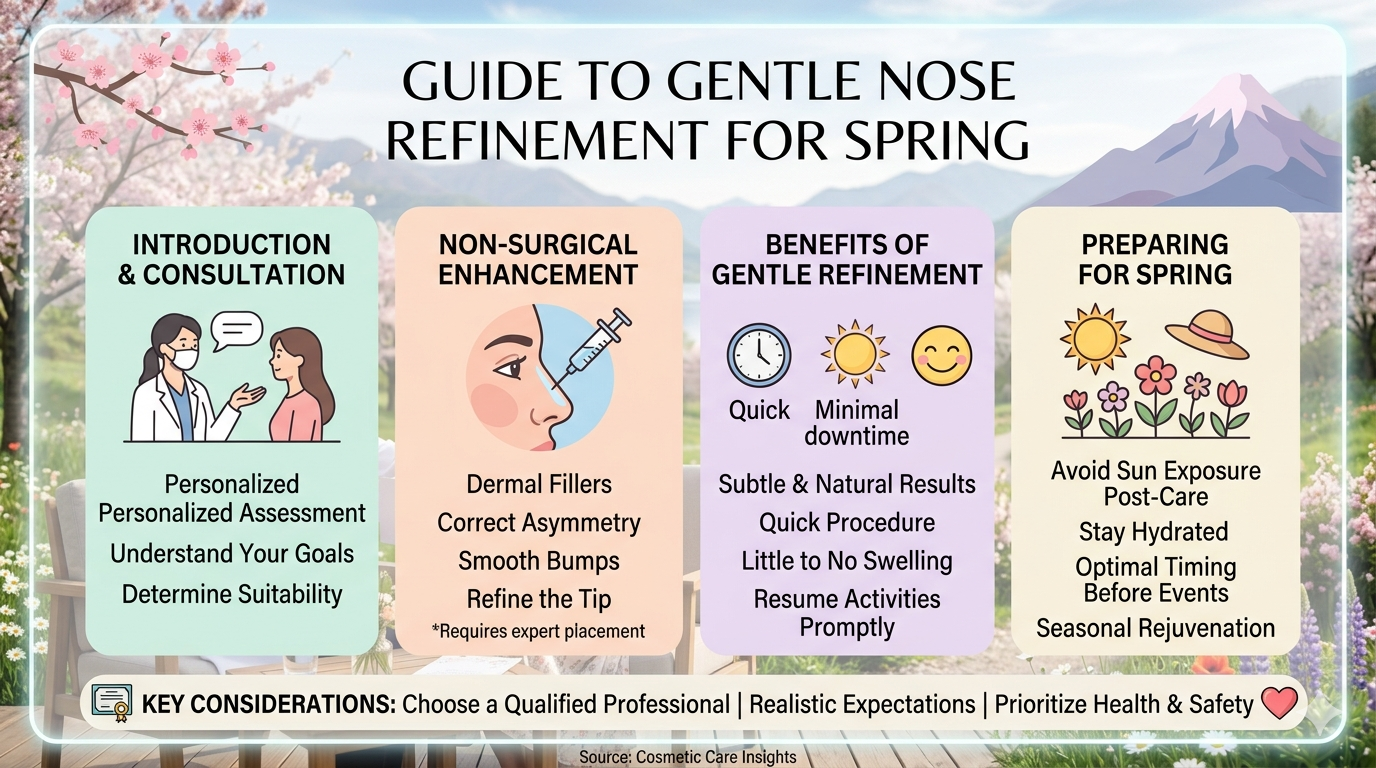
Visual layout of nasal structure and refinement method categories
Disclaimer
This article is for general informational and educational purposes only. It does not constitute professional medical, surgical, diagnostic, or consumer purchasing advice. References to procedures, providers, or methods do not imply endorsement or guarantee of results. Readers are encouraged to consult licensed medical professionals and official resources before making any medical decision.

by Ramil Villar | Mar 15, 2026 | Awareness
Understanding Eye Makeup and Eye Hydration: An Educational Overview of Light Smokey Eyes and Ocular Comfort
Neutral information on cosmetic eye styling and basic eye hydration considerations.
Cosmetic eye makeup techniques are widely discussed in beauty and lifestyle media. One commonly referenced style is the light smokey eye, which involves soft shading around the eyelids. Separately, eye hydration refers to maintaining adequate moisture on the surface of the eyes. This article explains these two topics from an educational perspective, including general cosmetic practices and basic eye health considerations often referenced in ophthalmology and consumer safety guidance.
Cosmetic Eye Styling: What Is a Light Smokey Eye?
A light smokey eye is a cosmetic makeup style that uses gradual shading around the eyelid area. The technique typically involves applying darker and lighter tones of eye shadow to create soft contrast near the lash line and outer eyelid.
In general makeup discussions, this style may include:
- A light or neutral base color on the eyelid
- Slightly darker tones blended toward the outer corner of the eye
- Soft eyeliner application near the lashes
- Blending techniques that reduce sharp edges between colors
Cosmetic practices vary depending on personal preference, cultural trends, and available products. The appearance produced by makeup techniques may differ across individuals because of variations in skin tone, eyelid shape, lighting conditions, and cosmetic formulas.
When applying eye makeup, hygiene practices are commonly recommended in consumer safety guidance. These may include:
- Using clean brushes or applicators
- Avoiding the use of expired cosmetic products
- Removing eye makeup before sleep to reduce residue near the eyelids
These practices are often referenced in dermatology and ophthalmology discussions regarding cosmetic use around the eye area.
Eye Hydration: Basic Concepts
Eye hydration refers to the presence of sufficient moisture on the ocular surface. The tear film—a thin layer of liquid covering the eye—helps maintain lubrication and contributes to visual clarity and comfort.
The tear film generally consists of three layers:
- Lipid layer – helps reduce evaporation
- Aqueous layer – provides moisture and nutrients
- Mucin layer – helps tears spread evenly across the eye surface
When tear production or tear stability changes, individuals may experience symptoms associated with dry eye, a condition discussed in ophthalmology research.
Common factors associated with ocular dryness may include:
- Extended screen use
- Environmental conditions such as wind or air conditioning
- Contact lens wear in some individuals
- Age-related changes in tear production
Understanding these factors can help explain why eye comfort may vary in different situations.
Interaction Between Eye Cosmetics and Eye Comfort
Eye cosmetics are typically applied close to sensitive areas of the eyelids and eyelashes. In consumer health literature, some considerations are often mentioned when discussing cosmetic use near the eyes.
These considerations may include:
- Avoiding cosmetic products inside the eye
- Ensuring that products are designed for use near the eyes
- Removing makeup gently to avoid irritation around the eyelids
Some individuals may notice temporary irritation if cosmetic particles enter the eye surface. When irritation occurs, discontinuing product use and rinsing the eye area with clean water is sometimes discussed in general eye safety guidance.
Hypothetical example:
A person applies blended eye shadow for a light smokey style before attending an event. Later in the evening, minor eye discomfort occurs due to residual makeup particles near the lashes. Removing the makeup with a gentle cleanser may help reduce residue around the eyelids.
This example illustrates how cosmetic practices and eye comfort can sometimes interact.
Context: Eye Care and Consumer Safety
In ophthalmology and consumer health discussions, maintaining eye comfort typically involves routine habits that reduce strain and irritation. These may include regular blinking during screen use, adequate lighting when reading, and maintaining hygiene when using cosmetics near the eye area.
Under consumer protection standards, including the Consumer Act of the Philippines (RA 7394), marketing claims about cosmetic or health outcomes should avoid misleading statements. As a result, educational discussions about eye care often focus on factual information rather than promises of specific cosmetic or visual results.
Public health organizations such as the Department of Health (DOH) and Food and Drug Administration Philippines (FDA Philippines) provide regulatory oversight regarding health products and consumer safety communications.
FAQ
What is a smokey eye in makeup?
A smokey eye is a cosmetic eye makeup style that blends darker and lighter shades of eye shadow around the eyelids. The technique creates soft shading rather than sharp lines.
What does eye hydration mean?
Eye hydration refers to maintaining sufficient moisture on the surface of the eyes through the tear film. Proper tear balance helps support lubrication and ocular comfort.
Why can eye dryness occur during screen use?
During prolonged screen viewing, people may blink less frequently. Reduced blinking may influence how tears spread across the eye surface, which can contribute to dryness in some situations.
Trusted Sources
- Department of Health (DOH) Philippines — Public health advisories on eye health
- Food and Drug Administration (FDA Philippines) — Consumer safety and product regulation
- American Academy of Ophthalmology (AAO) — Educational resources on eye conditions
- National Eye Institute (NEI), U.S. National Institutes of Health — Research and public education on vision science
- Peer-reviewed ophthalmology journals on tear film and ocular surface health
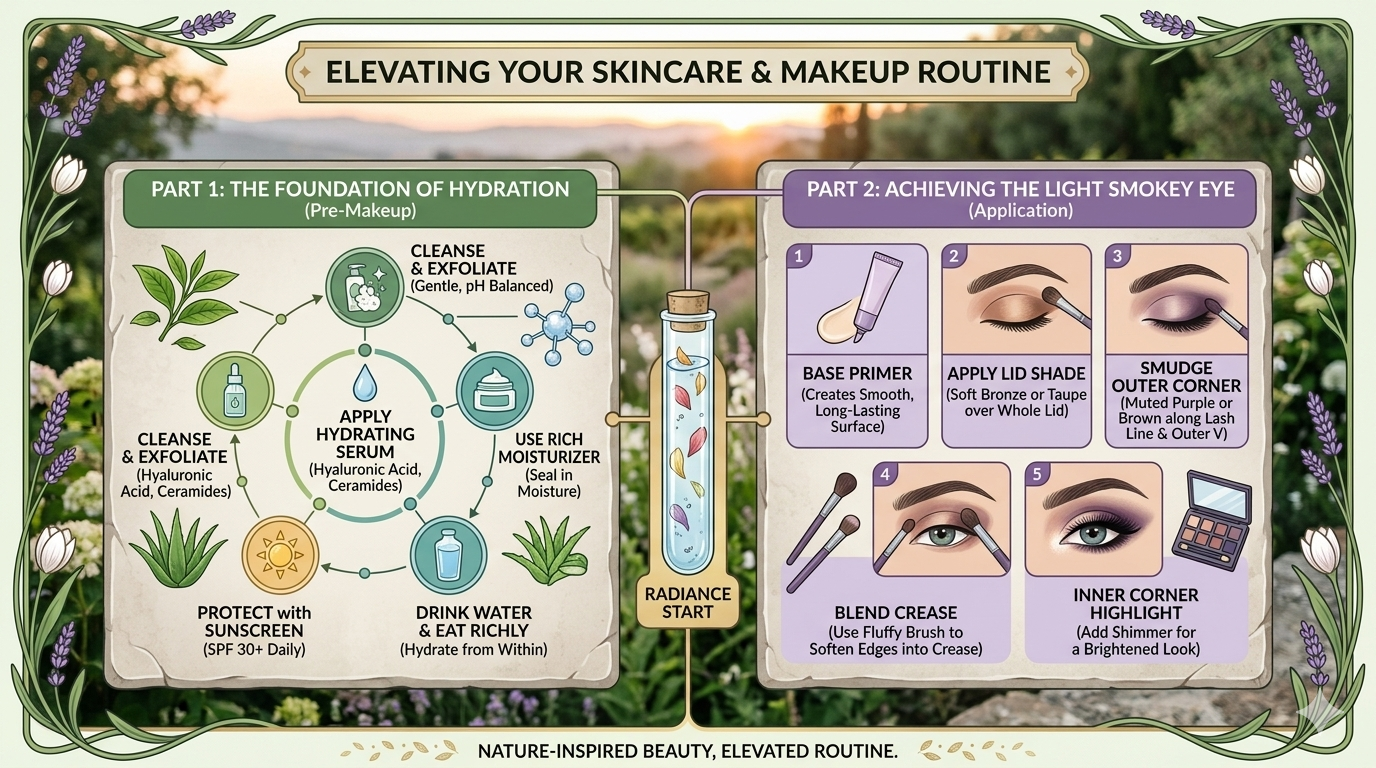
Visual infographic presenting smokey eye shading elements and a simplified diagram of tear film layers.
Disclaimer:
This article is for general informational and educational purposes only. It does not constitute professional medical, ophthalmological, or consumer purchasing advice. References to procedures, products, or clinics do not imply endorsement or guarantee of results. Readers are encouraged to consult licensed eye care professionals and verified resources for vision health decisions.