Routes Americas 2026 takeaways
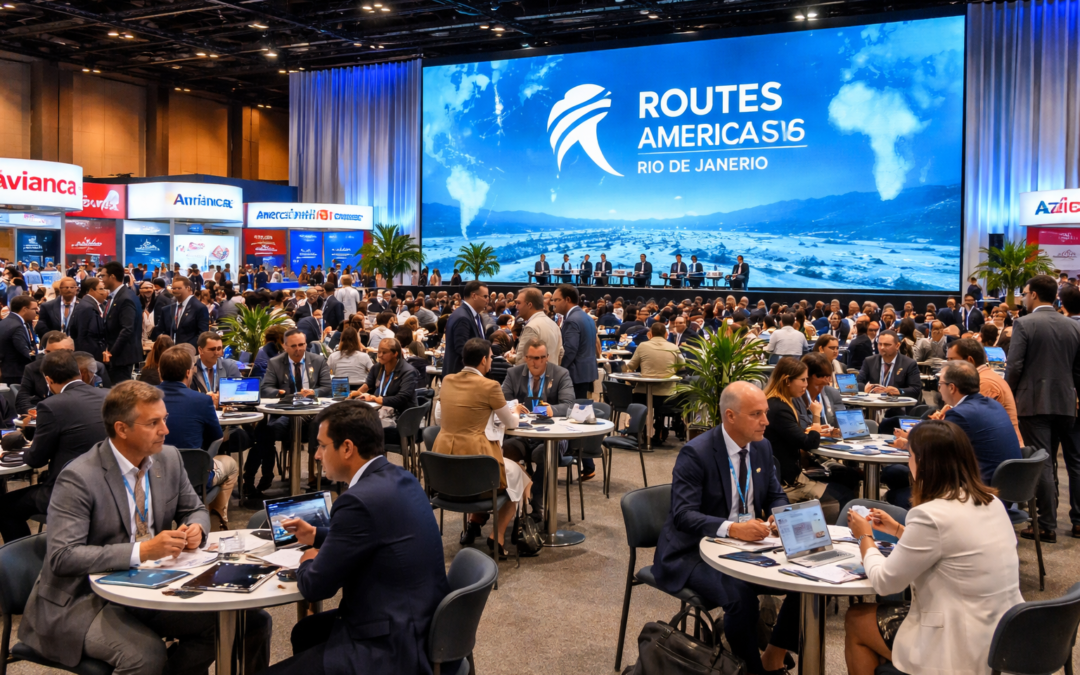
Routes Americas 2026 took place 3–5 March 2026 in Rio de Janeiro, Brazil, bringing together airlines, airports, and tourism authorities to discuss air-service development and route planning across the Americas.
Below are the main industry takeaways reported from conference discussions, airline briefings, and destination meetings.
Key Takeaways from Routes Americas 2026
1. Strong Focus on Expanding Regional and International Connectivity
Airlines, airports, and tourism authorities held thousands of bilateral meetings to negotiate new air routes and capacity increases across North, Central, and South America.
Key drivers discussed:
-
Growing demand for international leisure travel
-
Recovery and expansion of regional air networks
-
New opportunities for secondary airports to attract long-haul flights
These negotiations often form the basis for future route announcements within 12–24 months.
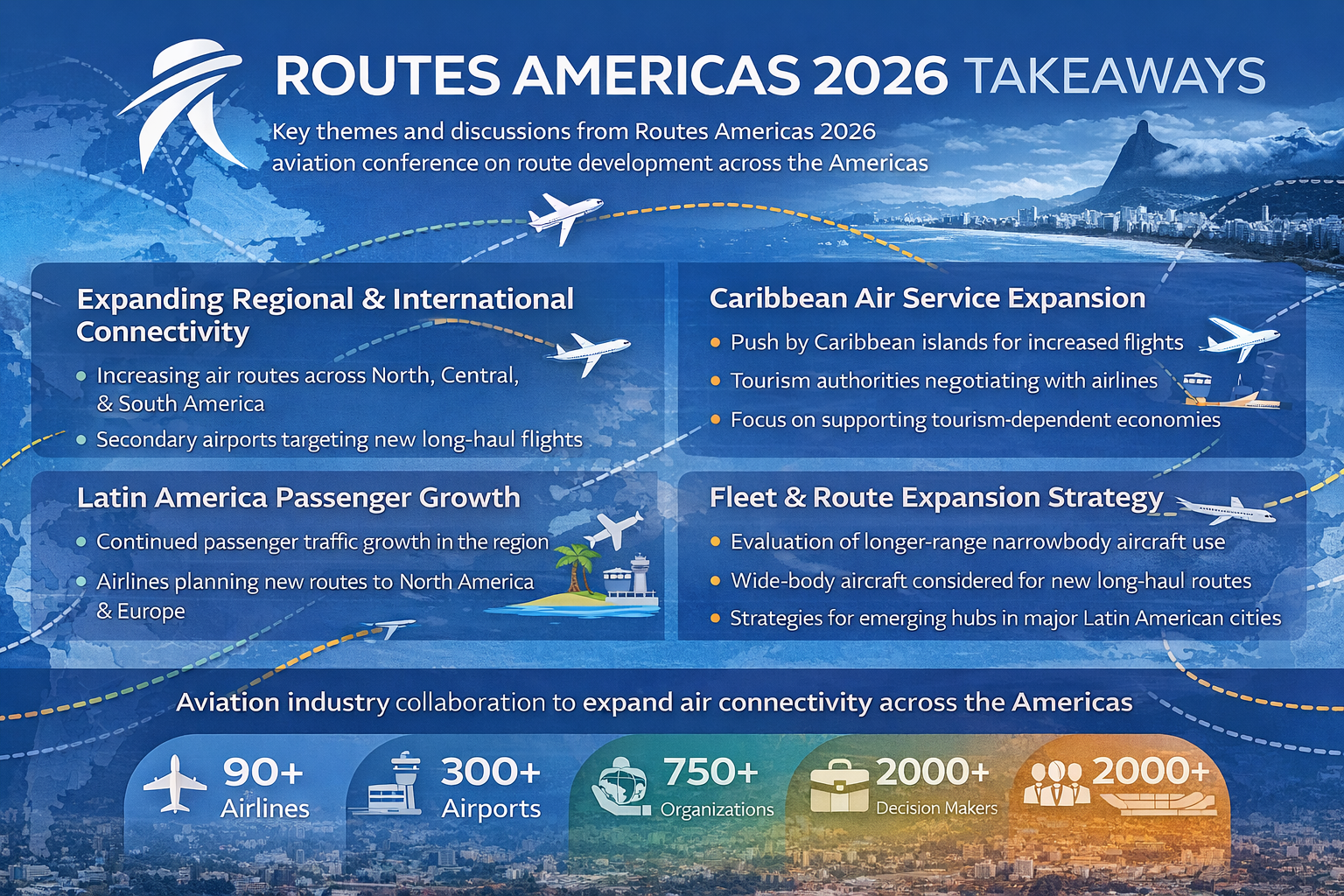
Visual summary of topics presented during Routes Americas 2026 industry sessions.
2. Caribbean Destinations Pushing for More Airlift
Several Caribbean territories used the conference to secure airline partnerships and improve connectivity.
For example, the United States Virgin Islands tourism authorities met with major airlines to discuss increasing flights to the territory, aiming to improve access for visitors and support the local tourism economy.
Air service expansion in the Caribbean was widely discussed because many island economies depend heavily on reliable aviation links.
3. Latin America Passenger Growth Driving Network Planning
Data shared during industry discussions highlighted continued passenger growth in Latin America, with regional traffic increasing in recent years.
Implications for airlines and airports include:
-
Increased competition for new routes
-
Expansion of hub strategies in large markets such as Brazil
-
Greater interest in connecting Latin America with North America, Europe, and emerging long-haul markets.
4. Airlines Evaluating Fleet Strategy for Route Expansion
Aircraft range and fleet composition were major topics in airline briefings.
Examples discussed across the industry include:
-
Deployment of longer-range narrowbody aircraft to open thinner international routes.
-
Airlines exploring wide-body aircraft for new long-haul services from emerging hubs.
For instance, GOL Linhas Aéreas announced plans to use wide-body aircraft to launch new long-haul routes from Rio, including services to cities such as New York, Paris, and Lisbon.
5. Collaboration Between Airlines, Airports, and Tourism Authorities
A central theme of the event was cross-industry collaboration.
Conference panels explored:
-
Joint airline–destination marketing strategies
-
Tourism-driven route development
-
Regional partnerships to strengthen sustainable air connectivity.
This approach reflects a broader industry trend where air service development is increasingly coordinated between multiple stakeholders, rather than airlines acting alone.
6. Airports Competing to Attract New Routes
Airports across the Americas used the event to present route proposals to airline network planners.
The Routes Americas Awards, held during the conference, recognized airports and destinations for effective route development strategies.
This competition highlights how airports now invest heavily in:
-
market research
-
incentive frameworks
-
airline partnerships.
Summary
Major takeaways from Routes Americas 2026 include:
-
Continued expansion of air connectivity across the Americas
-
Strong demand for Caribbean and tourism-driven routes
-
Latin American passenger growth influencing airline network strategies
-
Fleet modernization enabling new long-haul and “thin” routes
-
Increasing collaboration between airlines, airports, and tourism authorities.
The conference reinforced the role of route development forums in shaping future airline networks across the Americas region.