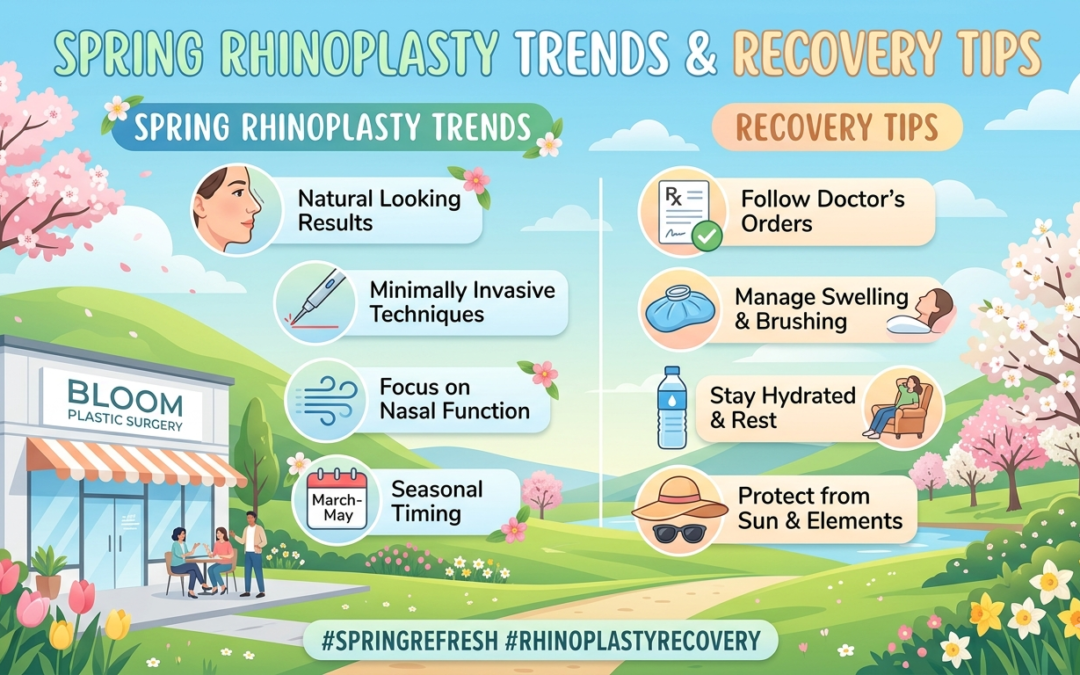
Spring Rhinoplasty Trends & Recovery Tips
Spring Rhinoplasty Trends & Recovery Tips: An Educational Overview
Seasonal patterns and general recovery considerations for nose enhancement procedures
Rhinoplasty trends and recovery discussions often vary by season due to scheduling patterns, lifestyle factors, and evolving medical practices. This article provides a neutral, educational overview of commonly discussed rhinoplasty trends during the spring period and general recovery considerations based on patient education literature. The focus is on awareness, not promotion.
What Are “Spring Rhinoplasty Trends”?
“Spring trends” in rhinoplasty generally refer to patterns in patient interest, scheduling, and procedural approaches observed early in the year.
Timing and Seasonal Planning
Some individuals schedule procedures earlier in the year to allow recovery time before mid-year activities. Educational sources note that recovery periods may align with seasonal planning, as healing progresses over several weeks to months.
Preference for Natural-Looking Structural Changes
Recent discussions in medical aesthetics emphasize subtle structural adjustments rather than dramatic alterations. This reflects broader trends toward individualized treatment planning rather than standardized outcomes.
Continued Interest in Non-Surgical Options
Non-surgical nose enhancement (such as dermal fillers) remains part of general aesthetic trends due to:
- Shorter recovery periods
- Temporary effects
- Incremental changes
These approaches differ from surgical rhinoplasty in scope and duration.
Increased Focus on Consultation and Planning
Spring periods are often associated with consultations and evaluations. Licensed professionals typically assess anatomy, medical history, and expectations before discussing any procedure.
General Recovery Timeline (Educational Overview)
Recovery after rhinoplasty occurs in phases and varies by individual.
- Week 1: Swelling, bruising, and congestion are common; protective splints may be used
- Weeks 2–4: Visible swelling begins to decrease; light daily activities may resume
- 1–3 months: Continued refinement as swelling reduces
- 6–12 months: Final structural stabilization may take up to one year
Healing timelines differ depending on anatomy, surgical technique, and overall health.
General Recovery Tips (Non-Prescriptive, Educational)
Patient education materials commonly describe the following recovery considerations:
Rest and Positioning
- Keeping the head elevated during rest may help reduce swelling
- Adequate sleep supports overall healing
Managing Swelling
-
Cool compresses applied to surrounding areas (not directly on the nose) are sometimes used in early recovery
Activity Limitations
- Strenuous physical activity is typically limited during early healing
- Pressure on the nose (e.g., from eyewear) is generally avoided during initial recovery
Environmental Factors
- Heat exposure may contribute to increased swelling
- Sun protection is commonly advised during healing phases
Nutrition and Hydration
- Balanced nutrition supports tissue repair
- Adequate hydration is associated with general recovery support
These are general observations from educational sources. Individual instructions are provided by licensed healthcare professionals.
Common Recovery Experiences
During recovery, individuals may experience:
- Temporary swelling and bruising
- Nasal congestion
- Mild discomfort
- Gradual changes in nasal appearance over time
These effects are part of the normal healing process in many cases, though experiences vary.
Context & Consumer Awareness
Under medical advertising and consumer protection standards:
- Recovery timelines are estimates, not guarantees
- Outcomes differ between individuals
- Surgical approaches (such as open or closed rhinoplasty) may influence swelling and healing duration
In patient education literature, informed consent includes understanding recovery variability, risks, and limitations before undergoing any procedure.
FAQ (Definitions Only)
Why is spring often discussed in rhinoplasty planning?
Spring is sometimes associated with recovery planning timelines, as individuals may consider scheduling earlier in the year. This is a general pattern, not a medical requirement.
How long does swelling last after rhinoplasty?
Swelling is most noticeable in the first few weeks and gradually decreases over several months. Minor swelling may persist for up to a year.
Are non-surgical nose enhancements permanent?
No. Non-surgical options such as fillers are temporary and require repeat treatments to maintain effects.
Trusted Sources
- Philippine Department of Health (DOH) – Public health guidance
- U.S. Food and Drug Administration (FDA) – Medical safety information
- Cleveland Clinic – Patient education materials
- StatPearls (NCBI) – Clinical reference resources
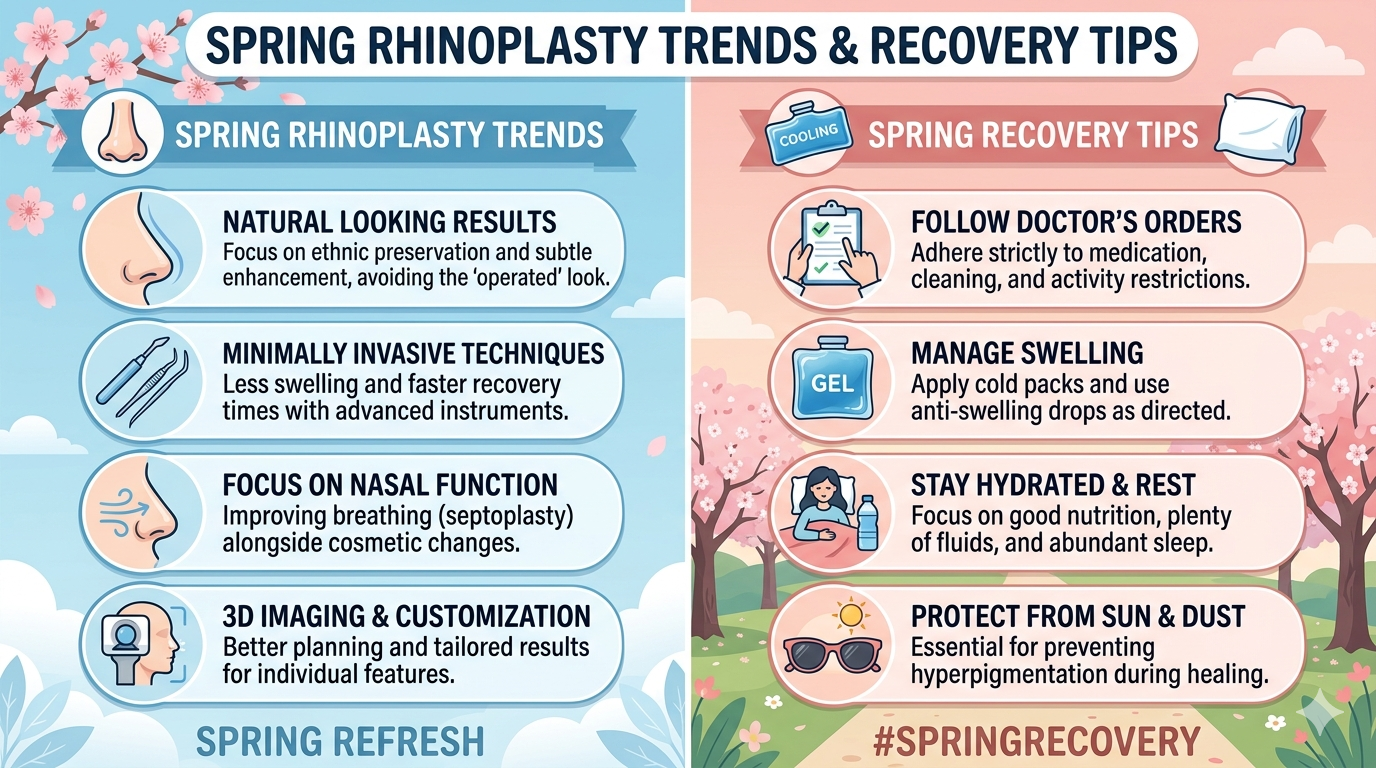
Structured infographic showing recovery phases and seasonal trend references
Disclaimer
This article is for general informational and educational purposes only. It does not constitute professional medical, surgical, diagnostic, or consumer purchasing advice. References to procedures, providers, or methods do not imply endorsement or guarantee of results. Readers are encouraged to consult licensed medical professionals and official resources before making any medical decision.