by Ramil Villar | Mar 16, 2026 | Skin Care Education
Metallic Glow Serums and Hydration: An Educational Overview of Cosmetic Formulations
A neutral explanation of how metallic or reflective cosmetic serums relate to hydration-focused skin care products.
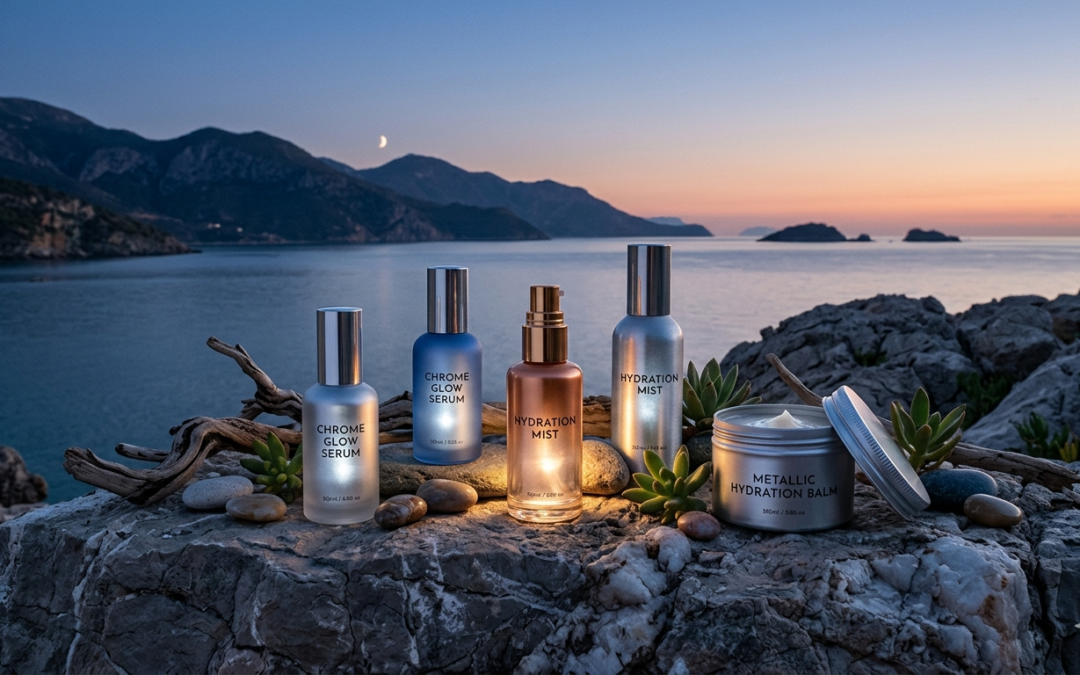
Metallic glow serums are cosmetic products sometimes described in beauty and skin care discussions due to their reflective or luminous appearance. These formulations may combine ingredients commonly used for hydration with pigments or particles that create a light-reflective effect on the skin’s surface. In the Philippines, cosmetic products fall under regulatory oversight by the Food and Drug Administration (FDA) within the Department of Health (DOH), and marketing practices are subject to consumer protection provisions such as the Consumer Act of the Philippines (RA 7394). Educational discussions of these products generally focus on formulation characteristics, ingredient categories, and the role of hydration in skin care routines.
What Are Metallic Glow Serums?
In cosmetic terminology, a serum typically refers to a lightweight liquid or gel-based product applied to the skin.
When described as “metallic glow”, the product may contain:
- Reflective mineral or synthetic pigments
- Fine particles designed to scatter light
- Hydrating base ingredients
These elements can produce a temporary luminous or reflective visual effect on the skin surface. The appearance comes from optical properties rather than changes to the structure of the skin.
Hydration in Skin Care Products
Hydration-focused products are designed to support moisture levels in the outer layer of the skin, known as the epidermis.
Many cosmetic formulations intended for hydration contain ingredient categories such as:
Humectants
Substances that attract water to the skin surface. Examples discussed in cosmetic science literature include glycerin and hyaluronic acid.
Emollients
Ingredients that help smooth or soften the skin surface by filling small gaps between skin cells.
Occlusives
Ingredients that form a thin barrier on the skin surface, which may help reduce moisture loss.
In some metallic glow serums, these hydration-related ingredients are combined with light-reflective particles to create both a moisturizing base and a visual effect.
Cosmetic Pigments and Reflective Particles
The reflective quality in metallic-style serums often comes from cosmetic pigments or minerals.
Examples commonly discussed in cosmetic formulation research include:
- Mica-based pigments
- Synthetic fluorphlogopite
- Iron oxides or coated mineral particles
These materials are used in various cosmetics such as highlighters, foundations, and illuminating serums. Their role is primarily optical, meaning they affect how light interacts with the surface of the skin.
Product Safety and Consumer Awareness
Consumers are generally encouraged to review product labeling and ingredient lists when evaluating cosmetic items.
Educational consumer awareness practices include:
- Checking ingredient labels for known sensitivities
- Reviewing official product notifications where available through regulatory agencies
- Conducting a small patch test before wider application
Regulatory authorities such as the Philippine FDA oversee the notification and safety monitoring of cosmetic products distributed in the country.
Context: Cosmetic Science and Skin Hydration
In cosmetic science research, hydration is often discussed in relation to maintaining the outer skin barrier. Products designed for topical use may incorporate combinations of humectants, emollients, and other ingredients to support surface moisture.
Reflective pigments, when included in cosmetic products, function independently from hydration ingredients. Their purpose is generally visual rather than structural or therapeutic.
Understanding this distinction helps clarify how certain cosmetic products combine aesthetic effects with common skin care formulation techniques.
Frequently Asked Questions
What is a cosmetic serum?
A cosmetic serum is typically a lightweight liquid or gel-based formulation designed for topical application to the skin. Serums often contain concentrated cosmetic ingredients and are commonly used within skin care routines.
What does “metallic glow” mean in cosmetic products?
The term usually refers to a reflective or luminous appearance created by light-scattering pigments or particles within the formulation.
Why do some skin care products include hydrating ingredients?
Hydrating ingredients are used in cosmetic formulations to support moisture levels in the outer layer of the skin and help maintain the skin barrier.
Trusted Sources
- Department of Health (DOH), Philippines
- Food and Drug Administration (FDA) Philippines — Cosmetic Regulation
- International Journal of Cosmetic Science
- American Academy of Dermatology (AAD) educational materials
- World Health Organization (WHO) public health resources
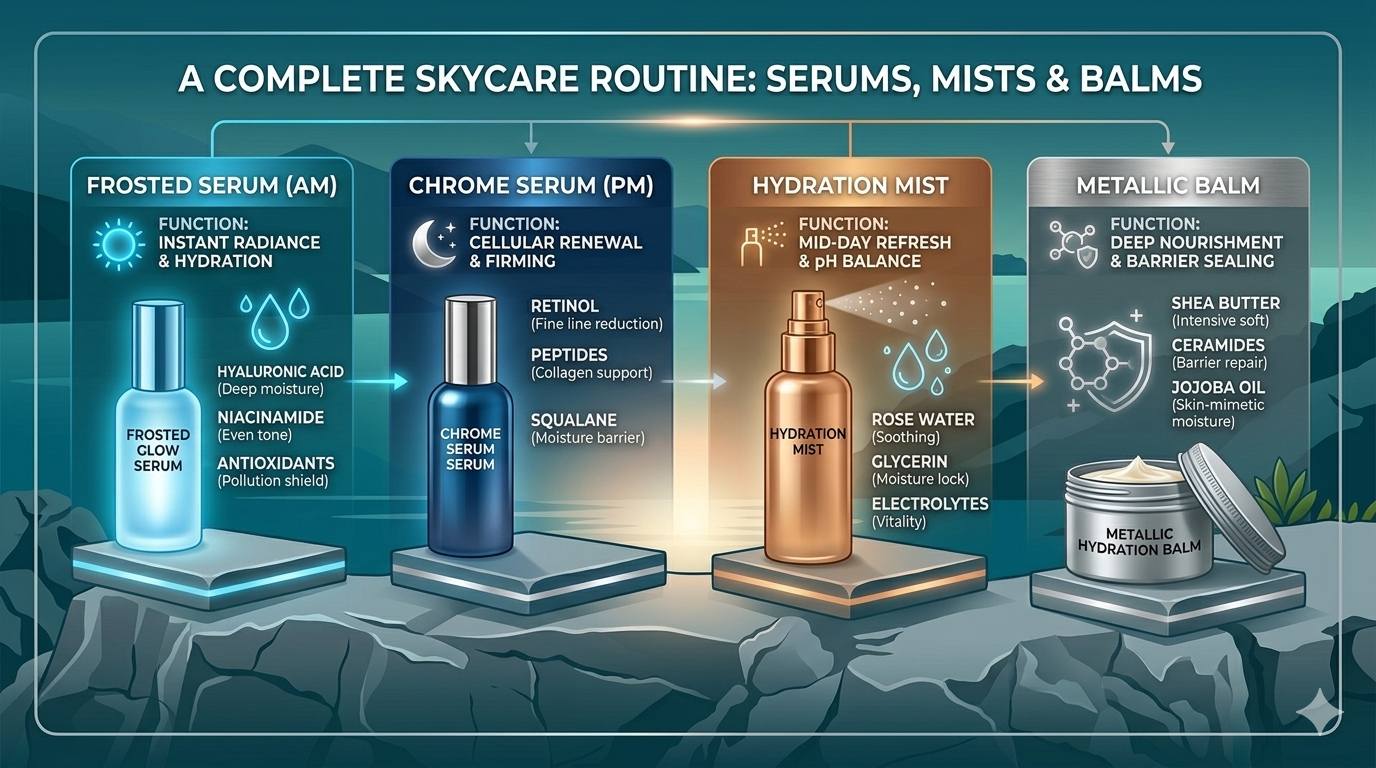
Visual diagram illustrating reflective pigments and hydration-related ingredients within cosmetic serum formulations.
Disclaimer:
This article is for general informational and educational purposes only. It does not constitute professional medical, dermatological, or consumer purchasing advice. References to products, routines, or treatments do not imply endorsement or guarantee of results. Readers are encouraged to consult licensed dermatologists and verified resources for skin care decisions.
by Ramil Villar | Mar 16, 2026 | Skin Care Education
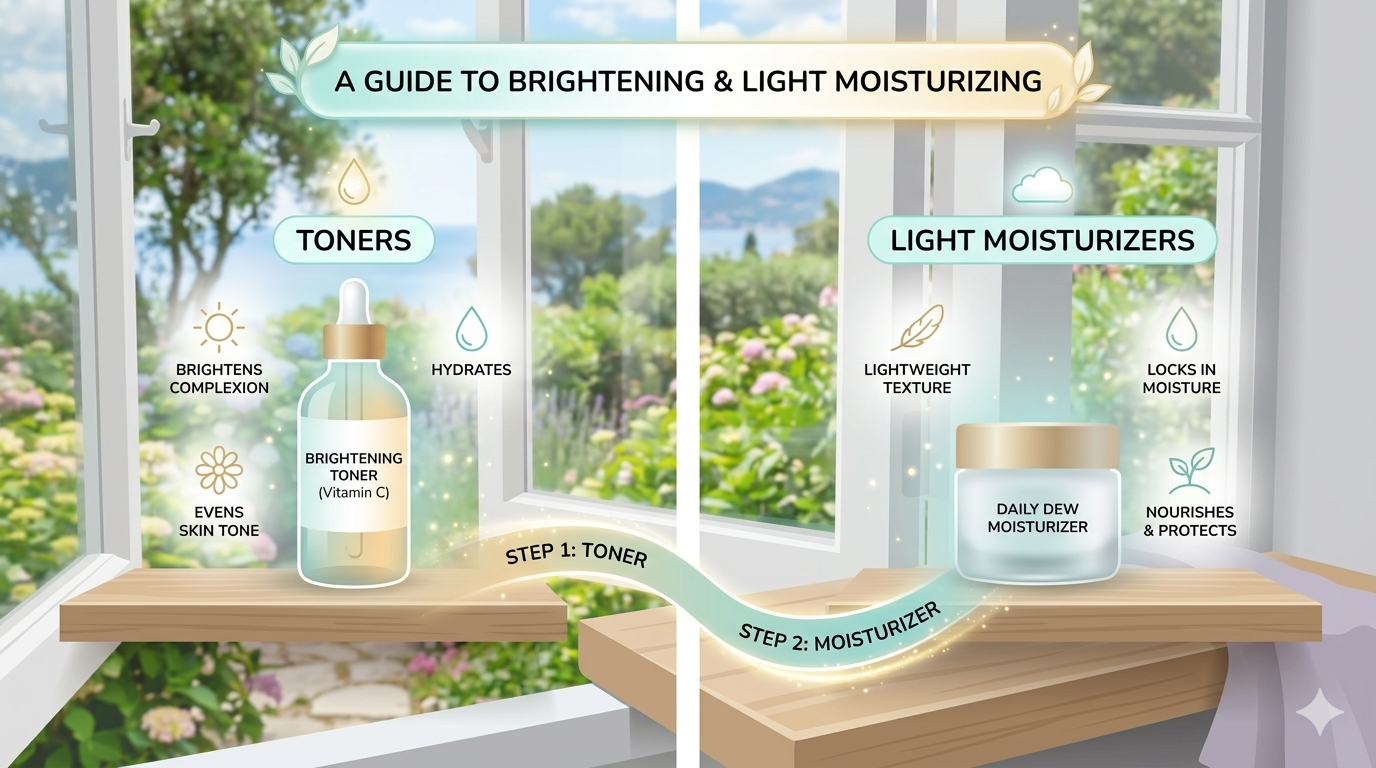
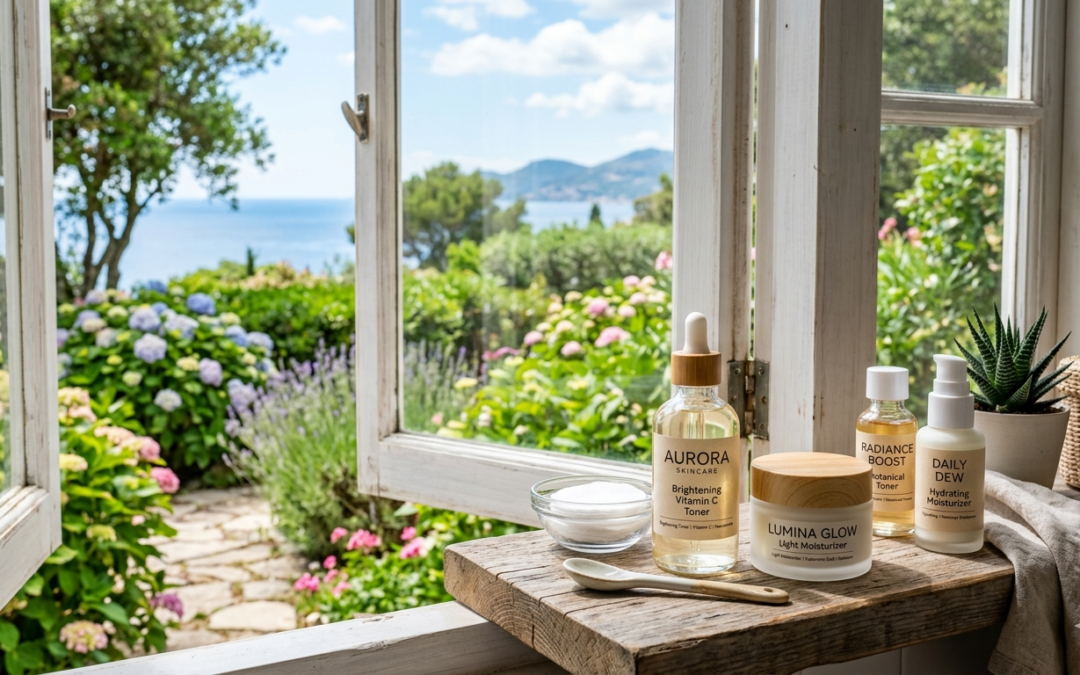
Visual diagram outlining toner and moisturizer product categories and formulation components.
Brightening Toners and Light Moisturizers: An Educational Overview of Two Skin Care Product Categories
A neutral explanation of toners and lightweight moisturizers commonly discussed in skin care routines.
Skin care routines sometimes include products described as “brightening toners” and “light moisturizers.” These product categories are commonly referenced in cosmetic and dermatology discussions about maintaining skin hygiene and hydration. In the Philippines, cosmetic products are monitored under consumer protection and safety frameworks administered by agencies such as the Food and Drug Administration Philippines and the Department of Health.
This article explains how these product categories are generally defined, how they are used in routine skin care discussions, and the types of ingredients that may appear in publicly available product descriptions.
What Are Toners?
Toners are liquid cosmetic products typically applied after cleansing the skin. In dermatology and cosmetic science references, toners are often described as products intended to help remove residual impurities or prepare the skin surface before additional products are applied.
Some toners are labeled by manufacturers as “brightening.” In product descriptions, this label often refers to ingredients associated with skin tone appearance or surface clarity. The term “brightening” is a marketing descriptor and does not represent a standardized medical outcome.
Examples of ingredient categories that may appear in toner formulations include:
- Humectants such as glycerin or hyaluronic acid
- Plant-derived extracts used in cosmetic formulations
- Mild exfoliating ingredients such as certain alpha hydroxy acids (AHAs) in regulated concentrations
- Vitamin-related compounds, including derivatives associated with antioxidant research
Ingredient lists and concentration levels vary between products.
What Are Light Moisturizers?
Light moisturizers refer to topical skin care products designed with thinner textures compared with heavier creams or ointments. Cosmetic descriptions may use terms such as “lotion,” “gel,” or “water-based moisturizer” to indicate lighter formulations.
Moisturizers are generally discussed in dermatology literature as products that support hydration by helping reduce moisture loss from the outer skin layer. Light moisturizers are often described as suitable for situations where heavier textures may feel uncomfortable, such as warm climates or humid environments.
Typical components in moisturizer formulations may include:
- Humectants – ingredients that attract water to the skin surface
- Emollients – ingredients that soften and smooth the skin surface
- Occlusive agents – ingredients that help reduce water evaporation from the skin barrier
The specific combination and concentration of ingredients differ across manufacturers.
How These Products May Appear in Skin Care Routines
In educational descriptions of skin care routines, toners and moisturizers are sometimes discussed in a sequence following cleansing.
A hypothetical example used in educational contexts may involve a person applying a cleanser, followed by a toner, and later a moisturizer. This example illustrates how product categories may be layered within routines; it does not imply that every routine requires these steps.
Individual routines may vary depending on skin preferences, environmental conditions, and personal product selection.
Context: Cosmetic Labeling and Consumer Awareness
Cosmetic terminology such as “brightening,” “hydrating,” or “refreshing” is commonly used in product labeling and marketing materials. Under consumer protection principles, cosmetic claims should avoid misleading or unverified statements.
Regulatory frameworks such as the Consumer Act of the Philippines (RA 7394) encourage accurate advertising and transparency in product information. Consumers are commonly advised to review ingredient lists, verify product registration where applicable, and consult qualified professionals for dermatological concerns.
FAQ
What does “brightening” mean in skin care product descriptions?
In cosmetic labeling, “brightening” generally refers to ingredients associated with the appearance of skin tone or surface clarity. The term is not a standardized medical classification.
What is the difference between a toner and a moisturizer?
Toners are liquid products typically applied after cleansing. Moisturizers are products designed to help maintain hydration and reduce moisture loss from the skin surface.
Why are lightweight moisturizers discussed in warm climates?
In some skin care discussions, lighter textures are mentioned because they may feel more comfortable in humid or warm environments. Product preference varies between individuals.
Trusted Sources
- Food and Drug Administration Philippines cosmetic product guidance
- Department of Health public health resources
- American Academy of Dermatology dermatology education materials
- Peer-reviewed dermatology and cosmetic science publications
Disclaimer
This article is for general informational and educational purposes only. It does not constitute professional medical, dermatological, or consumer purchasing advice. References to products, routines, or treatments do not imply endorsement or guarantee of results. Readers are encouraged to consult licensed dermatologists and verified resources for skin care decisions.

by Ramil Villar | Mar 16, 2026 | Beauty & Cosmetics, Skin Care Education
UV Protection and Moisturizing for Hot Weather
An educational overview of how sun exposure and environmental heat affect skin care routines.
Hot and humid climates can influence how the skin interacts with environmental factors such as sunlight, perspiration, and air pollution. In tropical regions, including the Philippines, daily exposure to ultraviolet (UV) radiation and high temperatures is common throughout the year.
Skin care practices related to UV protection and moisturization are frequently discussed in dermatology and public health guidance. Regulatory agencies such as the Department of Health (DOH) and the Food and Drug Administration (FDA Philippines) monitor cosmetic product labeling and safety to help ensure consumer protection.
This article explains how ultraviolet radiation affects the skin, how moisturization supports the skin barrier, and how these practices are commonly integrated into daily routines in warm environments.
Ultraviolet Radiation and Skin Exposure
Sunlight contains several forms of ultraviolet radiation, commonly classified as UVA and UVB.
UVA Radiation
UVA rays penetrate deeper into the skin layers and are present throughout daylight hours. Dermatology literature often examines their role in long-term skin exposure effects.
UVB Radiation
UVB rays primarily affect the outer layers of the skin. Their intensity can vary depending on time of day, season, and geographic location.
Public health guidance commonly encourages sun protection practices when individuals spend time outdoors. These practices may include the use of sun protection products, protective clothing, hats, or seeking shaded areas.
Skin Hydration in Warm and Humid Conditions
High temperatures may increase perspiration and exposure to environmental moisture. Despite this humidity, the outer layer of skin can still experience water loss through a process known as transepidermal water loss (TEWL).
Moisturizers are designed to support the outer skin barrier and help maintain hydration. Cosmetic science commonly categorizes moisturizing ingredients into three groups:
Humectants
Ingredients that attract water toward the skin surface.
Emollients
Substances that help smooth and soften the skin surface.
Occlusive Agents
Ingredients that form a protective layer that slows water evaporation.
The composition of moisturizers varies depending on formulation and intended skin compatibility.
Integrating UV Protection and Moisturization in Daily Routines
Dermatology references often describe skin care routines as a sequence of basic steps that support hygiene and barrier maintenance.
Common steps may include:
- Cleansing to remove sweat, oil, and environmental debris
- Moisturizing to support hydration in the outer skin layer
- Sun protection practices when exposure to sunlight is expected
In hot weather, some individuals select lighter formulations of moisturizers or sun protection products, although product texture and ingredient composition vary across brands.
Routine frequency and product selection often differ based on individual skin characteristics, occupational exposure to sunlight, and environmental conditions.
Context: Dermatology Research and Consumer Safety
In dermatological and cosmetic research, skin care formulations are evaluated for safety, stability, and compatibility with human skin. Studies often examine the relationship between environmental exposure and the skin barrier.
Consumer protection regulations require cosmetic manufacturers to present accurate labeling and avoid presenting cosmetic products as medical treatments unless specifically approved under pharmaceutical regulations.
These frameworks are intended to support informed consumer understanding of cosmetic products and skin care practices.
Frequently Asked Questions
What is ultraviolet (UV) protection in skin care?
UV protection refers to measures that help reduce exposure to ultraviolet radiation from sunlight. These measures may include protective clothing, shade, and products formulated to filter or reflect UV radiation.
Why is moisturizing discussed in hot climates?
Even in humid environments, the outer skin layer can lose water through normal biological processes. Moisturizers are commonly used to support hydration and maintain the skin barrier.
What does SPF mean on sun protection products?
SPF stands for Sun Protection Factor. It is a measurement used in cosmetic science to describe how a product is tested against UVB radiation under controlled conditions.
Trusted Sources
- Philippine Department of Health (DOH) public health advisories
- FDA Philippines cosmetic product regulatory guidelines
- Academic dermatology research on ultraviolet exposure and skin barrier function
- Peer-reviewed journals in dermatology and cosmetic science
- International dermatology associations and public health organizations
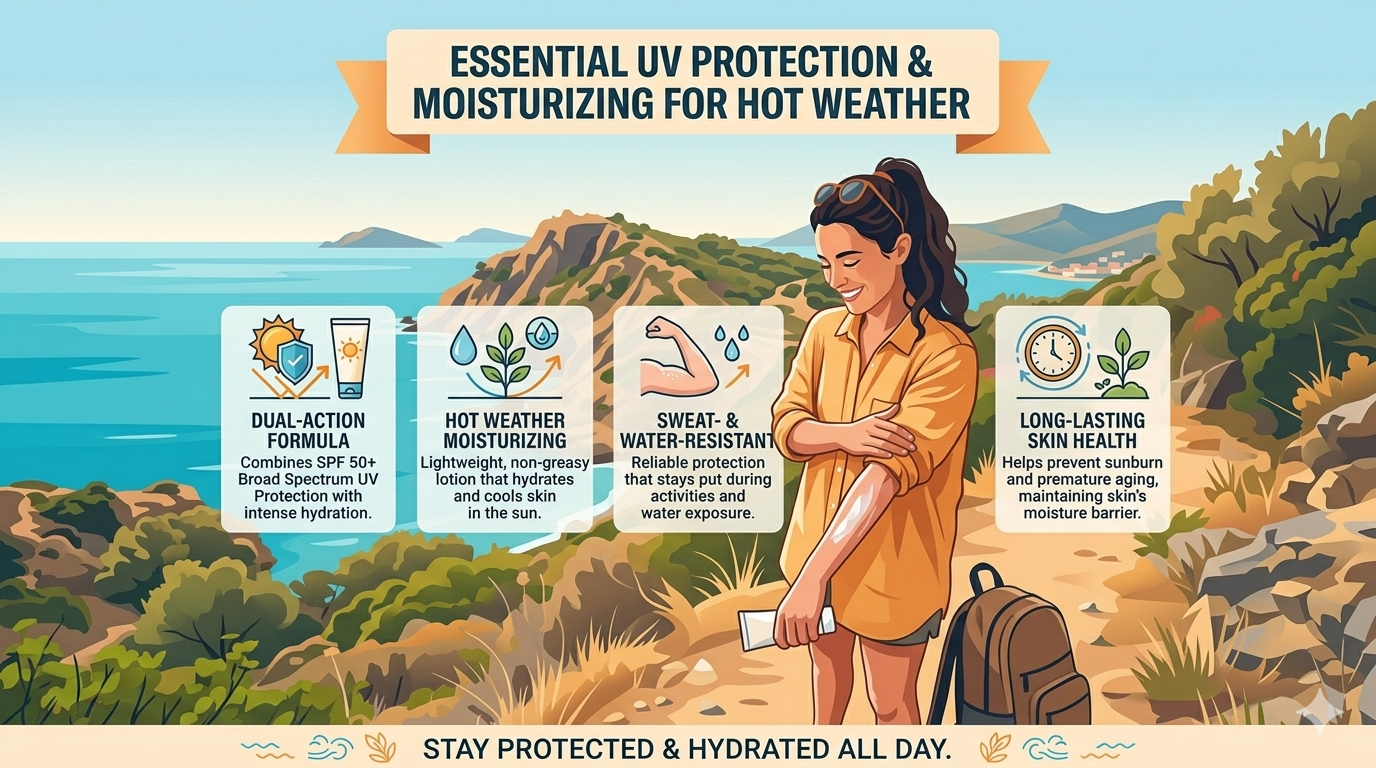
Infographic presenting ultraviolet radiation categories and general skin hydration concepts.
Disclaimer
This article is for general informational and educational purposes only. It does not constitute professional medical, dermatological, or consumer purchasing advice. References to products, routines, or treatments do not imply endorsement or guarantee of results. Readers are encouraged to consult licensed dermatologists and verified resources for skin care decisions.
by Ramil Villar | Mar 16, 2026 | Beauty & Cosmetics
Gentle Peeling and Skin Hydration: An Educational Overview
An informational explanation of exfoliation practices and skin hydration concepts in dermatology.
Skin care discussions sometimes refer to exfoliation methods and hydration practices as part of general skin maintenance routines. Exfoliation involves the removal of surface skin cells, while hydration practices aim to support the skin’s moisture balance.
Public health guidance notes that cosmetic products and skin care practices in the Philippines are subject to consumer protection and safety regulations. Oversight may involve the Food and Drug Administration Philippines and the Department of Health (Philippines).
This article explains what gentle peeling means in skin care terminology and clarifies the concept often described in consumer materials as “dewy” skin.
What Is Gentle Peeling?
Gentle peeling refers to mild forms of exfoliation designed to remove accumulated surface skin cells from the outermost layer of the skin.
Exfoliation may occur through two commonly discussed approaches:
Physical Exfoliation
Products or tools that remove surface skin cells through mild friction. Examples in educational literature include soft cloths or finely textured scrubs.
Chemical Exfoliation
Use of ingredients that help loosen the bonds between surface skin cells. Dermatology references often mention compounds such as alpha hydroxy acids (AHAs) or beta hydroxy acids (BHAs).
The term “gentle” typically indicates lower concentration ingredients or milder formulations designed to reduce irritation risk when used as directed.
Understanding the Term “Dewy” in Skin Care Language
The phrase “dewy skin” appears in cosmetic and beauty discussions. In informational contexts, it generally describes a skin appearance associated with surface hydration and light reflection.
Several factors may contribute to this appearance:
- Presence of moisture in the outer skin layer
- Application of hydrating topical products
- Natural oil production in certain individuals
- Lighting conditions and cosmetic formulations
The term is descriptive rather than clinical and does not represent a medical outcome.
Skin Hydration and Moisture Balance
Skin hydration refers to the water content present in the outer layer of the skin, known as the stratum corneum.
Moisturizing products often include ingredients that function in different ways:
Humectants
Ingredients that attract water to the outer skin layer.
Emollients
Substances that help smooth the skin surface.
Occlusives
Ingredients that help reduce water loss from the skin.
The combination of these functions may support the maintenance of the skin’s moisture barrier.
Hypothetical Example
A person living in a warm and humid environment may use a mild cleanser and a moisturizer formulated for daily use. In some routines, occasional exfoliation products are applied according to instructions provided by the manufacturer or healthcare professionals.
The purpose of such routines in dermatology literature is generally related to skin maintenance and hygiene rather than guaranteed cosmetic outcomes.
Context: Dermatology and Consumer Protection
Cosmetic products and skin care items sold in the Philippines may fall under regulatory oversight by the Food and Drug Administration Philippines, which monitors safety, labeling, and product registration requirements.
Consumer awareness guidelines also encourage individuals to review product ingredient lists and consult qualified professionals for persistent skin concerns.
In dermatology research, skin care practices are considered supportive habits rather than medical treatments unless prescribed by licensed professionals.
FAQ
What does exfoliation mean in skin care?
Exfoliation refers to the removal of surface skin cells from the outermost layer of the skin. This may occur through physical or chemical methods depending on the product formulation.
What does the term “dewy skin” describe?
“Dewy skin” is a descriptive phrase used in cosmetic discussions to refer to skin that appears hydrated or reflective under certain lighting conditions.
Is exfoliation required for skin care routines?
Dermatology resources describe exfoliation as one possible component of some routines. Skin care practices vary depending on individual preferences and skin characteristics.
Trusted Sources
- Department of Health (Philippines) public health information
- Food and Drug Administration Philippines consumer safety resources
- American Academy of Dermatology educational dermatology materials
- World Health Organization health information resources
- Peer-reviewed dermatology and cosmetic science journals
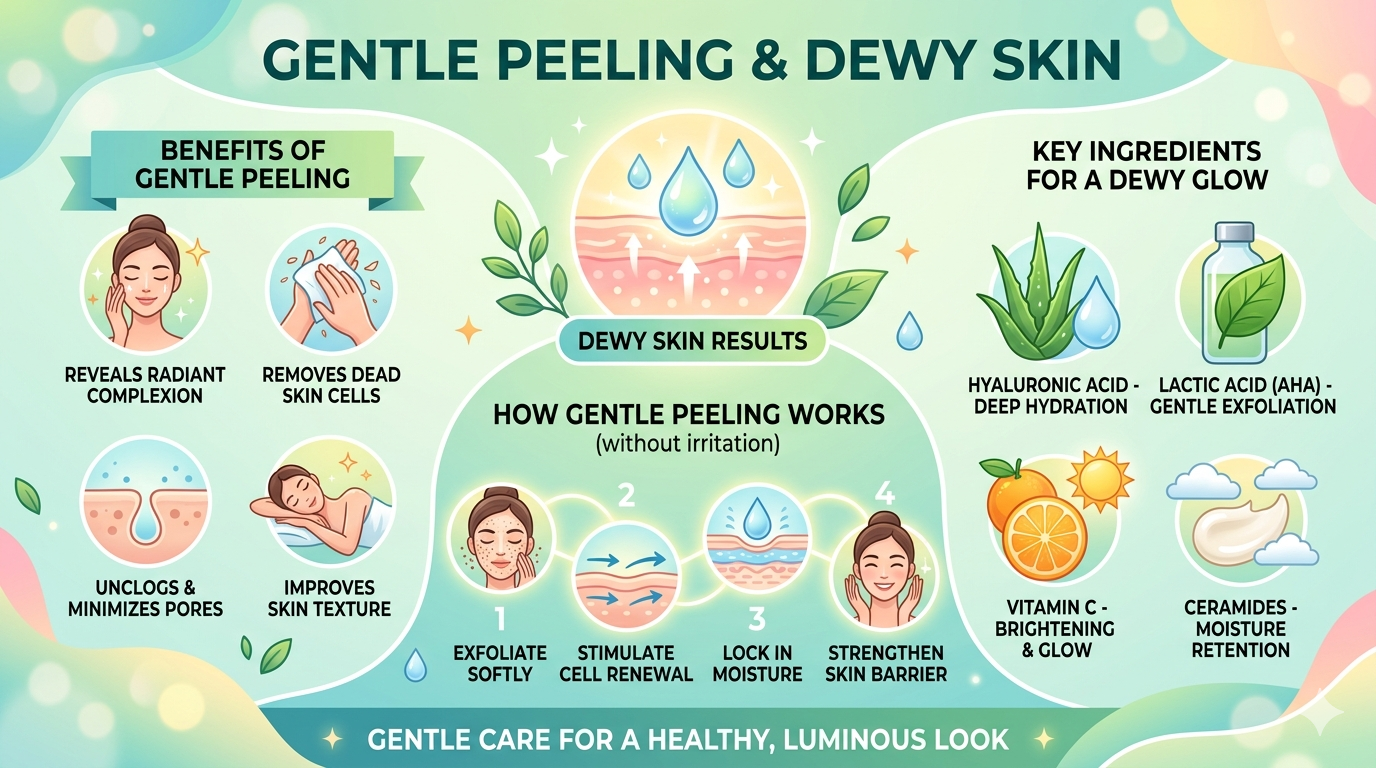
Illustrated overview of exfoliation and hydration terminology used in skin care discussions.
Disclaimer
This article is for general informational and educational purposes only. It does not constitute professional medical, dermatological, or consumer purchasing advice. References to products, routines, or treatments do not imply endorsement or guarantee of results. Readers are encouraged to consult licensed dermatologists and verified resources for skin care decisions.
by Ramil Villar | Mar 16, 2026 | Beauty & Cosmetics
Exfoliation and Lightweight Hydration: Educational Overview of Two Common Skin Care Concepts
A neutral explanation of exfoliation processes and lightweight moisturizing practices in general skin care routines.
Exfoliation and hydration are commonly discussed topics in educational skin care resources. These practices relate to the removal of surface skin buildup and the maintenance of moisture levels in the outer layer of the skin. In the Philippines, cosmetic products and related claims are monitored by regulatory bodies such as the Department of Health and the Food and Drug Administration. These agencies operate within consumer protection frameworks including the Consumer Act of the Philippines (RA 7394).
This article explains the basic concepts of exfoliation and lightweight hydration, how they are described in dermatology literature, and how individuals may observe their role within general skin care routines.
Understanding Exfoliation
Exfoliation refers to the removal of accumulated surface skin cells from the outermost layer of the skin. The outer skin layer naturally renews itself over time, and exfoliation practices are often discussed in cosmetic science as a way to remove surface debris or buildup.
Educational sources typically describe two broad categories of exfoliation:
Physical Exfoliation
Physical exfoliation involves the use of textured materials or tools that mechanically remove surface skin buildup. Examples may include scrubs or textured cloths.
Chemical Exfoliation
Chemical exfoliation involves substances that interact with the bonds between surface skin cells. In cosmetic science literature, this category may include ingredients such as certain acids or enzymes that assist in loosening accumulated cells on the outer layer.
Hypothetical example:
An individual introducing an exfoliating product might observe the instructions on the packaging and apply the product according to the recommended frequency indicated by the manufacturer.
Dermatology sources generally emphasize that exfoliation practices vary widely depending on skin characteristics and product formulation.
Understanding Lightweight Hydration
Lightweight hydration refers to moisturizing products designed to provide surface hydration while typically having a lighter texture or lower viscosity compared with thicker creams or ointments. These formulations are commonly described in cosmetic science literature as water-based or gel-based products.
The purpose of moisturizing in general skin care routines is to support hydration in the outer skin layer and reduce moisture loss. Lightweight formulations are often discussed as one of several categories of moisturizers.
Common characteristics described in cosmetic research include:
- Faster absorption compared with heavier formulations
- Lower oil content in some products
- Water-based or gel-like consistency
These characteristics describe product formulation properties rather than health or cosmetic outcomes.
Typical Placement in Skin Care Routines
Educational skin care guides often describe exfoliation and moisturizing as steps that may appear in a broader routine that includes cleansing and sun protection.
A simplified example of routine structure described in educational materials:
- Cleansing to remove surface debris
- Exfoliation at intervals described by product instructions
- Application of a moisturizing product
- Sun protection when exposed to sunlight
These steps represent general descriptions from skin care education resources rather than standardized medical recommendations.
Context: Dermatology and Cosmetic Science
In dermatology and cosmetic science studies, exfoliation and hydration are frequently examined in relation to the skin barrier and the outer layer known as the stratum corneum. Research may evaluate how various formulations interact with surface skin cells or moisture levels.
Under consumer protection frameworks such as the Consumer Act of the Philippines, marketing materials for cosmetic products are expected to avoid misleading claims about appearance outcomes or health effects. Regulatory agencies may review labeling and advertising to support transparency in consumer information.
FAQ
What is exfoliation in skin care?
Exfoliation refers to the removal of accumulated cells from the outer surface of the skin. It may involve mechanical or chemical methods depending on the product or material used.
What is lightweight hydration?
Lightweight hydration describes moisturizing products that are formulated with a lighter texture, often using water-based or gel-like formulations.
How often is exfoliation discussed in skin care guides?
Educational sources often note that exfoliation frequency varies depending on the product formulation and skin characteristics. Product instructions and dermatology references commonly provide guidance for appropriate use.
Trusted Sources
- Department of Health public health guidance
- Food and Drug Administration cosmetic regulation information
- American Academy of Dermatology dermatology education resources
- Peer-reviewed dermatology and cosmetic science journals
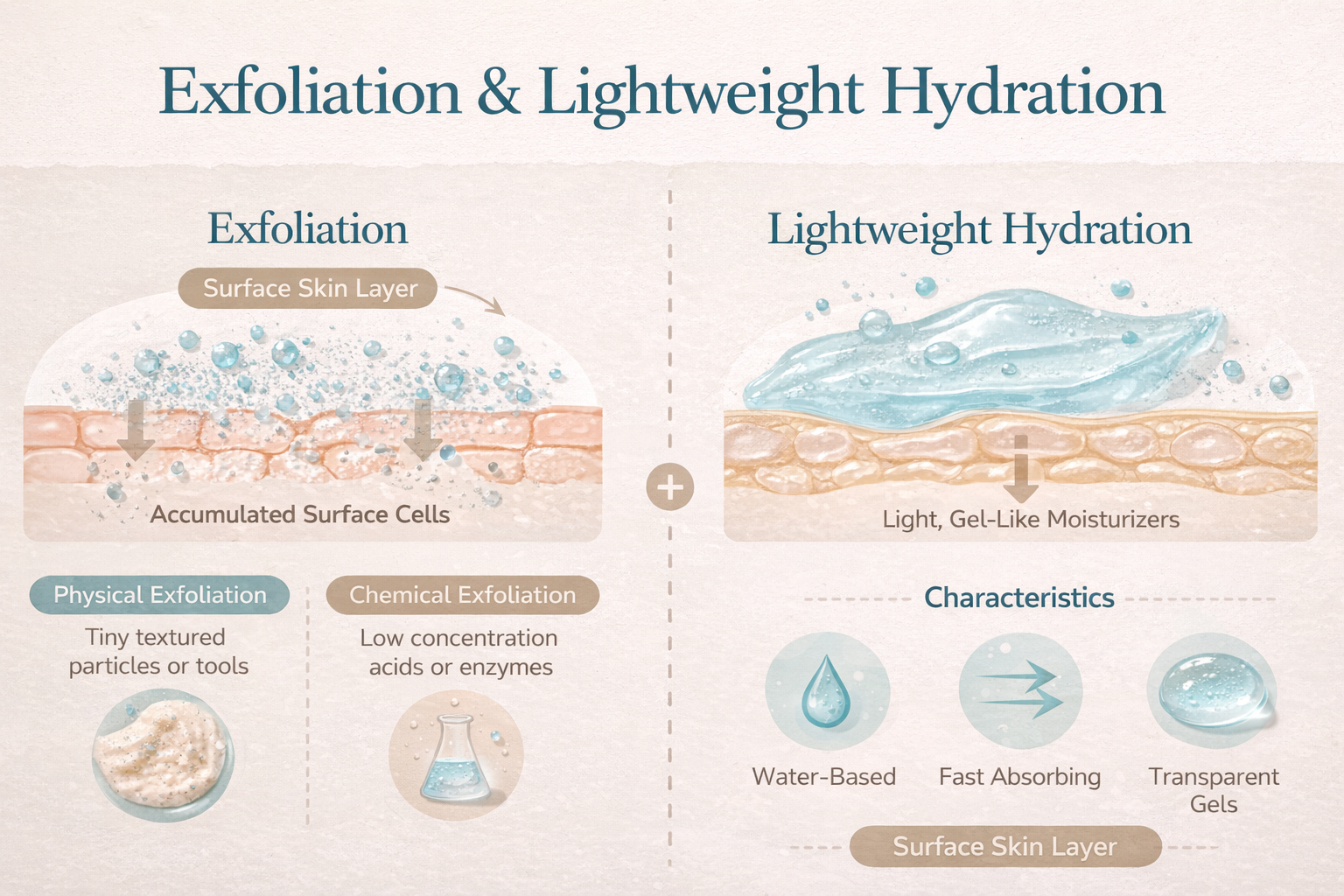
Illustrated overview of exfoliation mechanisms and lightweight hydration textures.
Disclaimer
This article is for general informational and educational purposes only. It does not constitute professional medical, dermatological, or consumer purchasing advice. References to products, routines, or treatments do not imply endorsement or guarantee of results. Readers are encouraged to consult licensed dermatologists and verified resources for skin care decisions.