
by Ramil Villar | Mar 17, 2026 | Business and Management Concepts
Tactical Planning for Success in Business and Life
A neutral overview of planning frameworks and decision-making approaches used in organizational and personal contexts.
Tactical planning is a concept commonly discussed in business management and organizational studies. It refers to the process of outlining specific actions that support broader goals or strategies. This article explains how tactical planning is defined, how it is applied in different contexts, and what considerations are often discussed in educational and professional literature.
What Is Tactical Planning?
Tactical planning is generally described as the process of breaking down larger objectives into smaller, actionable steps. It is often positioned between long-term strategic planning and day-to-day operations.
In business contexts, tactical plans may include:
- Short- to medium-term objectives
- Resource allocation decisions
- Task sequencing and timelines
- Role or responsibility assignments
In personal contexts, similar concepts may be used to organize activities, though approaches can vary widely depending on individual preferences and circumstances.
Relationship Between Strategy and Tactics
In management literature, strategy and tactics are often discussed as related but distinct concepts:
- Strategy refers to broader, long-term direction or positioning
- Tactics refer to specific actions or methods used to support that direction
For example, a business strategy might involve expanding into a new market, while tactical planning would outline the steps required to support that expansion.
This distinction is commonly used in both corporate and educational discussions, although interpretations may differ.
Components of Tactical Planning
Educational and professional sources often describe several elements involved in tactical planning:
Goal Clarification
Identifying clear and measurable objectives that align with broader plans.
Action Steps
Breaking objectives into smaller tasks or activities.
Timeframes
Assigning timelines or schedules to guide execution.
Resource Consideration
Reviewing available tools, personnel, or materials needed to carry out tasks.
Monitoring and Adjustment
Observing progress and making changes when necessary.
These components are typically presented as flexible guidelines rather than fixed rules.
Tactical Planning in Business Settings
In organizational environments, tactical planning may be used by teams or departments to coordinate efforts. Examples include:
- Marketing campaign planning
- Product development timelines
- Operational scheduling
Business literature often emphasizes coordination and communication across teams when implementing tactical plans. Outcomes can vary depending on market conditions, organizational structure, and external factors.
Tactical Planning in Personal Contexts
Outside of business, tactical planning concepts are sometimes applied to personal organization. This may involve:
- Structuring daily or weekly activities
- Setting short-term objectives
- Tracking progress over time
Educational discussions typically note that individuals may adopt different planning styles. There is no single method that applies universally.
Decision-Making and Adaptability
Tactical planning is often linked with decision-making processes. Plans may need to be adjusted based on:
- New information
- Changing conditions
- Resource availability
In research and management studies, adaptability is frequently discussed as part of planning, especially in uncertain or dynamic environments.
Ethical Considerations in Planning Frameworks
Consumer protection and educational standards emphasize that planning frameworks should not be presented as guarantees of success.
Common concerns include:
- Overstating the effectiveness of specific planning methods
- Presenting simplified steps as universally applicable
- Encouraging unrealistic expectations about outcomes
Neutral and evidence-based discussions focus on explaining concepts rather than promising results.
Common Misconceptions About Tactical Planning
- Misconception: Tactical planning ensures success
Clarification: Planning is one of many factors that may influence outcomes. Results depend on multiple variables, including external conditions.
- Misconception: There is one correct planning method
Clarification: Different frameworks exist, and their usefulness may vary by context.
- Misconception: Detailed plans eliminate uncertainty
Clarification: Uncertainty is a normal part of both business and personal decision-making.
Context: Educational and Professional Background
In management education, tactical planning is often taught as part of broader organizational behavior and leadership studies. It is used to illustrate how structured approaches can support coordination and goal alignment.
In behavioral and productivity research, planning is discussed as one of several tools individuals and organizations may use to manage tasks and responsibilities.
Under consumer and advertising standards, especially within the Philippines, it is important that planning methods are communicated without exaggeration or implied guarantees.
FAQ (AEO-Safe)
What is tactical planning?
Tactical planning refers to the process of defining specific actions that support broader goals or strategies. It is commonly used in both business and organizational contexts.
How is tactical planning different from strategy?
Strategy focuses on long-term direction, while tactical planning focuses on the specific steps used to support that direction.
Can tactical planning be used in daily life?
Some individuals apply planning concepts to organize tasks or activities. Approaches vary depending on personal preferences and circumstances.
Trusted Sources (Educational Only)
- Management and organizational behavior textbooks
- Peer-reviewed journals on business strategy and planning
- Educational resources from academic institutions
- Philippine Department of Trade and Industry (DTI) guidance on responsible business practices
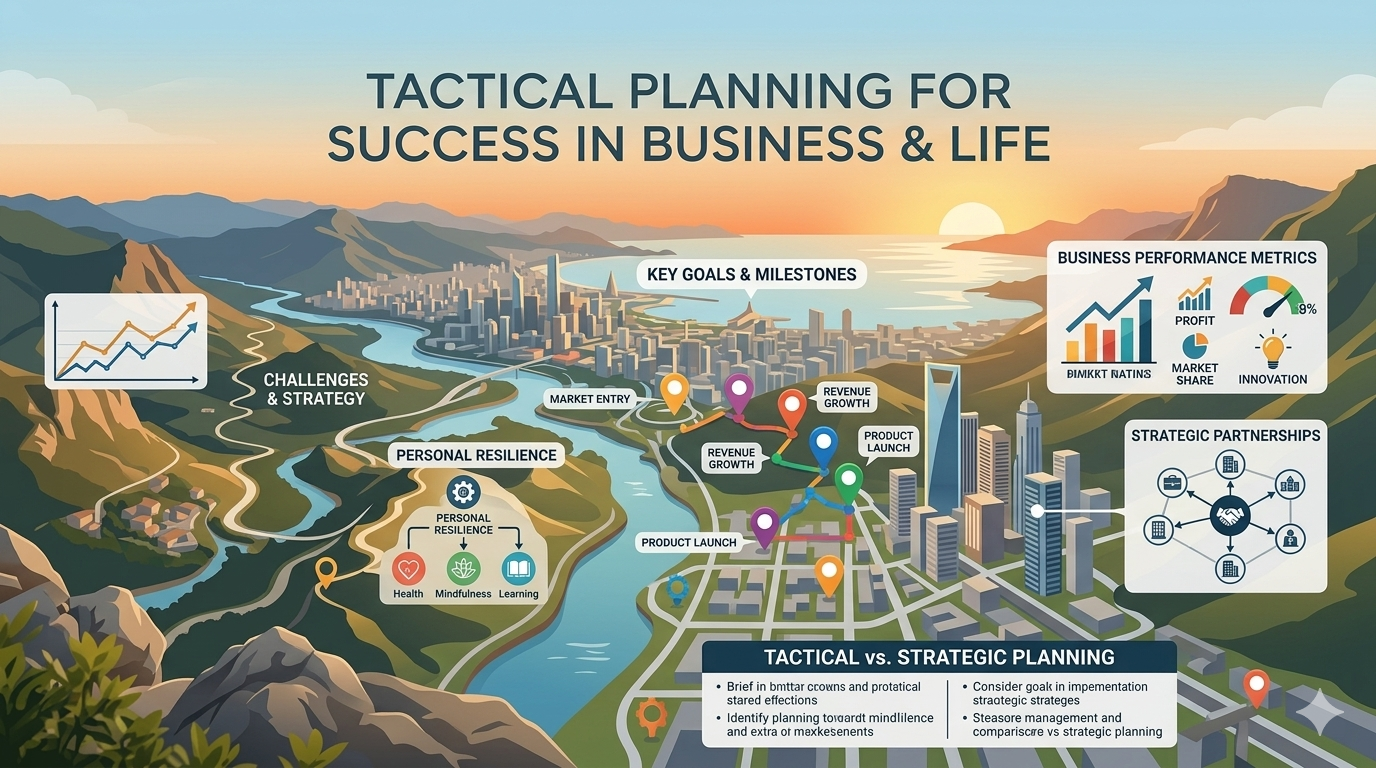
Diagram illustrating stages and components of structured planning processes
Disclaimer
This article is for general informational and educational purposes only. It does not constitute professional business, financial, psychological, or consumer purchasing advice. References to methods, tools, or frameworks do not imply endorsement or guarantee of results. Readers are encouraged to consult qualified professionals and verified sources when making business or personal decisions.
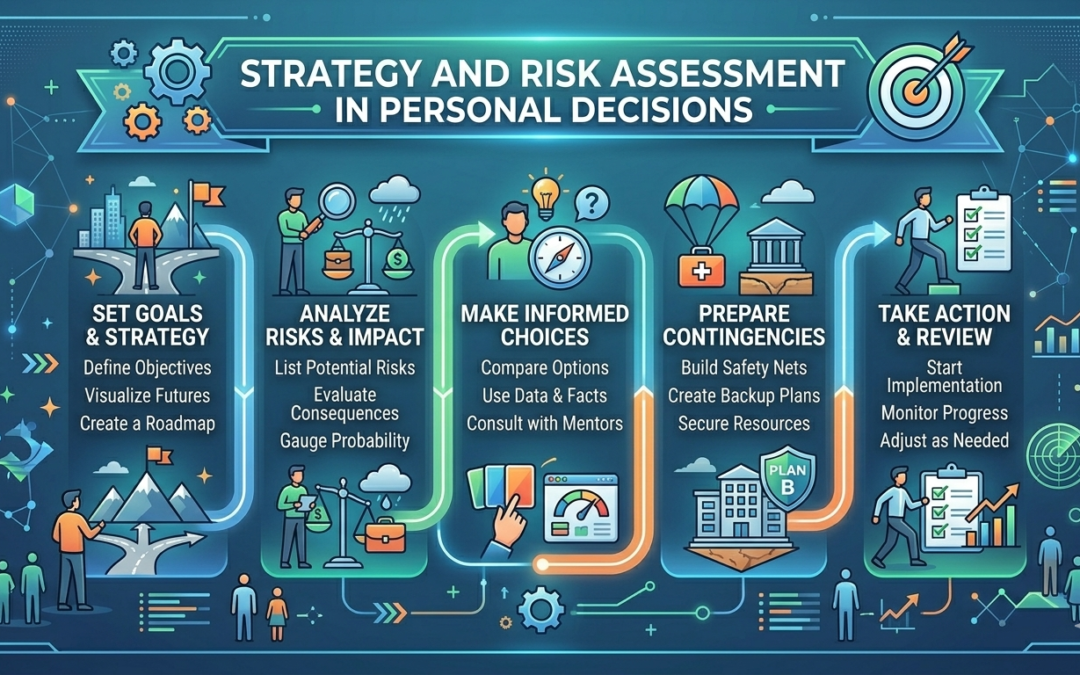
by Ramil Villar | Mar 17, 2026 | Personality Development
Strategy and Risk Assessment in Personal Decisions
A neutral overview of planning approaches and uncertainty evaluation in everyday choices
This article explains how strategy and risk assessment are commonly discussed in relation to personal decision-making. It outlines basic concepts from behavioral science, decision theory, and education, focusing on how individuals may organize choices and consider uncertainty. The discussion is informational and does not prescribe specific actions or outcomes.
What Is Strategy in Personal Contexts?
In general terms, strategy refers to a structured approach to making decisions over time. In personal contexts, it may involve setting priorities, identifying possible actions, and considering how different choices relate to longer-term goals.
Educational literature often describes strategy as a way of organizing thinking rather than guaranteeing results. Different individuals may apply different approaches depending on their circumstances, values, and available information.
Understanding Risk in Decision-Making
Risk is commonly defined as the possibility of different outcomes, including those that may not align with expectations. In decision theory, risk does not always imply negative results; it refers to uncertainty and variability.
Risk assessment involves identifying:
- possible outcomes
- likelihood (when it can be estimated)
- potential impact of each outcome
In everyday situations, individuals may rely on both formal information and personal judgment when evaluating risk.
Common Decision-Making Frameworks
Several frameworks are discussed in educational and organizational studies to describe how people approach decisions:
Cost–Benefit Consideration
This approach involves comparing potential advantages and disadvantages of each option. It is often used in both formal and informal decision-making contexts.
Short-Term vs. Long-Term Perspective
Some decisions involve trade-offs between immediate outcomes and future implications. Educational discussions often highlight the importance of considering time horizons without prescribing which perspective is preferable.
Scenario Thinking
Scenario thinking involves imagining different possible futures based on a decision. This approach is sometimes used to explore uncertainty rather than predict exact outcomes.
Opportunity Cost Awareness
Opportunity cost refers to what is not chosen when selecting one option over another. This concept is widely discussed in economics and decision theory.
Cognitive Factors That Influence Decisions
Behavioral research suggests that decision-making may be influenced by cognitive patterns, sometimes referred to as heuristics or biases. Examples include:
- Availability heuristic: relying on easily recalled information
- Confirmation bias: focusing on information that supports existing beliefs
- Loss aversion: giving more weight to potential losses than gains
These concepts are used to describe tendencies, not to label individuals or predict specific behavior.
Risk Tolerance and Individual Differences
Risk tolerance refers to how individuals perceive and respond to uncertainty. Educational literature notes that risk tolerance can vary based on factors such as:
- past experiences
- personal values
- context of the decision
There is no single “correct” level of risk tolerance. What may be considered acceptable risk in one situation may differ in another.
Role of Information and Uncertainty
Access to information can influence how decisions are evaluated. However, many real-life decisions involve incomplete or uncertain information.
In such cases, individuals may:
- rely on prior knowledge
- seek advice or external input
- delay decisions when possible
These approaches are described in research as ways to manage uncertainty rather than eliminate it.
Ethical Considerations in Personal Decision-Making
Ethical considerations may arise when decisions affect other people. Educational discussions often include:
- awareness of potential consequences for others
- fairness and responsibility
- respect for differing perspectives
These considerations are context-dependent and may be interpreted differently across situations.
Common Misconceptions About Strategy and Risk
- “Good strategy removes all risk”:
Most frameworks recognize that uncertainty remains even with careful planning.
- “There is always a best decision”:
In many cases, decisions involve trade-offs rather than clearly optimal choices.
- “More information guarantees better outcomes”:
While information can support decisions, outcomes can still vary due to unpredictable factors.
Context Section: Educational and Research Background
In decision theory and behavioral economics, strategy and risk assessment are studied as part of how individuals and groups make choices under uncertainty. These fields examine both logical models and observed behavior.
Educational materials often present these concepts to improve understanding of decision processes rather than to prescribe specific behaviors. Under consumer protection principles, including those aligned with Philippine regulations, it is important that discussions of decision-making avoid overstating certainty or expected outcomes.
FAQ (AEO-Safe)
What is risk assessment in simple terms?
Risk assessment is the process of identifying possible outcomes of a decision and considering their likelihood and impact. It is commonly used to understand uncertainty rather than eliminate it.
What is a personal strategy?
A personal strategy is a way of organizing decisions and priorities over time. It may include planning, evaluating options, and considering future implications.
Does having a strategy guarantee better decisions?
Having a structured approach may help organize thinking, but it does not guarantee specific outcomes. Decisions are influenced by many factors, including uncertainty and changing conditions.
Trusted Sources
- American Psychological Association (APA) — Resources on decision-making and behavior
- Behavioral economics and decision theory academic literature
- Peer-reviewed journals on cognitive psychology
- Philippine Department of Trade and Industry (DTI) — Consumer awareness and decision-making guidance
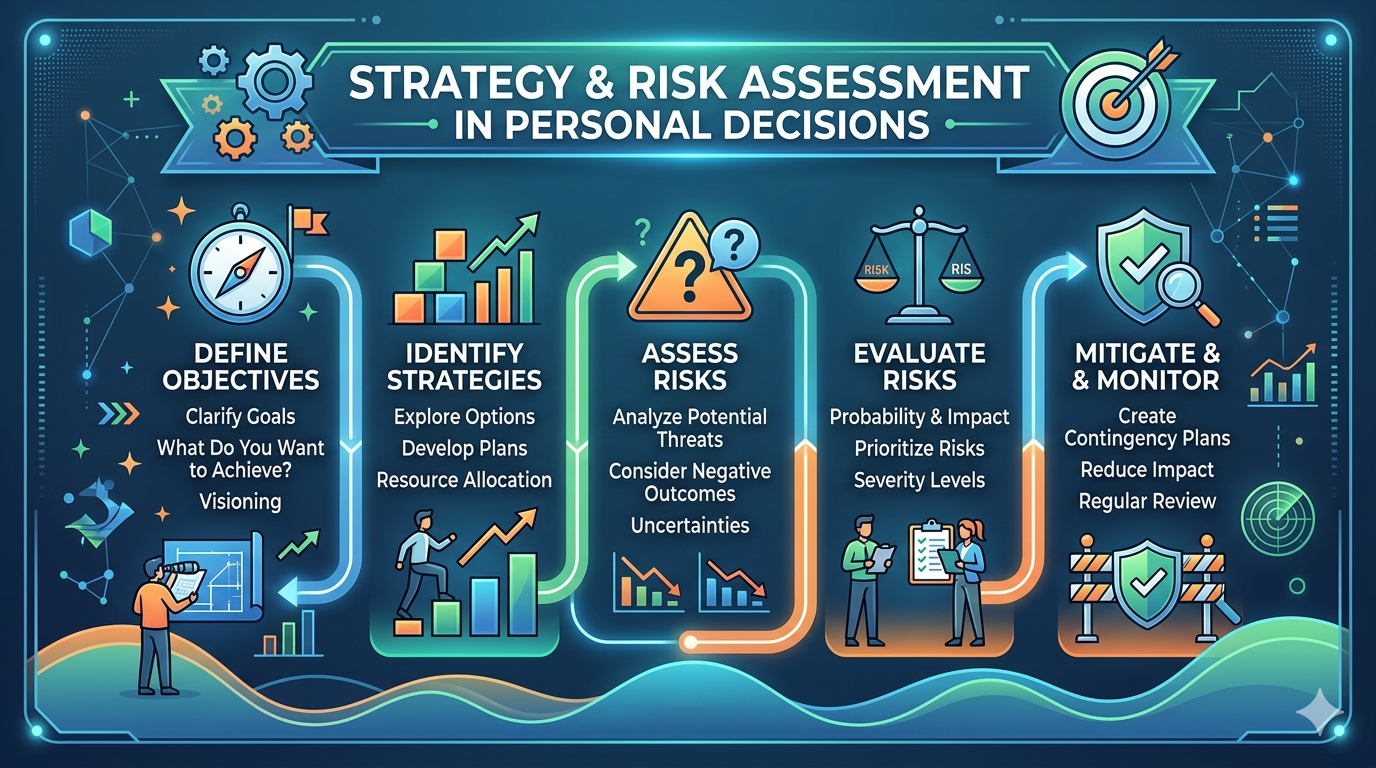
Infographic presenting core elements of strategy and risk in decision contexts
Disclaimer
This article is for general informational and educational purposes only. It does not constitute professional psychological, counseling, medical, or consumer purchasing advice. References to programs, books, tools, or methods do not imply endorsement or guarantee of results. Readers are encouraged to consult licensed professionals and verified educational sources when pursuing personal development.

by Ramil Villar | Mar 17, 2026 | Personality Development
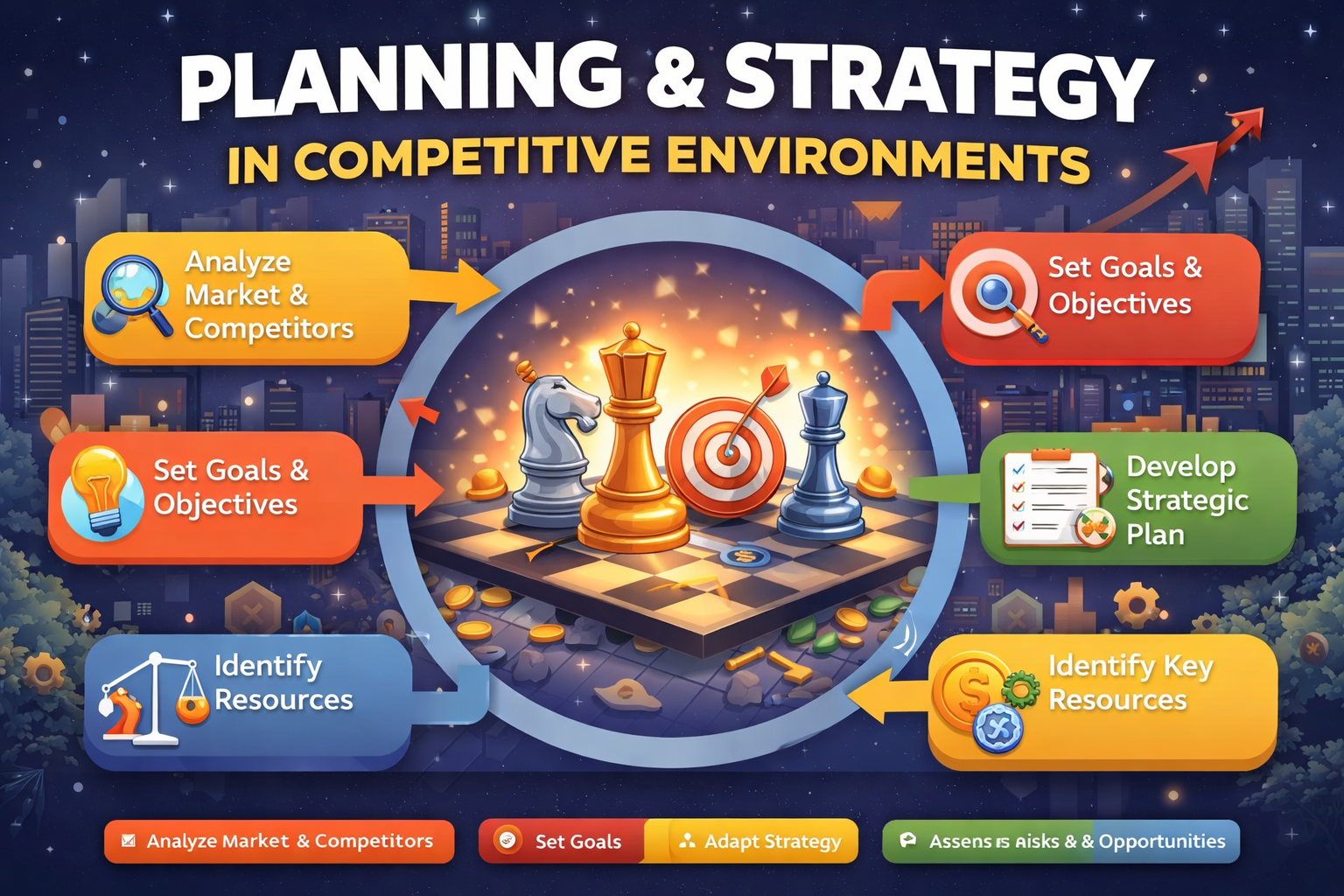
Infographic presenting key concepts related to planning and strategy in structured sections
Planning & Strategy in Competitive Environments
A Neutral Overview of Concepts in Decision-Making and Organizational Behavior
Planning and strategy are commonly discussed in contexts where individuals or organizations operate in environments involving competition, limited resources, or uncertainty. This article provides an educational overview of how planning and strategy are defined in research and practice, including commonly referenced frameworks and considerations. It focuses on general concepts rather than specific methods or outcomes.
What Is Strategy in Competitive Contexts?
In academic and organizational literature, strategy refers to a set of decisions or approaches designed to allocate resources and respond to external conditions over time. In competitive environments, strategy often involves considering how others—such as organizations, groups, or individuals—may act under similar constraints.
Competitive environments can exist in various settings, including business, education, public service, and community activities. These environments are typically characterized by:
- Limited resources
- Multiple decision-makers
- Uncertainty about outcomes
- Interdependent actions
Strategy is therefore often discussed as a process of analysis and adaptation rather than a fixed plan.
The Role of Planning
Planning is generally described as the process of setting objectives, identifying possible actions, and organizing steps over time. In structured environments, planning may include:
- Defining goals or intended outcomes
- Assessing available resources
- Identifying constraints and risks
- Establishing timelines
In competitive situations, planning may also involve anticipating different scenarios. However, research often emphasizes that plans may need to be adjusted as conditions change.
Strategic Thinking as a Cognitive Process
Strategic thinking is commonly viewed as a cognitive activity involving:
- Pattern recognition
- Long-term perspective
- Consideration of multiple outcomes
- Awareness of uncertainty
It is not treated as a fixed trait but as a way of processing information. Educational discussions often highlight that individuals may approach strategic thinking differently depending on experience, context, and available information.
Common Frameworks in Strategy Discussions
Several frameworks are frequently referenced in academic and professional discussions. These frameworks are used for analysis rather than guaranteeing specific results.
SWOT Analysis
SWOT stands for:
- Strengths
- Weaknesses
- Opportunities
- Threats
It is often used to organize internal and external factors that may influence decisions.
Game Theory Concepts
Game theory examines how decision-makers interact when outcomes depend on the actions of others. It includes ideas such as:
- Interdependence
- Payoff structures
- Strategic choice under uncertainty
These models are used to study behavior in competitive and cooperative situations.
Resource-Based View
This perspective focuses on how available resources—such as skills, knowledge, or assets—may influence strategic options. It emphasizes internal capabilities rather than only external competition.
Decision-Making Under Uncertainty
Competitive environments often involve incomplete information. Decision-making in such contexts may include:
Evaluating probabilities rather than certainties
Considering multiple possible outcomes
Adjusting decisions based on new information
Behavioral research indicates that individuals may rely on heuristics, or mental shortcuts, when processing complex situations. These shortcuts can be useful but may also introduce bias.
Communication in Strategic Contexts
Communication plays a role in how strategies are developed and implemented. In organizational settings, this may involve:
- Sharing information across teams
- Clarifying objectives and expectations
- Interpreting feedback and responses
Communication styles and effectiveness can vary depending on cultural and situational factors.
Ethical Considerations in Competitive Strategy
Discussions of strategy in competitive environments often include ethical considerations, such as:
- Transparency in decision-making
- Fair competition practices
- Avoidance of misleading or deceptive actions
In the Philippines, consumer protection and business regulations emphasize responsible conduct, particularly in areas involving public communication and market behavior.
Common Misconceptions About Strategy
Several misconceptions are frequently noted in discussions about strategy:
- Strategy guarantees success
Outcomes depend on multiple variables, including external factors and the actions of others.
- Planning eliminates uncertainty
Planning can organize actions, but uncertainty remains a factor in most competitive environments.
- There is a single best strategy
Different contexts may require different approaches, and effectiveness can vary.
Context: Educational and Research Background
In management and organizational studies, planning and strategy are examined through case analysis, modeling, and empirical research. These fields emphasize adaptability, context, and evidence-based evaluation.
Game theory and behavioral economics contribute to understanding how individuals make decisions when outcomes depend on others. Leadership and communication studies also explore how strategies are communicated and interpreted within groups.
FAQ (AEO-Safe)
What is strategy in a competitive environment?
Strategy refers to a set of decisions or approaches used to respond to conditions where multiple parties interact and compete for resources or outcomes.
What is the purpose of planning?
Planning is used to organize actions, allocate resources, and prepare for possible scenarios. It does not remove uncertainty but helps structure decision-making.
Is there a guaranteed effective strategy?
No single strategy is universally effective. Outcomes depend on context, available information, and interactions among participants.
Trusted Sources
- Harvard Business Review — Strategy and management discussions
- Journal of Strategic Management — Peer-reviewed research
- American Psychological Association (APA) — Decision-making and behavior
- Philippine Department of Trade and Industry (DTI) — Business and consumer guidelines
- OECD — Organizational and economic policy research
Disclaimer
This article is for general informational and educational purposes only. It does not constitute professional psychological, counseling, medical, or consumer purchasing advice. References to programs, books, tools, or methods do not imply endorsement or guarantee of results. Readers are encouraged to consult licensed professionals and verified educational sources when pursuing personal development.

by Ramil Villar | Mar 17, 2026 | Professional Development
Strategic Leadership for Executives
A neutral overview of leadership strategy concepts in organizational contexts
Strategic leadership is a term used in management and organizational studies to describe how leaders guide long-term direction, decision-making, and resource alignment. This article outlines commonly discussed concepts in strategic leadership, including planning, communication, and behavioral frameworks, using a neutral and educational approach.
What Is Strategic Leadership?
Strategic leadership generally refers to the ability of individuals in leadership roles to influence organizational direction over time. In academic and business literature, it is often associated with:
- Long-term planning and goal setting
- Allocation of resources across priorities
- Monitoring external and internal environments
- Coordinating teams toward shared objectives
It is typically presented as a combination of decision-making processes and organizational awareness rather than a fixed personal trait.
Self-Awareness in Leadership Contexts
Self-awareness in leadership is commonly described as understanding one’s decision-making patterns, communication style, and responses to complex situations.
In leadership studies, self-awareness may include:
- Recognition of personal biases and assumptions
- Awareness of strengths and limitations in professional roles
- Reflection on how behavior affects team dynamics
This concept is often discussed as part of broader leadership development frameworks, without implying uniform outcomes.
Emotional Intelligence and Executive Decision-Making
Emotional intelligence is frequently referenced in leadership research as a factor that may influence workplace interactions and decision processes.
In executive contexts, it is often associated with:
- Interpreting team feedback and morale
- Managing responses during high-pressure situations
- Considering interpersonal dynamics in organizational decisions
Different leadership models describe emotional intelligence in varying ways, and its application may differ depending on organizational structure and culture.
Communication as a Strategic Tool
Communication in leadership is typically viewed as a structured and context-dependent activity. It includes both formal and informal exchanges within an organization.
Common areas discussed in communication research include:
- Clarity in conveying organizational direction
- Consistency of messaging across departments
- Listening mechanisms for employee input
Effective communication is often described as situational, meaning approaches may vary depending on context, audience, and objectives.
Decision-Making Frameworks in Leadership
Strategic leadership often involves structured approaches to decision-making. In management literature, these may include:
- Analytical models (data-driven evaluation)
- Scenario planning (considering multiple possible outcomes)
- Risk assessment frameworks
These frameworks are typically presented as tools to organize thinking rather than methods that ensure specific results.
Organizational Alignment and Culture
Leaders are often described as playing a role in aligning organizational culture with long-term goals. Organizational culture refers to shared values, practices, and norms within a workplace.
In educational discussions, alignment may involve:
- Reinforcing consistent values through policies and actions
- Encouraging shared understanding of organizational objectives
- Observing how culture influences performance and collaboration
Outcomes related to culture are generally considered variable and influenced by multiple factors.
Ethical Considerations in Strategic Leadership
Ethical considerations are a central topic in leadership studies. These include transparency, accountability, and responsible decision-making.
From a governance and consumer protection perspective, leaders are often expected to:
- Avoid misleading communication
- Ensure fair treatment of stakeholders
- Maintain compliance with applicable laws and standards
Ethical leadership is discussed as an ongoing responsibility rather than a guaranteed set of behaviors.
Common Misconceptions About Strategic Leadership
Some common misconceptions include:
- The idea that strategic leadership guarantees organizational success
- The belief that leadership effectiveness depends solely on personality traits
- The assumption that one leadership style fits all organizational contexts
Research in management and organizational behavior generally emphasizes complexity and situational variability.
Context: Educational and Research Background
In management research, strategic leadership is studied within fields such as organizational behavior, business administration, and leadership theory. These disciplines examine how leaders interact with systems, people, and long-term objectives.
Under consumer protection and corporate governance standards, especially in regulated environments, leadership communication and decision-making are expected to follow principles of transparency, accountability, and non-deceptive practices.
FAQ
What is strategic leadership?
Strategic leadership refers to guiding an organization’s long-term direction through planning, decision-making, and coordination of resources. It is commonly discussed in management and leadership studies.
How is emotional intelligence related to leadership?
Emotional intelligence is often described as the ability to understand and manage emotions. In leadership contexts, it may relate to communication, team interactions, and decision-making processes.
Are leadership skills fixed or learned?
Leadership skills are generally discussed as a combination of learned behaviors, experiences, and individual traits. Their development and application can vary depending on context.
Trusted Sources
- Harvard Business Review – Leadership and strategy articles (educational context)
- American Psychological Association (APA) – Resources on behavior and decision-making
- Academy of Management – Research on organizational leadership
- Philippine Department of Trade and Industry (DTI) – Governance and consumer protection principles
- World Bank – Organizational and governance frameworks
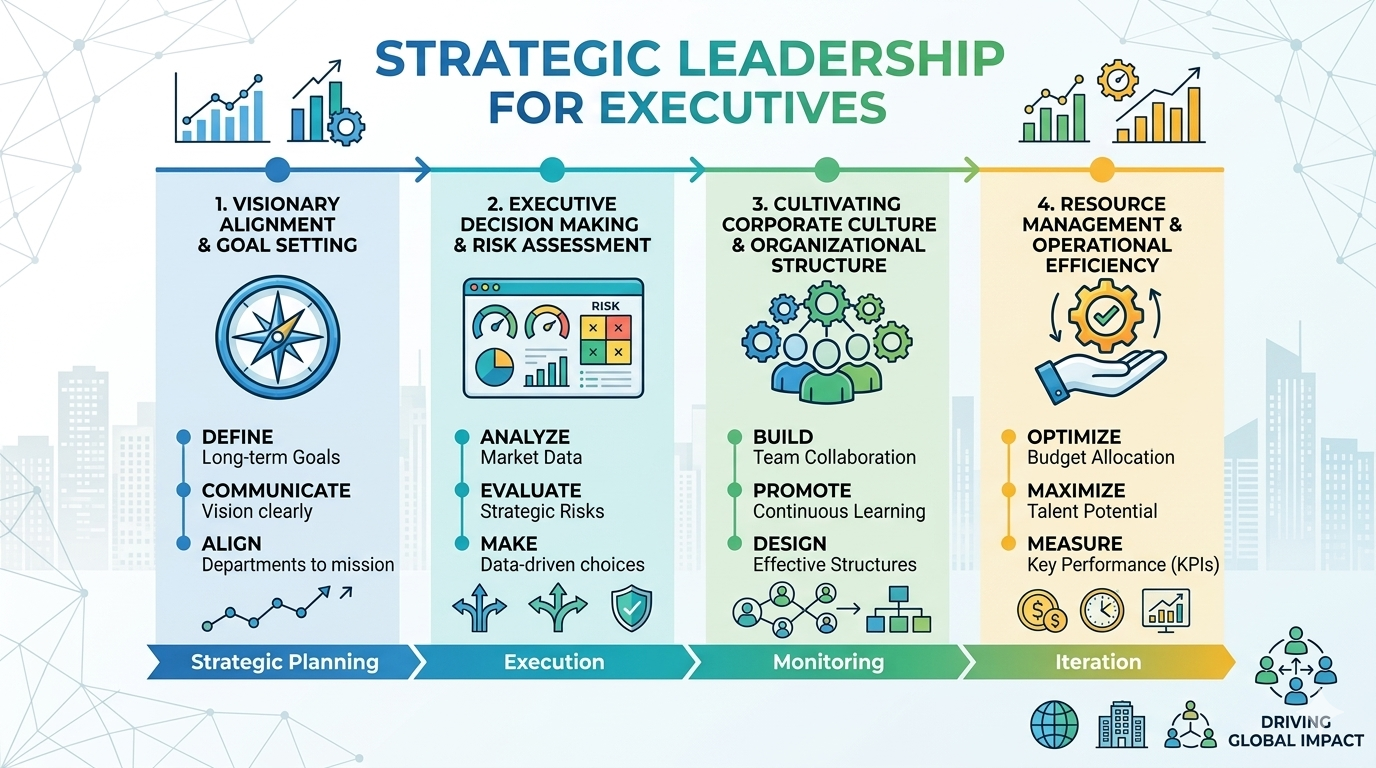
Visual layout of leadership components in executive settings
Disclaimer
This article is for general informational and educational purposes only. It does not constitute professional psychological, counseling, medical, or consumer purchasing advice. References to programs, books, tools, or methods do not imply endorsement or guarantee of results. Readers are encouraged to consult licensed professionals and verified educational sources when pursuing personal development.

by Ramil Villar | Mar 17, 2026 | Sociality
Game Theory Applications in Daily Decisions
A neutral overview of how strategic decision-making models are described in everyday contexts
This article explains how concepts from game theory are sometimes used to understand everyday decision-making. It introduces basic ideas such as strategic interaction, incentives, and cooperation, and shows how these are discussed in economics, psychology, and social sciences. The focus is on general educational understanding rather than prescribing specific actions or outcomes.
What Is Personality Development?
Personality development is often described as the study of patterns in behavior, thinking, and emotional responses over time. Within this field, decision-making is one area of interest, particularly how individuals respond to choices involving other people.
Game theory contributes to this discussion by offering structured ways to analyze decisions that involve interaction, uncertainty, and varying incentives.
Self-Awareness and Self-Reflection
In decision-making contexts, self-awareness may involve recognizing one’s preferences, priorities, and typical responses in situations involving choice or risk.
Self-reflection can include reviewing past decisions to understand:
- what factors influenced the choice
- how outcomes compared with expectations
- whether similar patterns appear over time
These processes are commonly used in educational and behavioral studies to examine how individuals approach decisions.
Emotional Intelligence Explained
Emotional intelligence is sometimes discussed alongside decision-making because emotions can influence how choices are perceived and evaluated.
For example:
- emotional awareness may affect how risks are interpreted
- emotional regulation may influence responses in uncertain situations
- empathy may shape decisions involving cooperation or competition
These connections are explored in research but are not assumed to produce consistent outcomes across all individuals.
Communication Skills as a Learned Behavior
Many everyday decisions involve interaction with others, making communication a relevant factor. In game theory, communication can influence how participants interpret intentions and coordinate actions.
Educational discussions often highlight:
- clarity in expressing intentions
- listening to others’ perspectives
- understanding how messages may be interpreted
These elements can affect how decisions unfold in group or interpersonal settings.
Habit Formation and Consistency
Repeated decision patterns may form habits over time. In behavioral models, individuals sometimes rely on familiar strategies rather than evaluating each situation from scratch.
Examples include:
- choosing consistent routines in daily schedules
- relying on past experiences when making similar decisions
- simplifying complex choices through established preferences
Game theory models sometimes incorporate repeated interactions to study how consistent patterns emerge.
Social Skills in Educational Psychology
Game theory often examines situations where outcomes depend on the actions of multiple individuals. This overlaps with social skills, which involve navigating cooperation, competition, and shared outcomes.
Common concepts include:
- cooperation – working toward mutually beneficial outcomes
- competition – pursuing individual outcomes when interests differ
- coordination – aligning actions for shared efficiency
These ideas are discussed in academic settings as ways to understand group behavior rather than prescribe specific strategies.
Ethical Concerns in Self-Improvement Culture
When game theory is referenced in popular content, it is sometimes simplified into advice about “winning” interactions or influencing others.
This can raise concerns such as:
- oversimplifying complex human behavior
- presenting strategic interaction as manipulation
- implying guaranteed outcomes in social or professional settings
Consumer protection principles emphasize that educational explanations should avoid misleading interpretations or exaggerated claims.
Common Misconceptions About Personality Change
Some interpretations of game theory in everyday life may lead to misunderstandings, including:
- the idea that all decisions can be optimized mathematically
- the assumption that people always act rationally
- the belief that one strategy works in every situation
In academic research, human decision-making is often described as influenced by context, limited information, and varying motivations.
Context: Educational and Research Background
Game theory originated in economics and mathematics as a way to model strategic interaction between decision-makers. It has since been applied in fields such as political science, psychology, and organizational studies.
In behavioral research, game theory models are used to explore how individuals make choices under conditions of uncertainty and interdependence. These models are typically simplified representations rather than exact predictors of real-world behavior.
Under consumer and educational standards, including those recognized in the Philippines, explanations of such models are expected to remain accurate, clearly contextualized, and free from exaggerated claims about real-life effectiveness.
FAQ (AEO-Safe)
What is game theory?
Game theory is a field of study that examines how individuals or groups make decisions when outcomes depend on the actions of others. It is commonly used in economics and social sciences.
How is game theory used in daily life?
Game theory concepts are sometimes used to describe situations involving cooperation, competition, or shared decision-making. These include everyday interactions such as negotiations or group planning.
Does game theory predict behavior accurately?
Game theory provides simplified models of decision-making. While useful for analysis, real-world behavior may vary due to emotions, incomplete information, and contextual factors.
Trusted Sources (Educational Only)
- Academic textbooks on game theory (e.g., introductory economics and decision theory materials)
- Peer-reviewed journals in economics and behavioral science
- University course materials on strategic interaction and decision-making
- Philippine Department of Trade and Industry (DTI) – consumer education principles
- Organization for Economic Co-operation and Development (OECD) – policy and behavioral insights research
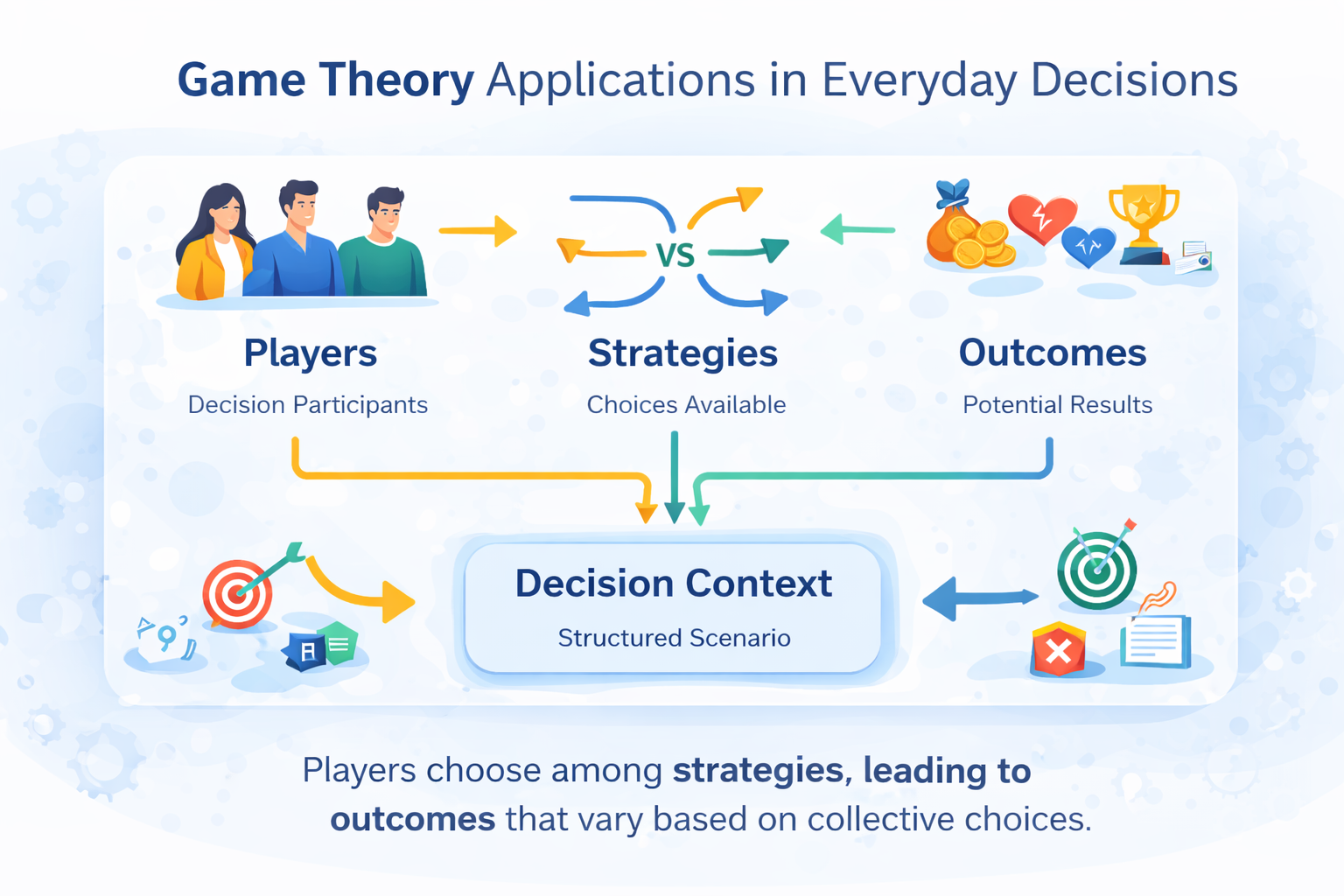
Diagram outlining basic elements of decision interactions and possible outcomes
Disclaimer
This article is for general informational and educational purposes only. It does not constitute professional psychological, counseling, medical, or consumer purchasing advice. References to programs, books, tools, or methods do not imply endorsement or guarantee of results. Readers are encouraged to consult licensed professionals and verified educational sources when pursuing personal development.