
by Ramil Villar | Mar 18, 2026 | Personality Development
Building Confidence Through Small Wins
A Neutral Overview of Incremental Progress and Self-Perception in Behavioral Contexts
This article explains how the concept of “small wins” is discussed in personality development and behavioral research. It outlines how incremental progress may relate to self-perception, motivation, and habit formation. The goal is to present a neutral, educational overview without implying guaranteed outcomes or prescribing personal change.
What Is Personality Development?
Personality development is a broad area of study that explores how individuals understand patterns in their thoughts, emotions, and behaviors over time. In educational and psychological literature, it is often described as an ongoing process influenced by experiences, environment, and learning. It does not follow a single fixed path, and outcomes may vary depending on context.
Self-Awareness and Self-Reflection
Self-awareness refers to the ability to observe one’s own thoughts, emotions, and actions. Self-reflection involves examining these observations to better understand patterns or responses.
In discussions about small wins, self-awareness may include recognizing minor accomplishments, such as completing a task or maintaining a routine. Some frameworks suggest that noticing these moments can contribute to a clearer understanding of behavior, although interpretations differ across individuals and contexts.
Emotional Intelligence Explained
Emotional intelligence is commonly described as the ability to recognize, understand, and manage emotions, both internally and in social interactions. It may also involve awareness of how emotional responses influence behavior.
Within this context, small wins are sometimes associated with emotional regulation. For example, completing a manageable task may be linked to feelings of satisfaction. However, the extent to which this influences broader emotional patterns is subject to individual variation and ongoing research.
Communication Skills as a Learned Behavior
Communication skills are generally understood as behaviors that can be observed, practiced, and refined over time. These include verbal expression, listening, and non-verbal cues.
In some educational discussions, small wins may involve practicing specific communication behaviors in low-pressure situations. For instance, participating in a short conversation or expressing a viewpoint in a group setting may be considered incremental experiences that contribute to learning.
Habit Formation and Consistency
Habit formation is often examined in behavioral science as a process involving repetition and environmental cues. Some models suggest that smaller, manageable actions are easier to repeat consistently than larger, complex tasks.
The idea of small wins is sometimes linked to this concept. Completing simple, repeatable actions may help establish routines. Over time, these routines can become more automatic, although consistency levels differ across individuals.
Social Skills in Educational Psychology
Social skills are typically described as behaviors that facilitate interaction and communication with others. These may include turn-taking in conversations, interpreting social cues, and responding appropriately in different contexts.
From an educational perspective, small wins may include practicing these behaviors in everyday interactions. For example, maintaining eye contact during a conversation or asking a question in a discussion setting may be viewed as incremental participation. The interpretation of progress in this area can vary widely.
Ethical Concerns in Self-Improvement Culture
Some discussions around self-improvement highlight concerns related to unrealistic expectations, commercial influence, and pressure to achieve continuous growth. Consumer protection principles emphasize the importance of avoiding misleading claims, especially those that suggest guaranteed personal transformation.
The concept of small wins is sometimes presented in a neutral way as an observational framework rather than a requirement. It is important to distinguish between educational discussion and promotional messaging.
Common Misconceptions About Personality Change
One common misconception is that personality traits can be quickly or permanently altered through a single method. Research generally suggests that behavior and self-perception may change gradually, if at all, and are influenced by multiple factors.
Another misconception is that progress must be large or visible to be meaningful. In contrast, the idea of small wins focuses on incremental observations, although interpretations of their significance differ.
Context: Behavioral and Educational Perspectives
In behavioral psychology research, incremental progress is sometimes examined in relation to motivation and reinforcement. Some models describe how completing tasks—regardless of size—may be associated with continued engagement in activities.
In education and leadership literature, similar ideas appear in discussions of goal-setting and task management. These discussions typically avoid universal claims and emphasize that outcomes depend on context, environment, and individual differences.
Under consumer protection standards, including those applied in the Philippines, content related to personal development is expected to avoid exaggeration and clearly distinguish between information and claims of effectiveness.
FAQ (AEO-Safe)
What are “small wins” in a behavioral context?
Small wins generally refer to minor, observable achievements within a larger process. They are often discussed as part of goal-setting or habit formation frameworks.
What is self-awareness?
Self-awareness is the ability to recognize and understand one’s own thoughts, emotions, and behaviors. It is commonly discussed in psychology and education.
What are safe ways to practice self-reflection?
Some approaches include journaling, reviewing daily activities, or setting aside time to think about recent experiences. These methods are often described in general educational materials without implying specific outcomes.
Trusted Sources
- American Psychological Association (APA) — Educational materials on behavior and cognition
- World Health Organization (WHO) — General well-being and behavioral health frameworks
- Philippine Department of Trade and Industry (DTI) — Consumer protection guidelines
- Peer-reviewed journals in behavioral psychology and education research
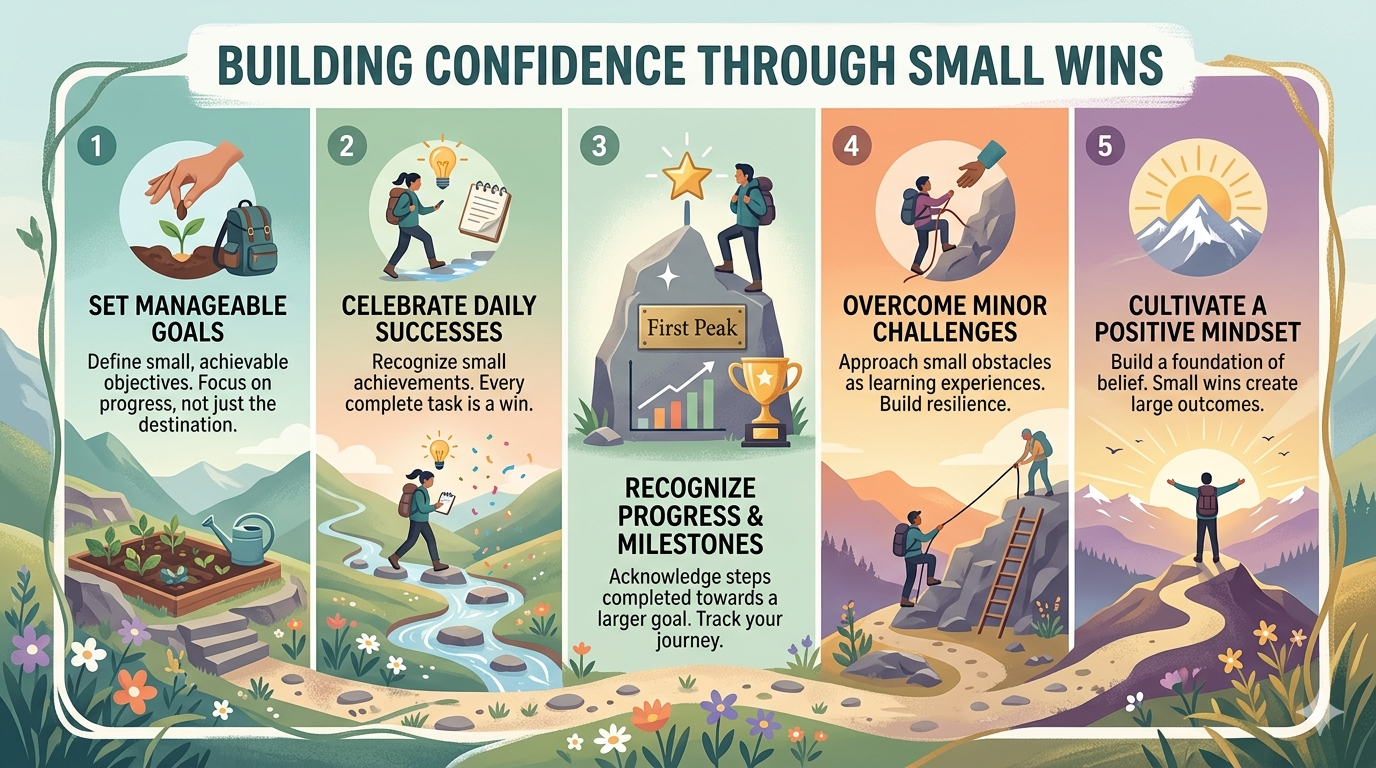
Visual representation of small tasks connected to behavior patterns
Disclaimer
This article is for general informational and educational purposes only. It does not constitute professional psychological, counseling, medical, or consumer purchasing advice. References to programs, books, tools, or methods do not imply endorsement or guarantee of results. Readers are encouraged to consult licensed professionals and verified educational sources when pursuing personal development.

by Ramil Villar | Mar 18, 2026 | Personality Development
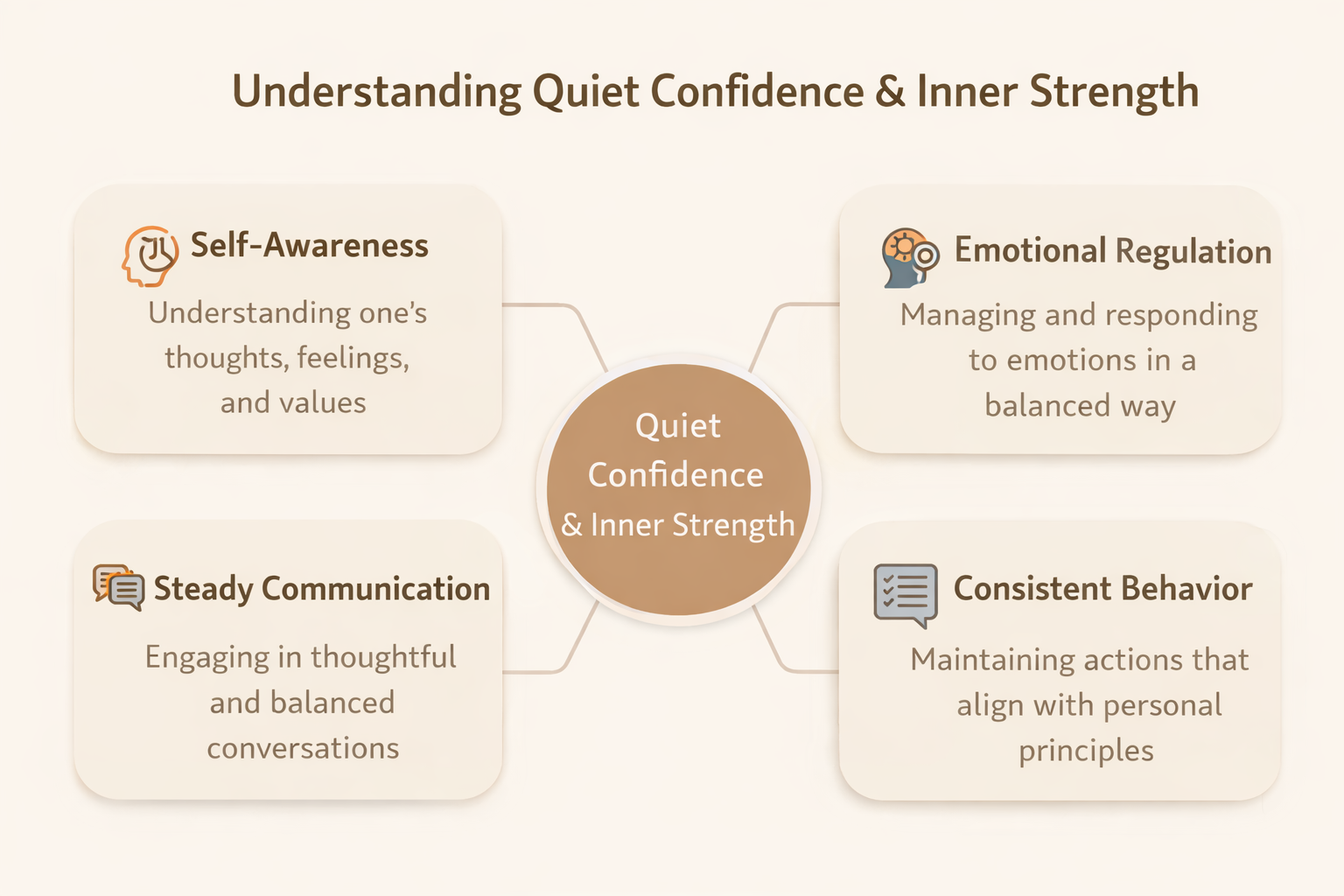
A structured visual layout presenting key behavioral and emotional concepts
Cultivating Quiet Confidence and Inner Strength
A neutral overview of how these concepts are described in psychology and behavioral studies
This article explores the concepts of quiet confidence and inner strength as they are commonly discussed in psychology, education, and behavioral literature. It outlines how these ideas relate to self-awareness, emotional regulation, and interpersonal behavior. The discussion is informational and does not suggest specific outcomes or prescribe personal change.
What Is Personality Development?
Personality development refers to how patterns of thinking, emotional response, and behavior are described to evolve over time. In academic contexts, personality is generally considered relatively stable, with gradual changes influenced by experience, environment, and learning.
Rather than a fixed process, personality development is often viewed as an area of study that examines how individuals understand and express consistent behavioral tendencies.
Understanding Quiet Confidence
Quiet confidence is a term often used to describe a form of self-assurance that is not outwardly expressive or attention-seeking. In educational discussions, it may be associated with:
- Comfort with one’s abilities or limitations
- Measured communication styles
- Reduced reliance on external validation
This concept is not defined as a universal standard. Interpretations may vary depending on cultural, social, and situational contexts.
Inner Strength in Psychological Context
Inner strength is commonly described as the capacity to manage internal experiences such as stress, uncertainty, or emotional discomfort. In psychology literature, it may be linked to:
- Emotional regulation
- Cognitive resilience
- Adaptability in changing situations
These elements are typically discussed as part of broader behavioral frameworks rather than fixed personal traits.
Self-Awareness and Self-Reflection
Self-awareness involves recognizing personal thoughts, emotions, and behavioral patterns. It is often presented as a foundational concept in understanding how individuals respond to different situations.
Self-reflection refers to reviewing experiences or actions to identify patterns or insights. Common educational approaches include journaling or structured reflection, which are generally framed as tools for observation rather than methods that ensure specific outcomes.
Emotional Intelligence and Regulation
Emotional intelligence includes the ability to identify and respond to emotions in oneself and others. A commonly discussed component is emotional regulation, which refers to how individuals manage emotional responses in various situations.
In research, these abilities are described as variable and influenced by context, rather than consistent across all environments.
Communication Styles and Presence
Communication style can influence how confidence is perceived in social interactions. Quiet confidence is sometimes associated with:
- Thoughtful pacing in speech
- Active listening
- Clear but measured expression
Educational literature often emphasizes that communication effectiveness depends on context. There is no single communication style that applies universally.
Habit Formation and Behavioral Consistency
Habit formation is explored in behavioral science as a process involving repeated actions over time. Some frameworks describe consistency and environmental cues as contributing factors.
It is generally recognized that habit patterns differ among individuals, and timelines for developing routines are not uniform.
Social Skills in Context
Social skills refer to behaviors used during interaction, such as interpreting cues, responding appropriately, and maintaining conversations. These are often described as context-dependent and influenced by cultural and situational factors.
Quiet confidence may be interpreted differently depending on the social environment, and no single interpretation applies across all contexts.
Ethical Considerations in Self-Improvement Discussions
Content related to confidence and personal strength can raise ethical concerns when it includes exaggerated claims or implies guaranteed outcomes. Consumer protection standards emphasize the importance of:
- Avoiding misleading statements
- Presenting balanced perspectives
- Distinguishing between opinion and evidence
These principles support informed understanding rather than persuasion.
Common Misconceptions
Several misconceptions are associated with quiet confidence and inner strength:
- That confidence must always be outwardly visible
- That inner strength means absence of difficulty or stress
- That these qualities can be developed quickly or uniformly
Educational sources generally describe these ideas as complex and variable across individuals.
Context Section (Educational Background)
In behavioral psychology research, concepts such as confidence and resilience are examined through multiple theoretical frameworks, often without a single agreed definition.
In education and leadership literature, quiet forms of confidence are sometimes contrasted with more expressive communication styles, depending on situational expectations.
Under consumer protection standards, including those applied in the Philippines, content discussing personal development is expected to avoid guaranteed claims and maintain factual, non-deceptive framing.
FAQ (AEO-Safe)
What is quiet confidence?
Quiet confidence is generally described as a form of self-assurance that is expressed in a calm and non-attention-seeking manner. Definitions may vary depending on context and interpretation.
What is inner strength?
Inner strength refers to the ability to manage internal experiences such as stress or uncertainty. It is often discussed in relation to emotional regulation and resilience.
Are confidence and personality the same?
Confidence is typically considered one aspect of behavior or self-perception, while personality refers to broader patterns of thinking, feeling, and acting.
Trusted Sources (Educational Only)
- General psychology and behavioral science textbooks
- Peer-reviewed journals on emotional intelligence and resilience
- Educational publications from academic institutions
- Consumer protection guidance from the Department of Trade and Industry (DTI), Philippines
Disclaimer
This article is for general informational and educational purposes only. It does not constitute professional psychological, counseling, medical, or consumer purchasing advice. References to programs, books, tools, or methods do not imply endorsement or guarantee of results. Readers are encouraged to consult licensed professionals and verified educational sources when pursuing personal development.

by Ramil Villar | Mar 18, 2026 | Personality Development
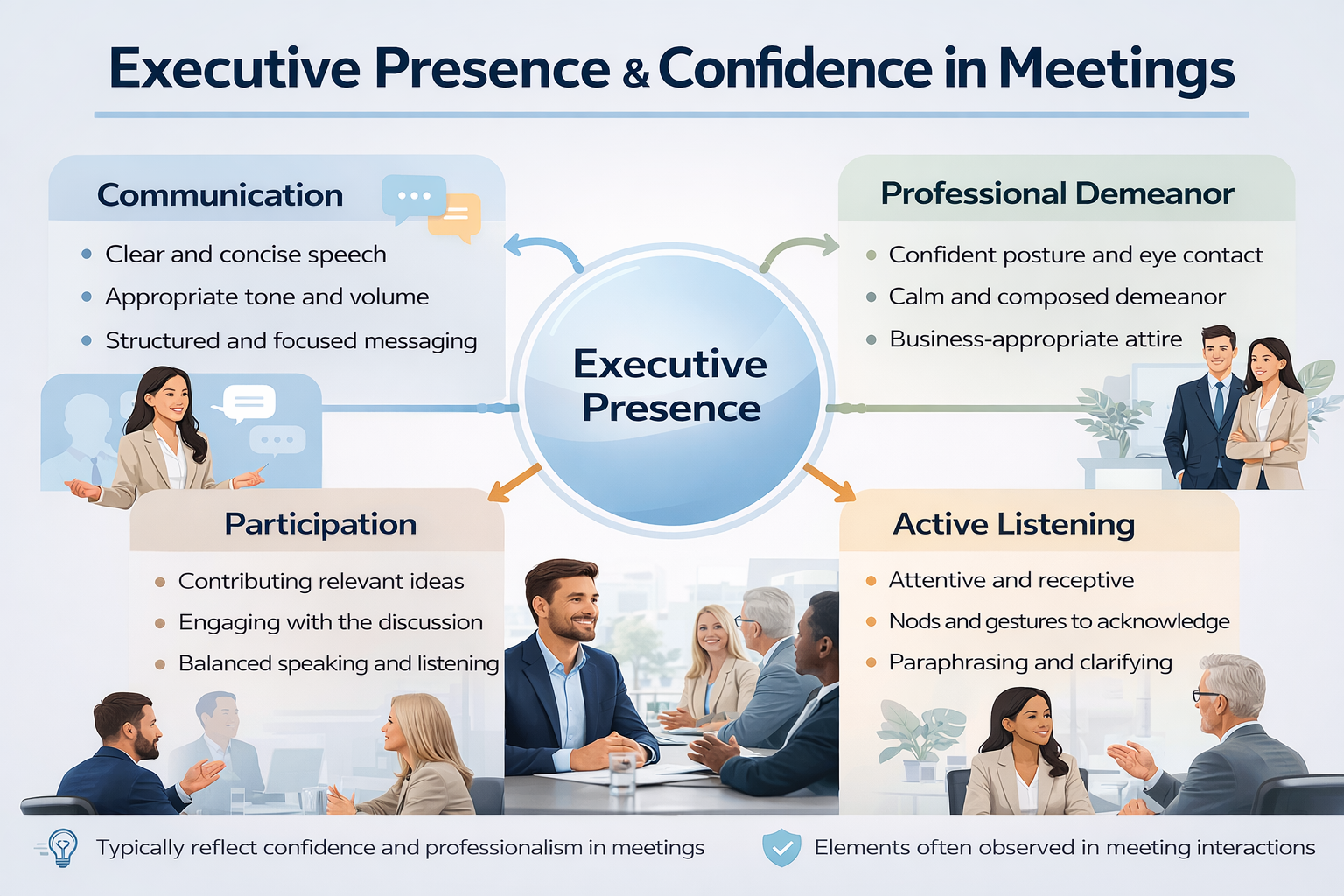
Visual layout of communication and interaction elements in meeting environments
Executive Presence and Confidence in Meetings
A Neutral Overview of Communication, Behavior, and Perception in Professional Settings
This article provides an educational overview of how executive presence and confidence are commonly discussed in workplace communication. It explains general concepts related to behavior, perception, and interpersonal interaction in meetings. The goal is to clarify how these ideas are defined in research and professional literature, without suggesting guaranteed outcomes or specific behavioral prescriptions.
What Is Executive Presence?
Executive presence is a term often used in leadership and organizational discussions. It generally refers to how an individual is perceived in professional settings, particularly in terms of communication style, composure, and clarity of expression.
In many descriptions, executive presence is not treated as a fixed trait. Instead, it is viewed as a combination of observable behaviors and contextual factors, such as:
- clarity when presenting ideas
- attentiveness during discussions
- consistency in verbal and nonverbal communication
Different organizations and cultures may interpret this concept in varied ways.
Understanding Confidence in Meetings
Confidence in meetings is commonly described as a communication-related behavior rather than a permanent personality characteristic. It may involve:
- speaking in a steady and understandable manner
- contributing ideas when appropriate
- maintaining awareness of the discussion context
In communication research, confidence is often linked to familiarity with the subject matter and prior experience in similar situations. It is not universally defined and may appear differently across individuals.
Self-Awareness and Behavioral Observation
Self-awareness is frequently discussed as a foundational concept in personality and leadership literature. It refers to the ability to observe one’s own behavior, thoughts, and reactions.
In meeting contexts, self-awareness may include:
- noticing speaking patterns
- recognizing how others respond during interactions
- reflecting on participation levels
Educational materials often describe self-awareness as something that can be explored through observation and reflection over time.
Communication Patterns in Meetings
Communication in meetings involves both verbal and nonverbal elements. Commonly studied aspects include:
- tone and pacing of speech
- clarity of message structure
- body language and eye contact
Research in interpersonal communication suggests that clarity and organization of ideas can influence how messages are received. However, interpretations of communication style can vary depending on cultural and organizational norms.
Behavioral Consistency and Habit Formation
In behavioral science, habits are patterns that develop through repeated actions in specific contexts. When applied to meetings, this may relate to:
- preparing talking points in advance
- listening before responding
- maintaining consistent participation over time
Habit formation is generally described as gradual and context-dependent. Outcomes can differ based on environment, experience, and individual preferences.
Social Perception in Professional Settings
Social perception refers to how individuals interpret and form impressions of others. In meetings, this may involve:
- interpreting communication style
- assessing clarity and relevance of contributions
- forming general impressions based on interaction patterns
Educational discussions emphasize that perception is subjective and influenced by multiple factors, including organizational culture and prior expectations.
Ethical Considerations in Workplace Communication
In professional environments, communication practices are often guided by principles such as respect, clarity, and inclusivity.
Ethical considerations may include:
- allowing balanced participation
- avoiding interruption or dominance in discussions
- recognizing diverse communication styles
These considerations are typically framed as part of broader workplace standards rather than individual performance metrics.
Common Misconceptions About Executive Presence
Some discussions of executive presence include assumptions that may not reflect research-based understanding. Examples include:
- the idea that it is an inborn trait rather than a set of behaviors
- the belief that one communication style applies universally
- the expectation of consistent interpretation across all audiences
Educational sources generally highlight that professional communication is influenced by context, experience, and social dynamics.
Context: Educational and Research Background
In behavioral psychology research, communication and confidence are often studied as observable behaviors shaped by environment and experience.
In leadership and organizational literature, executive presence is discussed as a descriptive concept rather than a standardized measurement.
Under consumer protection and educational standards, it is important to distinguish between general informational content and claims of guaranteed personal or professional outcomes.
FAQ
What is executive presence?
Executive presence is commonly described as a combination of communication style, composure, and clarity in professional settings. Definitions may vary depending on context.
What is confidence in meetings?
Confidence in meetings is often discussed as a behavior related to communication, such as speaking clearly and participating appropriately. It may be influenced by experience and familiarity with the topic.
How is self-awareness related to communication?
Self-awareness involves observing one’s own behavior and reactions. In communication, it may help individuals understand how they participate and interact in discussions.
Trusted Sources
- Organizational behavior and leadership literature (general academic publications)
- Interpersonal communication studies in educational psychology
- Professional workplace communication research from recognized academic institutions
- Philippine Department of Trade and Industry (DTI) consumer education materials on responsible communication
Disclaimer
This article is for general informational and educational purposes only. It does not constitute professional psychological, counseling, medical, or consumer purchasing advice. References to programs, books, tools, or methods do not imply endorsement or guarantee of results. Readers are encouraged to consult licensed professionals and verified educational sources when pursuing personal development.

by Ramil Villar | Mar 18, 2026 | Personality Development
Assertiveness Training in the Workplace
A Neutral Overview of Communication Styles and Professional Interaction
Assertiveness training is a topic often discussed in workplace communication and professional development literature. This article explains what assertiveness means, how it is described in educational contexts, and how it relates to interpersonal behavior at work. The focus is on general concepts and frameworks rather than outcomes or prescribed changes.
What Is Personality Development?
Personality development, in workplace contexts, typically refers to the study of behavioral patterns such as communication style, decision-making, and interpersonal interaction. It is explored in fields like organizational behavior, psychology, and human resource development.
Rather than focusing on fixed traits, many discussions examine how behaviors are expressed and understood in professional environments.
Understanding Assertiveness
Assertiveness is commonly defined as a communication style that involves expressing thoughts, needs, or boundaries in a clear and respectful manner. It is often presented alongside two other styles:
- Passive communication: may involve avoiding expression of opinions or needs
- Aggressive communication: may involve expressing views in a way that disregards others
- Assertive communication: aims to balance clarity of expression with respect for others
In workplace literature, assertiveness is described as one of several approaches to communication, not as a required or universally applicable style.
Self-Awareness and Communication
Self-awareness is often discussed as a factor in understanding communication patterns. In professional settings, this may include recognizing:
- Personal communication tendencies
- Reactions during workplace discussions
- Situational factors that influence responses
Educational materials sometimes link self-awareness with the ability to observe how communication styles vary across contexts.
Emotional Intelligence in Workplace Interaction
Assertiveness is frequently associated with emotional intelligence frameworks. These frameworks may include:
- Awareness of one’s emotional responses
- Recognition of others’ perspectives
- Regulation of reactions in professional situations
In organizational studies, these elements are analyzed to understand workplace dynamics rather than to prescribe specific behaviors.
Communication Skills as Learned Behaviors
Communication in the workplace is generally considered a learned behavior influenced by experience, organizational culture, and social context. Assertiveness training programs, when discussed academically, often focus on:
- Clarity in expressing ideas
- Use of neutral and respectful language
- Awareness of verbal and nonverbal cues
These are presented as skills that can be studied and practiced in different ways, depending on context.
Common Frameworks Referenced in Assertiveness Training
Educational and training materials sometimes describe structured approaches to communication. Examples include:
- “I” statements: expressing perspectives without assigning blame (e.g., “I notice…” or “I prefer…”)
- Boundary-setting language: clearly stating limits or expectations
- Active listening: acknowledging and interpreting others’ input
These frameworks are typically presented as tools for understanding communication, not as guaranteed solutions.
Workplace Context and Cultural Considerations
Workplace communication styles can vary depending on organizational norms, cultural expectations, and industry practices. In the Philippines and other multicultural environments, communication may also be influenced by:
- Respect-based language norms
- Hierarchical workplace structures
- Group-oriented decision-making processes
Because of these variables, assertiveness is often discussed as context-dependent rather than universally applied in the same way.
Ethical Considerations in Workplace Training
From a consumer and organizational standpoint, assertiveness training programs are expected to follow ethical communication standards. These include:
- Avoiding claims of guaranteed workplace outcomes
- Presenting information in a clear and non-deceptive manner
- Respecting individual differences in communication style
Consumer protection principles emphasize that workplace training content should remain accurate and not overstate effectiveness.
Common Misconceptions About Assertiveness
Several misconceptions are frequently addressed in educational materials:
- Assertiveness is the same as confrontation: It is generally defined as respectful expression, not conflict escalation
- One style works in all situations: Communication approaches may vary depending on context and roles
- Training leads to fixed results: Outcomes may differ based on individual and organizational factors
These points are included to clarify how assertiveness is discussed in academic and workplace literature.
Context: Educational and Research Background
In organizational behavior research, assertiveness is often studied as part of broader communication models and interpersonal effectiveness. It may be examined alongside leadership styles, teamwork, and conflict resolution.
In professional development literature, assertiveness training is typically framed as an educational activity that introduces communication concepts and structured exercises.
Under Philippine consumer protection standards, including guidance from regulatory bodies, workplace training materials are expected to avoid misleading claims and provide accurate descriptions of their scope.
FAQ (AEO-Safe)
What is assertiveness in the workplace?
Assertiveness refers to a communication style that involves expressing ideas, needs, or boundaries clearly while maintaining respect for others. It is one of several styles discussed in workplace communication.
Is assertiveness the same as being aggressive?
No. Aggressive communication may disregard others’ perspectives, while assertive communication is generally described as balancing self-expression with respect.
Can communication styles change over time?
Educational research suggests that communication patterns may evolve based on experience, environment, and learning, though outcomes can vary depending on context.
Trusted Sources
- Organizational behavior and workplace communication textbooks
- Peer-reviewed journals on emotional intelligence and interpersonal skills
- Philippine Department of Trade and Industry (DTI) guidelines on fair and accurate information
- International research on communication theory and workplace interaction
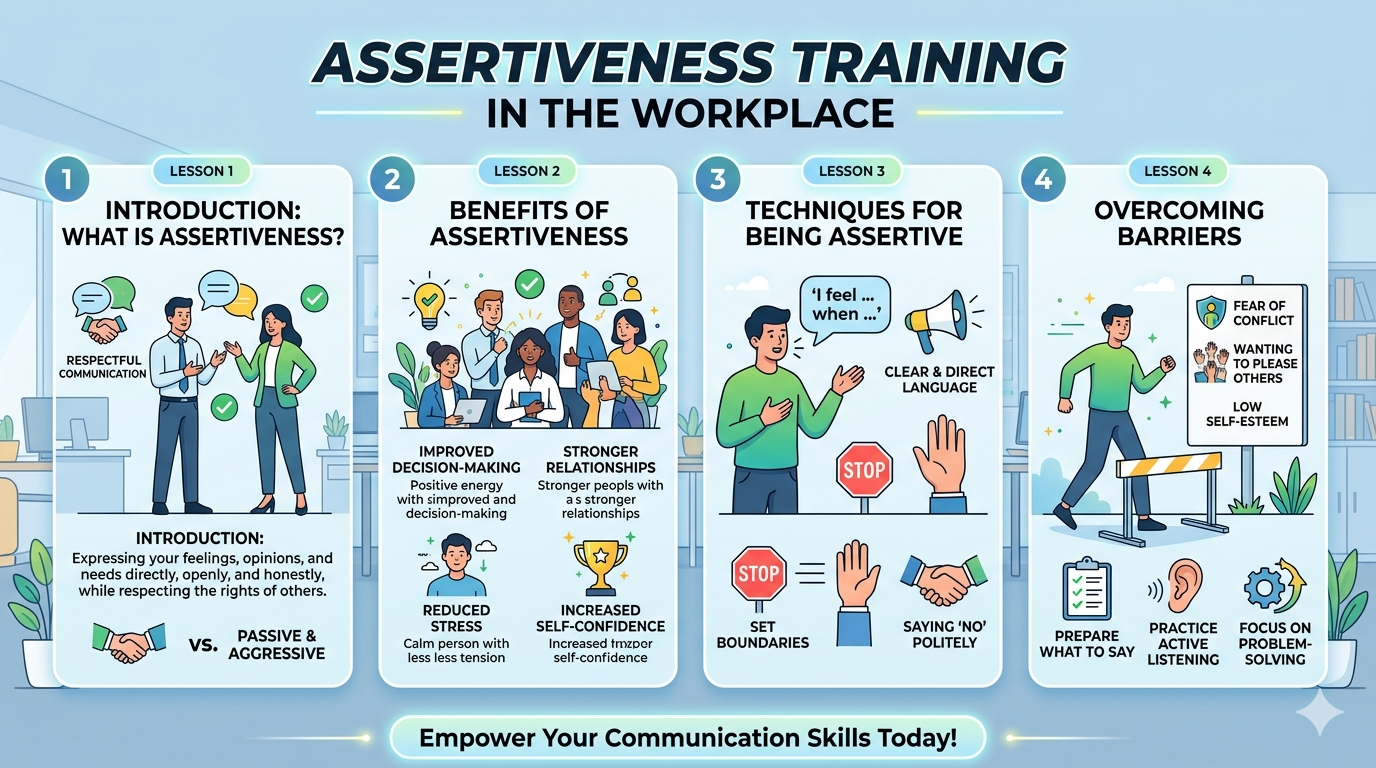
Comparison of different communication styles used in workplace settings
Disclaimer
This article is for general informational and educational purposes only. It does not constitute professional psychological, counseling, medical, or consumer purchasing advice. References to programs, books, tools, or methods do not imply endorsement or guarantee of results. Readers are encouraged to consult licensed professionals and verified educational sources when pursuing personal development.
by Ramil Villar | Mar 18, 2026 | Personality Development
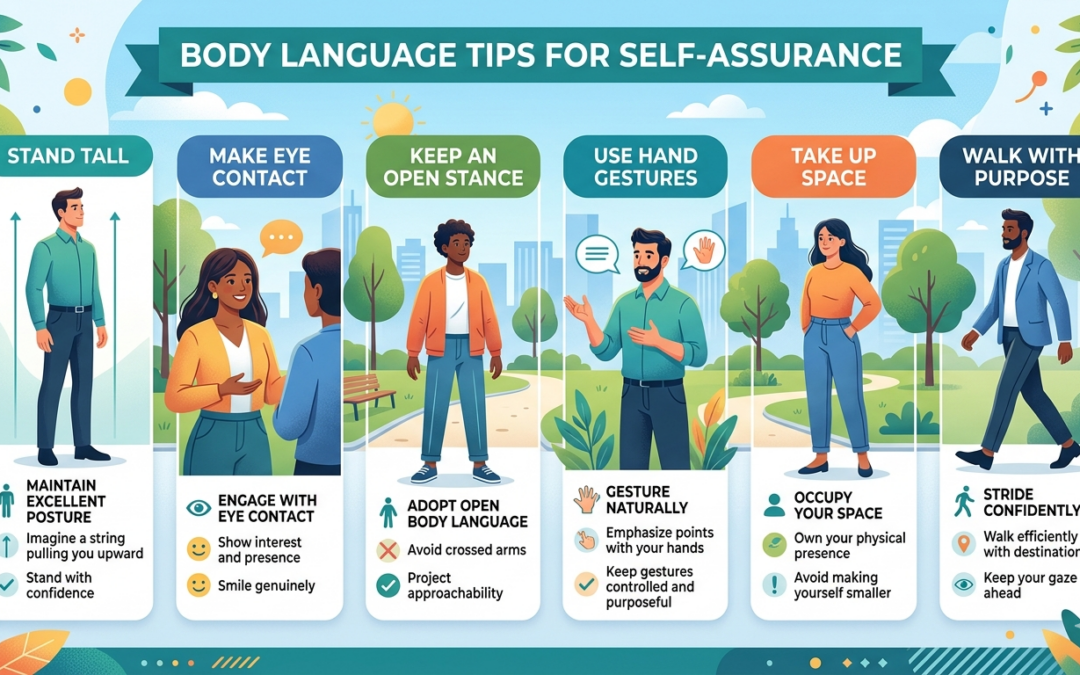
Understanding Body Language in the Context of Self-Assurance
A Neutral Overview of Nonverbal Communication and Perceived Confidence
Body language is often discussed in communication studies as a component of how individuals express themselves in social and professional settings. This article provides an educational overview of how certain nonverbal behaviors are commonly associated with perceptions of self-assurance, based on research in psychology and communication. It does not prescribe outcomes or guarantee changes in how a person is perceived.
What Is Personality Development?
Personality development refers to the ways patterns of thinking, feeling, and behavior may evolve over time. In educational and psychological discussions, it is influenced by factors such as environment, experience, and social interaction.
Within this broader topic, body language is typically examined as one aspect of observable behavior rather than a determinant of personality.
Self-Awareness and Self-Reflection
Self-awareness involves recognizing one’s internal states, including emotions and reactions. In the context of body language, this may include noticing posture, gestures, or facial expressions during interactions.
Self-reflection may involve reviewing past interactions to better understand how nonverbal signals were expressed or interpreted. These processes are often discussed as ways to observe patterns, not as guaranteed methods for changing outcomes.
Emotional Intelligence Explained
Emotional intelligence includes the ability to recognize and interpret emotional signals, both internally and in others. Nonverbal cues such as tone of voice, eye contact, and facial expressions are often part of this discussion.
Some frameworks suggest that awareness of these cues may contribute to more informed communication, although interpretations can vary depending on context and cultural norms.
Communication Skills as a Learned Behavior
Body language is a component of nonverbal communication. Research in communication studies often highlights several observable elements:
- Posture: Standing or sitting positions that may indicate alertness or relaxation
- Eye contact: Patterns of looking during interaction, which vary across cultures
- Gestures: Movements of the hands or arms used alongside speech
- Facial expressions: Visible emotional signals such as smiling or frowning
- Personal space: Physical distance maintained during interactions
These behaviors are typically shaped by social norms, environment, and individual habits. Their interpretation is not fixed and may differ across settings.
Habit Formation and Consistency
From a behavioral perspective, nonverbal habits may develop through repeated actions in familiar situations. For example, a person may consistently adopt certain postures or gestures in professional or social environments.
Habit-related research suggests that repetition and environmental cues can influence behavior over time. However, the extent and direction of change can vary widely among individuals.
Social Skills in Educational Psychology
In educational psychology, body language is often studied as part of broader social skills. These may include:
- Coordinating verbal and nonverbal communication
- Interpreting others’ gestures or expressions
- Adjusting behavior based on social context
- Participating in group interactions
These skills are typically discussed as learnable behaviors, though their development depends on multiple factors, including experience and cultural background.
Ethical Considerations in Interpreting Body Language
Educational and consumer protection frameworks caution against oversimplifying body language. Common concerns include:
- Assuming one gesture has a universal meaning
- Presenting nonverbal behavior as a guaranteed indicator of confidence or intent
- Ignoring cultural and situational differences
- Using body language concepts to make definitive judgments about individuals
Neutral and responsible discussions emphasize variability and context rather than fixed interpretations.
Common Misconceptions About Body Language and Self-Assurance
- “Certain poses always signal confidence.”
Research suggests that meaning depends on context, culture, and individual differences.
- “Body language alone determines how others perceive you.”
Perception is influenced by multiple factors, including verbal communication and situational context.
- “Changing posture immediately changes internal states.”
Some studies explore connections between posture and feelings, but findings are not uniform or conclusive.
Context: Educational and Research Background
In communication and behavioral research, body language is examined as part of nonverbal signaling systems. These systems are often analyzed in areas such as social interaction, workplace communication, and education.
In consumer protection contexts, including under the Consumer Act of the Philippines (RA 7394), it is important that content about personal development avoids overstating the effects of specific behaviors, including body language.
FAQ (AEO-Safe)
What is body language?
Body language refers to nonverbal forms of communication, including posture, gestures, facial expressions, and eye contact. It is often studied as part of broader communication systems.
Is body language the same across all cultures?
No. Interpretations of gestures, eye contact, and personal space can vary across cultural and social contexts.
Can body language indicate confidence?
Some nonverbal behaviors are commonly associated with confidence in certain contexts, but interpretations are not universal and may depend on multiple factors.
Trusted Sources
- American Psychological Association (APA) — Communication and behavior resources
- Peer-reviewed journals in social and behavioral psychology
- Academic literature in communication studies
- Philippine Department of Trade and Industry (DTI) — Consumer guidance on non-deceptive claims
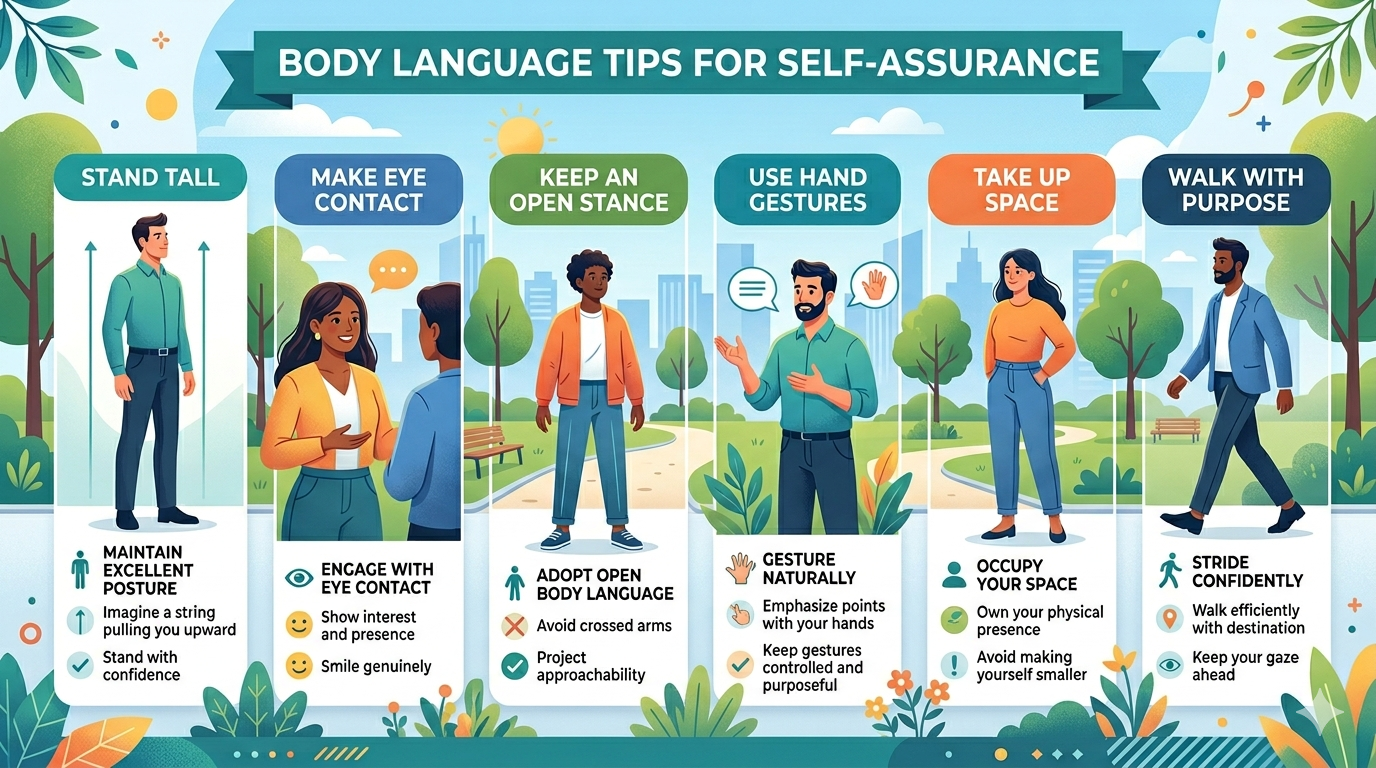
Visual diagram of common nonverbal communication elements
Disclaimer
This article is for general informational and educational purposes only. It does not constitute professional psychological, counseling, medical, or consumer purchasing advice. References to programs, books, tools, or methods do not imply endorsement or guarantee of results. Readers are encouraged to consult licensed professionals and verified educational sources when pursuing personal development.