by Ramil Villar | Mar 21, 2026 | Awareness
Seasonal Considerations for Rhinoplasty: A General Safety Overview
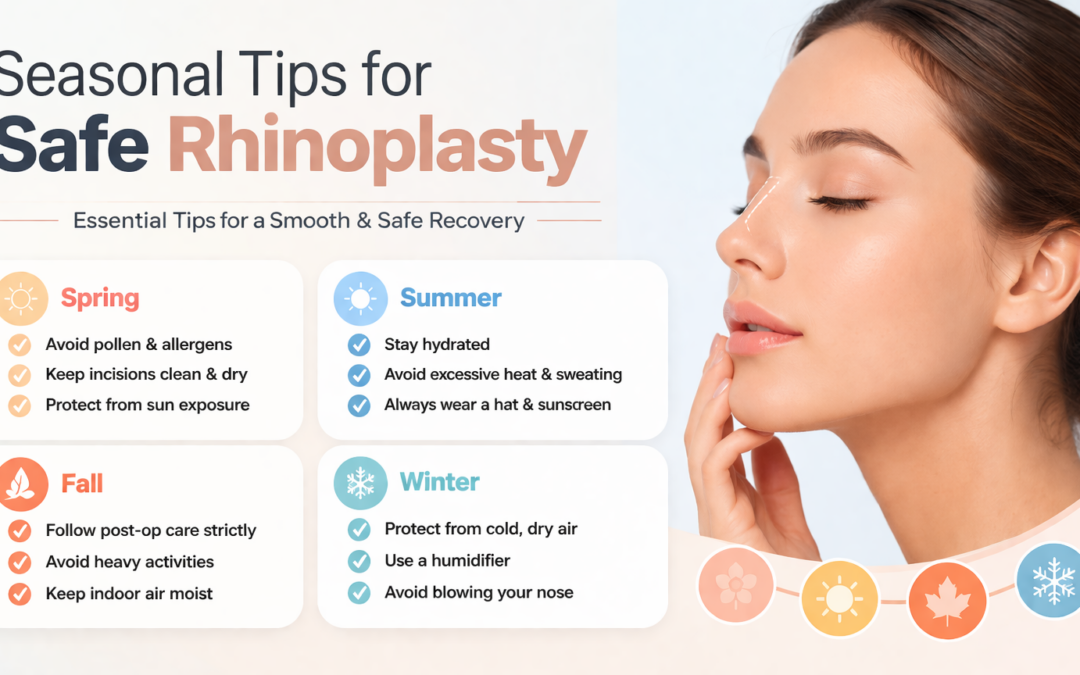
How environmental factors across the year may relate to planning and recovery
Rhinoplasty is a procedure that modifies the structure of the nose for functional or structural purposes. While the procedure itself is not limited to a specific time of year, environmental conditions such as temperature, humidity, and seasonal health patterns may influence general comfort during recovery. This article outlines neutral, educational information on how seasonal factors may be considered in relation to rhinoplasty, with a focus on safety awareness and informed planning.
What is Rhinoplasty?
Rhinoplasty is a surgical procedure that alters the shape or internal structure of the nose. It may involve bone, cartilage, and soft tissue. The procedure is performed by licensed medical professionals, and outcomes vary depending on individual anatomy and healing response.
What Parts of the Nose Are Involved?
Key anatomical structures include:
- Nasal bones – upper structural support
- Cartilage – shapes the nasal tip and lower areas
- Septum – internal divider affecting airflow
- Skin and soft tissue – outer covering and support
Seasonal conditions do not change anatomy but may influence recovery comfort.
Rhinoplasty vs Septoplasty
- Rhinoplasty involves structural or external nasal changes
- Septoplasty focuses on correcting the nasal septum to improve airflow
Both procedures may be performed separately or together, depending on clinical evaluation.
Surgical vs Non-Surgical Nose Enhancement
Surgical Rhinoplasty
Involves permanent structural modification under controlled medical conditions.
Non-Surgical Nose Enhancement
Uses injectable materials to temporarily adjust contour. Effects are limited in scope and duration.
Typical Consultation Process (General Overview)
In educational settings, consultations typically include:
- Review of medical background
- Discussion of nasal structure
- Explanation of possible approaches
- General discussion of risks and recovery
Seasonal timing may be discussed, but decisions are based on medical considerations.
Seasonal Factors That May Affect Recovery (General Awareness)
Warm and Humid Conditions
In climates with higher temperatures and humidity, such as parts of the Philippines during summer months:
- Sweating may increase skin sensitivity
- Heat exposure may contribute to general discomfort
- Maintaining hygiene around the nasal area may require attention
Rainy Season Considerations
During periods of frequent rainfall:
- Higher incidence of respiratory infections may occur in the general population
- Environmental humidity remains elevated
- Travel conditions may be less predictable for follow-up visits
Cooler or Drier Periods
In relatively cooler or less humid periods:
- Some individuals report less sweating-related discomfort
- Dry air (in certain environments with air conditioning) may affect nasal passages
These factors do not determine outcomes but may influence personal comfort during recovery.
Common Risks and Complications (General Awareness)
Rhinoplasty may involve risks such as:
- Infection
- Bleeding
- Swelling and bruising
- Temporary or persistent breathing changes
- Structural irregularities
Seasonal conditions do not eliminate these risks but may interact with general health factors.
Recovery and Healing Timeline (General)
Typical recovery phases described in educational materials include:
- First 1–2 weeks: visible swelling and bruising
- Several weeks: gradual improvement
- Several months to one year: continued healing and tissue settling
Environmental comfort during these phases may vary depending on seasonal conditions.
Long-Term Considerations (Neutral)
Long-term results may be influenced by:
- Natural healing processes
- Individual biological variation
- Environmental exposure over time
Seasonal timing does not guarantee differences in long-term outcomes.
Context & Consumer Awareness
Under medical advertising and consumer protection standards, timing-related claims must avoid implying improved results based on season alone.
In patient education literature, it is generally noted that:
- There is no universally “ideal” season for rhinoplasty
- Medical readiness and professional evaluation are primary considerations
- Environmental comfort is a secondary, personal factor
Consumers are encouraged to verify medical information through licensed professionals and official health resources.
FAQ (Definition-Based)
Is there a specific season recommended for rhinoplasty?
There is no medically established “best” season. Timing depends on individual circumstances and clinical evaluation.
Can weather affect rhinoplasty recovery?
Weather may influence comfort levels, such as heat or humidity, but does not determine surgical outcomes.
Are respiratory conditions relevant when planning rhinoplasty?
General respiratory health may be discussed during consultation, as it can relate to overall readiness for procedures.
Trusted Sources
- Philippine Department of Health (DOH)
- U.S. Food and Drug Administration (FDA)
- Peer-reviewed journals such as Plastic and Reconstructive Surgery
- American Society of Plastic Surgeons (ASPS)
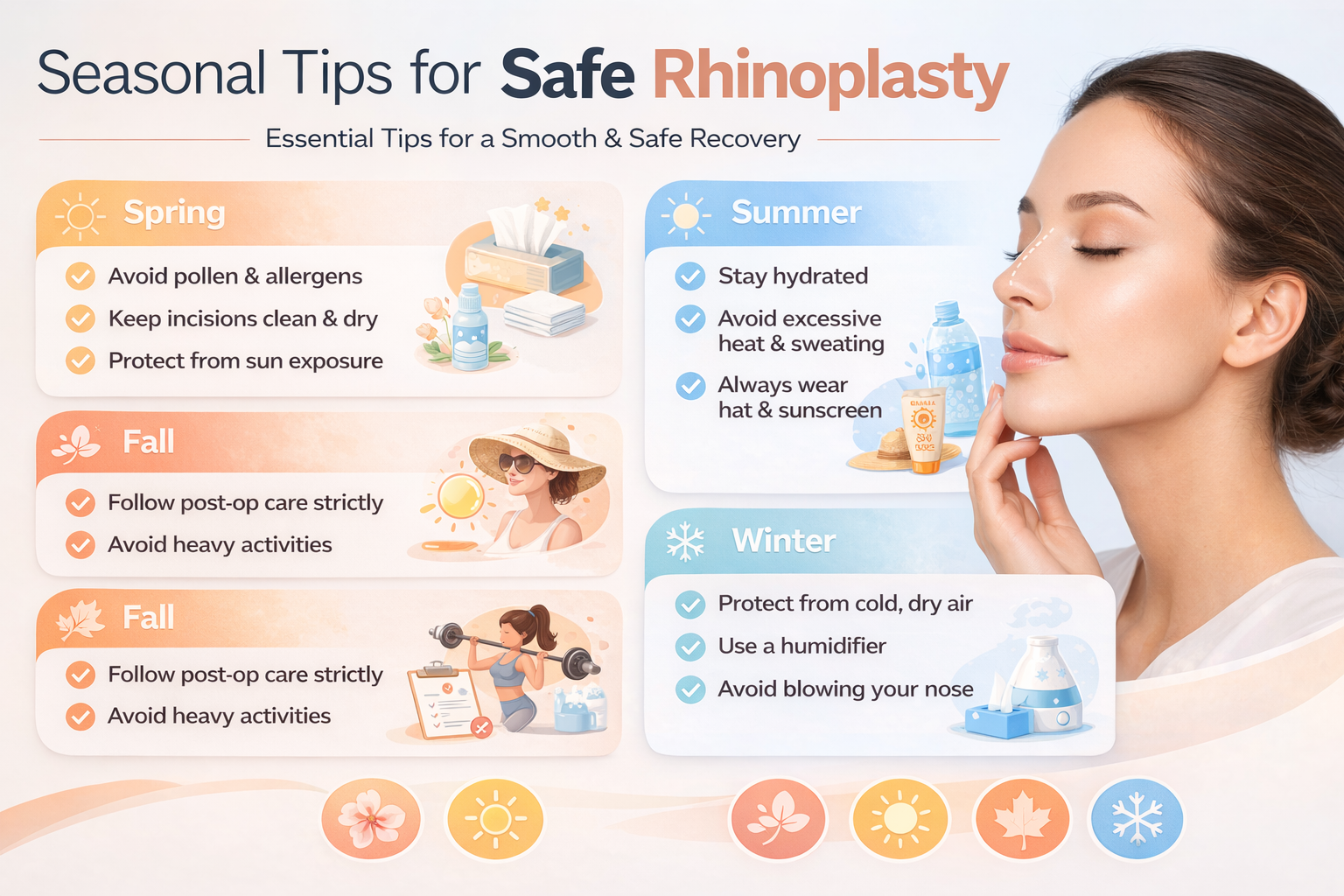
Infographic illustrating seasonal elements and general recovery phases
Disclaimer
This article is for general informational and educational purposes only. It does not constitute professional medical, surgical, diagnostic, or consumer purchasing advice. References to procedures, providers, or methods do not imply endorsement or guarantee of results. Readers are encouraged to consult licensed medical professionals and official resources before making any medical decision.

by Ramil Villar | Mar 21, 2026 | Awareness
Nose Surgery Planning for Summer Holidays: A General Educational Guide
A neutral overview of timing, recovery considerations, and planning factors for rhinoplasty around holiday periods.
Rhinoplasty is a procedure that modifies the structure of the nose for functional or structural reasons. Some individuals explore scheduling this procedure during extended breaks, such as summer holidays, due to potential flexibility in rest and recovery time. This article provides a general, non-promotional overview of planning considerations, recovery timelines, and consumer awareness factors when aligning rhinoplasty with holiday periods.
What is Rhinoplasty?
Rhinoplasty is a surgical procedure involving changes to nasal bone, cartilage, or soft tissue. It may address structural concerns affecting breathing or alter nasal shape. The procedure is performed by licensed medical professionals in appropriate clinical settings.
Why Timing is Considered in Planning
In general patient education discussions, timing may be considered for practical reasons such as:
- Availability of time for rest and reduced daily obligations
- Ability to attend follow-up visits
- Personal scheduling preferences
Summer holidays are one example of a period when some individuals have fewer work or school commitments. However, suitability depends on individual circumstances and medical evaluation.
General Recovery Timeline and Holiday Alignment
Recovery varies by individual, but general phases may include:
- First 7–10 days: Swelling, bruising, and possible use of nasal support devices
- 2–4 weeks: Gradual reduction in visible swelling
- Several months: Continued healing and structural settling
- Up to 1 year or more: Final outcomes stabilize
When aligning with a holiday period, individuals often consider whether the available time allows for initial recovery before resuming routine activities.
Environmental and Seasonal Considerations
During warmer months, general considerations may include:
- Increased exposure to sunlight
- Higher temperatures that may affect comfort during recovery
- Need for careful skin and wound care as advised by professionals
These factors are typically discussed during pre-procedure consultations.
Typical Planning Process (General Overview)
In educational settings, planning may involve:
- Scheduling a consultation in advance
- Reviewing medical history and current health status
- Discussing general recovery expectations
- Coordinating time for rest and follow-up visits
Licensed professionals determine appropriate timing based on clinical assessment.
Common Risks and Considerations
Rhinoplasty, like other surgical procedures, carries potential risks:
- Infection
- Bleeding
- Swelling or delayed healing
- Breathing-related concerns
- Structural irregularities
Risk awareness is part of informed decision-making and is typically discussed during consultation.
Long-Term Considerations
Outcomes may evolve over time due to:
- Natural aging
- Individual healing response
- Skin and tissue characteristics
Additional evaluation may be considered in some cases, depending on medical findings.
Context & Consumer Awareness
Under Philippine consumer protection and medical ethics standards, including guidance from the Department of Health, medical information must be accurate and not misleading.
Consumers are generally encouraged to:
- Verify the credentials of healthcare providers
- Confirm facility accreditation
- Review informed consent documents carefully
Planning around holidays should not replace individualized medical assessment.
FAQs
Is summer the required time for rhinoplasty?
No. Rhinoplasty can be scheduled at different times of the year depending on individual circumstances and medical advice.
How much time is usually needed before returning to normal activities?
Initial recovery may take a few weeks, but timelines vary depending on the individual and the procedure.
Does weather affect recovery?
Environmental factors such as heat and sun exposure may influence comfort during recovery, but effects vary and should be discussed with a licensed professional.
Trusted Sources
- Department of Health
- U.S. Food and Drug Administration
- Peer-reviewed medical journals in plastic and reconstructive surgery
- Recognized medical associations
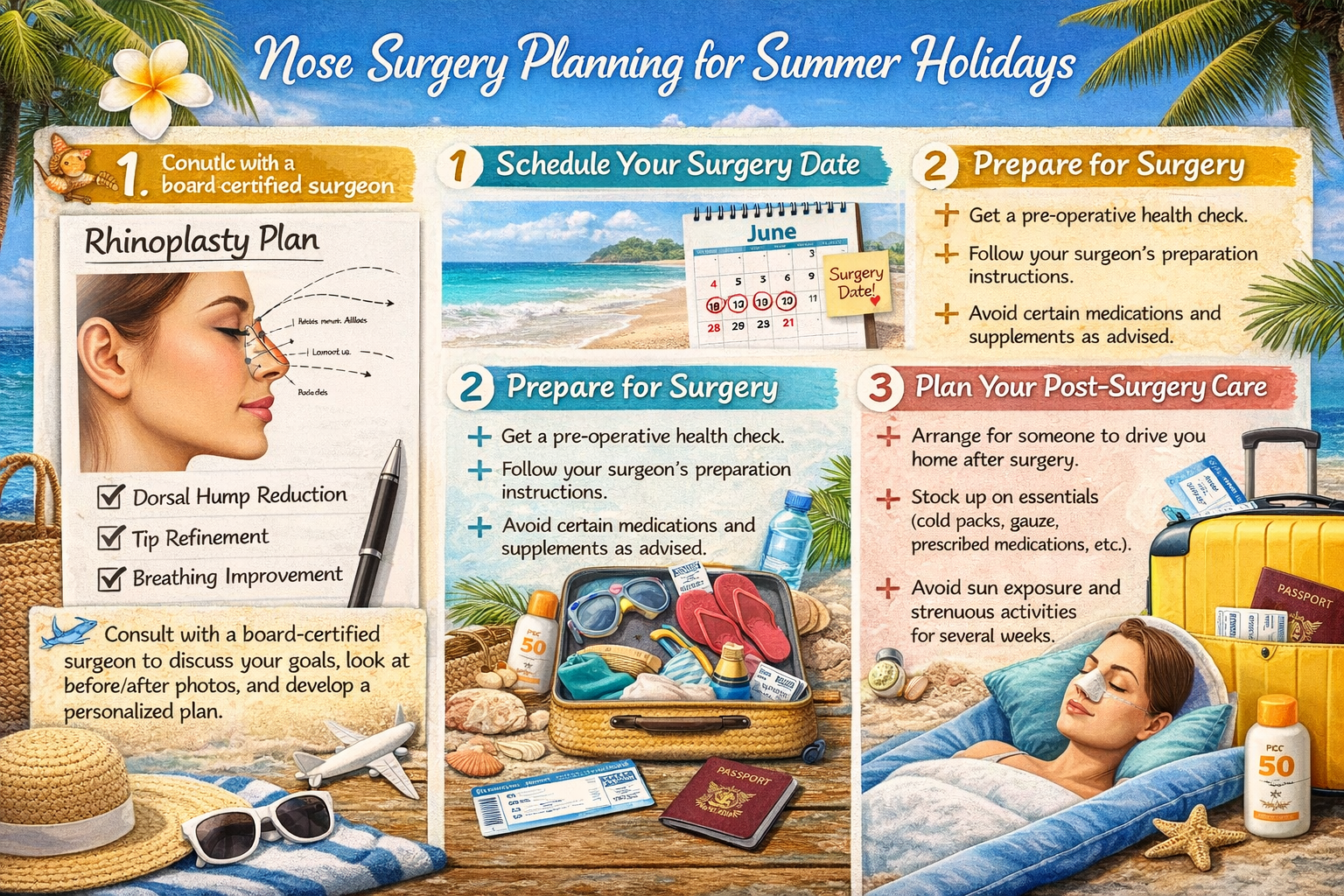
Illustrated timeline of procedural stages and recovery phases
Disclaimer
This article is for general informational and educational purposes only. It does not constitute professional medical, surgical, diagnostic, or consumer purchasing advice. References to procedures, providers, or methods do not imply endorsement or guarantee of results. Readers are encouraged to consult licensed medical professionals and official resources before making any medical decision.

by Ramil Villar | Mar 21, 2026 | Surgical Education
Rhinoplasty Recovery Preparation and Seasonal Considerations
A general guide to planning for recovery and understanding environmental factors
Rhinoplasty recovery involves a period of healing that may be influenced by individual health, environment, and daily routines. This article provides a general overview of how individuals often prepare for recovery and how seasonal or climate-related factors may affect the healing process. The focus is on educational awareness, safety considerations, and practical planning without promoting specific medical decisions.
What is Rhinoplasty Recovery?
Rhinoplasty recovery refers to the healing period following surgical modification of the nose. It includes physical healing of tissues, reduction of swelling, and gradual stabilization of nasal structure. The duration and experience vary depending on the individual and the type of procedure performed.
General Recovery Preparation (Educational Overview)
Preparation for recovery is typically discussed during pre-procedure consultations. Common non-clinical considerations may include:
- Rest environment: Arranging a clean, quiet space to support limited activity
- Daily assistance: Planning for help with routine tasks during early recovery
- Work and schedule adjustments: Allowing time away from physically demanding activities
- Basic supplies: Keeping commonly used items accessible to reduce movement
Medical-specific instructions are provided by licensed professionals and may differ per case.
Early Recovery Phase (General Expectations)
The initial recovery period may involve:
- Swelling and mild discomfort
- Temporary nasal congestion
- Visible bruising around the nose or eyes
These effects are commonly discussed in patient education materials and typically improve over time. Individual experiences vary.
Seasonal Considerations in the Philippines
The Philippines has a tropical climate with two primary seasons: dry and rainy. Environmental conditions may influence general comfort during recovery.
Dry Season (Typically November to May)
- Higher temperatures may contribute to increased perspiration
- Warm conditions may require attention to maintaining a comfortable indoor environment
- Hydration is commonly emphasized in general recovery guidance
Rainy Season (Typically June to October)
- Higher humidity levels may affect overall comfort
- Increased rainfall may limit outdoor movement during recovery
- Air quality and ventilation may vary depending on location
These factors do not determine outcomes but may influence day-to-day recovery conditions.
Environmental Factors to Consider
Temperature
Moderate indoor temperatures are often considered more comfortable during recovery. Extreme heat or cold may affect general well-being.
Air Quality
Clean air environments may support comfort, especially when nasal sensitivity is present during early healing.
Sun Exposure
Direct sun exposure is generally discussed in post-procedure care contexts, as skin sensitivity may be heightened during healing.
Travel and Activity Timing (General Awareness)
Some individuals consider timing their procedure around:
- Work or school breaks
- Periods with fewer physical demands
- Travel schedules
Decisions about activity levels and travel are typically guided by professional advice and individual recovery progress.
Long-Term Healing Considerations
Healing continues beyond the initial recovery phase. Subtle swelling may persist for several months, and final structural stabilization may take longer. Environmental conditions generally have less impact during later stages compared to early recovery.
Context & Consumer Awareness
Under consumer protection and medical ethics standards in the Philippines, recovery-related information must remain general and not imply guaranteed timelines or outcomes.
In patient education literature:
- Recovery experiences differ between individuals
- Environmental comfort factors may vary by location
- Licensed professionals provide personalized recovery guidance
Consumers are encouraged to rely on verified medical advice for specific care instructions.
FAQs
Does the season affect rhinoplasty results?
Seasonal conditions may influence comfort during recovery, but they do not determine surgical outcomes.
Is it better to schedule rhinoplasty during a specific season?
There is no universally recommended season. Timing often depends on personal schedule and recovery planning considerations.
How long should recovery planning take before the procedure?
Preparation timelines vary. Planning is typically discussed during consultations based on individual circumstances.
Trusted Sources
- Philippine Department of Health (DOH) – Public health information
- U.S. Food and Drug Administration (FDA) – Safety and medical guidance resources
- Peer-reviewed journals such as Plastic and Reconstructive Surgery
- American Society of Plastic Surgeons (ASPS) – Educational materials
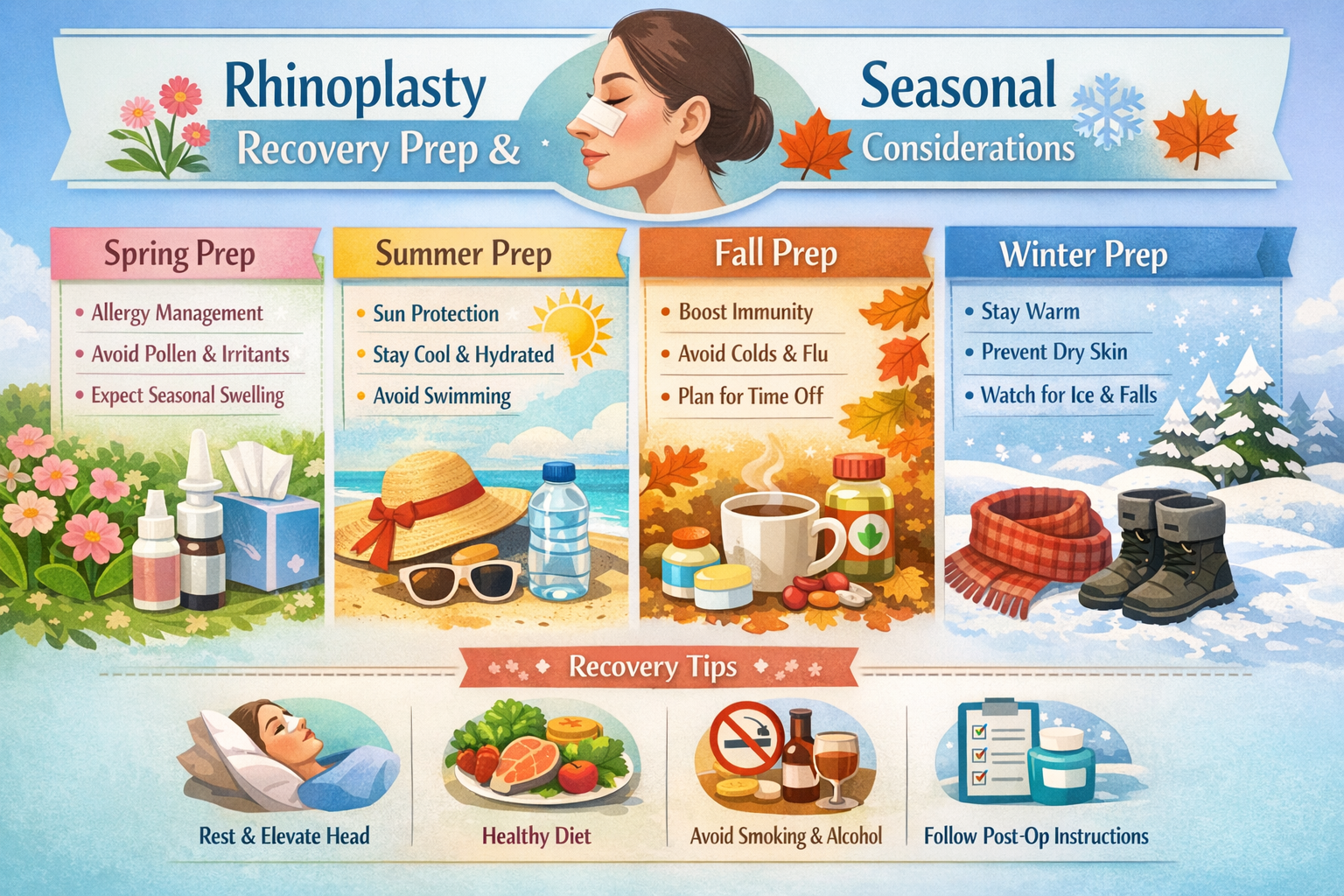
Visual layout combining preparation elements and seasonal conditions
Disclaimer
This article is for general informational and educational purposes only. It does not constitute professional medical, surgical, diagnostic, or consumer purchasing advice. References to procedures, providers, or methods do not imply endorsement or guarantee of results. Readers are encouraged to consult licensed medical professionals and official resources before making any medical decision.
by Ramil Villar | Mar 21, 2026 | Structural Proportions
Harmonizing Nose Shape with Facial Features: An Educational Overview
Understanding how nasal structure relates to overall facial proportions
Nasal shape is one component of overall facial structure. In medical and anatomical discussions, the concept of “harmony” refers to how different facial features relate proportionally to one another. This article explains how the nose interacts with surrounding features, the anatomical factors involved, and how these relationships are evaluated in clinical settings. The focus is on general education, not aesthetic judgment or outcome expectations.
What Does “Facial Harmony” Mean?
Facial harmony is a descriptive term used in anatomy and clinical evaluation. It refers to the proportional relationship between facial features such as the nose, chin, forehead, and cheeks.
Rather than a fixed standard, these proportions vary across individuals. Cultural, genetic, and anatomical differences all influence facial structure.
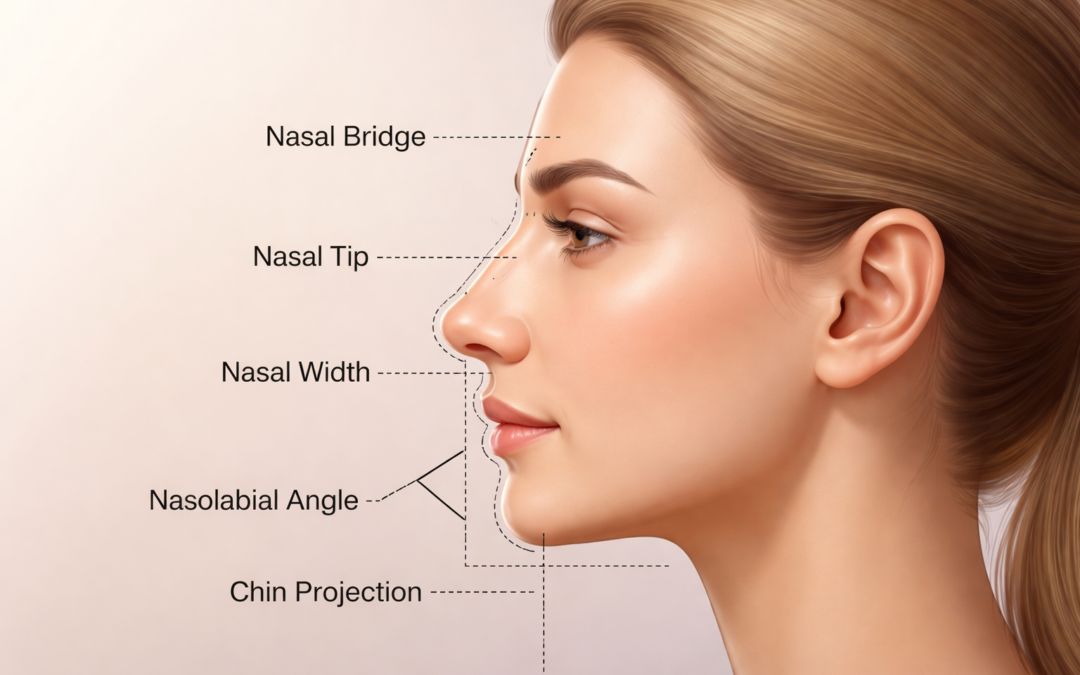
Key Nasal Features in Proportion Analysis
When evaluating the nose in relation to the face, medical literature often considers:
- Nasal bridge: the upper structure between the eyes
- Nasal tip: the lower, more flexible portion
- Nasal width: distance across the nostrils
- Nasal length: distance from bridge to tip
- Nasolabial angle: the angle between the nose and upper lip
These elements are assessed in relation to other facial landmarks rather than in isolation.
Relationship Between the Nose and Other Facial Features
Nose and Chin
The projection of the chin can influence how the nose appears in profile view. A smaller or more prominent chin may change perceived balance between facial structures.
Nose and Eyes
The width of the nasal bridge is often discussed in relation to the distance between the eyes. These proportions vary naturally among individuals.
Nose and Lips
The angle between the nose and upper lip (nasolabial angle) is one of the reference points used in clinical evaluation.
Nose and Forehead
The slope from the forehead to the nasal bridge (sometimes called the nasofrontal angle) contributes to overall profile structure.
How Proportions Are Evaluated in Clinical Contexts
In patient education and clinical settings, proportional analysis may include:
- Visual assessment from multiple angles
- Photographic documentation
- Measurement of angles and distances between facial landmarks
These evaluations are used to understand structure, not to define a universal standard.
Individual Variation and Anatomical Diversity
There is no single “correct” or “ideal” nose shape. Anatomical diversity is influenced by:
- Genetic background
- Age-related changes
- Skin thickness and cartilage structure
Medical literature emphasizes that variation is normal and expected across populations.
Role of Rhinoplasty in Structural Adjustment (General Context)
Rhinoplasty is one method that may alter nasal structure. In educational materials, it is described as a procedure that can modify bone, cartilage, or soft tissue.
Licensed surgeons typically evaluate:
- Structural anatomy
- Functional concerns (such as airflow)
- Patient-stated goals
Outcomes vary, and no specific proportional result can be guaranteed.
Limitations of Non-Surgical Approaches
Non-surgical nose enhancement methods, such as injectable fillers, may adjust certain contours temporarily. However:
- They do not change bone structure
- Effects are temporary
- Not all structural concerns can be addressed
Clinical evaluation determines suitability.
Context & Consumer Awareness
Under medical advertising and consumer protection standards, descriptions of facial proportions must remain neutral and not imply a required or superior appearance.
In patient education literature:
- Proportion analysis is used as a reference, not a rule
- Individual goals differ and are discussed during consultation
- Medical decisions require evaluation by licensed professionals
Consumers are encouraged to review official health resources and verify practitioner credentials through appropriate regulatory bodies.
FAQs
Is there a standard measurement for a “balanced” nose?
No universal standard applies to all individuals. Measurements used in clinical settings serve as reference points and vary depending on anatomy.
Can facial harmony be measured precisely?
Certain angles and distances can be measured, but interpretation depends on overall facial structure and clinical context.
Do all rhinoplasty procedures aim for the same proportions?
No. Approaches differ based on individual anatomy and goals discussed during consultation.
Trusted Sources
- Philippine Department of Health (DOH) – Public health guidance
- U.S. Food and Drug Administration (FDA) – Medical safety information
- Peer-reviewed journals such as Plastic and Reconstructive Surgery
- American Society of Plastic Surgeons (ASPS) – Educational resources
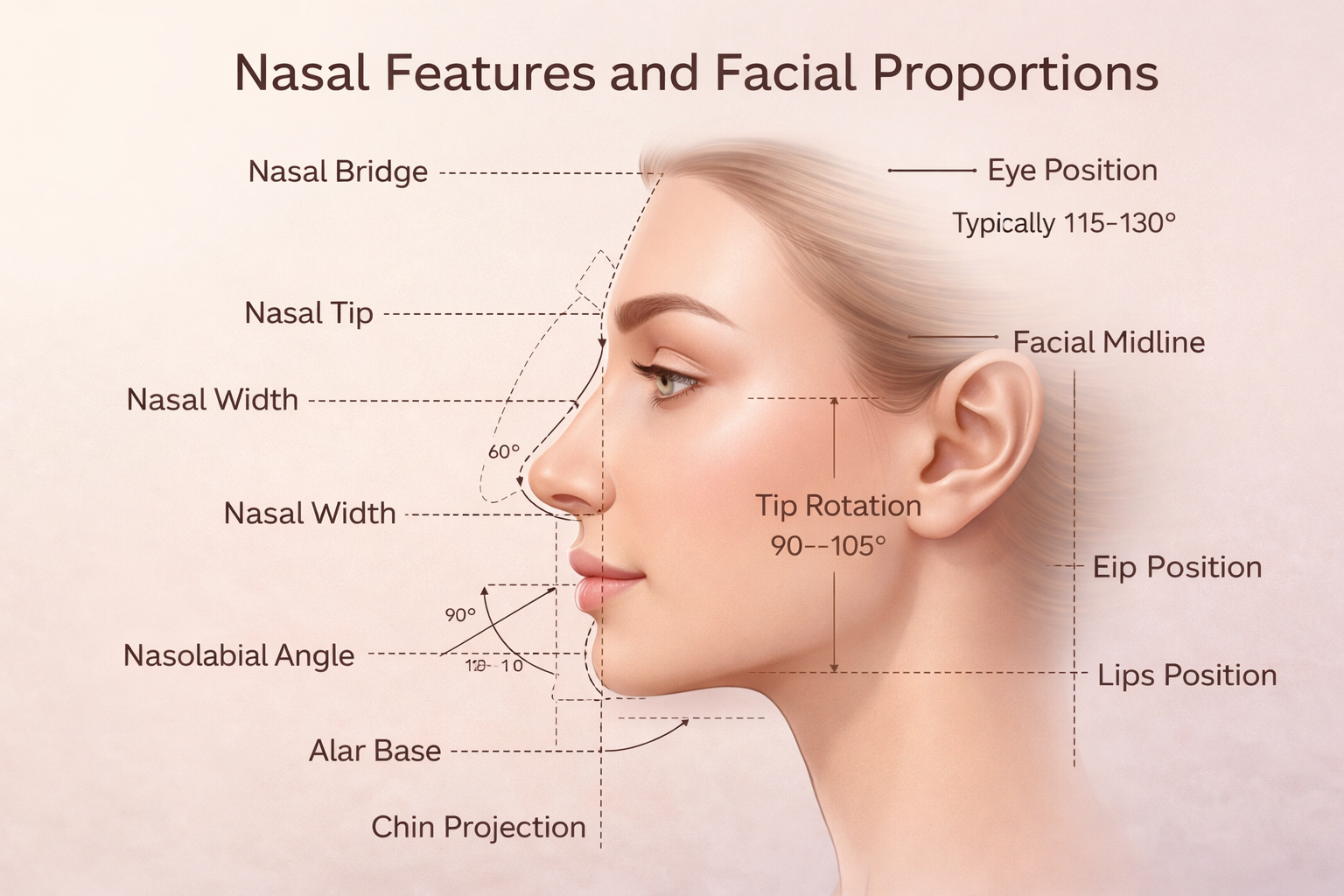
Diagram showing labeled nasal features and facial reference points
Disclaimer
This article is for general informational and educational purposes only. It does not constitute professional medical, surgical, diagnostic, or consumer purchasing advice. References to procedures, providers, or methods do not imply endorsement or guarantee of results. Readers are encouraged to consult licensed medical professionals and official resources before making any medical decision.

by Ramil Villar | Mar 21, 2026 | Aesthetic Trends
Spring-Inspired Nose Sculpting Trends: Educational Overview of Emerging Approaches
A seasonal look at evolving preferences in rhinoplasty and non-surgical nose enhancement
“Spring-inspired” nose sculpting trends refer to a broader shift in rhinoplasty and non-surgical nose enhancement toward subtle, individualized, and less invasive approaches. The term “spring-inspired” is often used in lifestyle or media contexts to describe seasonal preferences, but in medical discussions, these trends align with ongoing developments in technique, patient preferences, and safety considerations. This article outlines current patterns in nose enhancement based on recent medical and consumer education sources, with a focus on neutral, evidence-aligned information.
What Does “Spring-Inspired” Mean in This Context?
In general usage, “spring-inspired” trends suggest:
- Preference for lighter, more subtle changes
- Focus on balance and proportion
- Interest in lower downtime options
In rhinoplasty discussions, these themes correspond with documented shifts toward natural-looking outcomes and individualized planning rather than dramatic structural changes.
Subtle Structural Adjustments
Recent literature describes a move toward smaller, targeted modifications instead of major reshaping.
- Minimal tip refinement and gentle contour changes are commonly discussed
- Straight or softly curved nasal profiles are increasingly referenced in trend reports
These approaches aim to maintain overall facial proportions rather than create standardized shapes.
Personalized and Proportion-Based Planning
Modern rhinoplasty planning often emphasizes individual anatomy.
- Use of 3D imaging and simulation tools allows visualization and planning before procedures
- Customization based on facial structure and proportions is a consistent theme across sources
This reflects a shift away from “one-style” outcomes toward case-by-case evaluation.
Non-Surgical Nose Enhancement Growth
Non-surgical options are increasingly discussed in both clinical and consumer contexts.
- Injectable fillers may be used to adjust contour temporarily
- These methods typically involve shorter recovery periods but do not alter bone or cartilage
Such approaches are often described as temporary and limited to specific types of contour changes.
Focus on Function Alongside Structure
There is growing attention to nasal function in addition to external shape.
- Procedures may combine structural modification with airway considerations
- Functional rhinoplasty or septorhinoplasty integrates breathing-related evaluation with structural changes
This reflects a broader medical emphasis on both form and function.
Techniques Aimed at Reduced Tissue Disruption
Advances in surgical methods are also part of current trends.
- Preservation rhinoplasty focuses on maintaining existing structures where possible
- Ultrasonic (piezoelectric) tools allow more precise bone shaping with less surrounding tissue impact
These developments are associated with efforts to improve precision and recovery experience.
Cultural and Anatomical Considerations
Recent discussions highlight the importance of maintaining individual anatomical characteristics.
- “Ethnic rhinoplasty” emphasizes respect for natural features rather than standardization
- Outcomes are increasingly designed to align with each person’s baseline anatomy
This reflects a broader move toward inclusivity in medical aesthetics.
Context & Consumer Awareness
Under medical advertising and consumer protection standards:
- Descriptions of trends should not be interpreted as guarantees of outcomes
- Individual suitability varies and requires evaluation by licensed professionals
- Public information sources emphasize informed consent and realistic expectations
Seasonal or trend-based terminology (such as “spring-inspired”) may be used in media but should not replace clinical assessment or individualized medical guidance.
FAQ (Definition-Based)
Are “spring-inspired” rhinoplasty trends medically defined?
No. The term is not a clinical classification. It is commonly used in media to describe general aesthetic preferences, such as subtle or natural-looking changes.
Is non-surgical nose enhancement permanent?
No. Non-surgical methods, such as fillers, are typically temporary and may require repeat treatments to maintain effects.
Do newer techniques reduce recovery time?
Some newer approaches aim to minimize tissue disruption, which may influence recovery experience. However, healing varies by individual and procedure type.
Trusted Sources
- Philippine Department of Health (DOH) – Public health information
- U.S. Food and Drug Administration (FDA) – Injectable filler safety resources
- International Society of Aesthetic Plastic Surgery (ISAPS)
- Peer-reviewed journals in plastic and reconstructive surgery
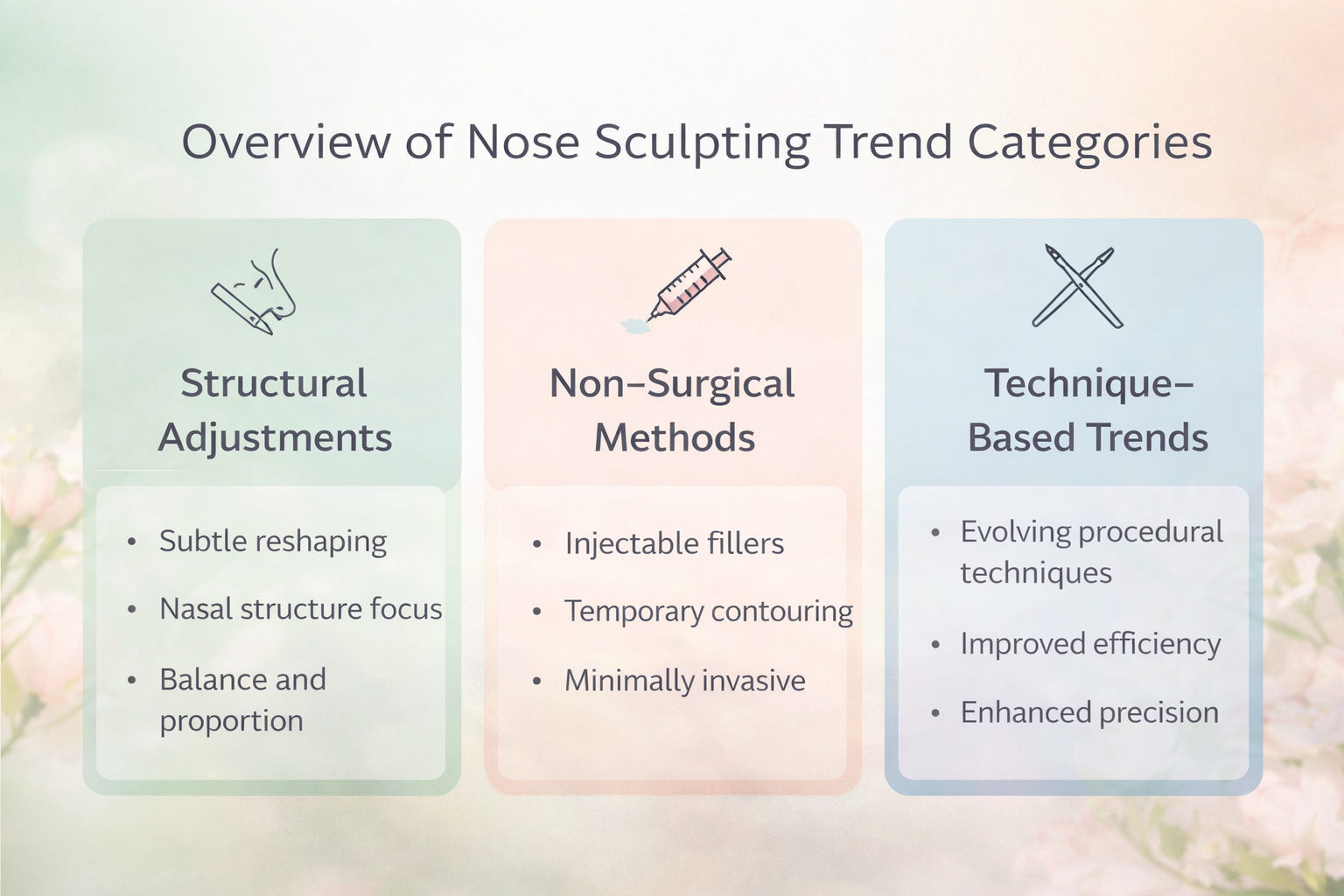
Visual summary of current nose sculpting trend categories
Disclaimer
This article is for general informational and educational purposes only. It does not constitute professional medical, surgical, diagnostic, or consumer purchasing advice. References to procedures, providers, or methods do not imply endorsement or guarantee of results. Readers are encouraged to consult licensed medical professionals and official resources before making any medical decision.