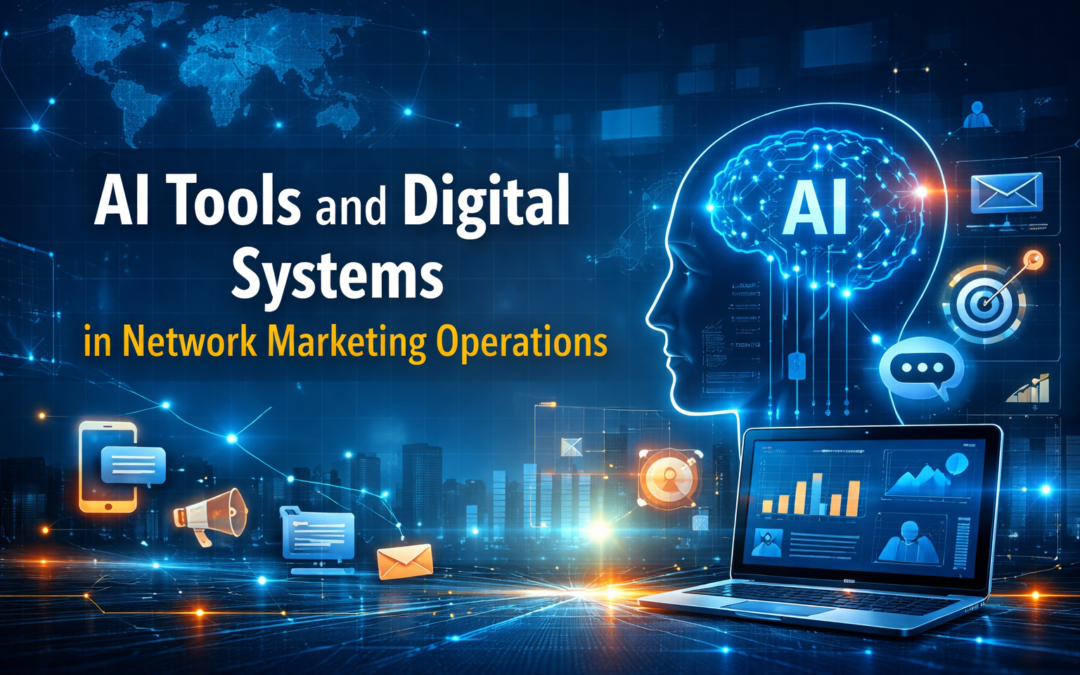
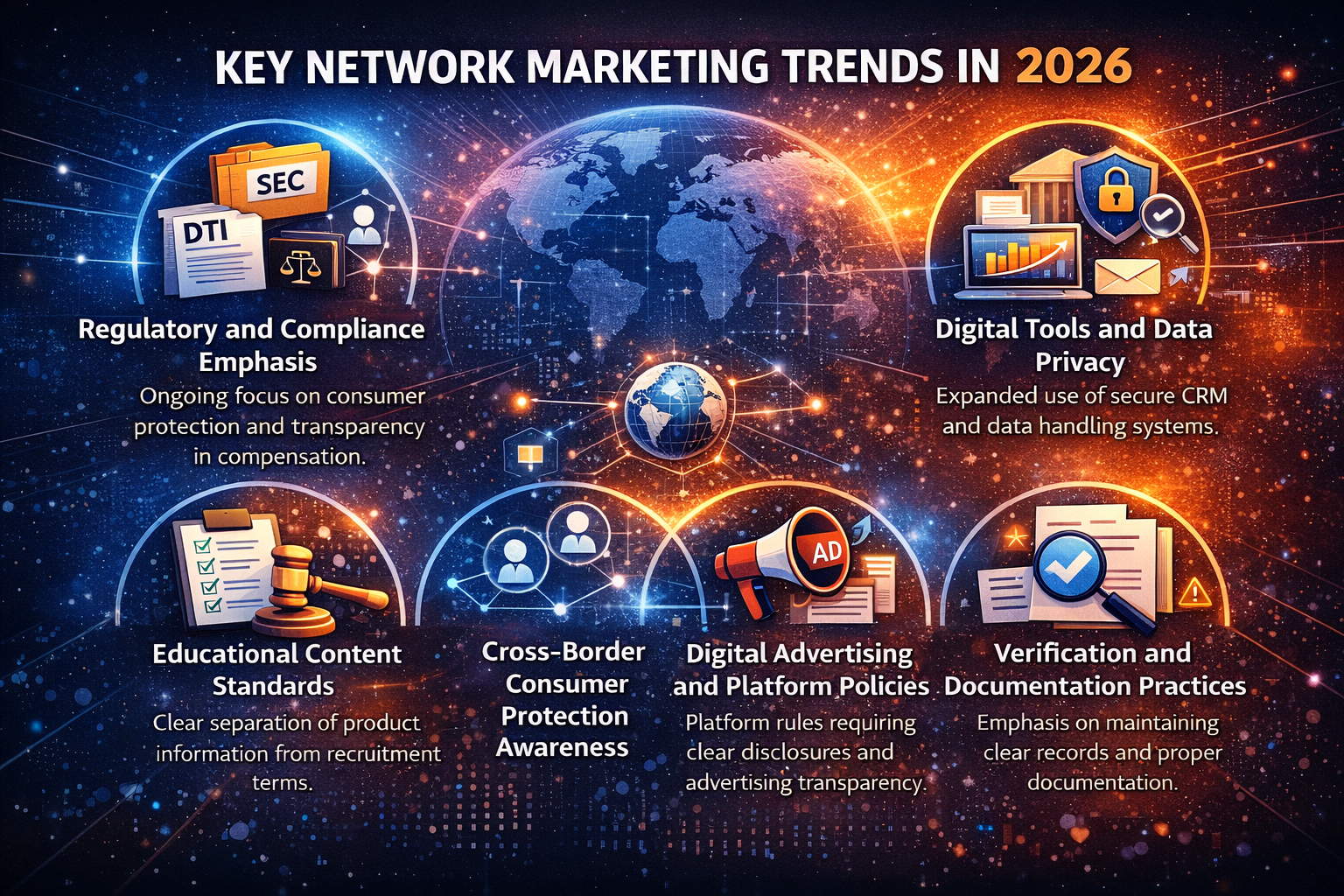
Artificial intelligence (AI) is increasingly being used in network marketing and direct selling environments to support content creation, customer communication, and operational efficiency. In the Philippines, the use of AI tools in marketing activities must still align with consumer protection standards, data privacy requirements, and fair advertising principles under applicable regulations such as the Department of Trade and Industry (DTI) rules and the Data Privacy Act of 2012.
This article explains how AI is being applied in network marketing strategies, what functions it typically supports, and what compliance considerations may arise when AI is used in sales-related systems.
AI Tools Commonly Used in Network Marketing Operations
AI in network marketing is generally applied through software tools that automate tasks or improve decision-making. These tools do not change the legal responsibilities of businesses and distributors, but they can change how communication and marketing processes are executed.
Common categories include:
-
AI writing and content generation tools
-
Automated customer relationship management (CRM) systems
-
Chatbots and automated messaging tools
-
Predictive analytics and performance dashboards
-
AI-powered lead scoring systems
-
Image and video editing automation tools
These systems are usually integrated into websites, messaging platforms, email systems, or internal distributor portals.
1. AI for Content Creation and Marketing Materials
AI is widely used to generate written content such as:
-
product descriptions
-
educational blog posts
-
social media captions
-
FAQ content
-
email templates
In network marketing settings, this can help standardize messaging and reduce manual workload. However, AI-generated marketing content still needs review to avoid misleading or exaggerated statements.
A compliance concern arises when AI content unintentionally produces:
Businesses using AI should treat AI-generated text as a draft rather than an official marketing statement.
2. AI-Driven Chatbots for Customer Communication
Many network marketing teams use chatbots for:
-
answering basic product questions
-
guiding users to catalog pages
-
providing store hours or delivery details
-
handling common customer service requests
AI chatbots can improve response time, especially for inquiries received outside business hours.
However, chatbots can create compliance risks if they provide inaccurate statements or if they simulate human communication in a way that could be considered deceptive. Clear labeling that a chatbot is automated is commonly considered a transparency practice.
3. AI for Customer Relationship Management
CRM systems enhanced with AI can support:
-
contact organization
-
follow-up reminders
-
automated segmentation of customer lists
-
personalized message scheduling
-
customer inquiry tracking
In network marketing, these tools can reduce missed follow-ups and improve recordkeeping.
From a Philippine compliance perspective, CRM usage should align with the Data Privacy Act of 2012 (RA 10173), particularly in how personal data is collected, stored, and used. Consent and lawful processing remain essential, even if AI is involved.
4. AI-Based Personalization and Marketing Automation
AI marketing systems can personalize communication by analyzing behavior such as:
This allows marketing automation platforms to send different messages to different audiences. In practice, personalization is often used to deliver product education or customer support content more efficiently.
However, excessive personalization without proper consent may raise privacy concerns, especially when behavioral data is collected through tracking technologies.
5. Predictive Analytics and Performance Monitoring
AI tools are also used to generate dashboards that analyze:
-
sales trends
-
inventory movement
-
customer interest patterns
-
seasonal product demand indicators
-
distributor activity reporting
In network marketing environments, these dashboards are often used to monitor operations and improve internal planning.
It is important to note that predictive analytics should not be presented as a guarantee of future performance. Forecasting tools are inherently uncertain and depend on multiple external factors.
6. AI in Training Systems and Distributor Learning Platforms
Some organizations use AI to support training through:
-
automated quizzes and assessments
-
learning recommendations
-
training progress dashboards
-
simulated customer interaction scripts
This can improve standardization of training programs.
However, compliance risks may occur if training systems encourage misleading marketing claims, promote recruitment-focused messaging, or instruct users to communicate in a way that could be interpreted as deceptive.
7. AI for Fraud Detection and Compliance Monitoring
AI is also being applied to detect problematic activity, including:
-
duplicate accounts
-
unusual ordering patterns
-
suspicious refund patterns
-
inconsistent identity verification details
-
false claims posted on public channels
Some companies use AI to scan distributor content for prohibited claims such as exaggerated income language or unapproved health-related statements.
This use of AI is typically focused on reducing compliance violations and protecting consumers from misleading marketing.
Compliance Considerations When AI Is Used in Network Marketing
AI adoption in network marketing requires careful review because marketing activities are still subject to consumer protection and fair advertising standards.
Common compliance concerns include:
Misleading Advertising Risk
AI can generate statements that sound factual but are not verified. This may violate consumer protection standards under the Consumer Act of the Philippines (RA 7394) if the information is misleading or deceptive.
Data Privacy and Consent
If AI tools store personal data, send automated messages, or track user behavior, the business must ensure lawful processing under RA 10173.
Disclosure and Transparency
Automated systems that simulate human conversation may raise trust and disclosure issues if customers believe they are interacting with a real person.
Recordkeeping and Accountability
Even if a chatbot or AI tool produced the message, accountability remains with the business and the individuals using the platform.
Why AI Adoption Is Increasing in Direct Selling Models
In general, direct selling and network marketing operations often involve high volumes of repetitive communication, including customer support questions, product explanations, and follow-up messages.
AI tools are increasingly used because they can assist with:
-
scalability of customer messaging
-
automation of administrative tasks
-
faster production of marketing drafts
-
improved tracking of communication activity
This trend is also consistent with broader digital commerce practices across industries, including retail, logistics, and customer support.
FAQ
1. Is AI allowed in network marketing activities in the Philippines?
AI tools are generally allowed, but their use must still comply with Philippine consumer protection laws and data privacy requirements. The use of automation does not remove legal responsibility for marketing accuracy.
2. Does AI change the legal definition of a pyramid scheme?
No. Business classification depends on the compensation structure and whether revenue is primarily driven by recruitment rather than legitimate product or service value. AI tools do not change regulatory definitions.
3. What is the main risk of using AI in marketing content?
A common risk is that AI may generate unverified or misleading claims. Content should be reviewed before publishing to ensure accuracy and compliance.
Trusted Sources
-
Securities and Exchange Commission (SEC) Philippines — official advisories and investor protection guidance
-
Department of Trade and Industry (DTI) Philippines — consumer protection and fair trade enforcement
-
Republic Act No. 7394 — Consumer Act of the Philippines
-
Republic Act No. 10173 — Data Privacy Act of 2012
-
Republic Act No. 8792 — E-Commerce Act of 2000
-
National Privacy Commission (NPC) Philippines — data privacy compliance guidance
Disclaimer
This article is for general informational and educational purposes only. It does not constitute legal, financial, tax, or investment advice. References to business models, compensation structures, or companies do not imply endorsement or recommendation. Readers should consult official government sources such as the SEC and DTI for regulatory guidance.