by iamrolanddiaz | Feb 21, 2026 | Princesang Reyna
A Neutral Educational Overview of Personal Financial Planning Frameworks
This article provides an informational overview of commonly discussed financial goal categories for a calendar year. It references general principles reflected in guidance from central banks, financial consumer protection authorities, and public financial education initiatives. The content is educational in nature and does not recommend specific products, institutions, or outcomes.
Under applicable central banking and consumer protection regulations, individuals remain responsible for assessing their own financial circumstances and consulting licensed professionals when necessary.
1️⃣ Emergency Savings Stability
An emergency fund is commonly defined as accessible savings reserved for unexpected expenses such as medical costs, essential repairs, or temporary income interruption.
Many financial education programs, including those referenced by the U.S. Federal Reserve and the Financial Conduct Authority, emphasize liquidity and risk awareness when maintaining short-term reserves.
Illustrative example (hypothetical):
An individual with monthly essential expenses of $2,000 may choose to evaluate whether maintaining three to six months of those expenses in an accessible account aligns with their risk tolerance and employment stability.
This example does not imply a required amount.
2️⃣ Structured Savings Goals
Structured savings refer to setting aside funds for defined purposes within a specific timeframe. Examples include:
Goals may be categorized by time horizon:
Clarity of timeframe influences where funds are held (e.g., demand deposits vs. fixed-term deposits), subject to applicable regulations and institutional policies.
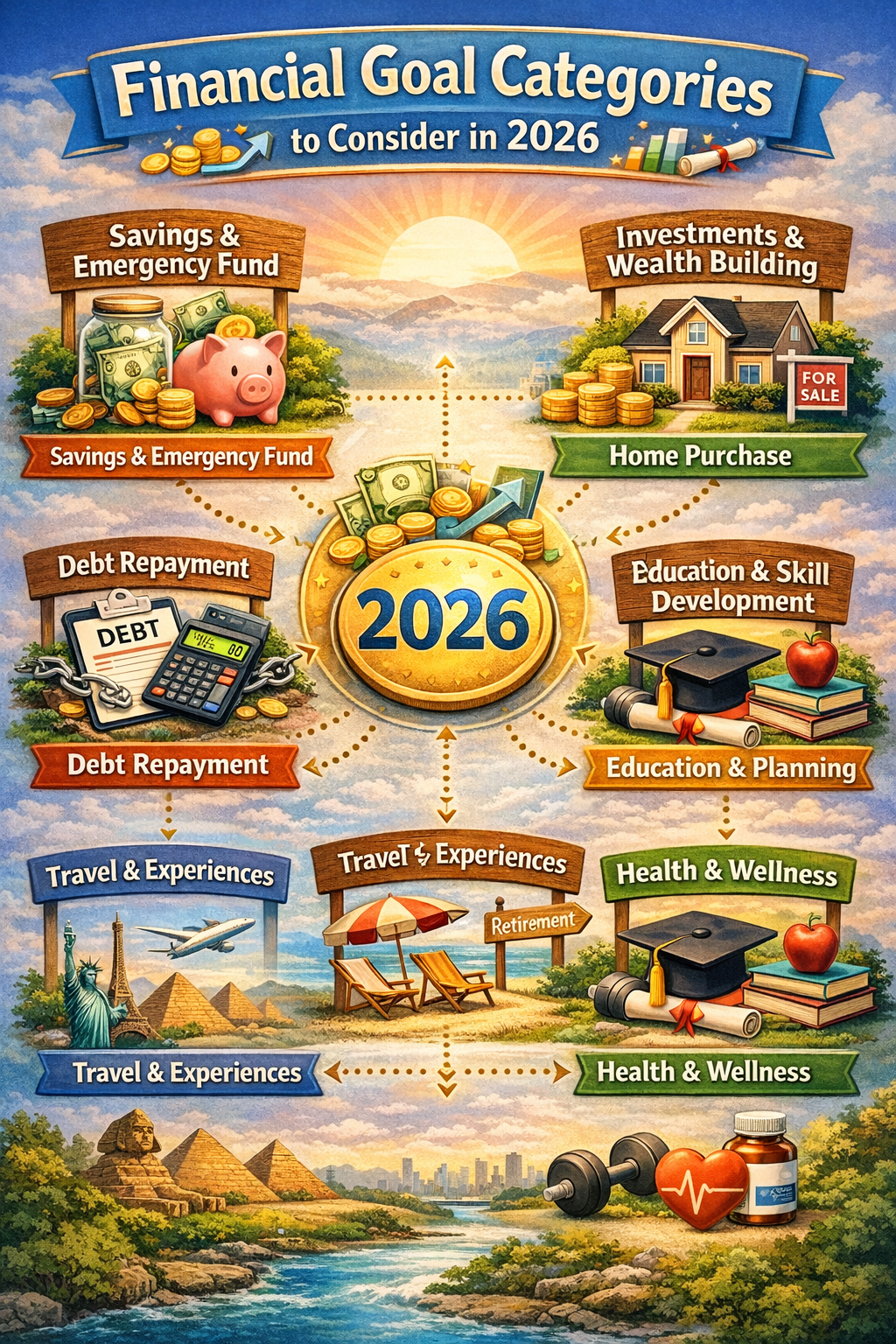
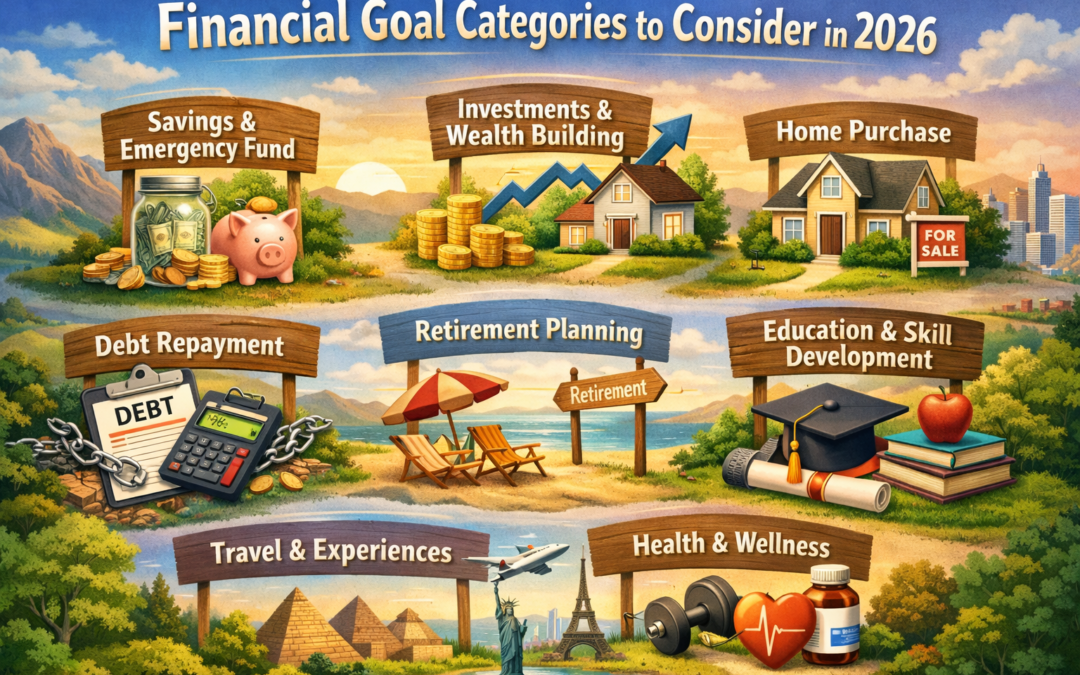
Infographic outlining financial goal categories referenced for 2026 in the Philippines.
3️⃣ Debt Reduction Planning
Debt management goals often involve:
-
Reviewing interest rates
-
Understanding repayment structures
-
Evaluating fixed vs. variable terms
-
Monitoring total cost of borrowing
Consumer protection agencies commonly stress transparency in loan disclosures. In the Philippines, for example, the Bangko Sentral ng Pilipinas publishes public guidance regarding financial literacy and responsible borrowing.
Reducing high-interest obligations may lower overall financial risk exposure. Outcomes depend on individual financial profiles.
4️⃣ Retirement Contribution Assessment
Long-term savings goals frequently include retirement preparation. This may involve:
-
Reviewing contribution levels
-
Understanding compounding effects
-
Monitoring investment risk exposure
-
Evaluating inflation impact
Compound interest refers to interest calculated on both the principal and previously accumulated interest.
Illustrative example (hypothetical):
If a savings account earns 3% annually and interest compounds yearly, earnings are calculated on the total balance each period. Actual rates vary and are not guaranteed.
Retirement systems and tax treatment differ by jurisdiction.
5️⃣ Financial Literacy and Record-Keeping
A financial goal for 2026 may also include improving understanding of:
-
Account statements
-
Fee disclosures
-
Data privacy policies
-
Fraud indicators
Financial regulators globally emphasize verifying institution legitimacy through official registries and avoiding unsolicited financial solicitations.
Data protection authorities under GDPR-style frameworks highlight safeguarding personal and banking information.
6️⃣ Risk Management Review
Risk management includes reviewing:
-
Insurance coverage (where applicable)
-
Beneficiary designations
-
Digital banking security settings
-
Two-factor authentication activation
Digital banking security standards vary by country but generally fall under central bank oversight and national data protection regulations.
Regulatory Context
Under applicable central banking and financial consumer protection frameworks:
-
Deposits may be insured up to statutory limits (varies by jurisdiction).
-
Financial institutions must provide standardized disclosures.
-
Marketing communications are subject to anti-misrepresentation rules.
-
Customers retain the right to file complaints with regulatory authorities.
Readers are encouraged to consult official regulatory websites in their country for current rules and protections.
FAQ
What is compound interest?
Compound interest is interest calculated on the initial principal plus accumulated interest from previous periods. The frequency of compounding affects total returns.
What is an emergency fund?
An emergency fund is a pool of liquid savings intended to cover unexpected essential expenses or temporary income loss.
Are financial goals the same for everyone?
No. Financial goals vary depending on income stability, debt obligations, dependents, and long-term objectives.
Trusted Source References
-
U.S. Federal Reserve
-
Financial Conduct Authority
-
Bangko Sentral ng Pilipinas
-
National financial consumer protection agencies
-
Central banking authorities in relevant jurisdictions
Disclaimer
This article is for general informational and educational purposes only. It does not constitute financial, banking, legal, or investment advice. References to institutions, account types, or financial structures do not imply endorsement or guarantee results. Readers should consult official regulatory sources and licensed professionals for decisions specific to their jurisdiction.
#FinancialGoals2026, #PersonalFinance, #SavingsPlanning, #MoneyManagement, #BudgetingBasics, #FinancialLiteracy, #DebtReview, #EmergencyFund, #RetirementPlanning, #FinancialAwareness
Explore the full overview of financial goal categories for 2026 and examine key savings, budgeting, and financial literacy themes in a structured format.

by iamrolanddiaz | Feb 21, 2026 | Princesang Reyna
1. Continued Officer and Skilled Seafarer Shortages
Global shipping projections indicate that by 2026 there may be a significant shortfall of qualified officers, particularly at management and technical ranks. This gap stems from increasing demand for certified crew and slower growth in seafarer supply. Qualified officers, especially those with advanced technical or tanker experience, remain in high demand.
Implication for careers: Demand for seafarer roles such as deck officers and engineers may remain strong where safety and compliance standards are upheld.
2. Emphasis on Broader Competencies and Reliability
Maritime employers are placing greater emphasis on up‑to‑date safety training, compliance documentation, operational coordination skills, and reliability in day‑to‑day shipboard performance. Formal certification (e.g., STCW) remains foundational, but broader operational competencies are increasingly valued.
Trend insight: Prospective seafarers may find value in diversified training that supports both technical and procedural competence.
3. Digitalisation and Automation in Maritime Operations
Digital tools, including AI‑driven recruitment platforms, automated documentation systems, and data‑focused technologies, are reshaping how maritime roles are filled and how crew and shore teams operate. Remote hiring processes, predictive analytics, and digital tracking systems are becoming more common.
Operational effect: Shore‑based and hybrid roles linked to digital competence (e.g., digital compliance reporting, automated navigation systems) are emerging.

Descriptive infographic outlining sea-based professions, training, and certifications.
4. Welfare, Wellbeing and Advanced Training Tools
Seafarer welfare — including mental health support and training enhancements such as simulation‑based learning (VR/AR) — is gaining attention in workforce planning. Digital wellbeing platforms may support crew performance in extended voyages and isolated environments.
Workforce insight: Structured training and wellbeing support are increasingly part of professional development frameworks.
5. Emerging Technologies and Vessel Operations
2026 sees growing maritime discussion around semi‑autonomous vessels and remote operational technologies. Although fully unmanned deep‑sea operations are still developing, controlled remote operations are gaining regulatory and industry interest.
Career context: Traditional roles may evolve as vessels adopt new technologies, with some tasks shifting toward remote or shore‑based support.
6. ESG, Green Shipping and Compliance Roles
Environmental requirements, such as reporting under IMO’s decarbonisation frameworks and managing emissions‑related data, are shaping new roles tied to environmental, social, and governance (ESG) compliance. Regulatory focus on sustainable shipping practices may influence training and job functions.
Sector trend: Experts in environmental compliance and fuel handling may be increasingly relevant across both sea and shore‑based roles.
7. Recruitment Innovation and Talent Management
Platforms that support remote recruitment, skill matching, and digital onboarding are gaining broader adoption. These tools aim to make hiring more efficient and transparent across global labour markets.
📊 High‑Level Patterns (Non‑Promotional)
-
Workforce demand vs supply: Officer and technical role shortages continue to influence labour markets.
-
Skills evolution: Broader skill sets — from digital literacy to ESG reporting — are increasingly relevant.
-
Technology integration: Automation and digital platforms are shaping how maritime jobs are advertised and managed.
-
Wellbeing & training: Simulation training and telehealth services are part of career support frameworks.
🧭 Summary
In 2026, maritime careers continue to evolve in response to workforce supply challenges, digital transformation, environmental regulations, and operational innovations. Sea‑based work remains governed by international safety and certification standards, even as technology and recruitment systems change how roles are filled and supported.
Disclaimer: This information is educational and summarises general industry developments. It does not predict individual career outcomes or offer personalised maritime training or job advice. Trends may vary by region and require verification with local maritime authorities and accredited sources.
by iamrolanddiaz | Feb 21, 2026 | Princesang Reyna
An educational overview of warmer coastal locations, transportation options, and travel considerations.
This article provides an overview of coastal destinations that typically have warmer climates during the northern hemisphere winter months. It describes geographic and climate context, transportation accessibility, cultural background, and regulatory considerations. Sources include publicly available meteorological data and tourism authorities. Readers will learn about travel logistics, seasonal weather patterns, and local travel regulations.
Destination Overview
- Caribbean Islands
The Caribbean region, including islands such as Barbados, Antigua, and Saint Lucia, experiences warm temperatures during December through March. Popular activities include beach-based recreation, boating, and snorkeling. Transportation is typically via commercial airlines to main international airports, followed by local ferry or road connections to specific accommodations.
- Southeast Asia Coastal Areas
Countries such as Thailand, Vietnam, and Indonesia have tropical coastal regions that maintain warm temperatures in the northern winter months. Key beach areas include Phuket (Thailand), Nha Trang (Vietnam), and Bali (Indonesia). Travelers may access these locations via international airports with connecting domestic transport. Local regulations and entry requirements vary by country and are published by official immigration authorities.
- Central America
Coastal destinations in Costa Rica, Belize, and Panama have warm climates during the northern winter. Beaches along the Pacific and Caribbean coasts are accessible through regional airports, with further transport via buses, shuttles, or ferries. Some regions observe rainy season variability, which can affect travel conditions.
- Oceania – Northern Australia and Pacific Islands
Northern Queensland in Australia and Pacific islands such as Fiji and Vanuatu have tropical summer conditions during December to February. Main airports provide commercial flight access, often requiring connecting flights from larger hubs. Local authorities provide information on seasonal weather patterns, visa requirements, and travel safety.
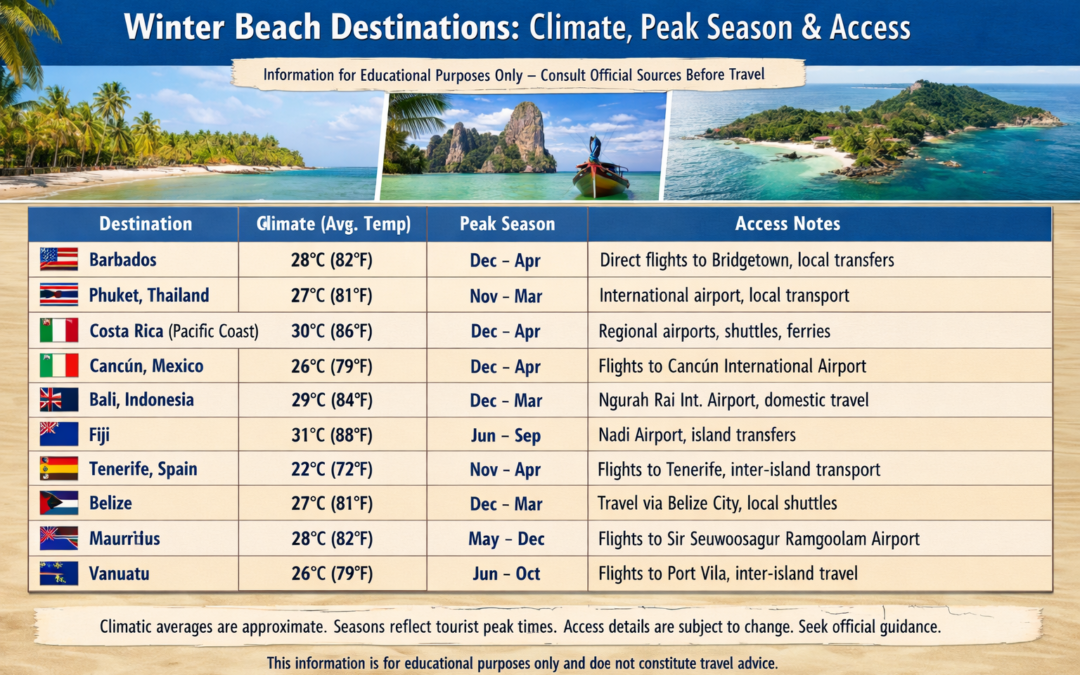
Educational infographic showing beach destinations, average climate, peak season, and travel options.
Travel Logistics
-
Transportation: Air travel is the primary access method. Local transfers may include buses, taxis, ferries, or rental vehicles.
-
Accommodation Verification: Travelers can verify accommodations through official tourism boards or recognized booking platforms that display regulatory compliance information.
-
Documentation: Entry requirements such as visas, passports, or health documentation are defined by local governments. Checking official government sources is recommended prior to travel.
Cultural and Environmental Context
-
Many coastal destinations are located in ecologically sensitive areas. Sustainable tourism practices, including responsible waste management, wildlife protection, and minimizing resource consumption, are encouraged.
-
Beaches may have different social or cultural norms; publicly available local guidance should be consulted to respect local practices.
Hypothetical Example
-
A traveler seeking warmer temperatures in January may hypothetically fly to Phuket, Thailand, and transfer via local transport to a beach resort. Seasonal rainfall and regional regulations could affect the itinerary, and official sources should be reviewed prior to planning.
Context
-
According to publicly available meteorological data, tropical and subtropical coastal regions maintain higher temperatures during the northern winter months.
-
International sustainable tourism frameworks recommend low-impact travel to preserve coastal ecosystems.
FAQ
What documents are commonly required for international travel to tropical beach destinations?
Travelers typically need a valid passport, any required visas, and, in some regions, health documentation such as vaccination certificates. Specific requirements are provided by local immigration authorities.
What is sustainable tourism in beach areas?
Sustainable tourism involves travel practices that minimize environmental impact, protect local wildlife and ecosystems, and respect cultural norms.
How can travelers verify accommodation legitimacy?
Verification can be done through official tourism boards, recognized hotel associations, and booking platforms that provide regulatory compliance information.
Trusted Source References
-
Caribbean Tourism Organization – Public Data Resources
-
Tourism Authority of Thailand – Official Visitor Guidance
-
Costa Rica Tourism Board – Entry and Travel Regulations
-
Australian Government – Department of Foreign Affairs and Trade – Travel Advice
-
United Nations World Tourism Organization – Sustainable Tourism Guidelines
Disclaimer
This article is for general informational and educational purposes only. It does not constitute professional travel, legal, immigration, health, or safety advice. References to destinations, accommodations, or services do not imply endorsement or guarantee outcomes. Travelers are encouraged to consult official government and regulatory sources when making travel decisions.
by iamrolanddiaz | Feb 21, 2026 | Princesang Reyna
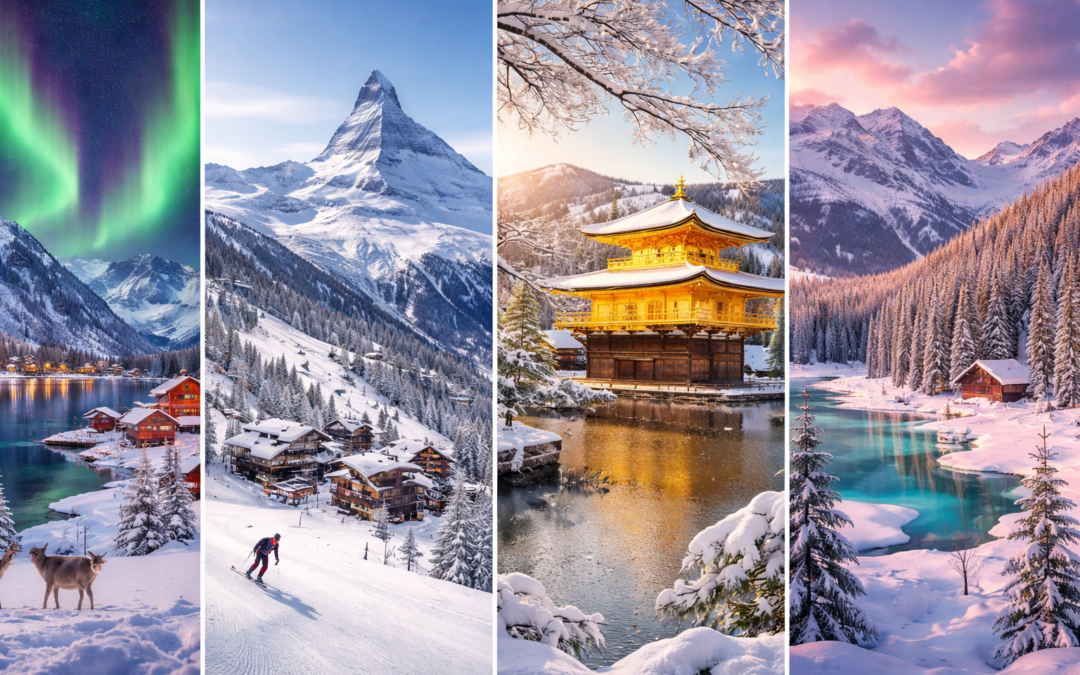
A neutral guide to regions with winter climates and seasonal offerings for informational planning.
This article provides an educational overview of locations around the world that are commonly associated with winter climates, seasonal outdoor conditions, or winter‑focused environments. It outlines geographical context, typical climate patterns, transportation considerations, and safety and regulatory factors relevant to winter travel. The content is informational and does not promote specific operators or guarantee particular experiences.
Winter Climates and Seasonal Context
In the Northern Hemisphere, winter generally occurs between December and March, with colder temperatures, shorter daylight hours, and seasonal snow or ice in many regions. In the Southern Hemisphere, winter typically falls between June and September. Travel conditions and available activities vary with latitude, altitude, and local climate patterns.
Regions and Examples of Winter Conditions
The following list describes broad regions and representative locations that experience winter conditions. Each entry includes geographical context and considerations for travel logistics.
Northern Europe and the Arctic
Geographical Context:
Northern European countries and Arctic territories experience extended periods of cold temperatures and snow during winter months. These regions are situated near or above the Arctic Circle.
Examples (Hypothetical):
-
Coastal and inland areas across Norway, Sweden, and Finland.
-
Arctic archipelagos at high latitudes.
Climate:
Cold temperatures with snow cover; daylight hours vary significantly with latitude, including polar night conditions in winter.
Travel Logistics:
Transportation infrastructure may include regional flights, trains, and winter‑equipped road networks. Seasonal weather can affect accessibility; winter tires and adapted vehicles are often used.
Seasonal Considerations:
Winter climates support snow and ice conditions; safety considerations include low temperatures, icy surfaces, and limited daylight in some areas.
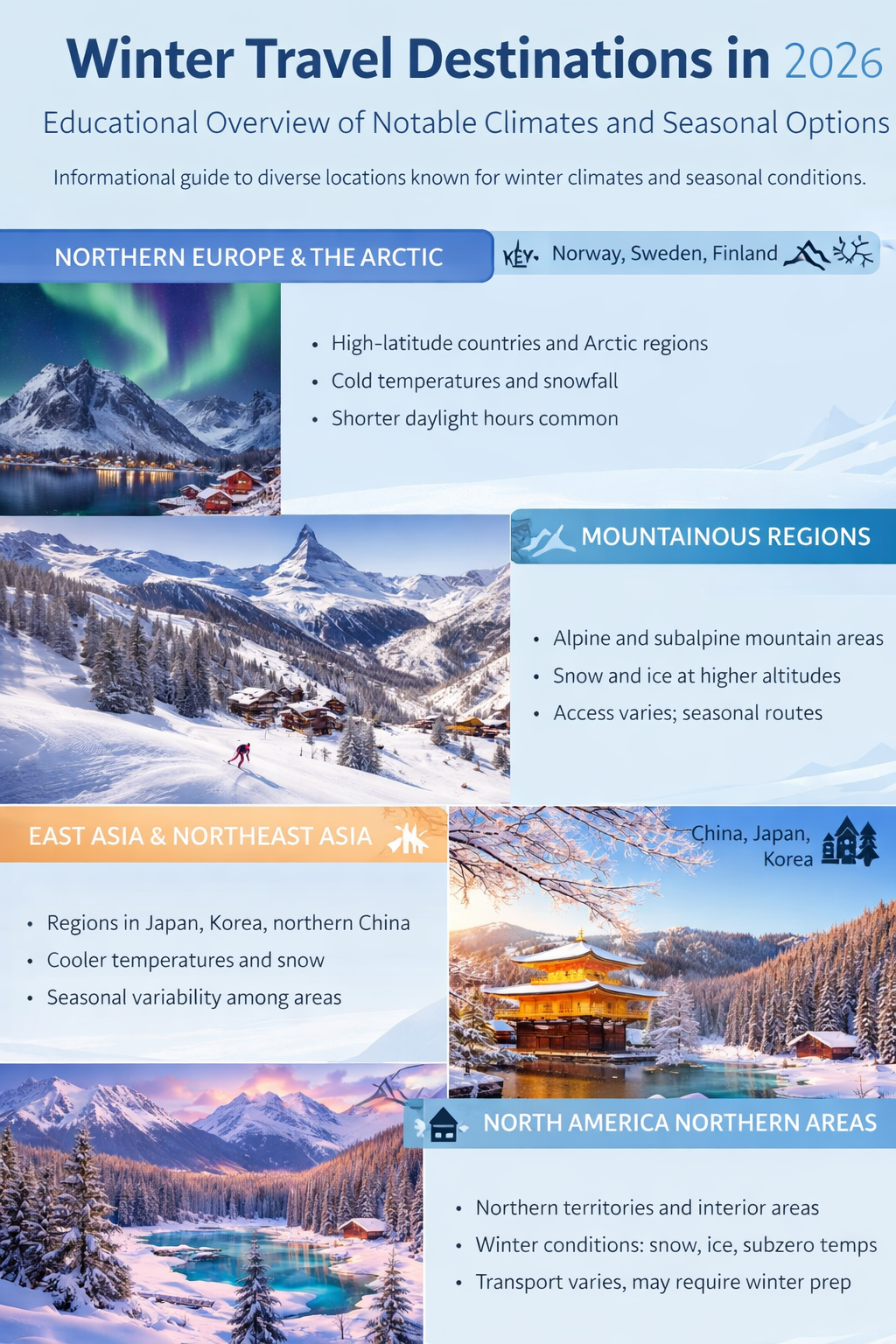
Illustration summarizing winter climates, key regions, and seasonal travel conditions globally.
Mountainous Regions (Alpine and Subalpine Zones)
Geographical Context:
High‑elevation mountain ranges in several continents can have persistent winter conditions at altitude, including snow cover and colder temperatures.
Examples (Hypothetical):
-
Mountain ranges in Europe (e.g., Alps), Asia (e.g., Himalayas), North America (e.g., Rockies), and South America (e.g., Andes).
Climate:
Temperatures decrease with elevation; snow and ice are common in winter and may extend into shoulder seasons.
Travel Logistics:
Access may involve regional hubs via air or rail followed by mountain transport. Weather can affect road and trail conditions; planning should include seasonal closures and weather forecasts.
East Asia and Northeast Asia Seasonal Winter
Geographical Context:
Regions in northeastern parts of East Asia experience marked winter seasons with lower temperatures and occasional snowfall.
Examples (Hypothetical):
Climate:
Seasonal cold spells and precipitation that may fall as snow at certain elevations or latitudes.
Travel Logistics:
Transport networks include domestic flights, rail systems, and roads that are maintained for seasonal changes. Weather advisories from local authorities can inform safe travel timing.
North America Northern and Interior Areas
Geographical Context:
Northern states and provinces in North America, particularly at higher latitudes or elevations, are associated with winter climates.
Examples (Hypothetical):
Climate:
Temperatures often below freezing; snow and ice are common features of mid‑winter months.
Travel Logistics:
Transport may include air services, intercity rail, and maintained highways. Winter equipment for vehicles and awareness of weather advisories are relevant for overland travel.
Southern Hemisphere Winter Zones
Geographical Context:
In the Southern Hemisphere, winter conditions occur during the mid‑year months. Certain high‑elevation and offshore regions can experience winter‑like conditions.
Examples (Hypothetical):
Climate:
Seasonal decrease in temperatures with potential snowfall in elevated terrain.
Travel Logistics:
Regional air and ground transport systems may have seasonal schedules. Road conditions in elevated regions can vary with snowfall and ice.
Travel Logistics and Transportation
Transportation Systems:
Winter travel often involves multimodal transport: air, rail, and road. In regions with snow or ice, transport infrastructure is typically managed with seasonal maintenance (e.g., snow plowing and winter tires). Travelers should consult official transportation agencies for current schedules and advisories.
Documentation and Entry:
Standard travel documentation (passports, visas) applies regardless of seasonal conditions. Entry requirements are determined by national immigration authorities and can vary by citizenship; consult official government sources prior to travel.
Climate and Safety Considerations
Weather Awareness:
Winter climates present specific conditions such as cold temperatures, snow, and ice. Awareness of local weather forecasts and official advisories supports informed planning. Safety measures may include appropriate clothing, traction devices for walking surfaces, and familiarity with cold‑weather risks such as hypothermia.
Daylight Variation:
High‑latitude regions can have limited daylight in winter months. This may affect outdoor activities and transport schedules; consult local climate data for expected daylight hours during the intended travel period.
Health Considerations:
Cold weather can influence health, particularly for individuals with certain medical conditions. Public health authorities offer information on staying warm and recognizing cold‑related health issues.
Context Section: Seasonal Climate Frameworks
Under widely used climate classification systems, winter months in temperate and polar regions are characterized by lower average temperatures and reduced insolation. Seasonal patterns are influenced by axial tilt and latitude, with air masses shaping local weather conditions. Regions at higher elevations also exhibit lower temperatures due to lapse rates.
FAQ
What defines a winter climate?
A winter climate generally refers to a period with lower average temperatures, often associated with snow and ice in certain geographic regions. Patterns vary by latitude, elevation, and local weather systems.
How can travelers prepare for winter conditions?
Preparation involves understanding typical temperatures, daylight hours, and weather patterns for the destination and travel dates. Consulting official transportation and meteorological advisories supports informed planning.
Are winter conditions the same worldwide?
No. Winter conditions differ by region; some areas may have mild, wet winters, while others experience prolonged cold and snow. Local climate data provides specific information.
Trusted Source References
-
National meteorological services for regional climate data
-
Official transportation authorities for seasonal service information
-
National immigration authorities for entry requirements
-
World Meteorological Organization (WMO) climate classifications
Disclaimer: This article is for general informational and educational purposes only. It does not constitute travel, legal, immigration, health, or safety advice. References to destinations or conditions do not imply endorsement or guarantee outcomes. Travelers are encouraged to consult official government and regulatory sources when planning travel.
by iamrolanddiaz | Feb 21, 2026 | Princesang Reyna
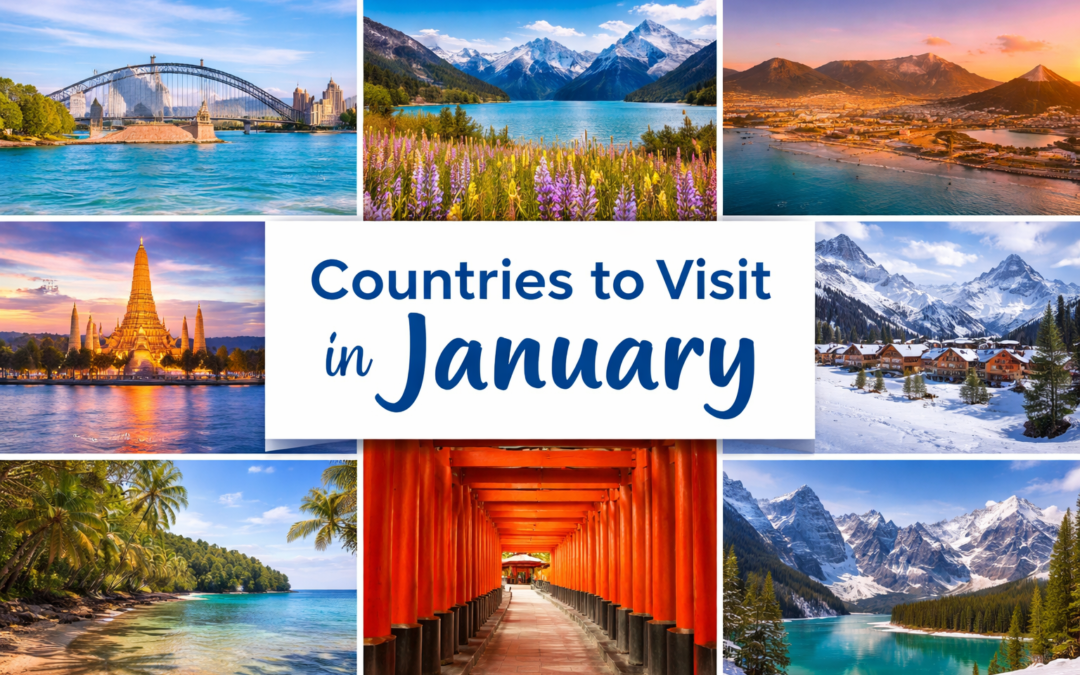
A neutral overview of global destinations with seasonally distinct weather and cultural activity in January.
This article provides a neutral summary of countries where January often aligns with particular seasonal conditions, cultural events, or travel logistics that some visitors consider when planning trips during this month. It does not imply that these destinations are “best” in an absolute sense, nor does it guarantee outcomes. Travelers can learn about typical weather patterns, local events, and logistical considerations that may be relevant in January.
Seasonal and Regional Travel Context in January
In many parts of the world, January falls in the heart of winter in the Northern Hemisphere and summer in the Southern Hemisphere. Climatic patterns and cultural calendars differ across regions, which can influence what types of travel activities are customary or accessible during this period.
Southern Hemisphere – Summer Conditions
-
Australia
-
Seasonal context: January is mid-summer in Australia. Regions such as the southern coastal cities typically experience warm to hot weather.
-
Travel considerations: Long daylight hours can coincide with outdoor cultural events, natural exploration, and coastal recreation. Metropolitan areas have established transport systems (e.g., trains, buses). Visa requirements vary by nationality; many nationalities require an electronic travel authorization.
-
New Zealand
-
Seasonal context: Also in summer, with generally mild to warm temperatures. Outdoor and nature-based activities are often suitable.
-
Cultural and logistic context: Tourism infrastructure is developed; travel between islands typically uses air or ferry services. Entry requirements depend on passport and may include electronic visas.
-
South Africa
-
Seasonal context: Summer brings warmer weather and longer days, particularly in coastal provinces.
-
Travel logistics: Multiple international gateways and a mix of transport options exist. Climate varies by region, from Mediterranean-like conditions in the Western Cape to subtropical in the northeast.
Tropical Regions – Dry Season in January
-
Thailand
-
Seasonal context: January often falls within the dry season in many parts of Thailand, with lower precipitation in central and southern regions.
-
Local events: Some cultural festivals may occur around this time depending on the lunar calendar.
-
Travel logistics: Well-established domestic transport networks; entry requirements include visa-exemption arrangements for some nationalities.
-
Vietnam
-
Seasonal context: Northern Vietnam can be cooler, while central and southern areas are generally drier. Weather conditions vary considerably by region.
-
Cultural context: Traditional markets and regional cultural events continue throughout the month. Border crossing regulations differ by nationality.
-
Costa Rica
-
Seasonal context: January is typically part of the dry season in many Pacific coastal areas, which may coincide with high visibility for outdoor nature activities.
-
Logistics: International terminals serve larger cities; domestic flights and buses connect major regions. Entry documents depend on traveler nationality and purpose.
Northern Hemisphere – Winter Conditions
-
Japan
-
Seasonal context: January is winter, with snow in many regions. This may align with winter sports or seasonal cultural observances around the New Year.
-
Travel logistics: Extensive rail network; public transport is widely used. Entry requirements include visa or visa waiver conditions based on nationality.
-
Canada
-
Seasonal context: January is typically a winter month with low temperatures in many provinces. Winter landscapes and seasonal events are part of the cultural environment in some regions.
-
Logistics: Travel infrastructure includes domestic flights and rail services; weather may influence transport schedules.
-
Switzerland
-
Seasonal context: Positioned in winter, mountainous areas may support snow-related seasonal activities. Urban centers offer cultural venues.
-
Travel logistics: Integrated public transport systems; visa requirements vary by nationality.
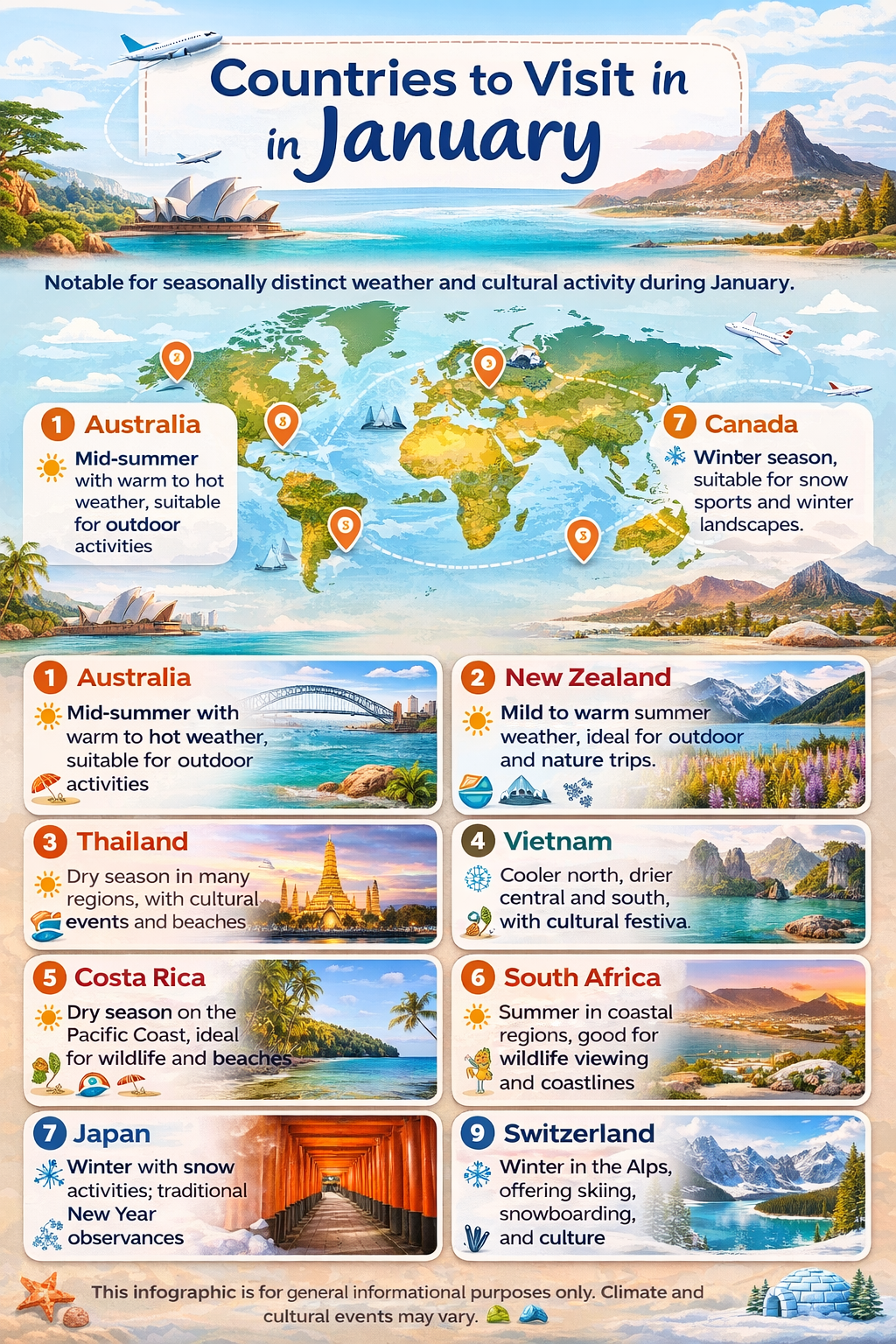
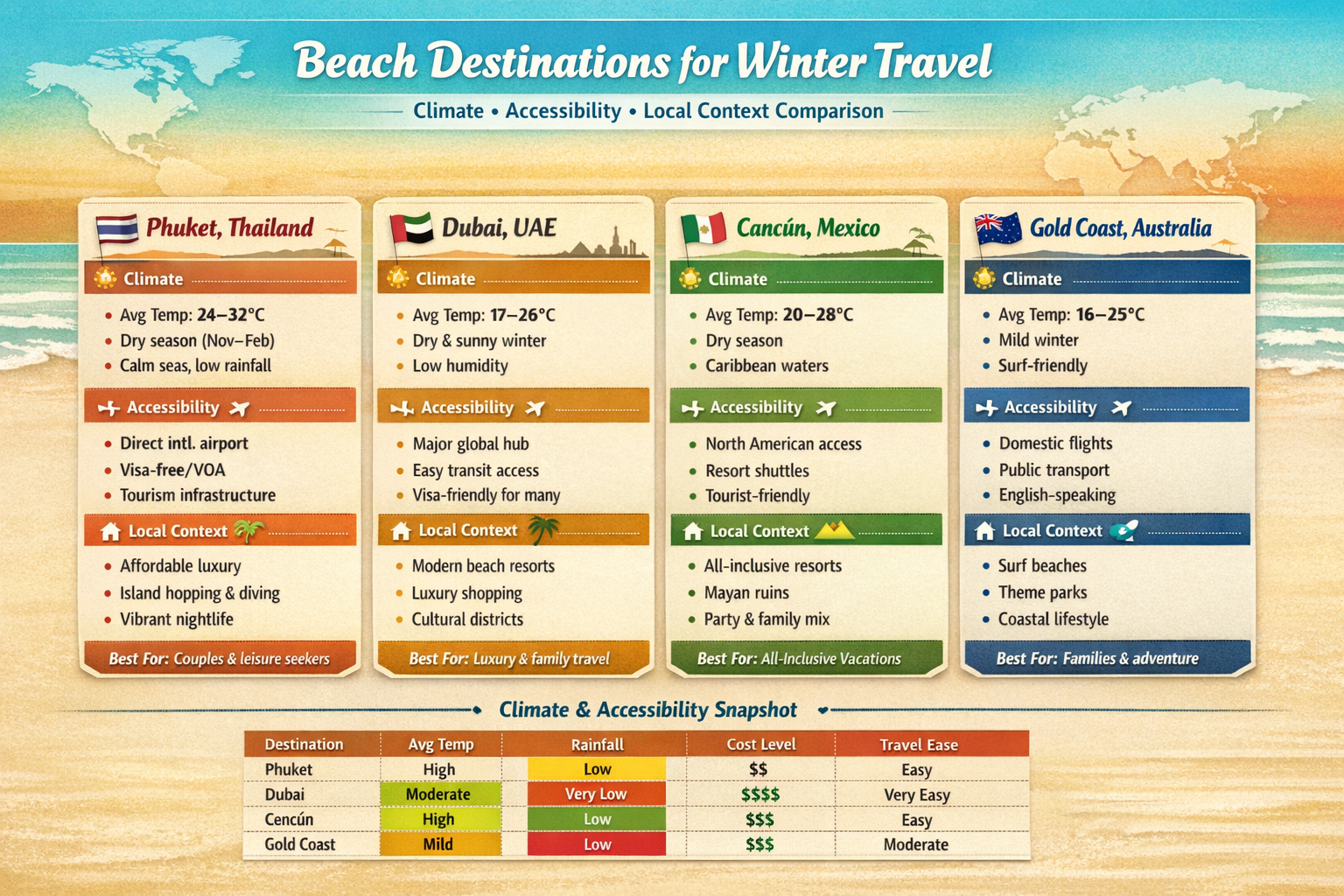
Visual summary of selected countries and their seasonal conditions in January.
Travel Documentation and Entry Considerations
-
Passports: Validity requirements differ by destination; many countries require passports to have remaining validity beyond the intended stay.
-
Visas: Nationals of some countries may be eligible for visa-free entry or visa-on-arrival; others must apply in advance.
-
Health Documentation: Some destinations may have health-related entry requirements (e.g., proof of vaccinations) based on global health advisories.
Weather and Activity Planning
Hypothetical Scenario:
A traveler interested in coastal exploration and generally dry conditions in January might consider countries in the Southern Hemisphere (e.g., Australia or Costa Rica) where this month frequently aligns with drier and warmer seasonal patterns. Conversely, someone interested in winter landscapes and related seasonal cultural events might observe that countries such as Switzerland or Japan have established winter environments traditional for this period.
This example is illustrative and does not imply a recommendation or guarantee of conditions.
FAQ
What climatic patterns are typical in January across hemispheres?
January generally corresponds with mid-winter in the Northern Hemisphere and mid-summer in the Southern Hemisphere. Tropical regions may experience dry or wet seasons depending on local geography.
Are entry requirements the same for all travelers?
No. Entry requirements (visas, electronic authorizations) vary by destination and traveler nationality. Official government resources should be consulted for current requirements.
Are cultural events in January uniform worldwide?
Cultural calendars differ by country. Some countries have seasonal observances or public holidays in January; these vary regionally and by cultural tradition.
Context
Under international travel planning principles, climate and seasonal variations are among the factors travelers may consider when choosing travel dates. Global travel advisories and official tourism resources published by national authorities provide current information on entry requirements, local conditions, and safety considerations.
Trusted Source References
-
Official government immigration and tourism portals
-
National weather and meteorological services
-
United Nations World Tourism Organization (UNWTO) publications
Disclaimer
This article is for general informational and educational purposes only. It does not constitute professional travel, legal, immigration, health, or safety advice. References to destinations do not imply endorsement or guarantee outcomes. Travelers are encouraged to consult official government and regulatory sources when planning travel.