Tuna Sashimi and Kinilaw na Tuna: Nutritional Overview and Safe Consumption Practices
A neutral guide to the nutritional aspects, food safety, and meal planning considerations for raw tuna dishes.
This article provides an educational overview of tuna served raw, including sashimi and kinilaw preparations. It covers basic nutritional information, food safety considerations under Philippine regulatory standards, and hypothetical meal planning examples. References include guidelines from the Department of Health (DOH), the Food and Drug Administration (FDA Philippines), and recognized nutrition research sources.
Nutritional Overview of Tuna
Tuna is a protein-rich seafood commonly consumed raw in various cuisines. Its nutritional profile typically includes:
- Protein: Supports maintenance of body tissues; tuna is a high-quality protein source.
- Fats: Contains omega-3 fatty acids, which are essential polyunsaturated fats. Levels vary by species.
- Micronutrients: Provides vitamins such as B12 and D, and minerals including selenium and iodine.
- Calories: Moderate calorie content per 100g serving (varies by species).
Tuna is low in carbohydrates and naturally contains no dietary fiber.
Food Safety Considerations
Consuming raw fish carries potential microbiological and chemical risks. In the Philippines, the following are recommended under FDA and DOH guidelines:
- Source Verification: Purchase tuna from licensed suppliers adhering to food safety standards.
- Storage Temperature: Maintain cold-chain storage at 0–4°C to limit bacterial growth.
- Freshness Assessment: Check color, smell, and texture; avoid tuna showing discoloration or off-odors.
- Parasite Risk: Freezing tuna to −20°C for at least 7 days can reduce parasite exposure (per FDA seafood guidance).
- Hygienic Preparation: Ensure utensils and surfaces are sanitized before handling raw fish.
Under Philippine regulations, restaurants offering kinilaw or sashimi are required to comply with LGU sanitation and food handling standards.
Hypothetical Meal Planning Example
A neutral, illustrative daily meal plan including raw tuna could be:
| Meal | Item | Portion | Key Nutrients |
|---|---|---|---|
| Breakfast | Brown rice with steamed vegetables | 1 cup | Carbs, fiber, vitamins |
| Lunch | Kinilaw na tuna | 100g | Protein, omega-3, selenium |
| Snack | Fresh fruit (e.g., mango) | 1 medium | Vitamin C, fiber |
| Dinner | Grilled chicken breast with leafy greens | 120g protein | Protein, vitamins A & K, fiber |
This example demonstrates how raw tuna can be included as part of a nutrient-diverse diet. Portion sizes are for illustration only; individual dietary needs vary.
Context
In nutrition science studies, raw fish consumption provides protein and essential fatty acids but requires careful handling to minimize microbial and parasitic risks. Under consumer protection and labeling standards, all seafood must meet freshness, sourcing, and storage criteria.
Dietary planning typically involves nutrient balance and portion control. Tuna can contribute to overall protein intake but should be consumed as part of a varied diet including vegetables, grains, and other protein sources.
FAQs
What is sashimi?
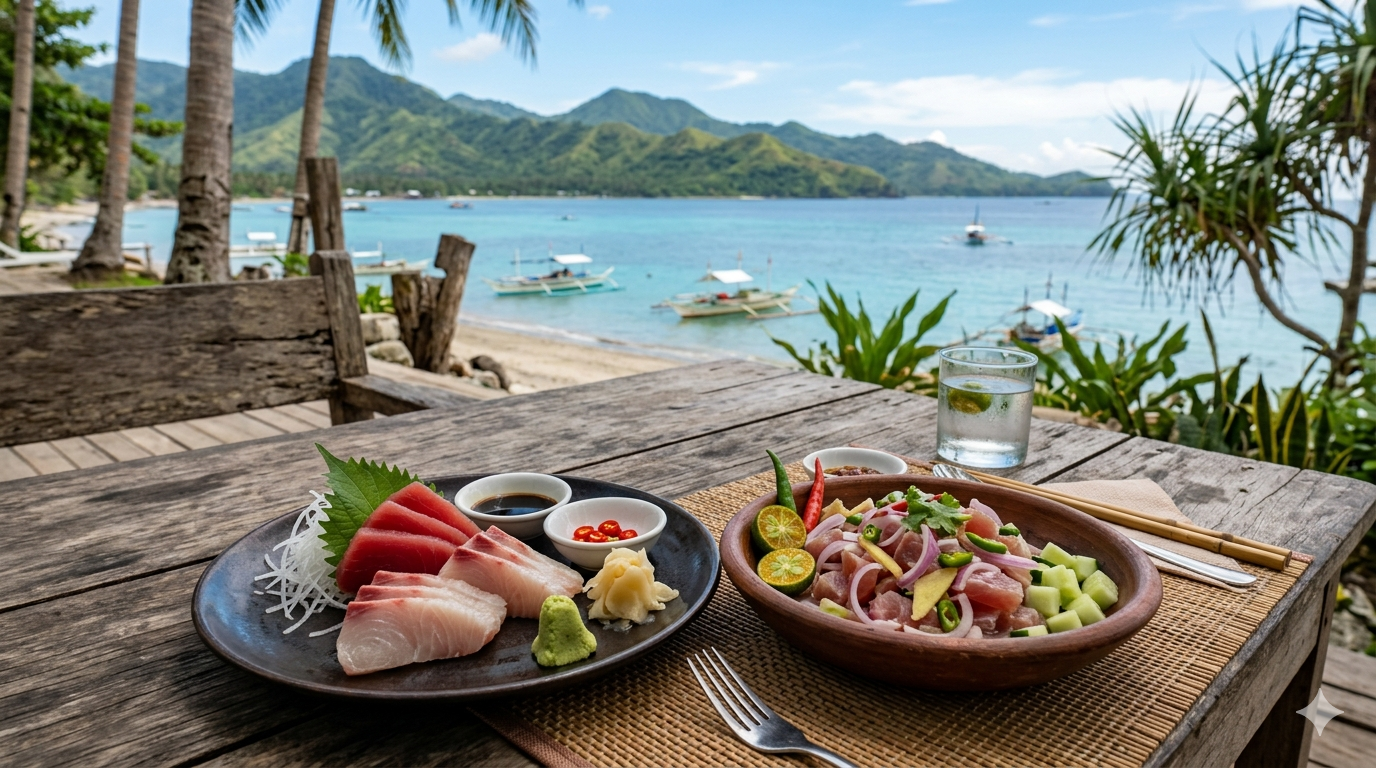
Sashimi refers to thinly sliced raw fish or seafood served without rice, often accompanied by condiments such as soy sauce or wasabi.
What is kinilaw na tuna?
Kinilaw is a Filipino dish where raw tuna is marinated in vinegar or citrus juice with optional vegetables and seasonings.
Are there safety concerns with eating raw tuna?
Yes. Raw tuna may carry bacteria or parasites. Safe consumption involves sourcing from licensed suppliers, proper refrigeration, and hygienic preparation.
Trusted Sources
- Department of Health (DOH Philippines) – Food Safety Guidelines
- Food and Drug Administration (FDA Philippines) – Seafood Handling Advisory
- National Oceanic and Atmospheric Administration (NOAA) – Consumer Seafood Guide
- Peer-reviewed nutrition journals on seafood nutrient composition
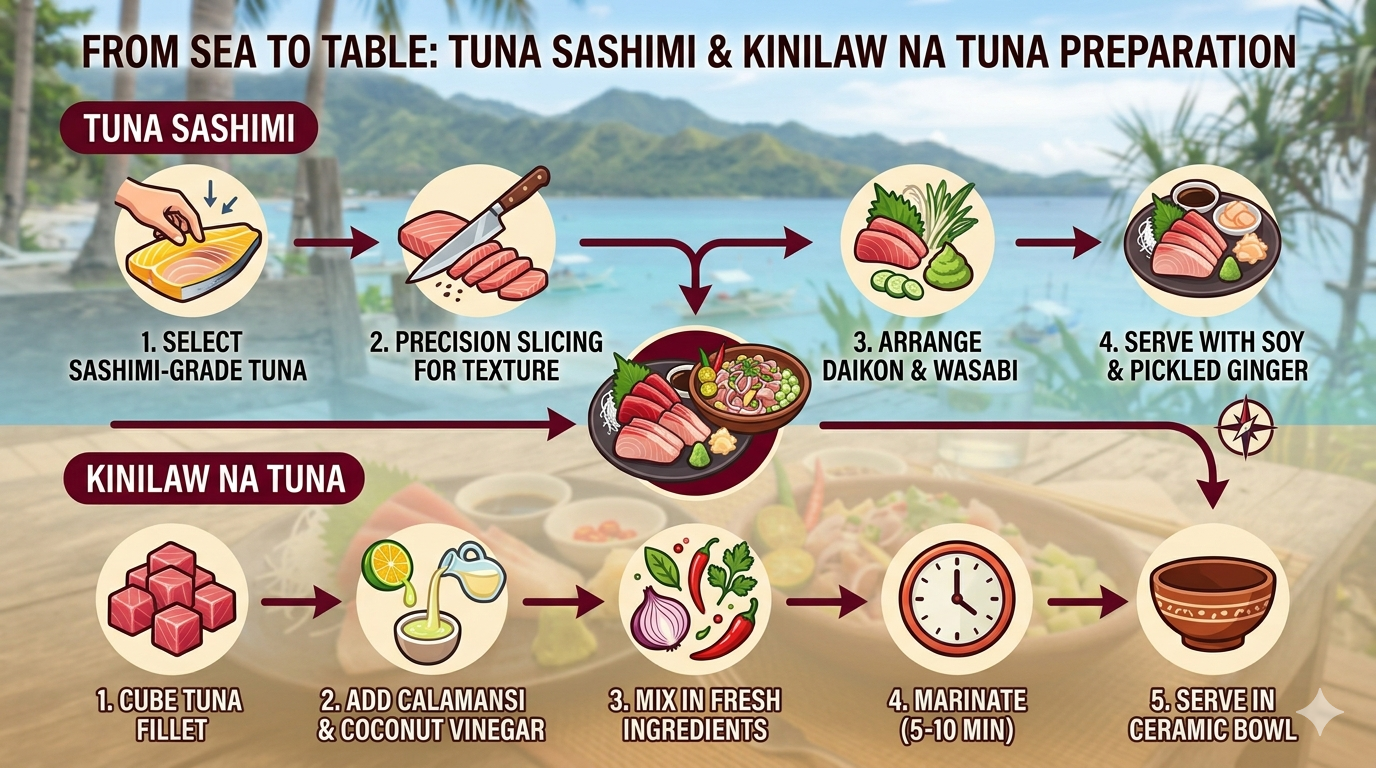
Infographic displaying tuna types and raw preparation methods.
Disclaimer
This article is for general informational and educational purposes only. It does not constitute professional medical, nutrition, or dietary advice. References to foods or dishes do not imply endorsement or guarantee of health outcomes. Readers are encouraged to consult licensed nutritionists, dietitians, or medical professionals for personalized guidance.