
Kinilaw: Understanding the Filipino Raw Fish Dish
A neutral overview of kinilaw, its ingredients, preparation principles, and nutritional considerations.
Kinilaw is a traditional Filipino dish commonly made from raw seafood marinated in vinegar or citrus juice. Under Philippine food safety and consumer protection standards, proper handling of raw ingredients is important to reduce the risk of foodborne illness. This article provides an educational overview of kinilaw, including its typical ingredients, preparation practices, and nutritional considerations. Readers will learn about safe consumption, nutrient content, and food labeling awareness relevant to this dish.
Ingredients and Common Preparation
Kinilaw typically includes:
- Raw seafood such as fish (tuna, tanigue, or mackerel), shrimp, or squid
- Acidic marinating agents like vinegar, calamansi, or lemon juice
- Optional vegetables and aromatics such as onions, ginger, tomatoes, and chili peppers
- Seasonings like salt and pepper
The acidic marinade partially denatures the proteins in seafood, giving the dish its characteristic texture. However, marination does not fully eliminate bacteria or parasites, so proper seafood sourcing and hygiene are important.
Nutritional Overview
Kinilaw can be part of a nutrient-rich diet when consumed safely. Typical nutrients include:
- Protein: High-quality protein from seafood
- Omega-3 fatty acids: Present in certain fish like tuna or mackerel
- Vitamins and minerals: Including vitamin D, vitamin B12, iodine, and selenium
- Low in carbohydrates: Unless additional ingredients like fruits or condiments are added
Portion sizes and frequency of consumption should be considered in the context of overall dietary balance. Kinilaw can be complemented with vegetables or whole grains to increase fiber intake.
Safe Consumption Practices
Under DOH and FDA Philippines guidelines:
- Use fresh or properly frozen seafood from reputable sources
- Marinate in acidic solutions immediately before serving
- Keep ingredients refrigerated until preparation
- Avoid cross-contamination with raw meats or unwashed utensils
These steps help reduce the risk of foodborne illnesses while maintaining the traditional characteristics of kinilaw.
Context
In nutrition science studies, raw seafood is recognized as a source of lean protein and essential fatty acids, but it also carries potential microbial or parasitic hazards. Under Philippine consumer protection and labeling standards, seafood should be sold with proper freshness indicators and storage guidance. Diet planning typically involves balancing protein intake with other macronutrients, and nutrient results may vary individually depending on overall diet and health status. Consultation with licensed nutritionists or dietitians is recommended for personalized dietary guidance.
FAQs
What is kinilaw?
Kinilaw is a Filipino dish made from raw seafood marinated in vinegar, citrus juice, or other acidic liquids, often with vegetables and seasonings.
Is kinilaw nutritious?
Kinilaw provides protein, omega-3 fatty acids, and several vitamins and minerals. Nutrient content depends on the type of seafood used.
How can kinilaw be prepared safely?
Safe preparation involves using fresh seafood, proper refrigeration, and immediate marination before consumption to reduce microbial risks.
Trusted Sources
- Department of Health (DOH) Philippines — Food Safety Advisory: Raw Seafood
- Food and Drug Administration (FDA Philippines) — Guidelines on Fish Handling and Storage
- Philippine Council for Agriculture, Aquatic and Natural Resources Research and Development (PCAARRD) — Nutritional Composition of Local Seafood
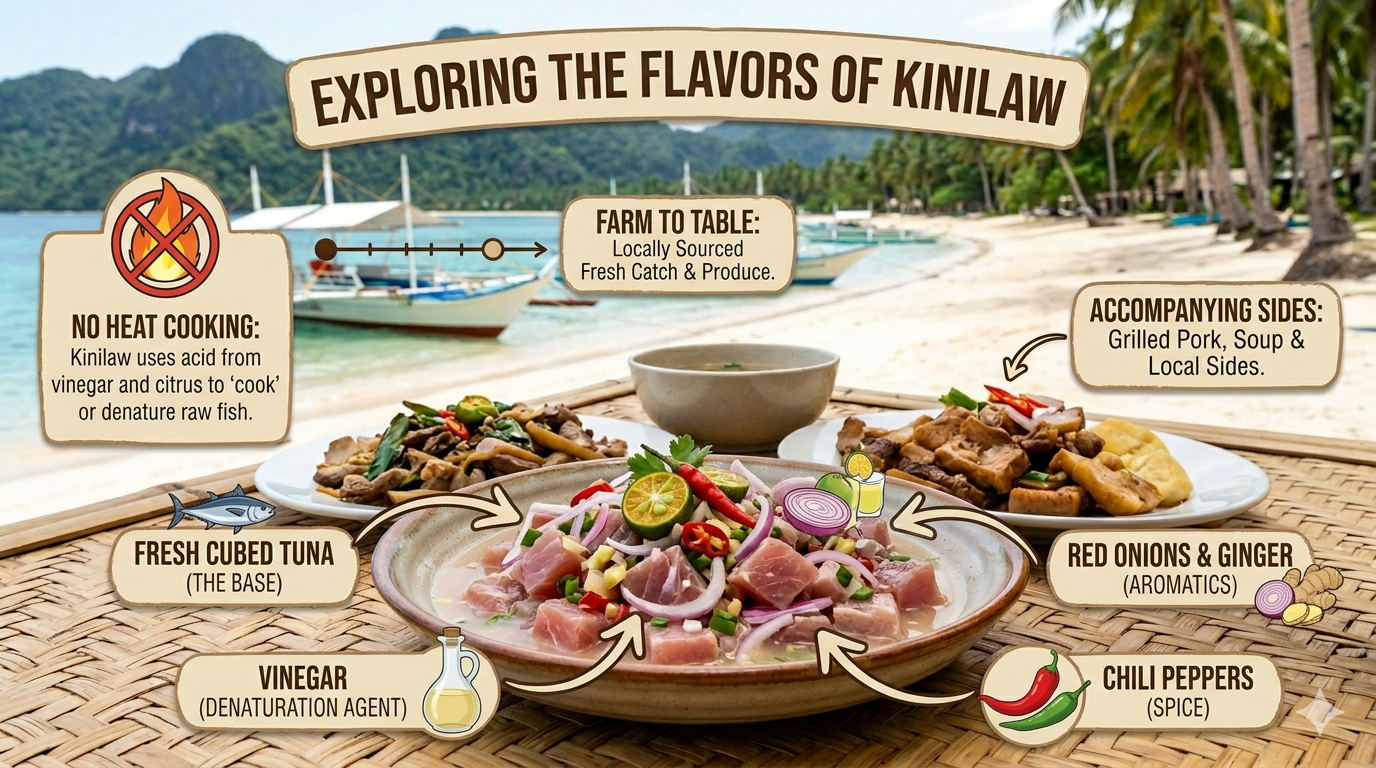
Step-by-step infographic illustrating the composition and preparation of kinilaw
Disclaimer
This article is for general informational and educational purposes only. It does not constitute professional medical, nutrition, or dietary advice. References to kinilaw, seafood, or preparation practices do not imply endorsement or guarantee of health outcomes. Readers are encouraged to consult licensed nutritionists, dietitians, or medical professionals for personalized guidance.