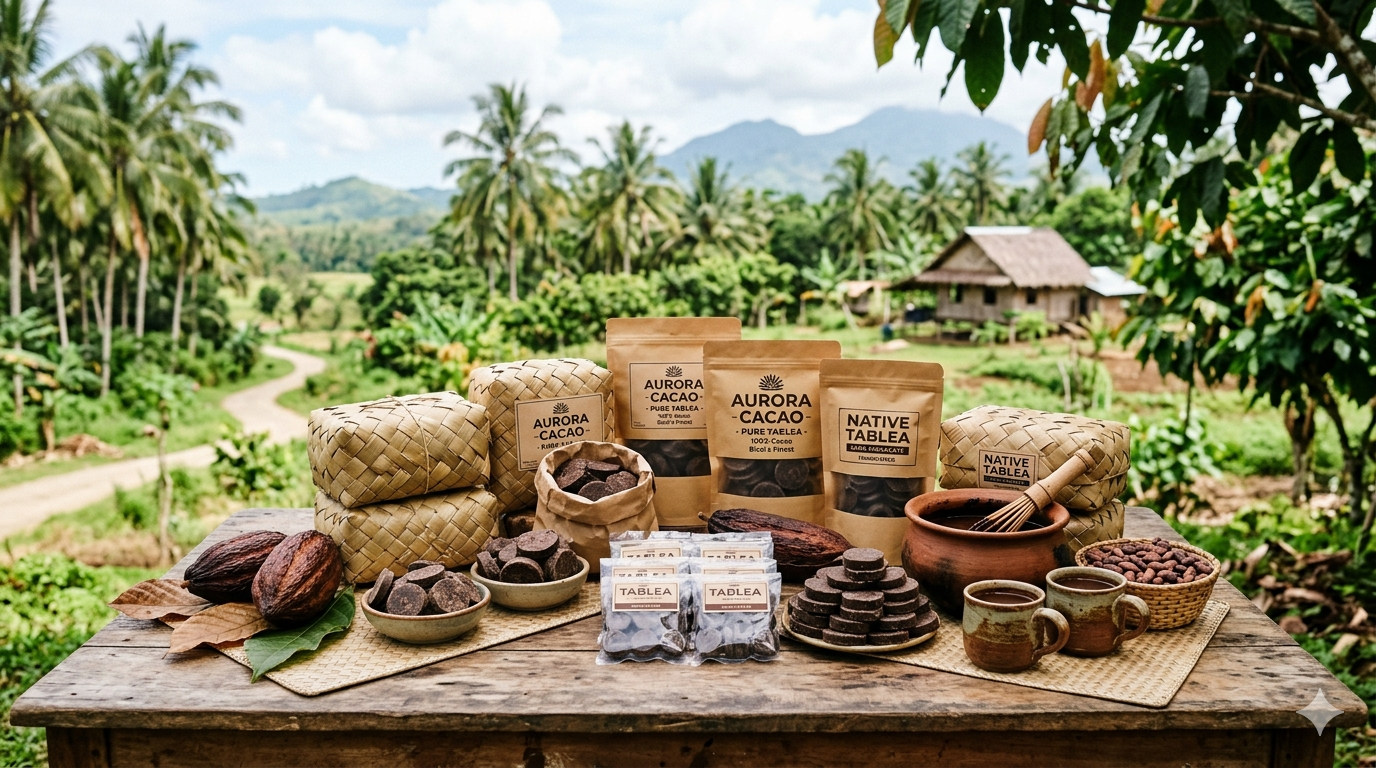
Philippine Chocolate Tablea Products: An Educational Overview
Understanding nutrition, food composition, and consumer awareness
This article provides a neutral, factual overview of chocolate tablea products commonly found in the Philippines. It explains what tablea are, their typical composition and macronutrient characteristics, how to read food labels on packaged versions, and consumer safety considerations under Philippine food standards (DOH, FDA Philippines, DTI). The content is educational and does not promote specific brands or make health claims.
What Are Chocolate Tablea?
“Tablea” (also spelled tablia) refers to small discs, tablets, or blocks made from ground and roasted Theobroma cacao beans. Traditionally used in Filipino households to make hot chocolate drinks (e.g., tsokolate), tablea represent minimally processed cacao solids and cocoa butter — the natural components of the cacao seed.
In processed form, tablea may sometimes have added ingredients for texture or flavor, such as sugar or milk solids. Products vary by manufacturer and formulation. Under Philippine food labeling standards, packaged tablea must declare ingredients and nutrition information if required by Food Safety Act and FDA labeling rules.
Typical Composition & Nutrient Concepts
Chocolate tablea products generally contain three broad components:
- Cacao solids: contain fiber and plant‑based compounds naturally present in cacao.
- Cocoa butter: the fat portion of cacao beans.
- Added ingredients (varies): such as sugar, milk powder, or lecithin — these change nutrient profiles.
Macronutrient Characteristics
In general (varies by product formulation):
- Energy (calories): Tablea are energy‑dense because of fats and carbohydrates.
- Fat: Mostly derived from cocoa butter; includes saturated and unsaturated fatty acids.
- Carbohydrates: Includes sugars if added; natural carbohydrates from cacao.
- Protein: Minimal amounts present naturally.
These descriptors are educational; specific nutrient amounts must be obtained from the packaged product’s nutrition facts label.
How to Read Nutrition Labels on Tablea Products
In the Philippines, packaged food products must comply with labeling requirements under the Food Safety Act and FDA guidelines. Labels typically include:
- Ingredient List: Ingredients in descending order by weight.
- If sugar or milk solids appear high on the list, the product may contain more of those than pure cacao.
- Nutrition Facts Panel:
- Serving size
- Energy (calories)
- Total fat, saturated fat
- Carbohydrates (including total sugars)
- Protein
- Sodium (when declared)
- Allergens: Some products may declare milk or soy.
Reading these elements can help consumers understand what nutrients are present and in what amounts relative to the portion size.
Consumer Awareness & Safety
Philippine Food Standards Context
- Packaged tablea products sold in the Philippines should be registered or notified with the Food and Drug Administration (FDA Philippines) and comply with labeling standards enforced by DTI and DOH.
- Numerical nutrition values (e.g., calories per serving) are for informational purposes and do not imply health or weight outcomes.
Shopping Tips (Educational Awareness Only)
- Look for clear ingredient lists rather than vague terms.
- Compare products by nutrition facts panel to understand fat and sugar content.
- Be aware of added sweeteners — higher sugar content means more calories from sugars.
This information is for general consumer awareness and does not constitute dietary advice.
Food Composition & Dietary Planning
In nutrition science, foods are described by their nutrient content, not by effect claims. Tablea products vary widely:
- Traditional tablea is primarily ground cacao with minimal additives.
- Commercially processed tablea may include sweeteners or milk components that change macronutrient balance.
Dietary planning typically involves balancing sources of fats, carbohydrates, and proteins across meals. Consumers who include tablea‑based beverages in foods or drinks can consider how those portions contribute to their overall daily nutrient intake without implying that the product itself has specific health outcomes.
FAQs
What are chocolate tablea?
They are discs or blocks made from roasted, ground cacao beans used traditionally to prepare hot chocolate beverages.
Do tablea products vary in nutrition?
Yes. Nutrient content can differ depending on added ingredients such as sugar or milk, which is why reading labels is informative.
How can consumers make informed choices?
Consumers can read ingredient lists and nutrition panels on packaged foods to understand nutrients like fat, sugars, and calories per serving.
Trusted Sources
- FDA Philippines — official food labeling guidelines
- Department of Health (DOH), Philippines — food safety advisories
- Academic nutrition science texts on food composition
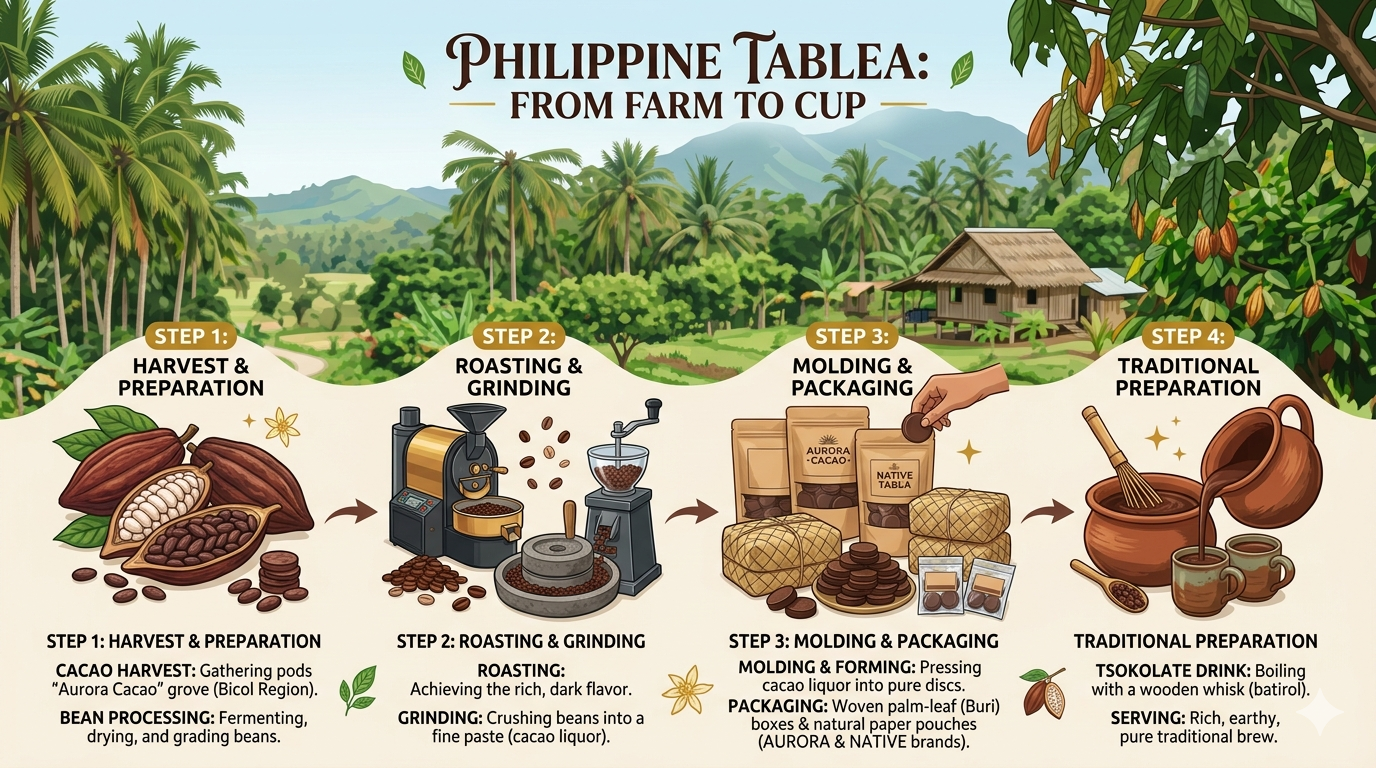
Illustration of chocolate tablea ingredients and component percentages
Disclaimer
This article is for general informational and educational purposes only. It does not constitute professional medical, nutrition, or dietary advice. References to foods or nutrients do not imply endorsement or guarantee of health outcomes. For personalized guidance, readers are encouraged to consult licensed nutritionists, dietitians, or medical professionals.