Binaki: Understanding the Traditional Filipino Corn Snack
A neutral overview of ingredients, preparation, and nutritional considerations.
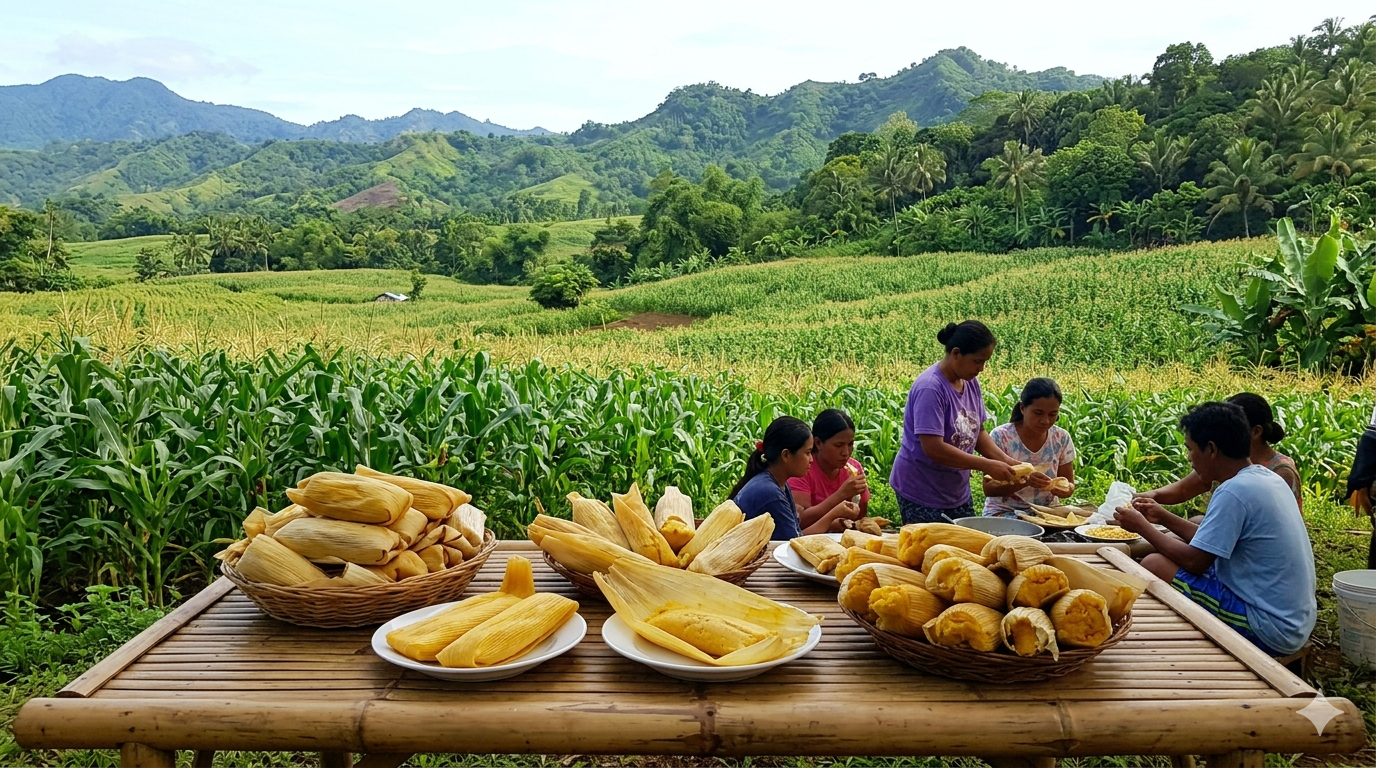
Binaki is a traditional Filipino snack originating from the Visayas region. It is typically made from grated corn, coconut milk, sugar, and sometimes butter or margarine, wrapped in corn husks, and steamed. This article provides an educational overview of its typical composition, preparation methods, and nutritional aspects, referencing Philippine food safety and labeling guidelines.
Ingredients and Preparation
Binaki primarily consists of:
- Corn kernels – grated or ground, forming the base of the snack.
- Coconut milk – adds moisture and fat content.
- Sugar – used in varying amounts for sweetness.
- Optional fat – butter or margarine may be included.
- Corn husks – used as wrapping for steaming.
The mixture is combined, wrapped securely, and steamed until set. Traditional preparation does not involve frying or added preservatives.
Nutritional Considerations
Binaki contains:
- Carbohydrates – mainly from corn and sugar.
- Fat – from coconut milk and any added butter or margarine.
- Protein – small amounts from corn.
- Fiber – from corn solids and husks during preparation.
- Micronutrients – such as vitamin C, B-vitamins, and magnesium, naturally present in corn.
Consumption of binaki provides energy from carbohydrates and fats. Portion size and frequency may influence overall caloric intake.
Food Safety and Labeling Awareness
Under Philippine FDA and DOH standards:
- Packaged binaki should have ingredient lists and production information.
- Homemade or market-prepared binaki should follow safe food handling practices, including proper steaming, storage, and hygiene.
- Consumers should verify freshness and avoid binaki showing signs of spoilage (mold, off-odor).
Context
In nutrition science studies, corn-based snacks like binaki are recognized as energy-dense foods that provide carbohydrates and fats but may contain added sugar. Dietary results and energy intake vary individually. Consumers seeking personalized guidance on diet or nutrient balance should consult licensed nutritionists, dietitians, or medical professionals.
FAQs
What is binaki made of?
Binaki is typically made from grated corn, coconut milk, sugar, and sometimes butter, wrapped in corn husks and steamed.
Is binaki a high-calorie snack?
Binaki contains carbohydrates and fats, contributing to its energy content. Nutrient composition varies depending on added sugar or butter.
Can I store binaki safely?
Steamed binaki should be stored in a clean, covered container. Refrigeration is recommended if not consumed immediately.
Trusted Sources
- Department of Health (DOH) Philippines – Food Safety Advisories
- Food and Drug Administration (FDA Philippines) – Guidelines on Processed Foods and Labeling
- Academic journals on Philippine traditional foods and nutrition
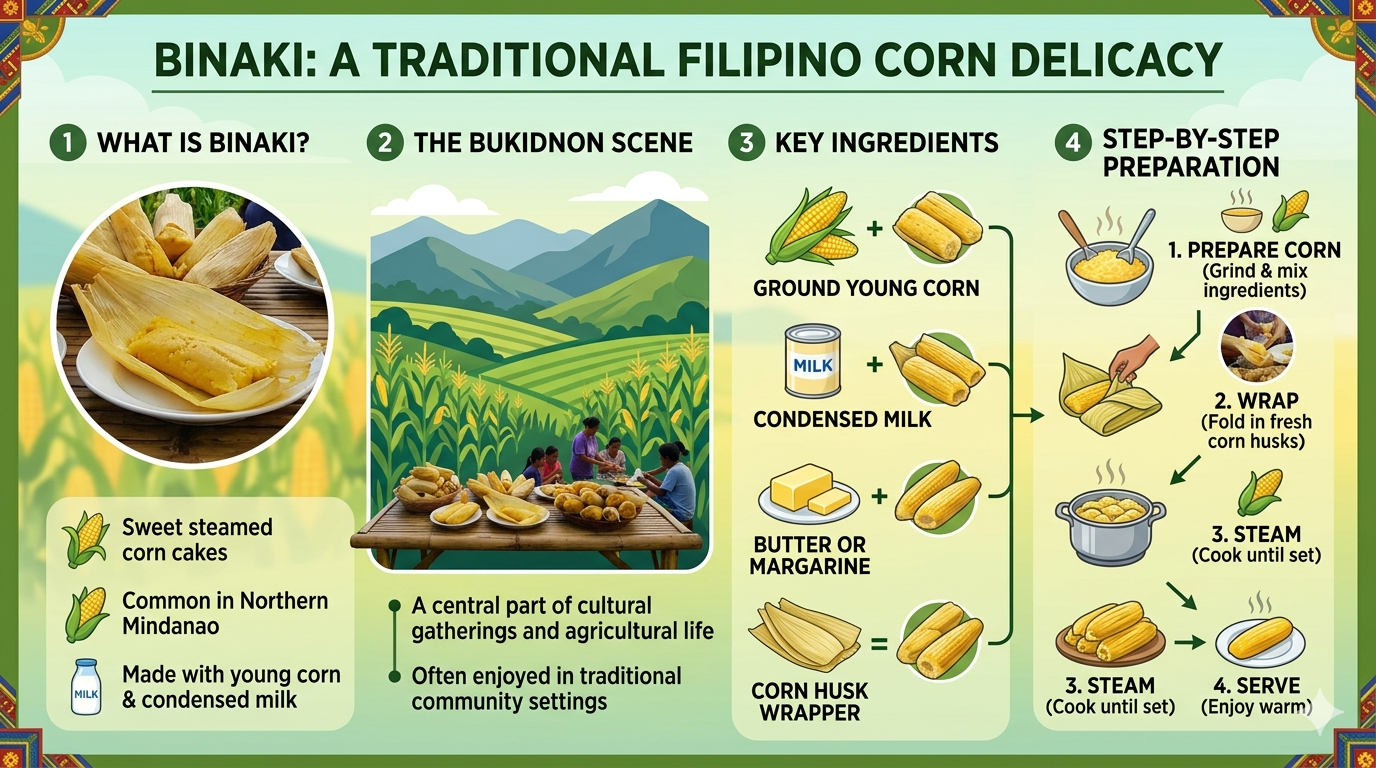
Infographic depicting the ingredients and steaming method for traditional binaki.
Disclaimer
This article is for general informational and educational purposes only. It does not constitute professional medical, nutrition, or dietary advice. References to foods or preparation methods do not imply endorsement or guarantee of health outcomes. Readers are encouraged to consult licensed nutritionists, dietitians, or medical professionals for personalized guidance.